
Quang Ninh Food Guide
Quang Ninh is a paradise for seafood lovers, offering an impressive variety of fresh catches and regional specialties from Vietnam's northeastern coast. Visitors can enjoy grilled squid, horseshoe crab, oysters, sea snails, clams, prawns, and many traditional local dishes prepared with fresh ingredients from Ha Long Bay and surrounding islands. From bustling seafood markets to waterfront restaurants and floating villages, every meal reflects the province's rich maritime culture. This Quang Ninh Food Guide introduces the must-try dishes and unforgettable dining experiences.
On this page
- The Iconic Maritime Delicacies: Foundations of the Coastal Identity
- Mountain Specialties and Highland Heritage
- The Market Landscape and Culinary Geography
- Practical Culinary Logistics and Etiquette for the Quang Ninh Food Guide
- Conclusion: Finalizing Your Journey Through the Best Things to Do in Quang Ninh
To cross the geographic threshold into Quảng Ninh is to enter a culinary landscape where the vast, emerald expanse of the Gulf of Tonkin converges with the rugged, mist-cloaked ridgelines of the northern borderlands. For the professional culinary anthropologist, the specialized food critic, and the local advocate who has spent years investigating the distinctive, terroir-driven flavor architectures of this province, Quảng Ninh represents a profound, living archive of Vietnamese gastronomy. This is a region that rejects the polished, standardized dining of commercialized maritime resorts in favor of a raw, honest, and deeply aromatic culinary identity. Every dish found here—from the hand-pounded, springy density of the legendary squid patties to the slow-rendered, fragrant fats of the highland mountain poultry—tells a story of human adaptation to a land defined by geological extremes. This exhaustive quang ninh food guide serves as a definitive map for the deliberate traveler, moving beyond the superficiality of coastal tourist menus to uncover the flavor profiles that have defined this province for generations. By navigating the smoky, hearth-cooked rituals of the highland villages and the vibrant, high-turnover hubs that define the coastal market culture, you will engage with a heritage that honors ancient maritime and agrarian recipes while continuously adapting to the evolving palate of a modernizing society. This is a cuisine of maritime resilience, complex mountain umami profiles, and a profound, cultural respect for the art of the meal.
The Iconic Maritime Delicacies: Foundations of the Coastal Identity
The gastronomic identity of the coast is anchored by a set of delicacies that reflect the historical necessity and the aesthetic ambition of the Gulf of Tonkin. These meals are not merely culinary selections; they are cultural artifacts that demand a rigorous commitment to ingredient integrity, texture, and traditional preparation methodology, representing the highest evolution of the regional maritime palate.
Chả Mực Hạ Long: The Art of Hand-Pounded Squid
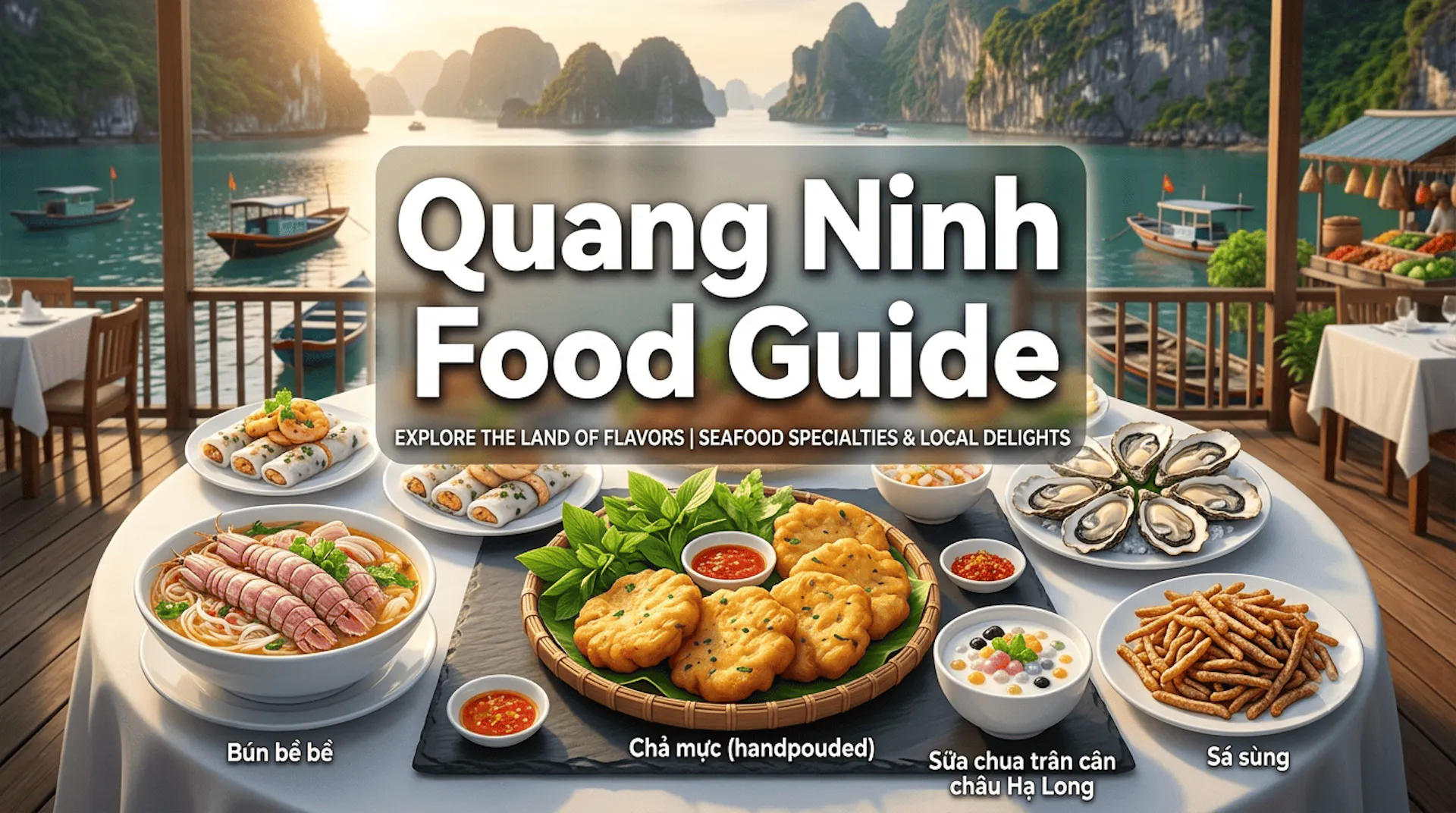
The Chả mực Hạ Long (Hạ Long squid patty) is the definitive, authoritative maritime snack of the nation, a dish that acts as a narrative vessel for the province’s most prized coastal protein. The "Expertise" involved in the preparation is nothing short of artisanal; the squid must be selected from the specific, deep-water varieties of the Gulf of Tonkin, which are prized for their firm, sweet flesh. The critical stage of the craft involves pounding the squid meat by hand in a large stone mortar rather than using industrial mechanical grinders. This manual process is essential for achieving the specific, springy texture that defines an authentic patty; the physical labor breaks down the muscle fibers while keeping them intact enough to maintain a structural, elastic "bite." When the pounded paste is seasoned with minimal aromatics—typically white pepper and a touch of fish sauce—and fried in a bath of golden oil, it results in a patty that is crisp on the exterior and remarkably bouncy within. To eat authentic Chả mực in Hạ Long is to consume the very essence of the local marine heritage, where the time-dependent, labor-intensive nature of the process is treated with a level of sanctity that defines the coastal street food culture.
Sá Sùng: The Culinary Gold of the Coast
The Sá sùng (sipunculid worm or "sand worm") offers a sophisticated, connoisseur-level experience that highlights the province's unique coastal biodiversity. Often referred to as the "umami booster" of the region, these rare marine creatures reside in the sandy, tidal flats of the coastal districts and have been used for centuries to elevate the flavor profiles of local broths and soups. The preparation is a masterclass in delicate, terroir-driven culinary methodology: the worms are meticulously cleaned to remove the internal silt, then sun-dried until they reach a state of brittle, intense concentration. When roasted briefly over an open flame, the Sá sùng undergoes a transformative chemical reaction, releasing a profound, sweet, and oceanic umami that is incomparable to any other ingredient in the Vietnamese pantry. To consume the worm in its roasted, crispy form, or to experience the broth derived from its slow-simmering, is to understand the regional culinary philosophy that prizes the natural, mineral-heavy essence of the sea above all else. Engaging with this delicacy is a demonstration of the province’s deep, indigenous knowledge of the coastal ecosystem, where the rarest of marine organisms are elevated to the status of a premium, culinary asset.
Bún Bề Bề: The Essence of the Bay
The Bún bề bề (mantis shrimp noodle soup) represents the quintessential maritime ritual of the province, a staple that bridges the gap between the morning harvest and the midday meal. The dish is defined by its broth, which is derived from a slow-simmered reduction of fresh mantis shrimp shells, aromatics, and local sea salt, providing a clean, saline spike that highlights the quality of the seafood. The mantis shrimp themselves, harvested daily from the shallow waters of the bay, are poached just until they reach a state of firm, succulent perfection, ensuring their sweet, lobster-like meat remains tender. The marker of a master cook in Ha Long is the consistency of this broth—it must be clear, aromatic, and devoid of the fishy, overwhelming notes found in inferior, mass-produced versions. Eating this noodle soup on a low, street-side stool, accompanied by a small plate of fresh, crisp herbs and a wedge of local lime, is the definitive expression of the regional culinary philosophy; it is simple, nourishing, and relies entirely on the technical skill of the maker to extract the maximum flavor from the bounty of the Gulf of Tonkin.
Mountain Specialties and Highland Heritage
As the culinary investigator moves away from the coastal hubs toward the northern borderlands of Bình Liêu and the high-altitude regions, the foodways transition into a realm dominated by ancestral agrarian techniques. Here, the necessity of surviving difficult, high-altitude climates has birthed a complex tradition of livestock and produce management that defines the everyday highland palate.
Gà Đồi Tiên Yên: The Highland Gastronomy
The Gà đồi Tiên Yên (Tiên Yên hill chicken) is a dish that highlights the importance of habitat in shaping the flavor of regional protein. These free-range chickens are raised in the mountainous regions of Tiên Yên, where they are allowed to roam across a diverse, forested terrain, grazing on natural insects, wild seeds, and forest vegetation. This specific, high-activity lifestyle produces a chicken that is vastly different from its lowland, grain-fed counterparts—the meat is firm, the skin is yellow and remarkably thin yet crunchy, and the flavor is concentrated and savory. The traditional preparation methodology usually involves steaming the chicken with a hint of local turmeric to bring out its natural hue and aroma, served simply with a dipping sauce of salt, pepper, and local lemon leaves. To consume Gà đồi is to experience the high-altitude culinary heritage of the province, where the quality of the meat is a direct result of the terrain. It is a meal that evokes the history of the mountain communities, serving as an essential anchor for local festive gatherings and providing the traveler with an authentic look at the sophisticated, land-integrated cuisine that defines the province's internal environmental character.
Khâu Nhục: The Cultural Convergence
The Khâu nhục (slow-cooked, braised pork belly) provides a compelling window into the province’s deep-rooted cult of patience and historical reverence, particularly among the ethnic minority groups of the border regions. This dish, involving a multi-step preparation of marinating, searing, and then slow-braising the pork belly with a mix of dried herbs, fermented beans, and indigenous spices for several hours, represents a peak of northern mountain culinary methodology. The result is a pork belly that has been transformed into a melt-in-the-mouth, savory-sweet masterpiece that is prized during weddings, funerals, and Lunar New Year festivals. The preparation is labor-intensive, requiring a master-level understanding of temperature control to ensure the pork is tender enough to be eaten with chopsticks while retaining its structural integrity. Visiting the high-altitude areas like Bình Liêu to experience this dish in a communal setting is not merely an act of culinary observation; it is a participation in the local cultural heritage stewardship that defines the identity of the borderland populations. To navigate the meal is to respect the local traditions and to acknowledge the weight of time that has sustained this recipe through cycles of cultural convergence.
Indigenous Mountain Produce
No serious investigation of traditional Quang Ninh cuisine can proceed without an authoritative analysis of the indigenous mountain produce that marks the local seasonal calendar. From the forest honey gathered in the deep valleys of Bình Liêu to the unique, seasonal vegetables that appear only in the cool, mountain-mist months, these ingredients are the pinnacle of the province’s botanical output. The expertise required to cultivate or forage these varieties is immense; it involves a sophisticated understanding of the specific, micro-climate dynamics of the northeastern ridgelines. To consume these products in season is to understand the regional pride in its agricultural heritage; they are seasonal culinary highlights that are celebrated throughout the province, often serving as the primary aromatic markers of the provincial harvest calendar. They demonstrate the depth of indigenous culinary knowledge, where even the simplest plants are elevated to the status of essential, flavor-defining components through traditional processing integrity.
The Market Landscape and Culinary Geography
To grasp the true culinary pulse of Quảng Ninh, one must look at the markets, where the trade of ingredients provides the most authoritative evidence of the provincial palate and the seasonal availability of the maritime and mountain bounty.
Navigating Coastal Markets
The morning market—whether it be the high-volume activity of the central markets in Hạ Long or the smaller, village-specific nodes along the northern mountain corridors—is the primary research site for any student of the provincial diet. These spaces operate on a rhythm dictated by the first light; by the time the sun is high, the bulk of the trade is already concluded. Navigating these stalls requires a willingness to observe the mundane, transactional reality of the province. You will see vendors sorting through piles of freshly gathered, forest-foraged mushrooms, arguing over the price of the morning's maritime catch, and measuring out mounds of local spices. By observing the flow of these ingredients, you gain an immediate understanding of the dietary foundations of the area. It is here that you find the herbs that form the base of the morning soups, the shellfish that will be used in the evening meals, and the chili pastes that will define the province's character. The market is not merely a place of commerce; it is an archive of the regional diet, providing a vivid, sensory-heavy context for the provincial culinary philosophy: a commitment to seasonality, regional sourcing, and the creative utilization of the entire available ecosystem.
Artisan Street Food Culture
The genuine Quang Ninh street food culture is maintained by family-run stalls and household kitchens that serve as the primary venues for experiencing the province's culinary heritage. These venues are the custodians of regional flavors, often operating in the same location for decades and utilizing recipes that have been refined by multiple generations of the same family. To eat at these stalls is to enter a space of immense cultural importance; the cook is not merely a provider of calories but a protector of ancestral memory. The consistency of the menus, the specificity of the ingredients used, and the adherence to traditional preparation methods are the markers of these custodians. By patronizing these small, family-owned operations, the traveler contributes to the continued sustainability of the provincial culinary identity, ensuring that the labor-intensive recipes are passed on rather than replaced by industrial, standardized alternatives. It is in these quiet, working eateries that you find the true rhythm of the province—a rhythm defined by the harvest, the hearth, and the communal spirit of the coast and mountain frontier.
Practical Culinary Logistics and Etiquette for the Quang Ninh Food Guide
Executing a highly successful, intellectually grounded food tour across this province requires a pragmatic adherence to local schedules and a sophisticated understanding of regional street dynamics. The absolute rule for locating the finest nodes of traditional Quảng Ninh cuisine is to operate on the native timeline, which is strictly dictated by the intense thermal and light realities of the Gulf of Tonkin and the northern mountains.
The most authoritative bún bề bề and chả mực vendors open their doors precisely at the dawn hours and are frequently depleted of their morning batches by mid-morning, as the local maritime population seeks to consume these hot, highly seasoned dishes before the heat of the day. When attempting to distinguish between authentic, family-run establishments and modern tourist venues, look for the visual cues of long-term operational history: a single, heavily weathered sign listing only one or two specific preparations, a hearth fired by charcoal or high-quality wood rather than industrial gas, and a clientele composed entirely of multi-generational local families. These venues are typically located within the deep, residential alleyways or along the primary rural highways connecting the agricultural and fishing districts, far removed from the manicured promenades of the resorts.
Regarding etiquette, dining in this province is inherently a respectful, community-oriented activity. The dining culture is frequently conducted in spaces that are humble and unadorned, where the focus is entirely on the freshness and the quality of the communal platter. It is a space that demands ease, patience, and a lack of pretense. Whether you are in a bustling, salt-air market stall or a more refined, family-run eatery, the protocol remains consistent: show patience, respect the "slow food" preparation of the traditional recipes, and always express genuine, visible gratitude. The artisans who maintain these recipes are the keepers of the province’s cultural heritage, and they take immense pride in the labor they invest in their traditional, hearth-cooked broths and their careful, artisanal preparations. By approaching your meals with an appreciation for this investment of time and skill, you ensure that your culinary journey is not just a collection of meals, but a respectful engagement with the living, enduring traditions of the Northeast region. This is the Quảng Ninh way of dining, where the quality of the food is inseparable from the respect shown to the environment, the harvest, and the cook who provides the meal.
Conclusion: Finalizing Your Journey Through the Best Things to Do in Quang Ninh
Quảng Ninh offers one of the most honest, intellectually stimulating, and environmentally reflective culinary landscapes in Northern Vietnam. By actively refusing to dilute its robust flavor profiles for the comfort of the international market, the province has successfully guarded the integrity of its regional foodways, from the intricate, slow-pounded art of the local squid patties to the bold, intense, and highly aromatic profile of its mountain-reared poultry. As you conclude your reading of this definitive quang ninh food guide, consider the depth of the gastronomic history you are about to encounter. Are you most eager to experience the smoky, mineral-rich intensity of the iconic Chả mực, or does the prospect of participating in the meditative, ritualized consumption of the adventurous Gà đồi Tiên Yên provide the primary motivation for your journey into the heart of the Northeast frontier? Which regional specialty—the coastal squid patties or the mountain-reared chicken—are you most prepared to document first in your own culinary experience?
Read more: Quang Ninh Travel Guide

By Roy Trinh
Editor
Roy Trinh is a travel writer and destination expert at Go Visit Vietnam, dedicated to helping travelers discover the beauty, culture, and diversity of Vietnam. Through well-researched travel guides, practical itineraries, local insights, and authentic recommendations, Roy shares valuable information to inspire memorable journeys across the country. From vibrant cities and breathtaking landscapes to regional cuisine and cultural heritage, every guide is created to help visitors experience Vietnam with confidence and curiosity.
Frequently Asked Questions About Quang Ninh Food Guide
What food is Quang Ninh famous for?
Quang Ninh is famous for its fresh seafood, including grilled squid, horseshoe crab, oysters, sea snails, clams, prawns, and many specialties from Ha Long Bay and the surrounding coastal areas.
Where can I try authentic local food in Quang Ninh?
Visitors can enjoy authentic cuisine at Ha Long seafood markets, waterfront restaurants, fishing villages, local night markets, family-run eateries, and restaurants specializing in regional seafood dishes.
Is seafood worth trying in Quang Ninh?
Absolutely. Quang Ninh is one of Vietnam's top seafood destinations, offering exceptionally fresh seafood harvested daily from Ha Long Bay, Bai Tu Long Bay, and nearby islands.
Is Quang Ninh a good destination for food lovers?
Yes. Quang Ninh offers a diverse culinary scene that combines fresh seafood, traditional northeastern Vietnamese recipes, coastal specialties, and unique local ingredients not commonly found elsewhere in Vietnam.
What food souvenirs should I buy in Quang Ninh?
Popular food souvenirs include dried squid, fish sauce, seafood snacks, local tea, traditional sweets, and regional specialty products available in markets and specialty shops throughout Quang Ninh.
Advertising box