
Quang Tri Food Guide
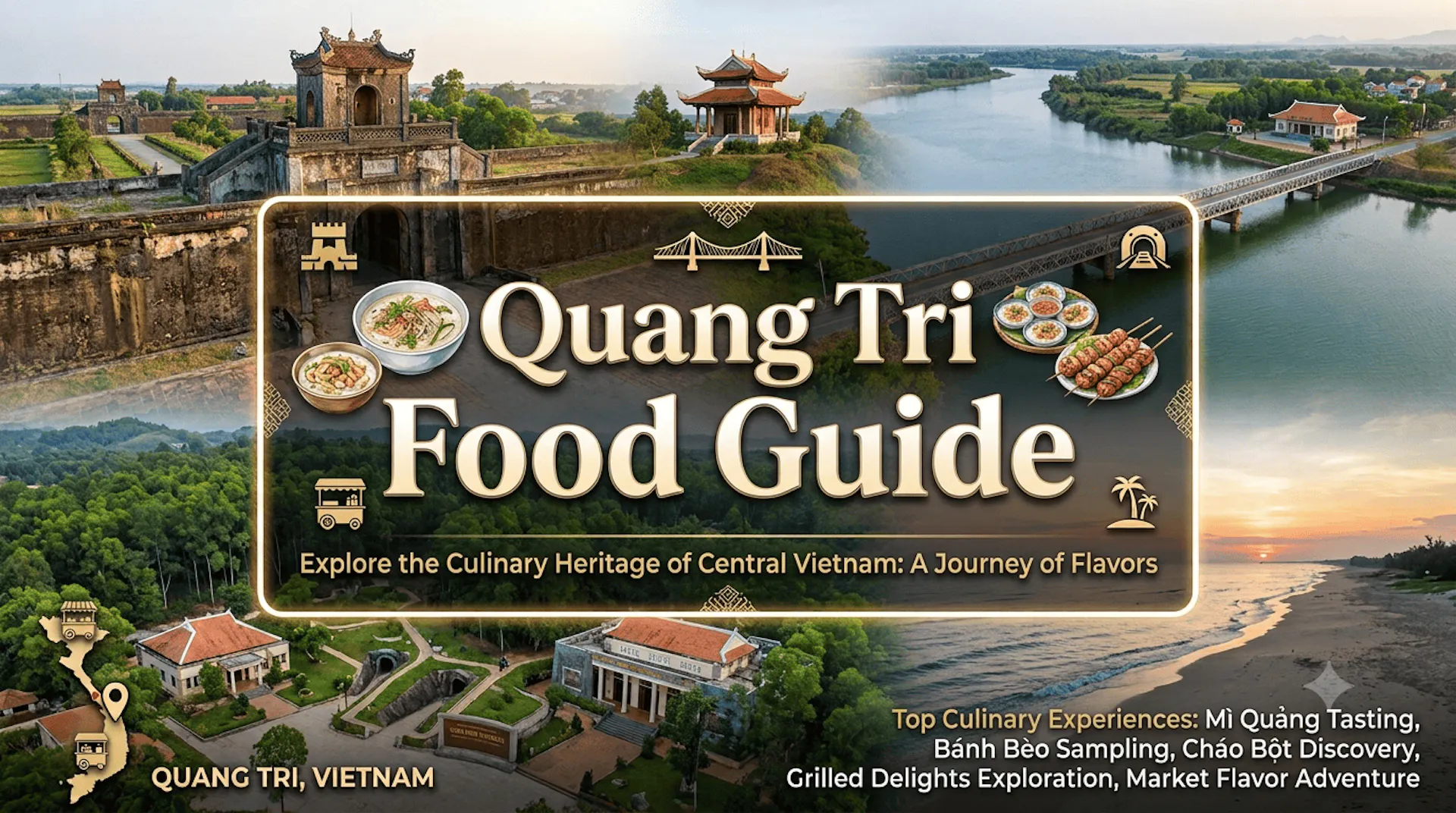
Quang Tri offers a rich culinary experience shaped by Central Vietnam's traditions and abundant coastal resources. Visitors can enjoy fresh seafood, traditional noodle dishes, grilled specialties, local rice cakes, flavorful soups, and regional delicacies prepared with fresh local ingredients. From bustling markets to family-owned restaurants and seaside eateries, every meal reflects the province's culture and history. This Quang Tri Food Guide introduces the must-try dishes, authentic local flavors, and memorable dining experiences that make Quang Tri a rewarding destination for food lovers.
On this page
- The Iconic Flavors of the River and Field: Foundations of the Culinary Identity
- The Art of Savory Street Delicacies
- Indigenous Flavors and Market Dynamics: The Social Life of the Table
- Practical Culinary Logistics and Etiquette for the Quang Tri Food Guide
- Conclusion: Finalizing Your Journey Through the Flavors of Quang Tri
To arrive in Quảng Trị is to enter a culinary landscape where the history of endurance and the bounty of the riverine plains are inextricably linked. For the culinary anthropologist, the specialized food critic, and the local expert who has spent years investigating the distinct, resilient flavor architectures of this province, Quảng Trị represents a profound, living archive of Central Vietnamese gastronomy. This is a region that rejects the polished, standardized dining of commercialized tourism in favor of a raw, honest, and deeply aromatic culinary identity. Every dish found here—from the infinitesimal, estuarine umami of the clam-based noodle soups to the bold, herb-infused pairing of highland buffalo—tells a story of human adaptation to a land that has been shaped by both the bounty of the river and the scars of its history. This exhaustive quang tri food guide serves as a definitive map for the deliberate traveler, moving beyond the superficiality of coastal resort dining to uncover the flavor profiles that have defined this province for generations. By navigating the smoky, hearth-cooked rituals of the neighborhood stalls and the vibrant, high-turnover hubs that define the local market culture, you will engage with a heritage that honors ancestral recipes while continuously adapting to the evolving palate of a modernizing society. This is a cuisine of resilience, complex flavor balance, and a profound, cultural respect for the art of the meal.
The Iconic Flavors of the River and Field: Foundations of the Culinary Identity
The gastronomic identity of Quảng Trị is defined by its ability to extract profound flavor from the most humble of ingredients. These staples are not merely sustenance; they are cultural markers that demand a rigorous commitment to freshness and an expert-level understanding of how the environment dictates the regional palate.
Bún Hến: The River’s Gift
The Bún hến (clam noodle soup) is the definitive culinary signature of the province, an icon that perfectly articulates the relationship between the local river systems and the daily diet. The process begins with the careful, labor-intensive harvesting of tiny clams from the riverbeds, which are then boiled to create a broth that is inherently clean, light, and possesses a subtle, oceanic depth. The preparation of this dish is a masterclass in the balance of temperature and texture: the cold, springy rice vermicelli serves as the foundation, topped with a generous heap of the sautéed, aromatic clam meat, and an array of fresh, garden-harvested herbs including mint, cilantro, and banana flower. The inclusion of crispy rice crackers (bánh đa) and a spike of roasted peanuts provides a textural counterpoint that is essential to the dish’s character. The broth, served on the side, is laced with chili oil and aromatics, allowing the diner to adjust the intensity of the flavor. To taste Bún hến is to consume the very essence of the riverine ecosystem, where the sweetness of the clam is amplified by the sharpness of the herbs and the smoky, crisp elements of the garnish, resulting in a flavor profile that is both invigorating and deeply restorative.
Cháo Bột: The Soul of Local Comfort
The Cháo bột (rice flour porridge) serves as the primary comfort food of the province, a staple that transcends social boundaries to appear in everything from quick, street-side morning meals to elaborate, formal family gatherings. The dish is defined by its unique, thick, and silky texture, achieved through the slow, methodical boiling of rice-flour dough strips alongside a broth enriched by freshwater fish or crab. Unlike the watery porridge found elsewhere, Cháo bột possesses a consistency that is substantial and comforting, often heavily seasoned with black pepper, scallions, and the local, aromatic chili paste that characterizes the regional palate. This dish is the definitive expression of the provincial philosophy toward food: it is simple, nourishing, and relies entirely on the quality of the base ingredients. It is a meal that evokes the warmth of the home hearth, serving as an essential, daily anchor for the local population and providing the traveler with an authentic, unfiltered look at the comfort food that defines the daily social life of the province.
Thịt Trâu Lá Trơng: A Unique Culinary Encounter
Perhaps the most culturally significant encounter in the province is the pairing of buffalo meat with the lá trơng (a native, wild-growing leaf). This is not a dish for the casual diner; it is a specialized culinary experience that requires an understanding of the botanical infusion mastery that is unique to the region. The buffalo meat, known for its lean, dense, and slightly gamey profile, is often grilled over charcoal or stir-fried with an array of aromatic spices, then served alongside the lá trơng. This specific leaf, which possesses a pungent, slightly peppery, and incredibly aromatic quality, acts as the perfect aromatic foil to the richness of the meat, cutting through the density with its bright, botanical acidity. The pairing is a testament to the indigenous botanical knowledge of the local foragers, who have spent centuries identifying plants that balance and enhance the flavors of the wild-game meats found in the interior regions. To eat Thịt trâu lá trơng is to witness the evolution of a dish born of the forest and the field, a culinary synthesis that remains entirely distinct to Quảng Trị.
The Art of Savory Street Delicacies
Beyond the iconic soups and the forest-infused meats lie the starch-based street delicacies that reflect the province's commitment to texture, crispness, and the complex art of the dipping sauce. These snacks are the essential social fuel of the urban and rural centers alike.
Bánh Lọc and Bánh Khoái: Texture and Tradition
The Bánh lọc and Bánh khoái represent the pinnacle of the region’s starch-based street craft, where the manipulation of rice and tapioca flour reaches its most refined expression. Bánh lọc—translucent, chewy dumplings stuffed with seasoned shrimp and pork—is a study in structural integrity; the tapioca dough must be boiled to a point where it becomes gelatinous and clear, revealing the savory filling inside. The success of the dish is determined by the dipping sauce, a concentrated, savory-sweet fish sauce reduction that serves as the essential, binding agent. Similarly, Bánh khoái—the regional, thick-crust pancake fried in cast-iron skillets—requires a deep, expertise-driven approach to the use of heat and fat. The goal is to achieve a crust that is simultaneously shatteringly crisp and slightly chewy, filled with shrimp, pork, and bean sprouts. The ritual of wrapping these pancakes in fresh, raw mustard greens and dipping them into a rich, peanut-and-liver-based sauce is the quintessential street-food experience, illustrating the local mastery of the fire-tempered, coastal snack. These are not merely foods; they are artisanal objects, requiring a level of manual dexterity and attention to temperature that distinguishes an authentic stall from the mass-produced, industrial alternatives.
Rustic Field Ingredients
The daily diet of the province is heavily reliant on the intelligent, traditional use of rural ingredients that are gathered, rather than purchased. The foragers of the region possess an encyclopedic knowledge of the forest and riverine environments, utilizing seasonal greens, wild-growing spices, and river-harvested tubers that define the rhythm of the local kitchen. This is a culinary culture that operates on the seasonal dietary shifts: the intense, dry summer dictates the use of cooling, herb-heavy preparations, while the cool, monsoon-heavy months demand the heat-forward, hearty, and aromatic warmth of the porridge and the heavy, spice-infused broths. To engage with this diet is to observe the local, seasonal dietary shifts that remain firmly anchored in the provincial geography. It is a way of life where the market stall and the home kitchen serve as a reflection of what the forest and the river have provided, ensuring that the cuisine remains in constant, dynamic dialogue with the local ecology.
Indigenous Flavors and Market Dynamics: The Social Life of the Table
To grasp the true culinary pulse of Quảng Trị, one must look at the markets, where the trade of ingredients provides the most authoritative evidence of the provincial palate and the seasonal availability of the riverine and forest bounty.
Navigating the Markets
The morning market—whether it be the high-volume activity of the Dong Ha Market or the smaller, village-specific nodes along the coast—is the primary research site for any student of the provincial diet. These spaces operate on a rhythm dictated by the first light; by the time the sun is high, the bulk of the trade is already concluded. Navigating these stalls requires a willingness to observe the mundane, transactional reality of the city. You will see vendors sorting through piles of freshly gathered, forest-foraged greens, arguing over the price of the morning's river-clam catch, and measuring out mounds of aromatic, local spices. By observing the flow of these ingredients, you gain an immediate understanding of the dietary foundations of the area. It is here that you find the herbs that form the base of the morning soups, the tubers that will be used in the evening porridges, and the chili pastes that will define the province's character. The market is not merely a place of commerce; it is an archive of the regional diet, providing a vivid, sensory-heavy context for the provincial culinary philosophy: a commitment to seasonality, regional sourcing, and the creative utilization of the entire available ecosystem.
Seasonal Shifts in Diet
The provincial diet is a dynamic, moving target, with the local consumption patterns shifting dramatically alongside the weather. The seasonal shifts in the diet are a matter of survival, comfort, and the intelligent management of the local resources. During the harsh, monsoon-dominated months, the reliance on fermented, shelf-stable, and spice-heavy foods increases, providing the caloric density and the interior warmth required to navigate the damp, cool weather. Conversely, the high-heat periods of the dry summer emphasize the importance of light, herb-forward, and acidic preparations that provide hydration and a cooling effect. To follow these shifts is to understand the local culinary survival strategy, where the meal is a tool for navigating the climate. This is why the authenticity of the local food scene is so closely tied to the season; the dishes that are available in the stalls are not just menu items; they are the necessary, seasonally specific responses to the provincial environment, showcasing an expertise in managing the local climate through the medium of the plate.
Practical Culinary Logistics and Etiquette for the Quang Tri Food Guide
Executing a seamless and highly authoritative exploration of this provincial food scene requires a pragmatic shift in expectation from the rapid-service culture of the urban centers to the family-oriented, traditional pace of the coastal and rural districts. When seeking out the most authentic eateries, rely on the "local traffic" principle; any stall that is consistently crowded with residents—where the menu is handwritten or absent, and the primary ingredients are based on the morning’s procurement—is an immediate, high-authority indicator of quality. These family-run establishments, often tucked away in the quiet, residential corridors of the city, are the true custodians of the province’s culinary history. They do not cater to the aesthetic preferences of the international tourism market; they cater to the palate of the locals, ensuring that the preparation is uncompromising, authentic, and rooted in the ancestral spice profiles of the region.
In terms of etiquette, dining in this province is inherently a respectful, community-oriented activity. The dining culture is frequently conducted in spaces that are humble and unadorned, where the focus is entirely on the freshness and the quality of the communal platter. It is a space that demands ease, patience, and a lack of pretense. Whether you are in a bustling, salt-air market stall or a more refined, family-run eatery, the protocol remains consistent: show patience, respect the "slow food" preparation of the traditional recipes, and always express genuine, visible gratitude. The artisans who maintain these recipes are the keepers of the province’s cultural heritage, and they take immense pride in the labor they invest in their traditional, hearth-cooked broths and their careful, artisanal preparations. By approaching your meals with an appreciation for this investment of time and skill, you ensure that your culinary journey is not just a collection of meals, but a respectful engagement with the living, enduring traditions of the Central Coast. This is the Quảng Trị way of dining, where the quality of the food is inseparable from the respect shown to the environment, the harvest, and the cook who provides the meal.
Conclusion: Finalizing Your Journey Through the Flavors of Quang Tri
Quảng Trị offers one of the most raw, authentic, and intellectually satisfying culinary landscapes in Vietnam. By refusing to conform to the commercial pressures of the broader tourist circuit, the province has successfully guarded the integrity of its maritime and river-specific foodways, from the intricate, slow-simmered art of the clam-based soup to the bold, intense, and highly aromatic profile of its traditional game-meat preparations. Every meal in this province serves as a profound education in environmental endurance and regional ingenuity. As you conclude your reading of this definitive quang tri food guide, consider the depth of the gastronomic history you are about to encounter. Are you most eager to experience the smoky, herb-infused intensity of the clam-based noodle soup, or does the prospect of participating in the meditative, refined, and aromatically complex rituals of the buffalo and leaf pairing provide the primary motivation for your journey into the heart of the Central Coast? Which regional delicacy—the iconic clam noodle soup or the unique buffalo-leaf pairing—are you most excited to document first in your own culinary experience?
> Read more: Quang Tri Travel Guide

By Roy Trinh
Editor
Roy Trinh is a travel writer and destination expert at Go Visit Vietnam, dedicated to helping travelers discover the beauty, culture, and diversity of Vietnam. Through well-researched travel guides, practical itineraries, local insights, and authentic recommendations, Roy shares valuable information to inspire memorable journeys across the country. From vibrant cities and breathtaking landscapes to regional cuisine and cultural heritage, every guide is created to help visitors experience Vietnam with confidence and curiosity.
Frequently Asked Questions About Quang Tri Food Guide
What food is Quang Tri famous for?
Quang Tri is known for its fresh seafood, traditional rice cakes, local noodle dishes, grilled specialties, flavorful soups, and a variety of Central Vietnamese recipes prepared with fresh regional ingredients.
Where can I try authentic local food in Quang Tri?
Visitors can enjoy authentic cuisine at local markets, seafood restaurants, family-run eateries, traditional food stalls, and coastal villages where fresh ingredients are prepared using regional recipes.
Is seafood worth trying in Quang Tri?
Absolutely. Quang Tri's coastline provides an abundance of fresh fish, squid, shrimp, crabs, clams, oysters, and other seafood served daily in restaurants and local fishing communities.
Is Quang Tri a good destination for food lovers?
Yes. Quang Tri offers authentic Central Vietnamese cuisine with fresh seafood, traditional home-style cooking, regional specialties, and local markets that showcase the province's rich culinary heritage.
What food souvenirs should I buy in Quang Tri?
Popular food souvenirs include dried seafood, fish sauce, local pepper, traditional rice cakes, sesame snacks, herbal products, and regional specialties available at local markets and specialty shops throughout Quang Tri.
Advertising box