
The History of Hu Tieu: From Migrant Roots to Southern Vietnam's Culinary Crown
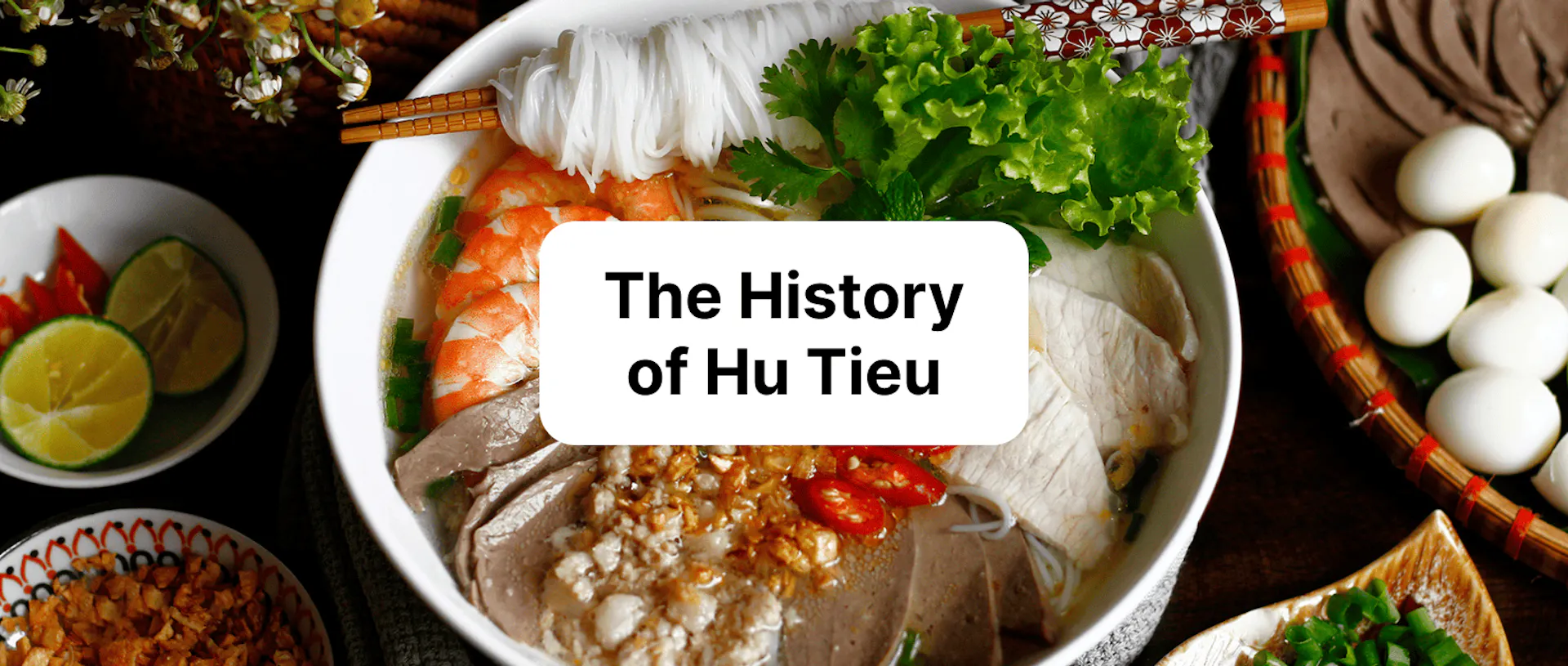
Traced through centuries of cross-border trade and migration, the history of Hu Tieu is a fascinating story of cultural synthesis. Originating from Teochew and Hokkien merchant traditions, the dish evolved through Cambodian influences around Phnom Penh before flourishing across the Mekong Delta. Today, this iconic noodle soup stands as a legendary staple of Saigon’s street food culture, blending rich bone broths, delicate rice noodles, and diverse regional flavors into an unforgettable symbol of Southern Vietnamese culinary heritage.
On this page
As dawn breaks over the bustling canals of the Mekong Delta and the sunlit avenues of Saigon, the air fills with a deeply seductive, aromatic perfume: the sweet, rich steam of pork bones simmering for hours alongside dried squid, rock sugar, and roasted shallots. Sitting in a low plastic chair as a vendor blanches translucent rice noodles and douses them in boiling, crystal-clear broth is a sacred morning ritual across Southern Vietnam. Yet, for culinary historians and food anthropologists, a steaming bowl of hủ tiếu offers far more than an extraordinary breakfast. To trace the history of Hu Tieu is to embark on a multi-century journey through the complex geopolitical, mercantile, and cultural currents of Southeast Asia. When asking where is Hu Tieu from and seeking the true origin of Hu Tieu, one uncovers a living architectural map of human migration. This iconic dish represents a centuries-old gastronomic synthesis, seamlessly weaving together the noodle-making heritage of Chinese traders, the indigenous ingredients of the Khmer Kingdom, and the brilliant culinary ingenuity of southern Vietnamese cooks into a unified, world-class comfort food.
The Roots Across Borders – Where is Hu Tieu From and Early Migrations
Tracing the Teochew and Hokkien Merchant Diaspora
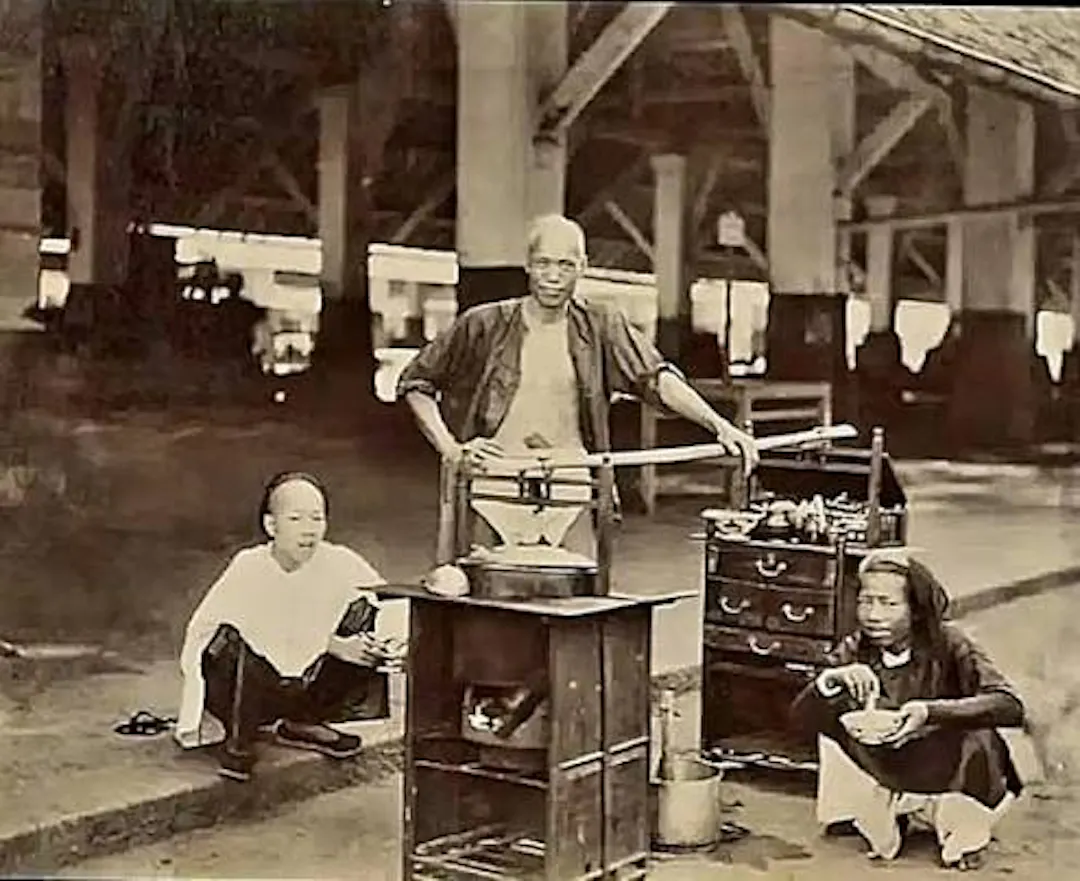
To understand the foundational Chinese influence on Hu Tieu, one must examine the vast maritime migration networks originating from China’s southern coastal provinces during the late Qing Dynasty. Throughout the nineteenth and early twentieth centuries, thousands of Chinese merchants, laborers, and refugees—known collectively in Vietnam as người Hoa—embarked on junk ships from the Chaoshan region of Guangdong and the coastal ports of Fujian. These Teochew (Triều Châu) and Hokkien migrants settled in key trading enclaves throughout the Indochinese Peninsula, bringing with them a revered culinary tradition: the art of crafting flat, steamed rice noodles known in the Teochew dialect as kway teow (粿條). In their native homeland, these rice sheets were typically sliced into wide ribbons and served in light, savory pork broths garnished with simple cuts of offal, minced pork, and fresh scallions. As these mercantile communities established roots across foreign ports, their foundational noodle craft adapted to local agricultural conditions, laying the physical groundwork for a centuries-long culinary evolution.
The Cambodian Interlude: Phnom Penh’s Culinary Catalyst
Before these Chinese noodle traditions crossed into the southern delta of Vietnam, they underwent a pivotal regional transformation within the Kingdom of Cambodia, establishing a crucial chapter in Hu Tieu history. A significant portion of the Teochew diaspora settled along the fertile banks of the Mekong and Tonle Sap rivers, particularly around the thriving trade capital of Phnom Penh. Within these urban market centers, Chinese noodle masters interacted directly with Khmer agricultural products, local palates, and Southeast Asian aromatic profiles. The traditional Teochew kway teow evolved into kuy teav, a distinct regional dish characterized by a lighter, intensely aromatic pork bone broth subtly elevated by the addition of dried marine life, local herbs, and fresh river seafood. This Cambodian interlude proved to be a critical catalyst; it softened the heavier, more medicinal profiles of traditional southern Chinese broths, introducing a delicate, sweet-savory balance that would become the defining hallmark of the dish as it prepared to migrate across national borders.
Entering the Southern Gateway – The Evolution in the Mekong Delta
Adaptation in the Delta Frontier
As commercial trade routes expanded during the late nineteenth and early twentieth centuries, families from both the Chinese diaspora and Cambodian trading hubs migrated eastward into the vast, waterlogged marshlands of Vietnam's southern frontier, known historically as Nam Bộ. It was within this lush, agrarian borderland that the dish officially transformed into hủ tiếu, beginning a crucial phase in the history of Vietnamese noodle soup. Southern Vietnamese cooks eagerly embraced the dish, adapting it to match the abundant natural resources of the Mekong Delta. The broth (nước lèo) underwent a profound transformation: cooks began simmering massive quantities of marrow-rich pork bones alongside golden rock sugar, charred aromatics, and dried squid or shrimp harvested from the Gulf of Thailand. This unique addition of sun-dried marine elements imparted a deep, umami-rich sweetness that resonated with the southern Vietnamese preference for bold, sweet, and aromatic flavor profiles, establishing the foundation of traditional Hu Tieu recipe history.
Regional Variations: From My Tho to Sa Dec
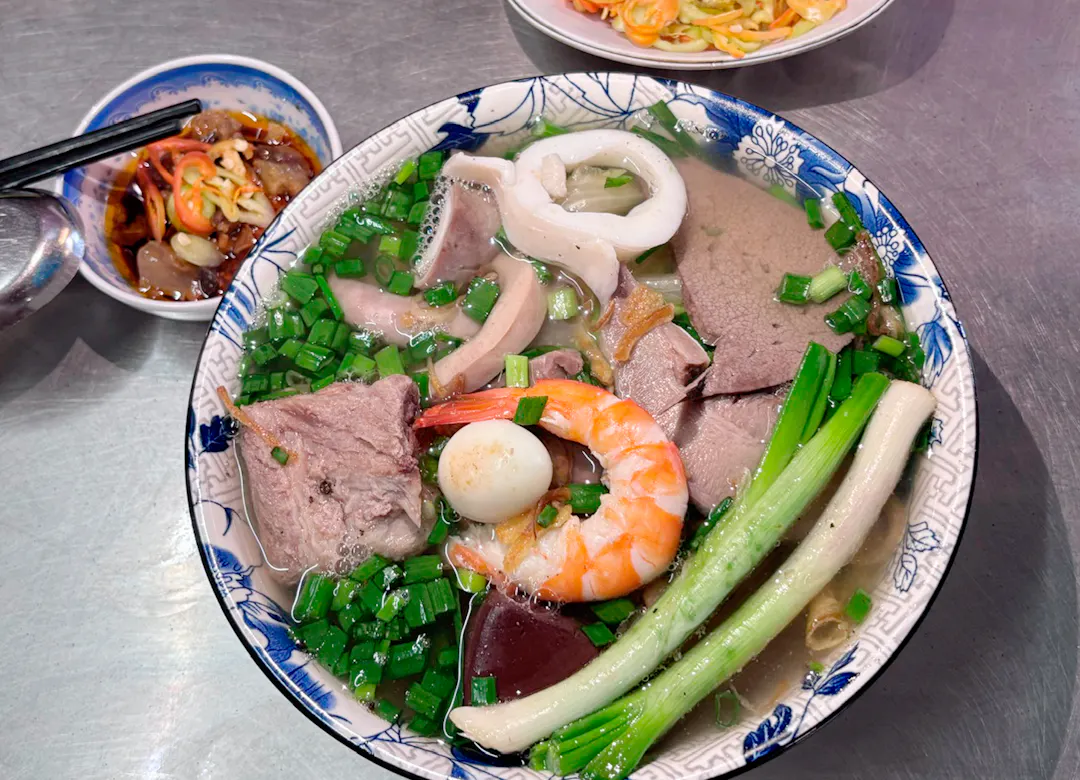
As the dish established deep roots throughout the provinces of the delta, distinct evolutionary branches began to emerge, each defined by localized agricultural processing techniques and noodle starch preferences. In the historic trading port of My Tho, local artisans developed hủ tiếu Mỹ Tho, famous for its unique noodle texture. Craftsmen utilized local high-starch rice varieties, drying the extruded rice sheets under the hot delta sun to produce thin, firm, and remarkably springy noodles that retained an elastic bite even when submerged in piping-hot broth. Conversely, in the fertile province of Dong Thap, the master millers of Sa Dec created hủ tiếu Sa Đéc, utilizing the region's pure, mineral-rich river water to craft wider, opaque noodles infused with tapioca starch, resulting in a softer, delightfully chewy texture. These distinct provincial styles proved that hủ tiếu was no longer a static foreign import, but a dynamic, highly adaptable canvas reflecting the terroir and agricultural pride of the southern delta.
The Saigon Renaissance – How Hu Tieu Became Famous
Urban Migration and Post-War Street Food Culture
The true tipping point in how Hu Tieu became famous in Southern Vietnam occurred during the mid-twentieth century, as rapid urbanization drew thousands of rural families and regional cooks from the delta into the expanding metropolis of Saigon. Within the electric, fast-paced environment of the southern capital, hủ tiếu evolved from a provincial staple into the undisputed king of municipal street food. The city's dense neighborhood grids and round-the-clock working culture created insatiable demand for quick, nourishing, and affordable meals. Family-run wooden pushcarts (xe hủ tiếu), often adorned with hand-painted glass panels depicting Chinese folk heroes or traditional delta scenes, set up on every major street corner. Operating late into the humid tropical night, these mobile vendors played a central role in the evolution of Hu Tieu in Saigon, feeding everyone from wealthy merchants and literary figures to midnight factory workers and cyclos drivers.
The Birth of Hu Tieu Nam Vang and Dry Style Variations
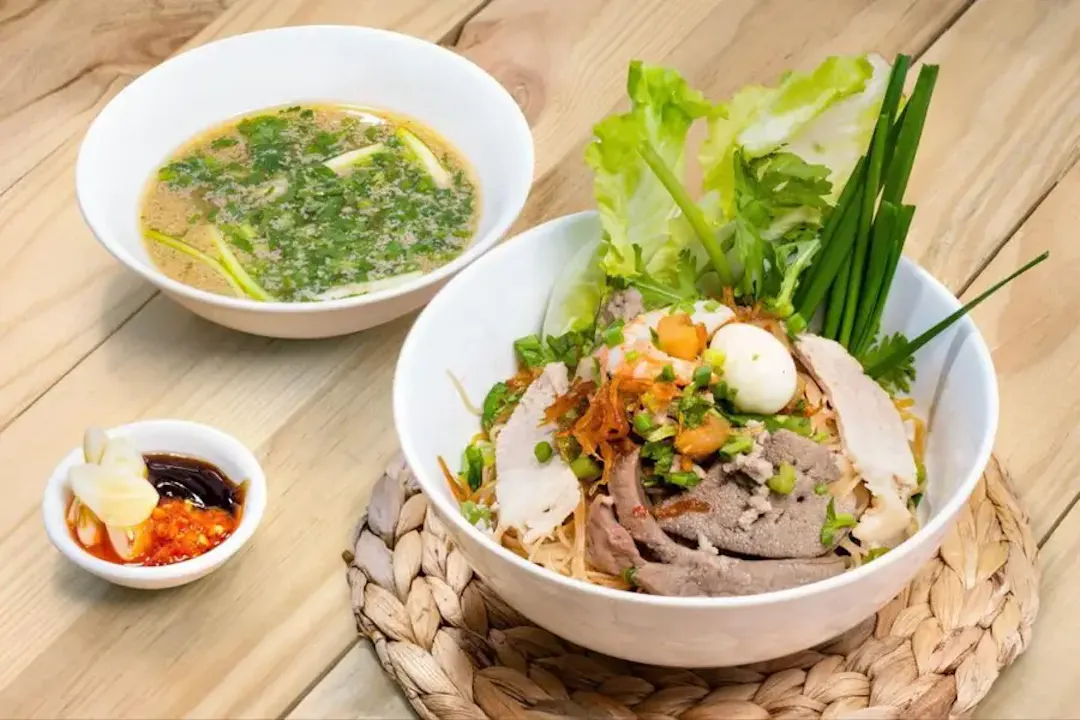
The urban culinary landscape of Saigon fostered intense gastronomic competition, leading to the creation of iconic sub-varieties that captured the public imagination. The most famous among these was hủ tiếu Nam Vang, a direct homage to the dish’s Cambodian heritage (Nam Vang being the Vietnamese name for Phnom Penh). Analyzing Cambodian Hu Tieu vs Vietnamese Hu Tieu reveals how Saigon chefs elevated the original kuy teav into a luxurious, multi-textured masterpiece. The broth was refined into a crystal-clear, intensely savory elixir, while the bowl was laden with a lavish array of toppings: minced pork, thinly sliced pork liver and heart, poached tiger prawns, quail eggs, and fresh garlic chives. Furthermore, Saigon vendors pioneered the dry variation (hủ tiếu khô), where the blanched noodles are tossed in an addictive, glossy dark sauce made from soy sauce, oyster sauce, sesame oil, and fried shallots, served alongside a separate bowl of steaming broth. This innovation allowed diners to experience contrasting textures and temperatures in a single meal, cementing the dish's status as a municipal obsession.
Culinary Craftsmanship and Modern Preservation
The Alchemy of Broth Simmering and Noodle Texture
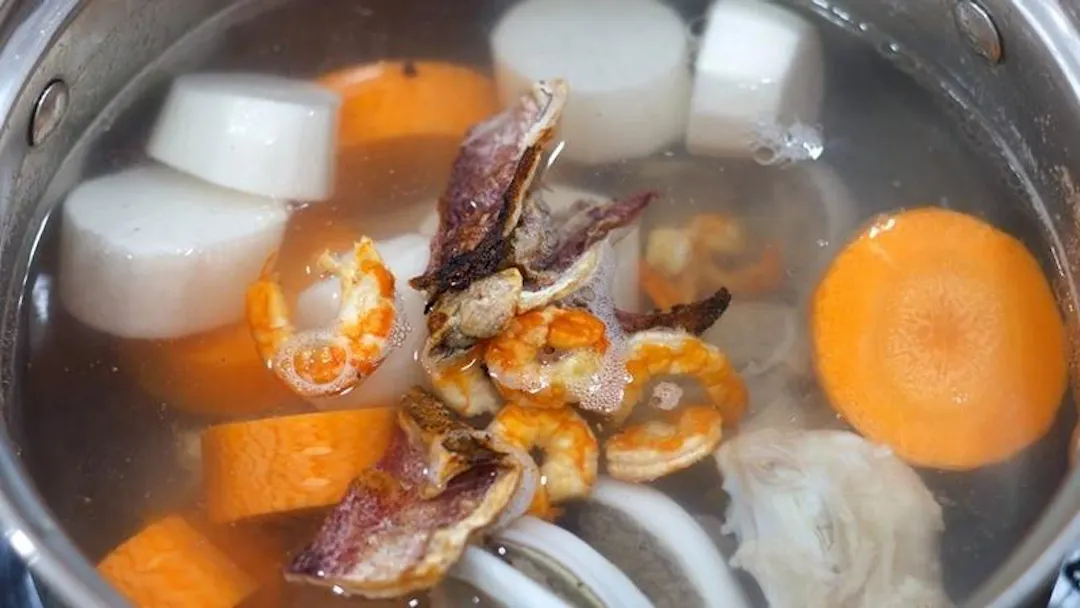
At its highest level of execution, crafting hủ tiếu is an exacting science requiring decades of disciplined apprenticeship and an obsessive devotion to ingredient selection. The foundational pillar of elite craftsmanship lies in the multi-hour preparation of the broth (nước lèo). Master broth makers begin before midnight, meticulously blanching pork leg bones, rack bones, and pork necks to remove all impurities. These bones are then simmered for six to eight hours over low, steady heat alongside sun-dried squid, dried earthworms (sá sùng), charred daikon radish, and rock sugar, carefully skimming the surface to ensure absolute clarity and a sweet, pristine finish. Equally critical is the art of noodle blanching (trụng bánh); the artisan must submerge the delicate rice strands in boiling water for precisely five to seven seconds before shaking them dry and instantly tossing them in fragrant, golden fried garlic oil. This step coats every strand, preventing sticking and imparting a rich, toasted aroma that elevates the entire dish.
Cultural Heritage in the Modern Era
In an era of rapid modernization and global fast-food saturation, the preservation of traditional hủ tiếu preparation represents a vital stand for cultural heritage across Non nước Việt Nam. Multi-generational families in Ho Chi Minh City and the Mekong Delta continue to operate century-old noodle shops, guarding their secret broth recipes and hand-milling techniques with immense familial pride. While modern commercial kitchens sometimes resort to artificial flavor enhancers or pressure cookers to accelerate production, discerning diners consistently seek out heritage establishments that honor the slow, labor-intensive methods of the past. Culinary historians, food writers, and international researchers increasingly recognize that this humble bowl of noodles is a precious cultural artifact—a living testament to the resilience, adaptability, and artistic brilliance of the diverse ethnic communities that built the vibrant cultural tapestry of Southern Vietnam.
Conclusion
Ultimately, exploring the history of Hu Tieu reveals far more than the origin story of a beloved street food; it uncovers a centuries-old narrative of migration, cultural convergence, and culinary genius. From its humble origins as a simple Teochew merchant snack, through its transformative Cambodian interlude and its ultimate refinement in the Mekong Delta and Saigon, hủ tiếu stands as a triumphant masterpiece of Southeast Asian culinary history. Every steaming bowl served today honors the generational legacy of the Chinese, Khmer, and Vietnamese cooks who meticulously shaped its identity. As you lower your spoon into the crystal-clear broth, lift the springy rice noodles, and savor the complex harmony of sweet pork, dried seafood, and aromatic herbs, you are actively participating in a rich, living tradition of shared human heritage.
Read more: Hủ Tiếu Gõ
Frequently Asked Questions
Where did Hu Tieu originally come from?
Hu Tieu originated from the Teochew (Triều Châu) and Hokkien Chinese merchant communities in Guangdong and Fujian provinces. These migrant traders brought their traditional flat rice noodle creation, kway teow, to Southeast Asia during the nineteenth century, laying the foundation for the dish we know today.
How did Cambodian culture influence the development of Hu Tieu?
Before reaching Vietnam, Chinese migrants settled extensively around Phnom Penh, Cambodia, adapting their traditional noodle soup to local ingredients and palates. This fusion produced kuy teav, which introduced dried marine elements, lighter bone broths, and fresh herbs. When this style migrated into Southern Vietnam, it became known as Hu Tieu Nam Vang (Phnom Penh-style Hu Tieu).
What is the difference between Hu Tieu and Pho?
While both are iconic Vietnamese noodle soups, they differ significantly in origin, broth base, and noodle texture. Pho originates from Northern Vietnam and features a beef or chicken broth infused with warm spices like star anise, cinnamon, and cardamon, paired with flat, soft rice noodles. Hu Tieu hails from the South, highlighting a clear, sweet-savory pork bone and dried seafood broth served with thinner, chewier rice or tapioca noodles and a diverse array of toppings like pork liver, quail eggs, and shrimp.
Why are the noodles in My Tho and Sa Dec Hu Tieu different?
The distinction comes down to regional agricultural starch processing and local water sources in the Mekong Delta. Hu Tieu Mỹ Tho uses clear, high-starch rice dried under the delta sun to create thin, firm noodles with a distinct springy bite. Hu Tieu Sa Đéc incorporates tapioca starch and the mineral-rich river water of Dong Thap province, producing wider, opaque noodles with a softer, chewier texture.
What is "Hu Tieu Kho" (Dry Style Hu Tieu)?
Hu Tieu Kho is a popular modern variation pioneered by vendors in Saigon where the blanched noodles are served in a separate bowl, tossed in a rich, glossy savory-sweet sauce made from soy sauce, oyster sauce, and fried garlic oil. The aromatic pork and seafood broth is served alongside in a small bowl, allowing diners to enjoy contrasting textures and temperatures in a single meal.
Advertising box