
What Is Bún Bò Huế? A Guide to Vietnam's Spicy Noodle Soup
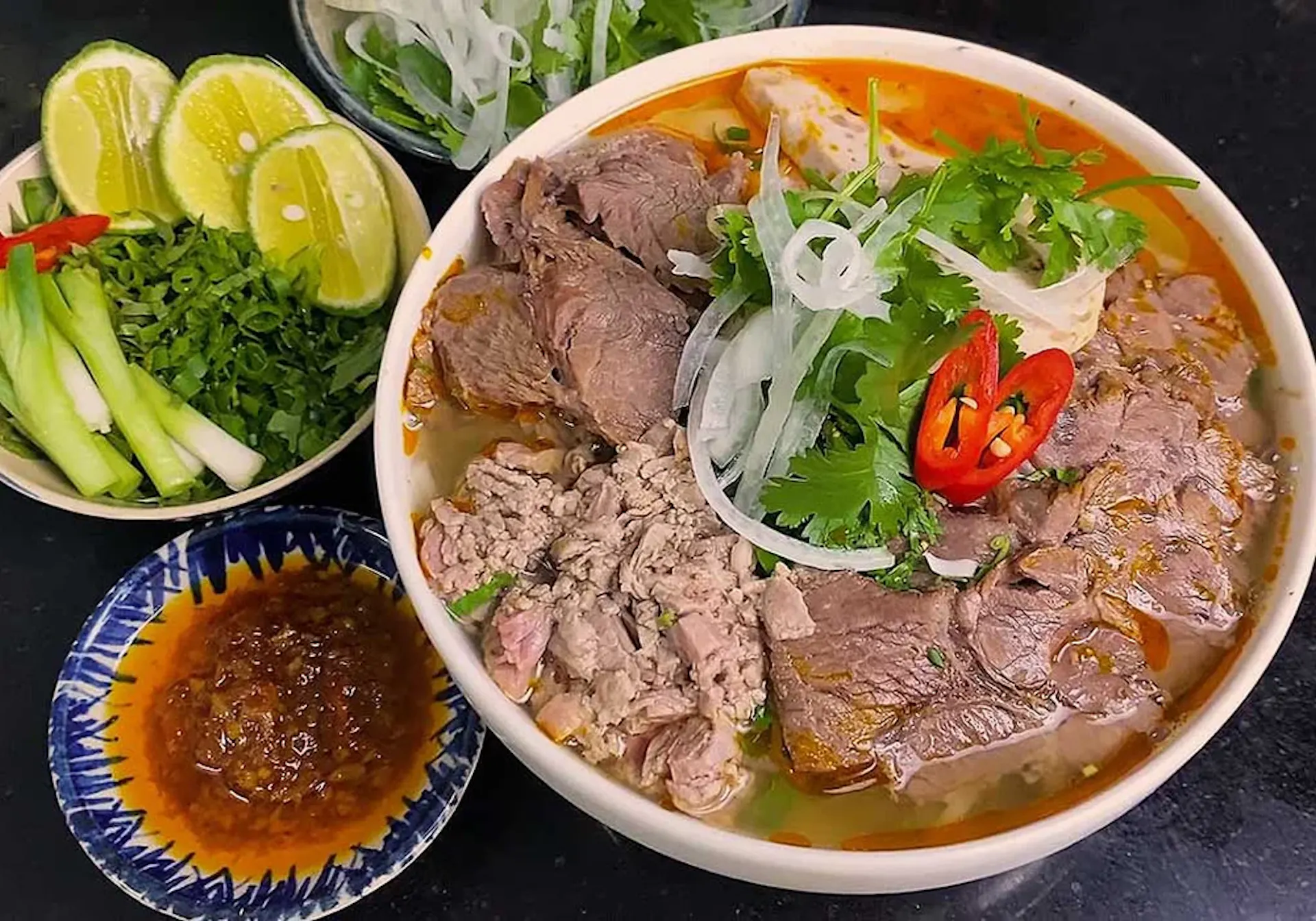
Bún Bò Huế is a spicy Vietnamese noodle soup associated with Huế, the former imperial capital of Vietnam. Made with thick round rice noodles, beef and pork, lemongrass, chili, and fermented shrimp paste, it is known for its rich broth and bold Central Vietnamese flavors. Common toppings include beef shank, pork hock, Vietnamese sausage, fresh herbs, banana blossom, and bean sprouts. Discover the history, ingredients, flavors, regional variations, and traditions behind one of Vietnam's most distinctive noodle soups.
On this page
- What Is Bún Bò Huế?
- What Does Bún Bò Huế Taste Like?
- What Is Bún Bò Huế Made Of?
- What Is Bún Bò Huế Broth Made Of?
- What Makes Bún Bò Huế Different From Phở?
- Bún Bò Huế History and Origin
- Popular Bún Bò Huế Toppings
- Regional Variations of Bún Bò Huế
- How to Eat Bún Bò Huế
- Where to Try Bún Bò Huế in Vietnam
- Bún Bò Huế and Hue Food Culture
- Conclusion
Bún Bò Huế is a spicy Vietnamese noodle soup associated with Huế, the former imperial capital of Vietnam. The dish combines thick, round rice noodles with beef and pork in a rich broth flavored with lemongrass, chili, and fermented shrimp paste known as mắm ruốc. Fresh herbs, banana blossom, bean sprouts, lime, and other toppings add contrasting textures and flavors.
Known for its bold, savory, aromatic, and spicy character, Bún Bò Huế is one of the most distinctive noodle dishes in Central Vietnamese cuisine. While it shares Vietnam's love of rice noodles and slow-cooked broths with Phở, its thicker noodles, lemongrass-forward aroma, fermented shrimp paste, and chili make it a very different experience.
What Is Bún Bò Huế?
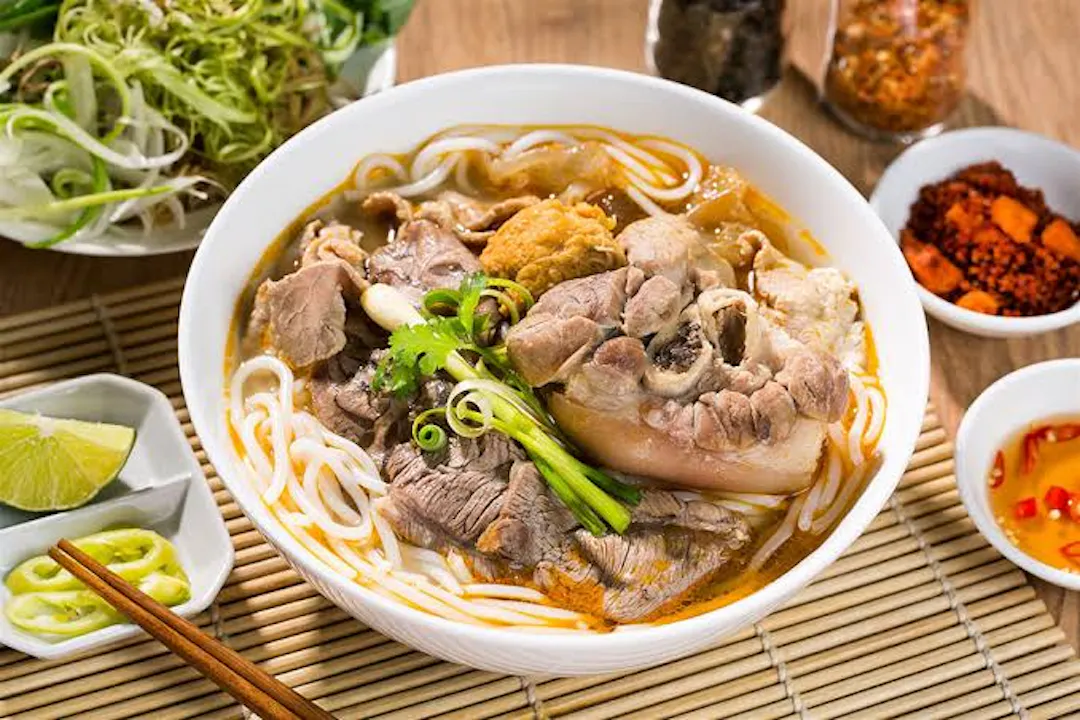
Bún Bò Huế is a traditional Vietnamese noodle soup from Huế in Central Vietnam. Its name can be translated roughly as “Huế beef noodles,” although traditional versions commonly contain both beef and pork.
The foundation of the dish is its flavorful broth. Beef and pork bones are simmered with aromatic ingredients, particularly lemongrass. Fermented shrimp paste adds savory depth, while chili oil or sa tế contributes the characteristic heat and red color associated with many bowls.
The noodles are another defining feature. Unlike the flat rice noodles used in Phở, Bún Bò Huế traditionally uses thick, round rice noodles with a firm, chewy texture.
A typical bowl may contain beef shank, pork hock, Vietnamese pork sausage, and other toppings. It is usually served with fresh herbs and vegetables, allowing diners to balance the richness and spice of the broth with crisp, fresh flavors.
What Does Bún Bò Huế Taste Like?
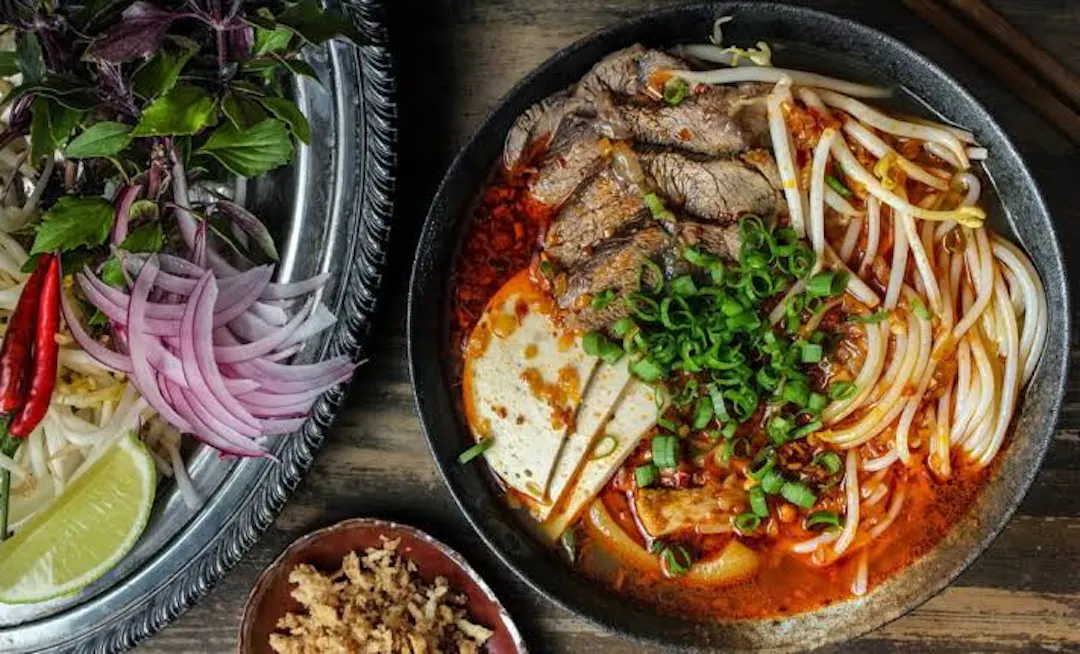
Bún Bò Huế has a much bolder flavor profile than many Vietnamese noodle soups. The broth is typically:
- Savory and rich from beef and pork bones
- Aromatic from lemongrass
- Spicy from chili oil or sa tế
- Deeply umami-rich from fermented shrimp paste
- Fresh and slightly acidic when herbs and lime are added
The fermented shrimp paste, mắm ruốc, gives the soup a distinctive savory aroma that separates it from Phở. It can be quite strong, but when used carefully it blends into the broth rather than dominating it.
Fresh herbs, banana blossom, bean sprouts, and lime provide a refreshing contrast to the rich soup. The result is a combination of spicy, savory, aromatic, fresh, and slightly tangy flavors in the same bowl.
The exact balance varies from restaurant to restaurant. Some versions are fiery, while others are relatively mild and allow diners to add chili according to their preference.
What Is Bún Bò Huế Made Of?
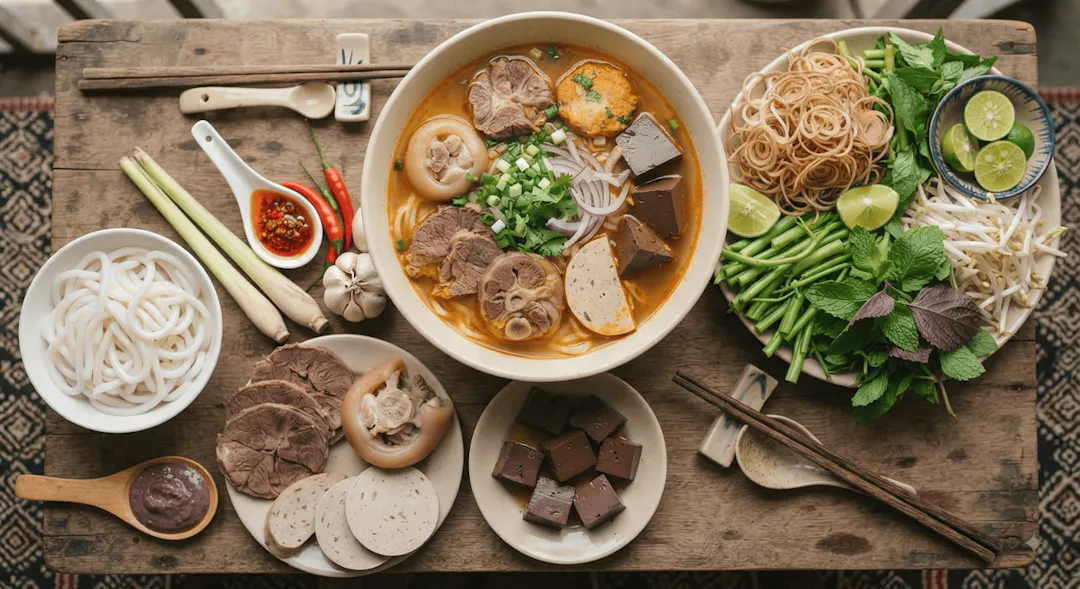
Although recipes vary throughout Vietnam, several ingredients define a traditional bowl.
Bún Bò Huế Noodles
Bún Bò Huế uses thick, round rice noodles. They are noticeably larger than the thin or flat rice noodles commonly associated with other Vietnamese noodle dishes. Their firm, slightly chewy texture allows them to hold up well in the rich broth and makes them an important part of the dish's identity.
Beef and Pork
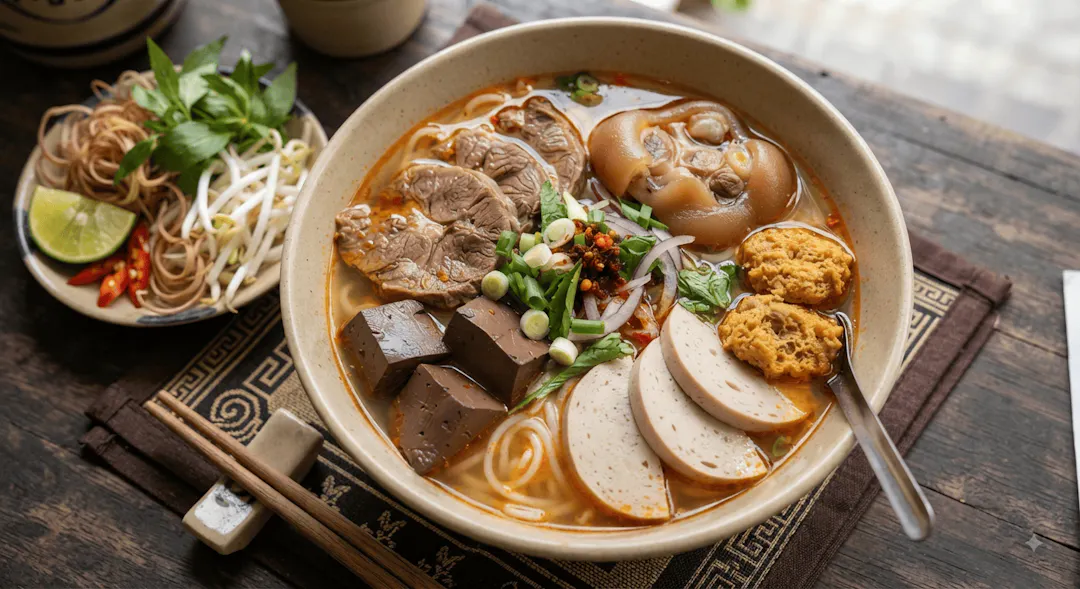
Despite its name, Bún Bò Huế commonly combines both beef and pork. Popular toppings include:
- Beef shank
- Pork hock
- Pork sausage
- Slices of beef
- Cooked pork blood
- Chả cua in some versions
Beef shank provides a meaty texture, while pork hock adds richness and gelatinous texture to the bowl.
Lemongrass
Lemongrass is one of the most recognizable aromas in Bún Bò Huế. Fresh lemongrass stalks are bruised or crushed before being simmered in the broth. Their citrusy fragrance helps balance the richness of the beef and pork stock and gives the soup its characteristic Central Vietnamese aroma.
Mắm Ruốc
Mắm ruốc is fermented shrimp paste commonly used in Central Vietnamese cooking. A small amount can add considerable savory depth to Bún Bò Huế. Its fermented aroma is one of the features that distinguishes the soup from more delicately flavored Vietnamese noodle dishes. Because mắm ruốc has a strong flavor, the amount used varies according to the recipe and the preferences of the cook.
Chili and Sa Tế
Chili provides much of Bún Bò Huế's signature heat. Many cooks prepare sa tế with chili, lemongrass, garlic, shallots, and oil. It can be incorporated into the broth or served separately so diners can adjust the spice level themselves. Annatto oil may also be used to give the broth a characteristic orange-red appearance.
Herbs and Vegetables
A bowl of Bún Bò Huế is usually accompanied by fresh vegetables and herbs. Common additions include:
- Banana blossom
- Bean sprouts
- Water spinach stems
- Mint
- Sawtooth herb
- Fresh lime
- Sliced onions and shallots
These ingredients provide crunch, freshness, and acidity that balance the rich broth.
What Is Bún Bò Huế Broth Made Of?
The broth is the heart of Bún Bò Huế. Traditional versions begin with beef and pork bones that are simmered to develop a rich and savory base. Lemongrass is added to provide its distinctive citrus aroma, while fermented shrimp paste contributes umami and depth. Chili oil or sa tế adds heat and color. Other seasonings can vary depending on the recipe and region.
The goal is not simply to make a spicy beef broth. A well-balanced Bún Bò Huế broth combines richness, saltiness, spice, aromatics, and fermented savory notes without allowing one flavor to overpower the others. This balance is one reason the dish remains so distinctive within Vietnam's diverse noodle-soup tradition.
What Makes Bún Bò Huế Different From Phở?
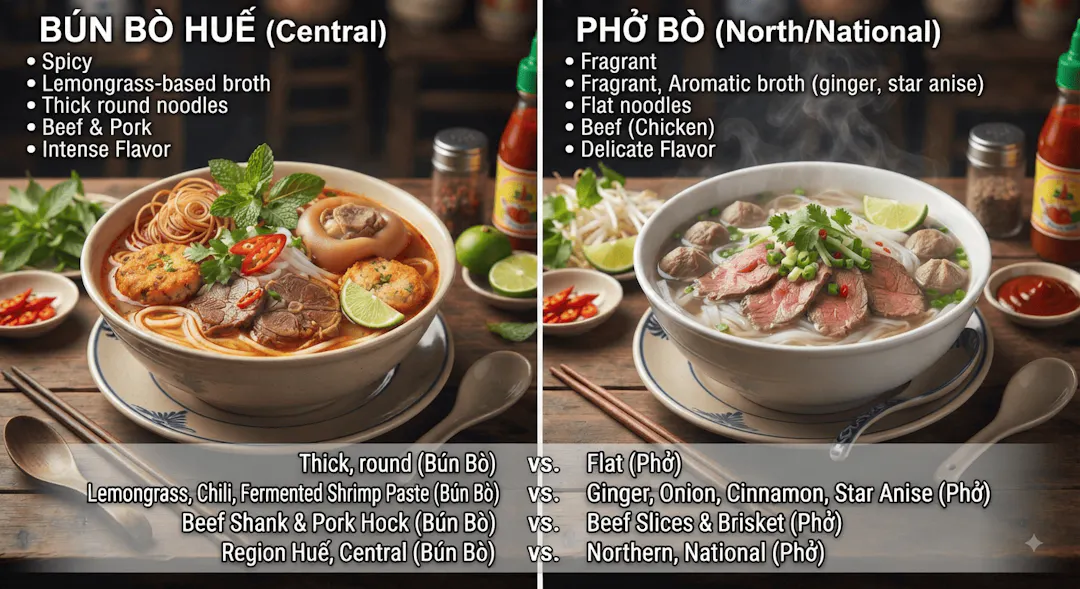
Bún Bò Huế and Phở are two of Vietnam's best-known noodle soups, but they have very different characteristics.
Noodles:
Bún Bò Huế uses thick, round rice noodles, while Phở uses flat rice noodles.
Broth:
Bún Bò Huế is strongly associated with lemongrass, chili, and fermented shrimp paste. Phở is typically characterized by an aromatic broth featuring ingredients such as ginger, onion, cinnamon, and star anise.
Flavor:
Bún Bò Huế is generally spicier, richer, and more intensely aromatic. Phở is usually more delicate, fragrant, and subtly sweet.
Meat:
Bún Bò Huế often combines beef and pork, including beef shank and pork hock. Phở is commonly served with beef or chicken.
Regional identity:
Bún Bò Huế is closely associated with Huế and Central Vietnam, while Phở has especially strong historical associations with northern Vietnam and is now enjoyed throughout the country.
Both dishes are important parts of Vietnamese food culture, but they offer very different culinary experiences.
Bún Bò Huế History and Origin
Bún Bò Huế is strongly associated with Huế, a city whose food culture developed alongside its long history as Vietnam's imperial capital. The exact origin of the dish is difficult to attribute to a single cook, restaurant, or historical event. Rather than viewing Bún Bò Huế as a dish with one clearly documented inventor, it is more useful to understand it as part of the culinary traditions that developed in and around Huế.
Huế cuisine is known for careful preparation, distinctive seasonings, and an appreciation for strong yet balanced flavors. Ingredients such as lemongrass, chili, fermented shrimp paste, rice noodles, beef, and pork became part of a regional food tradition that produced many distinctive dishes. Over time, Bún Bò Huế moved beyond Huế and became popular throughout Vietnam. Vietnamese communities overseas have also helped introduce the dish to diners around the world.
Today, a bowl of Bún Bò Huế connects modern diners with the food culture of Central Vietnam while continuing to evolve according to local ingredients and tastes.
Popular Bún Bò Huế Toppings
The toppings can vary depending on the restaurant and region.
Beef Shank
Thinly sliced beef shank is one of the most common meat toppings. Slow cooking makes it tender while retaining a satisfying meaty texture.
Pork Hock
Pork hock adds richness and a soft, gelatinous texture to the bowl. It is particularly popular in traditional versions of the soup.
Vietnamese Pork Sausage
Some bowls include chả lụa, a steamed Vietnamese pork sausage with a smooth and slightly firm texture.
Pork Blood
Cooked pork blood may be served in small cubes. Its soft texture makes it a distinctive topping for some traditional bowls.
Chả Cua
Some versions include chả cua, a savory crab-based mixture that may also contain pork and other ingredients. It is not present in every bowl but is a familiar topping in some interpretations of Bún Bò Huế.
Regional Variations of Bún Bò Huế
Bún Bò Huế has spread throughout Vietnam, and local restaurants often adapt the dish to regional preferences.
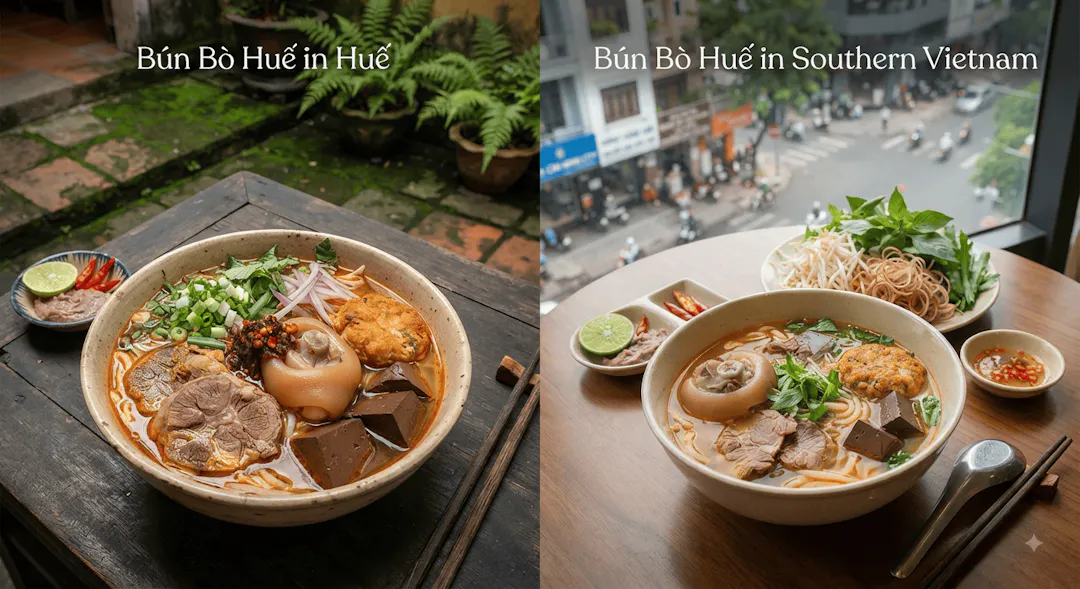
Bún Bò Huế in Huế
In Huế, diners can find versions that emphasize the dish's traditional Central Vietnamese character, including strong lemongrass aromas, fermented shrimp paste, chili, and thick rice noodles. The exact recipe varies between restaurants, and different cooks have their own approach to seasoning the broth and selecting toppings.
Bún Bò Huế in Southern Vietnam
Outside Huế, some restaurants adjust the soup to local tastes. Certain southern versions may have a slightly sweeter broth, a milder fermented shrimp-paste flavor, or a different selection of herbs and toppings. These variations do not make one version more authentic than another. They demonstrate how Vietnamese dishes adapt as they travel between regions.
How to Eat Bún Bò Huế
There is no complicated ritual for eating Bún Bò Huế. The best approach is to taste the soup first and then adjust it according to your preference. Start by tasting a spoonful of the broth to experience its balance of savory, aromatic, and spicy flavors. Then add some of the fresh vegetables and herbs. Banana blossom and bean sprouts provide crunch, while herbs add freshness.
A squeeze of lime can brighten the broth and balance its richness. If you enjoy spicy food, add extra chili or sa tế. Use chopsticks to pick up the noodles and meat while using a spoon for the broth. Combining noodles, meat, broth, herbs, and vegetables in each bite gives you the full range of textures and flavors.
Where to Try Bún Bò Huế in Vietnam
For travelers interested in experiencing the dish in its regional home, Huế is the natural place to start. Small local restaurants, neighborhood noodle shops, and traditional eateries throughout the city serve their own interpretations of Bún Bò Huế. Trying more than one restaurant can reveal differences in broth, spice level, noodles, meat, and toppings.
Bún Bò Huế is also widely available in other Vietnamese cities, including Ho Chi Minh City, Hanoi, Da Nang, and Nha Trang. When looking for a good bowl, busy local restaurants with a steady stream of customers can be a useful starting point. High turnover generally means the broth and noodles are prepared regularly throughout the day.
Bún Bò Huế and Hue Food Culture
Bún Bò Huế is more than a popular noodle soup. It represents the distinctive culinary character of Huế and Central Vietnam. Huế's food traditions are often associated with carefully balanced flavors, aromatic herbs, chili, fermented ingredients, and meticulous preparation. Bún Bò Huế brings many of these characteristics together in a single bowl.
The combination of thick rice noodles, slow-cooked meat, lemongrass, chili, mắm ruốc, fresh vegetables, and herbs creates a dish that is immediately recognizable. For travelers exploring Vietnam through food, trying Bún Bò Huế in Huế provides an opportunity to experience a regional cuisine that is different from the more internationally familiar flavors of Phở and other Vietnamese dishes.
Conclusion
Bún Bò Huế is one of Vietnam's most distinctive regional noodle soups. Closely associated with Huế and Central Vietnam, it combines thick round rice noodles, beef and pork, lemongrass, chili, fermented shrimp paste, and fresh herbs in a deeply flavored bowl of soup.
Its bold combination of savory broth, spicy chili, aromatic lemongrass, chewy noodles, tender meat, and fresh vegetables makes it very different from Phở and other Vietnamese noodle dishes. Whether you try a traditional bowl in Huế or discover a local interpretation elsewhere in Vietnam, Bún Bò Huế offers a flavorful introduction to the culinary traditions of Central Vietnam.
Read more: Bún Bò Huế: Vietnam's Spicy Beef Noodle Soup

By Roy Trinh
Editor
Roy Trinh is a travel writer and destination expert at Go Visit Vietnam, dedicated to helping travelers discover the beauty, culture, and diversity of Vietnam. Through well-researched travel guides, practical itineraries, local insights, and authentic recommendations, Roy shares valuable information to inspire memorable journeys across the country. From vibrant cities and breathtaking landscapes to regional cuisine and cultural heritage, every guide is created to help visitors experience Vietnam with confidence and curiosity.
Frequently Asked Questions
What is Bún Bò Huế?
Bún Bò Huế is a spicy Vietnamese noodle soup associated with Huế. It features thick round rice noodles, beef and pork, and a rich broth flavored with lemongrass, chili, and fermented shrimp paste.
Is Bún Bò Huế spicy?
Traditionally, Bún Bò Huế has a noticeable level of chili heat. However, the spice level varies between restaurants, and some versions allow diners to add chili according to their preference.
What does Bún Bò Huế taste like?
Bún Bò Huế is savory, spicy, aromatic, and rich, with prominent flavors of lemongrass and fermented shrimp paste. Fresh herbs, vegetables, and lime add freshness and acidity.
What is Bún Bò Huế made of?
Common ingredients include thick rice noodles, beef, pork, beef or pork bones, lemongrass, chili, fermented shrimp paste, herbs, banana blossom, bean sprouts, and lime.
What noodles are used in Bún Bò Huế?
Bún Bò Huế traditionally uses thick, round rice noodles. They are larger and more cylindrical than the flat rice noodles commonly used for Phở.
What is mắm ruốc?
Mắm ruốc is a fermented shrimp paste commonly used in Central Vietnamese cuisine. It adds a distinctive savory and fermented flavor to Bún Bò Huế broth.
Is Bún Bò Huế different from Phở?
Yes. Bún Bò Huế uses thicker round noodles and typically has a spicier, more intensely aromatic broth flavored with lemongrass and fermented shrimp paste. Phở uses flat rice noodles and generally has a more delicate, spice-driven broth.
Where did Bún Bò Huế originate?
Bún Bò Huế is associated with Huế in Central Vietnam. Its exact historical origin is difficult to trace to a single inventor, but the dish has become one of the defining foods of Huế cuisine.
What meat is used in Bún Bò Huế?
Traditional bowls may include beef shank, pork hock, pork sausage, and other beef or pork toppings. Some versions also include cooked pork blood or chả cua.
Advertising box