
What Is Hu Tieu? Vietnam's Southern Noodle Soup Explained
Hu Tieu (Hủ Tiếu) is a beloved noodle dish from southern Vietnam, especially popular in Ho Chi Minh City and the Mekong Delta. It combines thin, chewy rice or tapioca noodles with a clear, savory-sweet broth and toppings such as pork, shrimp, quail eggs, herbs, and vegetables. Influenced by the region’s diverse culinary traditions, Hu Tieu comes in several styles, including Hu Tieu My Tho, Hu Tieu Nam Vang, and dry Hu Tieu. Discover its ingredients, flavors, history, and traditions.
On this page
- What Is Hu Tieu?
- What Does Hu Tieu Taste Like?
- What Are the Main Hu Tieu Ingredients?
- How Is Hu Tieu Broth Made?
- Hu Tieu vs. Pho: What's the Difference?
- Where Did Hu Tieu Come From?
- Popular Types of Hu Tieu in Vietnam
- Hu Tieu Soup vs. Dry Hu Tieu
- How to Eat Hu Tieu Like a Local
- Where to Try Hu Tieu in Vietnam
- Why Is Hu Tieu Important to Southern Vietnamese Food Culture?
- Final Thoughts
If you are exploring Vietnamese food beyond pho, Hu Tieu (Hủ Tiếu) is one of the most important dishes to try. This popular southern Vietnamese noodle soup combines thin, chewy noodles with a clear, savory-sweet broth and toppings such as pork, shrimp, quail eggs, herbs, and vegetables.
Hu Tieu is especially associated with Ho Chi Minh City and the Mekong Delta, where it is enjoyed as a breakfast, lunch, or late-night meal. Unlike pho, which is often centered around beef or chicken, Hu Tieu commonly brings together pork and seafood in the same bowl.
From the famous Hu Tieu My Tho to Hu Tieu Nam Vang and dry-style Hu Tieu, the dish reflects the multicultural history and abundant ingredients of southern Vietnam.
What Is Hu Tieu?
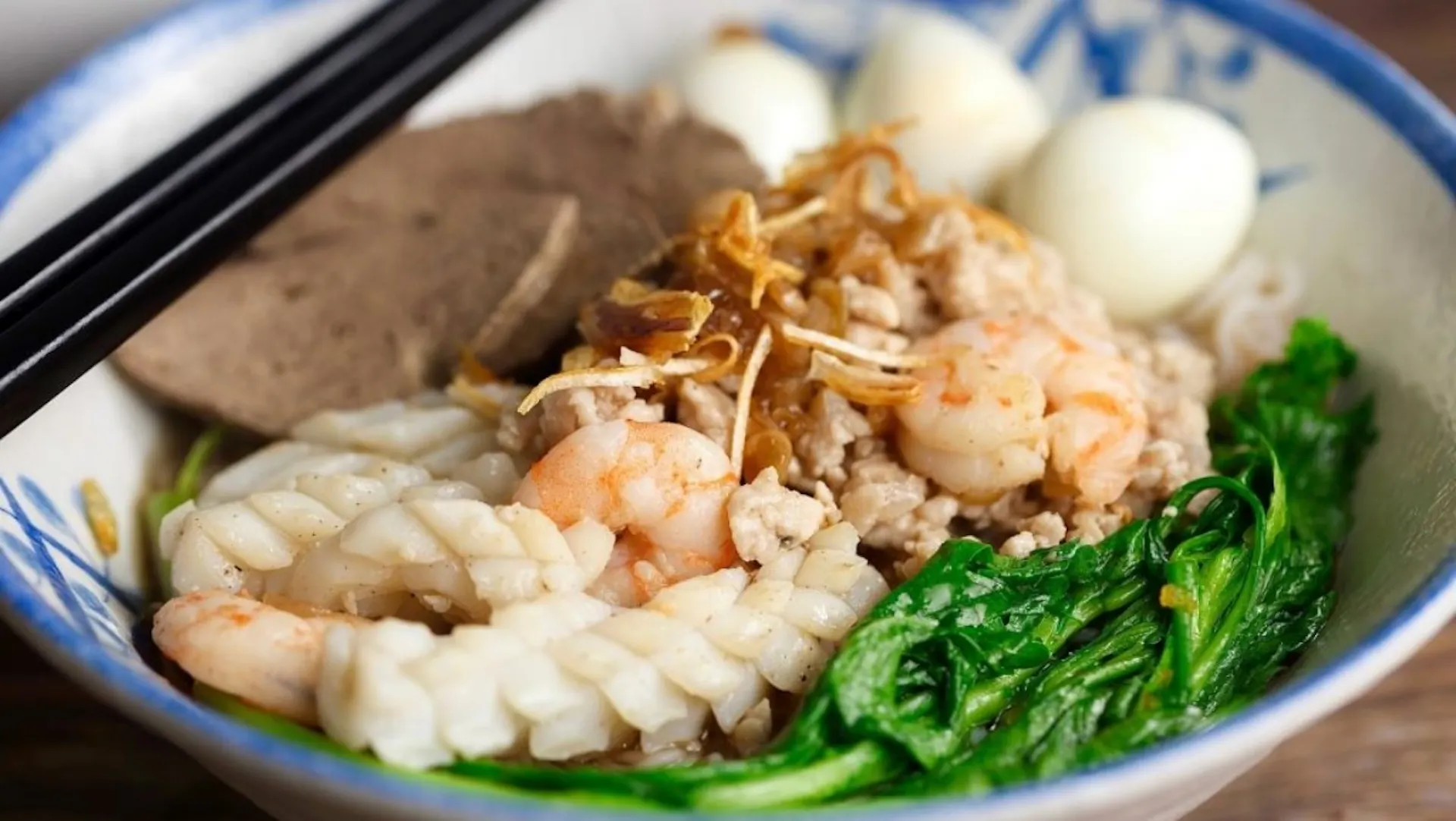
Hu Tieu is a southern Vietnamese noodle dish made with thin rice or tapioca noodles, a clear broth, meat or seafood, and fresh herbs and vegetables.
The dish is particularly popular throughout southern Vietnam, including Ho Chi Minh City, My Tho, Sa Dec, and other communities across the Mekong Delta.
A typical bowl may contain:
- Thin rice or tapioca noodles
- Pork
- Shrimp
- Quail eggs
- Pork offal, depending on the style
- Bean sprouts
- Chives or scallions
- Chinese celery
- Fried garlic or pork cracklings
- Clear pork-based broth
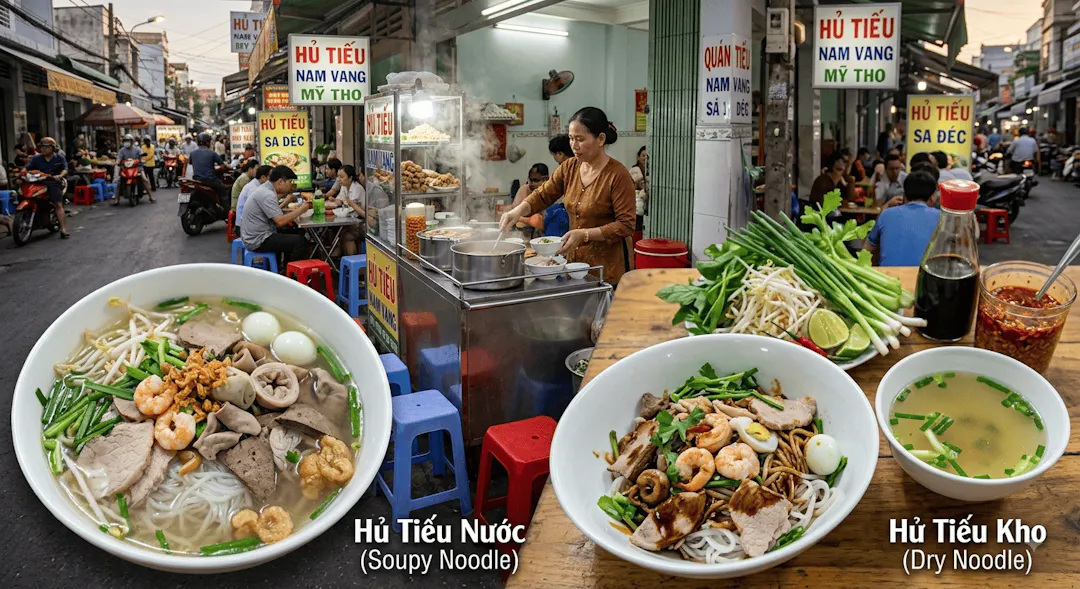
Hu Tieu can be served as a soupy noodle bowl or as Hu Tieu Kho, a dry version in which the noodles are mixed with a savory sauce while the broth is served separately.
What makes Hu Tieu distinctive is its combination of chewy noodles, lightly sweet broth, savory meats, seafood, and fresh vegetables.
What Does Hu Tieu Taste Like?
Hu Tieu generally has a clear, savory-sweet and umami-rich flavor.
The broth is usually lighter and more transparent than many heavily seasoned noodle soups. Pork bones provide body, while dried shrimp, dried squid, daikon, onions, and other aromatics can add additional depth.
The flavor profile often combines:
- Savory: pork and fish sauce
- Sweet: rock sugar and natural sweetness from vegetables
- Umami: pork bones and dried seafood
- Fresh: herbs, bean sprouts, and chives
- Aromatic: fried garlic and scallions
- Bright and spicy: lime and fresh chili
The noodles add another important element. Depending on the style, they can be soft and delicate or translucent, springy, and chewy.
This contrast between a light broth and substantial toppings is one of the reasons Hu Tieu is so satisfying.
What Are the Main Hu Tieu Ingredients?
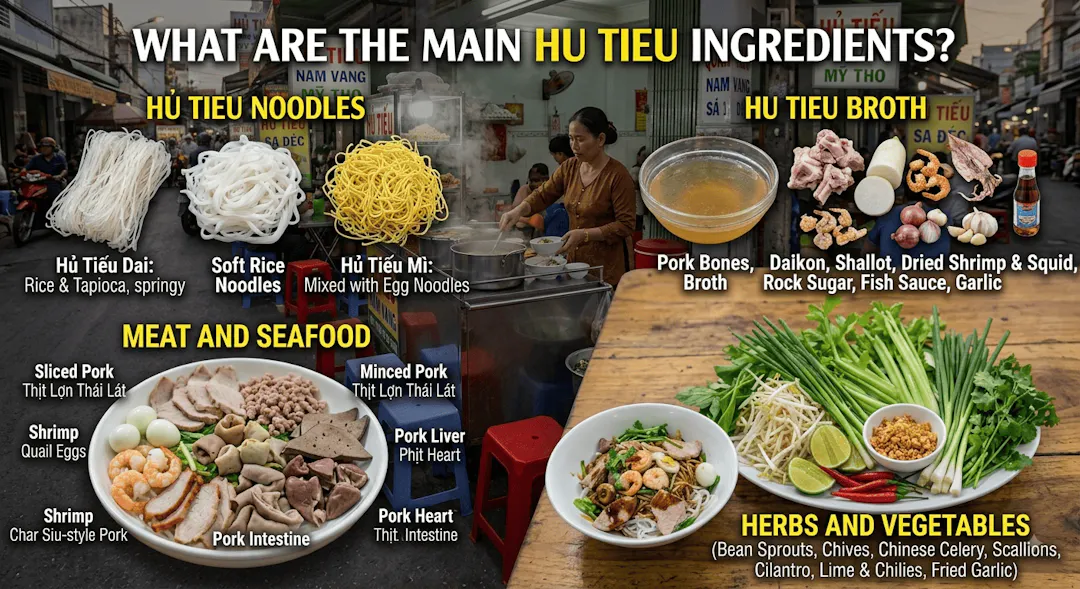
Although recipes vary throughout southern Vietnam, most versions are built around four main components: noodles, broth, toppings, and fresh accompaniments.
Hu Tieu Noodles
Hu Tieu noodles are usually thinner than the flat rice noodles used for pho. One popular variety is hủ tiếu dai, made with rice flour and tapioca starch. The addition of tapioca gives the noodles a translucent appearance and a firm, springy texture.
Other versions use softer rice noodles, while hủ tiếu mì combines Hu Tieu with yellow egg noodles. The choice of noodle can significantly change the eating experience.
Hu Tieu Broth
The broth is usually based on pork bones simmered with aromatic ingredients.
Common ingredients include:
- Pork bones
- Daikon
- Onion or shallots
- Dried shrimp
- Dried squid
- Rock sugar
- Fish sauce
- Garlic
The broth is generally kept clear rather than thick or creamy. Its subtle sweetness is characteristic of southern Vietnamese cooking.
Meat and Seafood
A bowl of Hu Tieu can contain a generous variety of toppings.
Common choices include:
- Sliced pork
- Minced pork
- Pork liver
- Pork heart
- Pork intestine
- Shrimp
- Quail eggs
- Char siu-style pork
The exact combination depends on the restaurant and regional style.
Herbs and Vegetables
Fresh ingredients help balance the richness of the meat and broth.
Typical accompaniments include:
- Bean sprouts
- Chinese celery
- Chives
- Scallions
- Cilantro
- Lime
- Fresh chili
- Fried garlic
These ingredients add freshness, crunch, acidity, and aroma to each bite.
How Is Hu Tieu Broth Made?
A flavorful Hu Tieu broth usually begins with pork bones. The bones are cleaned and blanched before being simmered gently in fresh water. This helps produce a cleaner and clearer stock.
Daikon, onions, and other aromatics are added during cooking. Some traditional recipes also use dried shrimp or dried squid to give the broth a deeper seafood umami.
Rock sugar is commonly used to provide a subtle sweetness rather than making the broth taste like dessert.
The goal is a broth that is:
clear + savory + lightly sweet + aromatic + umami-rich.
Unlike some strongly spiced Vietnamese noodle soups, Hu Tieu broth usually allows the natural flavors of the pork and seafood to remain prominent.
Hu Tieu vs. Pho: What's the Difference?
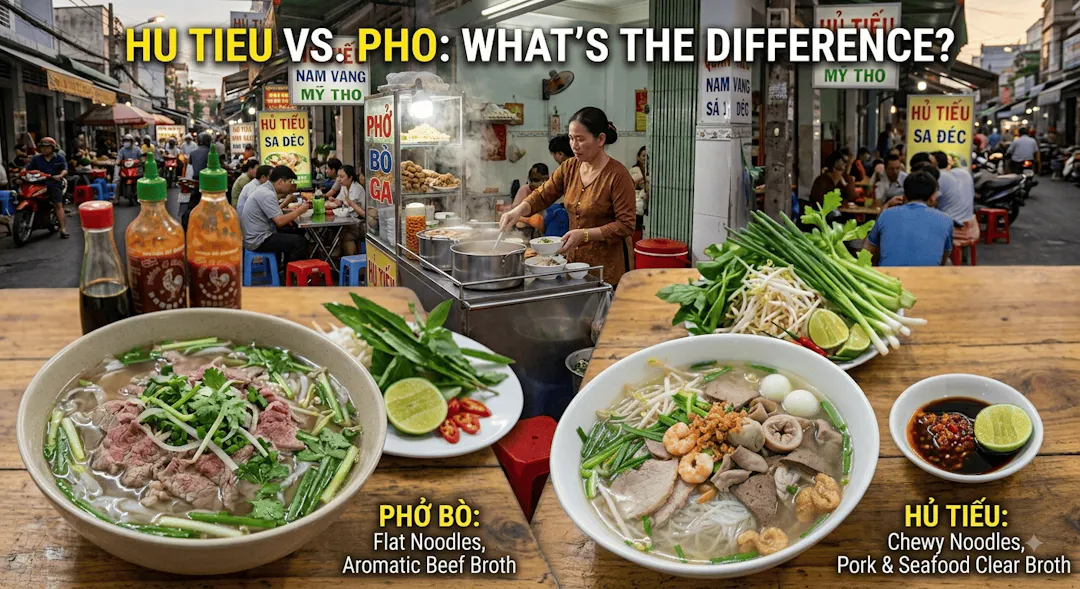
Hu Tieu and pho are both famous Vietnamese noodle dishes, but they have different regional identities and typical ingredients.
Hu Tieu
- Strongly associated with southern Vietnam
- Particularly popular in the Mekong Delta and Ho Chi Minh City
- Often uses thin rice or tapioca noodles
- Frequently combines pork and seafood
- Usually has a clear, lightly sweet broth
- Often includes quail eggs, pork offal, shrimp, and vegetables
Pho
- Originated in northern Vietnam and became popular nationwide
- Uses flat rice noodles
- Commonly features beef or chicken
- Broth is strongly associated with aromatic spices
- Popular versions include pho bo and pho ga
- Northern and southern styles differ significantly
In simple terms, pho is often defined by its aromatic broth and flat rice noodles, while Hu Tieu is known for its chewy noodles and combination of pork, seafood, and southern-style flavors.
Both are essential dishes for anyone interested in Vietnamese cuisine.
Where Did Hu Tieu Come From?
Hu Tieu has a complex history shaped by migration and cultural exchange in southern Vietnam. The dish is commonly associated with Teochew Chinese culinary traditions, which influenced noodle culture throughout southern Vietnam and Cambodia. The Mekong Delta became an important meeting point for Vietnamese, Chinese, and Cambodian communities, allowing different cooking traditions and ingredients to influence one another.
Over time, Vietnamese cooks adapted these noodle traditions to local ingredients and tastes. The result was not a single standardized recipe but a family of related dishes that developed throughout southern Vietnam. This history helps explain why Hu Tieu can look and taste different from one city to another.
Popular Types of Hu Tieu in Vietnam
One of the best things about Hu Tieu is its variety. Different cities and communities have developed their own interpretations.
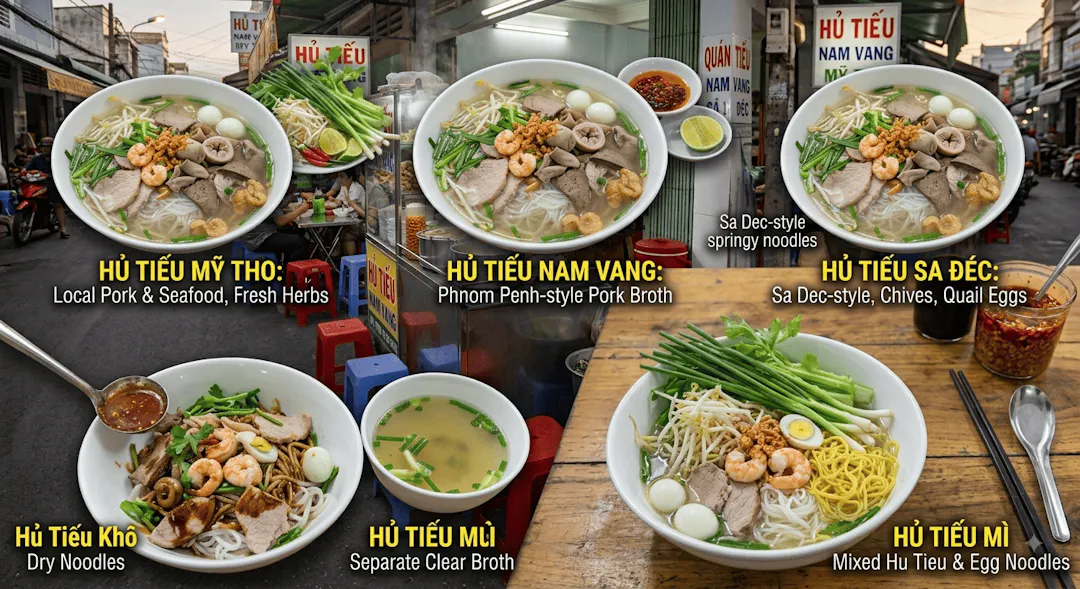
Hu Tieu My Tho
Hu Tieu My Tho is closely associated with My Tho in Tien Giang Province. It is particularly known for its distinctive noodles and combination of pork, seafood, vegetables, and clear broth.
It can be served as a traditional soup or as a dry noodle dish. For travelers exploring the Mekong Delta, trying Hu Tieu My Tho provides a direct connection to the region's food culture.
Hu Tieu Nam Vang
Hu Tieu Nam Vang is the Vietnamese name for Phnom Penh-style Hu Tieu. It reflects the culinary connections between southern Vietnam and Cambodia.
A typical bowl can contain:
- Pork
- Shrimp
- Minced meat
- Quail eggs
- Pork offal
- Chewy noodles
- Fresh herbs
It is especially popular in Ho Chi Minh City.
Hu Tieu Sa Dec
Hu Tieu Sa Dec is associated with Sa Dec in Dong Thap Province. The area is known for its rice-growing traditions and noodle production. Sa Dec-style noodles are often prized for their springy texture.
The dish represents the strong connection between Mekong Delta agriculture and local food culture.
Hu Tieu Kho
Hu Tieu Kho is the dry version of the dish. Instead of placing the noodles directly into a bowl of broth, cooked noodles are mixed with a savory sauce and toppings. A separate bowl of clear broth is served alongside.
This style lets the noodles and sauce take center stage while still providing the comforting broth associated with Hu Tieu.
Hu Tieu Mi
Hu Tieu Mi combines Hu Tieu noodles with yellow egg noodles. It is particularly popular among diners who enjoy a firmer, more substantial noodle texture.
Hu Tieu Soup vs. Dry Hu Tieu
The two main serving styles offer very different experiences.
Soup Hu Tieu
The noodles, meat, seafood, and vegetables are placed in a bowl and covered with hot broth.
This version emphasizes:
- Clear broth
- Aromatics
- Tender toppings
- Fresh herbs
- Warm, comforting flavors
Dry Hu Tieu
The noodles are tossed with a savory sauce and topped with meat, seafood, herbs, and other ingredients. The broth is served separately.
This style emphasizes:
- Chewy noodles
- Savory sauce
- Fried garlic
- Fresh vegetables
- Textural contrast
If you are trying Hu Tieu for the first time, either version is worth experiencing.
How to Eat Hu Tieu Like a Local
Eating Hu Tieu is straightforward, but a few simple steps can make the experience better.
1. Taste the broth first
Before adding chili or other condiments, take a spoonful of the broth. This lets you experience the balance of pork, seafood, sweetness, and aromatics.
2. Add fresh vegetables
Bean sprouts, chives, herbs, and Chinese celery can be mixed into the hot broth. They add freshness and crunch.
3. Add lime and chili
A squeeze of lime introduces acidity, while fresh chili adds heat. Add them gradually so you do not overpower the broth.
4. Combine noodles and toppings
Use chopsticks to pick up noodles together with pork, shrimp, herbs, and vegetables. The best bites combine several textures at once.
5. Enjoy the broth between bites
The clear broth is an important part of the dish, so take time to enjoy it rather than treating it simply as a cooking liquid.
Where to Try Hu Tieu in Vietnam
Hu Tieu is particularly easy to find in southern Vietnam.
Ho Chi Minh City
Ho Chi Minh City has countless Hu Tieu restaurants and street stalls. It is one of the easiest places for travelers to compare different versions of the dish.
My Tho
My Tho is an excellent destination for trying Hu Tieu My Tho, one of the best-known regional styles.
Sa Dec
Sa Dec is another important destination for noodle lovers, especially those interested in the history and production of Mekong Delta noodles.
Mekong Delta
Across the Mekong Delta, local variations reflect the area's abundance of rice, freshwater seafood, vegetables, and agricultural products.
Why Is Hu Tieu Important to Southern Vietnamese Food Culture?
Hu Tieu represents much more than a bowl of noodles. Its ingredients reflect the environment of southern Vietnam: rice provides the noodles, rivers and coastal waters provide seafood, farms provide vegetables, and pork forms the foundation of many broths and toppings.
Its history also reflects the multicultural character of the Mekong region. Chinese, Cambodian, and Vietnamese culinary traditions have interacted here for generations, and Hu Tieu is one of the clearest examples of that exchange.
For travelers, trying Hu Tieu is therefore a way to experience both southern Vietnamese food and the cultural diversity of the Mekong Delta.
Final Thoughts
Hu Tieu is one of the defining dishes of southern Vietnamese cuisine. Its chewy noodles, clear savory-sweet broth, pork and seafood toppings, fresh herbs, and regional variations make it very different from other Vietnamese noodle dishes.
From Hu Tieu My Tho in the Mekong Delta to Hu Tieu Nam Vang in Ho Chi Minh City, every version reflects the diverse history and ingredients of southern Vietnam.
If you are exploring Vietnamese food beyond pho, put a steaming bowl of Hủ Tiếu on your list. It is a simple but deeply flavorful introduction to the food culture of southern Vietnam.
Read more: Hủ Tiếu: Vietnam's Southern Noodle Soup

By Roy Trinh
Editor
Roy Trinh is a travel writer and destination expert at Go Visit Vietnam, dedicated to helping travelers discover the beauty, culture, and diversity of Vietnam. Through well-researched travel guides, practical itineraries, local insights, and authentic recommendations, Roy shares valuable information to inspire memorable journeys across the country. From vibrant cities and breathtaking landscapes to regional cuisine and cultural heritage, every guide is created to help visitors experience Vietnam with confidence and curiosity.
Frequently Asked Questions About Hu Tieu
What is Hu Tieu?
Hu Tieu is a popular southern Vietnamese noodle dish made with thin rice or tapioca noodles, clear savory-sweet broth, pork or seafood, herbs, and vegetables.
What does Hu Tieu taste like?
Hu Tieu typically tastes savory, lightly sweet, and umami-rich. The broth is usually clear and aromatic, while herbs, lime, and chili add freshness and acidity.
Is Hu Tieu the same as Pho?
No. Hu Tieu and pho are different Vietnamese noodle dishes. Hu Tieu is particularly associated with southern Vietnam and commonly uses chewy noodles with pork and seafood, while pho typically uses flat rice noodles with beef or chicken.
What noodles are used in Hu Tieu?
Hu Tieu can use thin rice noodles, tapioca-based noodles, or a combination of Hu Tieu and egg noodles. Hủ tiếu dai is known for its firm, chewy texture.
Is Hu Tieu spicy?
Hu Tieu itself is generally not very spicy. Fresh chili or chili sauce can be added according to personal preference.
Is Hu Tieu a breakfast food?
Yes. Hu Tieu is commonly eaten for breakfast in southern Vietnam, although it is also enjoyed for lunch, dinner, and late-night meals.
What is Hu Tieu My Tho?
Hu Tieu My Tho is a regional style associated with My Tho in the Mekong Delta. It is known for distinctive noodles and a combination of pork, seafood, vegetables, and flavorful broth.
What is Hu Tieu Nam Vang?
Hu Tieu Nam Vang is Phnom Penh-style Hu Tieu that became popular in southern Vietnam. It commonly includes pork, shrimp, quail eggs, noodles, herbs, and sometimes pork offal.
Advertising box