
What Is Mi Quang? A Guide to Vietnam’s Turmeric Noodle Dish
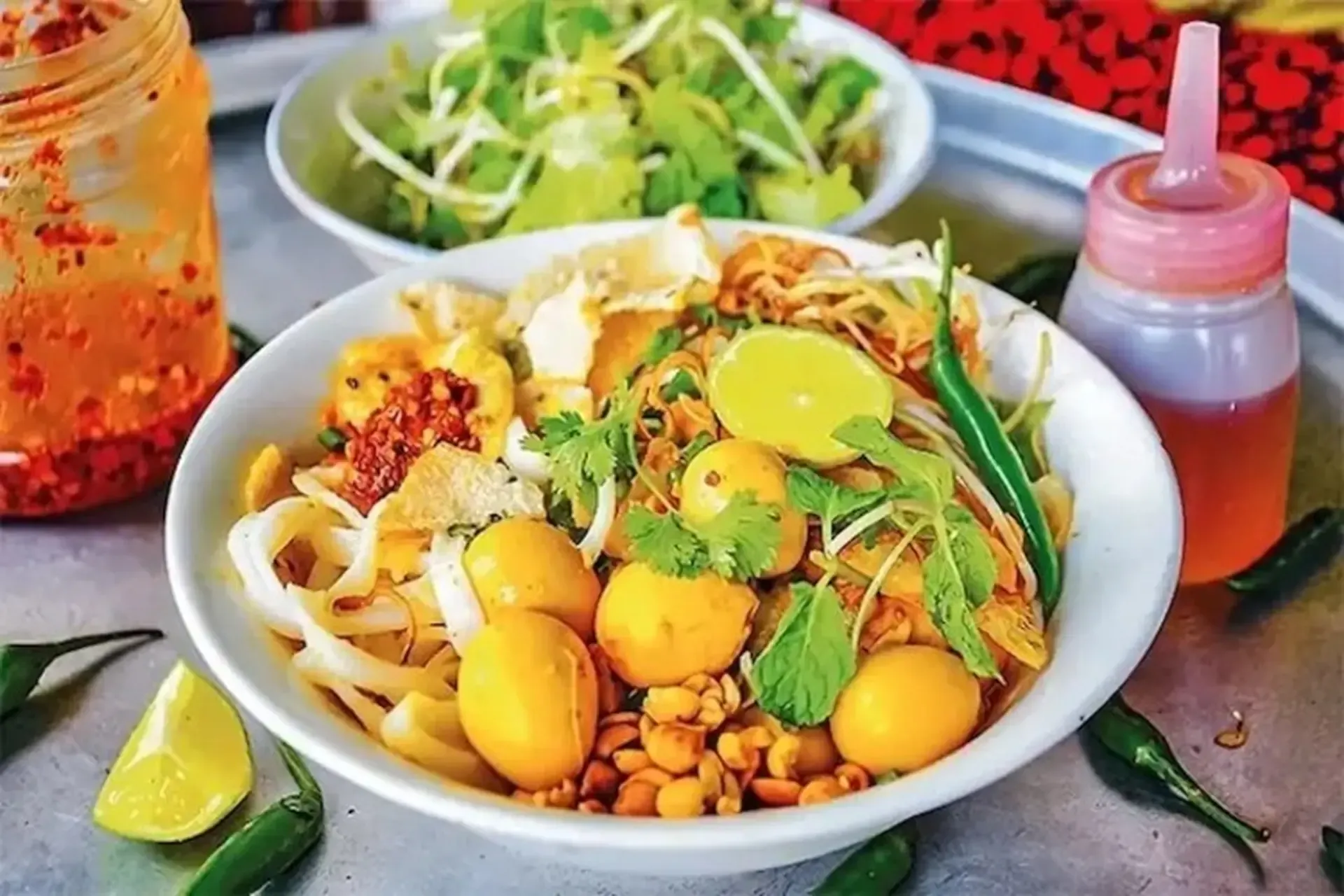
Mi Quang is a distinctive Vietnamese noodle dish from Quang Nam and Central Vietnam, known for its wide turmeric-tinted rice noodles and small amount of rich, savory broth. It is typically served with shrimp, pork or chicken, roasted peanuts, sesame rice crackers, fresh herbs, and crunchy vegetables. Unlike pho, Mi Quang is not served in a bowl full of broth. Instead, the concentrated sauce lightly coats the noodles, creating a flavorful combination of chewy noodles, tender meat, fresh herbs, and satisfying crunch.
On this page
- What Is Mi Quang?
- Where Does Mi Quang Come From?
- What Are Mi Quang Noodles?
- Why Are Mi Quang Noodles Yellow?
- What Are the Main Mi Quang Ingredients?
- What Does Mi Quang Taste Like?
- Why Does Mi Quang Have So Little Broth?
- Mi Quang vs. Pho: What's the Difference?
- Popular Types of Mi Quang
- Mi Quang in Quang Nam and Da Nang
- How Is Mi Quang Traditionally Served?
- How to Eat Mi Quang
- What Makes Mi Quang Special?
- Tips for Trying Authentic Mi Quang
- Mi Quang: A Taste of Central Vietnam
Mi Quang is one of the most distinctive noodle dishes in Central Vietnam. Originating in Quang Nam, this regional specialty is known for its wide yellow rice noodles, flavorful toppings, roasted peanuts, fresh herbs, sesame rice crackers, and a small amount of rich broth.
Unlike pho or bun bo Hue, Mi Quang is not a soup with noodles submerged in a large amount of broth. Instead, a small quantity of concentrated broth is added to coat the noodles and toppings. The result is a dish with a remarkable balance of savory, nutty, fresh, crunchy, and chewy textures.
If you are wondering what is Mi Quang, the simplest answer is: a Central Vietnamese rice noodle dish where turmeric-tinted noodles are combined with meat or seafood, herbs, peanuts, crispy rice crackers, and just enough flavorful broth to bring everything together.
What Is Mi Quang?
Mi Quang, or mì Quảng, is a traditional noodle dish associated with Quang Nam Province and the surrounding areas of Central Vietnam, including Da Nang and Hoi An.
The dish is built around several essential elements:
- Wide rice noodles, often yellow from turmeric
- Shrimp, pork, chicken, or other proteins
- A small amount of concentrated savory broth
- Roasted peanuts
- Crispy sesame rice crackers
- Fresh herbs and vegetables
- Fried shallots, chili, and other aromatics
What makes Mi Quang different from many other Vietnamese noodle dishes is the way it is served. The noodles are lightly coated with broth rather than swimming in it.
This gives Mi Quang a texture closer to a sauced noodle dish than a traditional noodle soup.
The combination of chewy rice noodles, tender protein, rich broth, crunchy peanuts and rice crackers, and fresh herbs is what gives Mi Quang its unmistakable character.
Where Does Mi Quang Come From?
Mi Quang comes from Quang Nam in Central Vietnam, where it has long been part of everyday regional food culture.
The dish is closely connected to the agricultural communities of the Quang Nam lowlands. Rice has historically been one of the region's most important crops, making rice flour a natural foundation for local noodles and other foods.
Quang Nam's location also helped shape the dish. The region combines rice-growing plains, rivers, coastal areas, and nearby mountains. As a result, local cooks have traditionally used whatever ingredients were readily available, including shrimp, pork, chicken, fish, herbs, and vegetables.
Mi Quang eventually became closely associated with nearby Da Nang food culture as well. Today, you can find the dish throughout Central Vietnam, from small local eateries to restaurants serving visitors in Da Nang and Hoi An.
Although recipes vary from one household or restaurant to another, the core identity remains the same: wide rice noodles, concentrated broth, local ingredients, fresh herbs, peanuts, and crispy rice crackers.
What Are Mi Quang Noodles?
The noodles are one of the defining characteristics of Mi Quang.
Traditional Mi Quang noodles are made from rice flour and are considerably wider than many Vietnamese rice noodles. They are usually soft and chewy, with enough structure to hold up when mixed with the broth and toppings.
Many versions have a distinctive yellow color created by adding turmeric to the rice batter.
The traditional process involves turning rice into a fine batter, steaming it into thin sheets, lightly coating the sheets with oil, and cutting them into broad ribbons.
The result is a noodle that is:
- Wide and flat
- Soft but pleasantly chewy
- Slightly slippery
- Substantial enough to hold rich toppings
- Often yellow or golden in color
The yellow color is one reason Mi Quang is sometimes described as Vietnamese turmeric noodles.
However, not every bowl has to be intensely yellow. Some traditional preparations use lighter-colored or even white noodles depending on the recipe and local style.
Why Are Mi Quang Noodles Yellow?
Turmeric is commonly used to give Mi Quang noodles their characteristic golden-yellow appearance.
Fresh turmeric or turmeric powder is incorporated into the rice batter before the noodles are steamed. In addition to its color, turmeric contributes a mild earthy aroma.
The turmeric flavor should generally complement the noodles rather than overpower them.
This is important because Mi Quang depends on balance. The noodles need to work together with the savory broth, meat or seafood, peanuts, herbs, and crispy rice cracker.
What Are the Main Mi Quang Ingredients?
The exact Mi Quang ingredients vary depending on the region and recipe, but several components appear frequently.
Rice Noodles
Wide rice noodles form the foundation of the dish. They provide a soft, chewy texture and absorb the concentrated broth.
Shrimp
Shrimp is one of the most common proteins in Mi Quang. Small shrimp are often cooked with aromatics and seasoning, creating a savory topping that complements the noodles.
Pork
Pork, particularly pork belly or other tender cuts, is another popular ingredient. It contributes richness and a deeper savory flavor.
Chicken
Mi Quang gà, or chicken Mi Quang, is especially popular. Pieces of chicken are cooked with aromatics and seasoning before being served over the noodles.
Roasted Peanuts
Crushed roasted peanuts provide a nutty flavor and an important crunchy texture.
Sesame Rice Crackers
Large pieces of crispy sesame rice cracker, known as bánh tráng mè, are traditionally served with Mi Quang.
The cracker can be broken into smaller pieces and mixed into the bowl, adding another layer of crunch.
Fresh Herbs and Vegetables
Fresh greens help balance the richness of the noodles and toppings.
Depending on the restaurant or region, the accompanying vegetables may include:
- Banana blossom
- Vietnamese mint
- Basil
- Mustard greens
- Water spinach stems
- Lettuce
- Bean sprouts
- Fresh herbs
Aromatics
Garlic, shallots, chili, black pepper, and fish sauce are commonly used to build the savory flavor of the dish.
What Does Mi Quang Taste Like?
Mi Quang has a complex but approachable flavor profile.
The noodles are relatively mild, allowing the toppings and concentrated broth to provide most of the flavor.
A typical bowl can combine:
Savory: from fish sauce, shrimp, pork, chicken, and broth.
Nutty: from roasted peanuts and sesame crackers.
Fresh: from herbs and raw vegetables.
Spicy: from fresh chili or chili-based condiments.
Rich: from pork, shrimp, and cooking oil.
Earthy: from turmeric and fresh herbs.
The most interesting part is the contrast between these flavors and textures. A single bite can contain soft noodles, tender meat, crunchy peanuts, crispy rice cracker, and cool herbs.
Why Does Mi Quang Have So Little Broth?
This is perhaps the most important characteristic to understand when learning about Mi Quang.
Unlike pho, which is served with a generous quantity of clear broth, Mi Quang uses only a small amount of concentrated liquid.
The broth is usually highly seasoned because it is intended to coat the noodles rather than function as a large soup base.
When the ingredients are mixed together, the small amount of broth distributes flavor throughout the bowl without drowning the noodles.
This creates a distinctive eating experience: you get the richness of a noodle soup but with much more emphasis on the noodles and toppings.
Mi Quang vs. Pho: What's the Difference?
Mi Quang and pho are both famous Vietnamese noodle dishes, but they are quite different.
Pho typically features thin rice noodles served in a large bowl of fragrant broth. The broth is one of the main attractions of the dish.
Mi Quang, by comparison, uses much wider noodles and only a small quantity of concentrated broth. It is also commonly served with roasted peanuts, sesame rice crackers, fresh herbs, and a more varied combination of toppings.
The easiest way to remember the difference is:
Pho = noodles in broth.
Mi Quang = noodles lightly coated with concentrated broth and combined with toppings.
Popular Types of Mi Quang
There is no single universal version of Mi Quang. Different regions, families, and restaurants use different proteins.
Mi Quang Tom Thit
This classic combination uses shrimp and pork. It highlights the land-and-sea character of Central Vietnamese cooking.
Mi Quang Ga
Mi Quang with chicken is another popular version. Pieces of chicken are cooked with aromatics and seasoning before being served with the noodles.
Mi Quang Ca
Some coastal communities prepare Mi Quang with fish, reflecting Central Vietnam's strong connection to the sea.
Mi Quang Ech
Frog is used in some regional preparations, particularly in versions associated with rural Quang Nam.
Mi Quang Chay
Vegetarian Mi Quang replaces meat and seafood with ingredients such as tofu, mushrooms, vegetables, and a plant-based broth.
These variations demonstrate how flexible the dish can be while maintaining its essential identity.
Mi Quang in Quang Nam and Da Nang
Mi Quang is particularly important to the food culture of Quang Nam.
In the countryside, recipes often reflect locally available agricultural and freshwater ingredients. Chicken, shrimp, frog, and other proteins can appear alongside the traditional noodles and herbs.
In Da Nang, the dish has become one of the city's most recognizable local foods. Urban restaurants may offer several versions, including shrimp and pork, chicken, seafood, or vegetarian Mi Quang.
For travelers visiting Central Vietnam, trying Mi Quang in both Hoi An and Da Nang can be an excellent way to experience how the same regional dish changes from one place to another.
How Is Mi Quang Traditionally Served?
Mi Quang is usually served in a relatively wide bowl.
The noodles go into the bowl first, followed by the cooked protein and a small amount of broth.
Fresh herbs and vegetables are then added, followed by roasted peanuts and pieces of sesame rice cracker.
Depending on the restaurant, chili, lime, fish sauce, or additional herbs may be provided separately.
Before eating, diners typically mix the ingredients together.
This allows the concentrated broth to coat the noodles while distributing the flavors of the meat, peanuts, herbs, and other toppings throughout the bowl.
How to Eat Mi Quang
There is no complicated etiquette required to enjoy Mi Quang, but mixing the ingredients well makes a noticeable difference.
Start by adding some of the fresh herbs and vegetables to the bowl.
Break the sesame rice cracker into smaller pieces and add them to the noodles.
Then use chopsticks to gently mix the noodles, toppings, broth, herbs, and peanuts.
Take a bite that combines several components rather than eating the noodles separately from the toppings.
The goal is to experience the contrast between:
warm noodles + cool herbs + tender protein + crunchy peanuts + crispy rice cracker + savory broth.
That combination is central to the character of Mi Quang.
What Makes Mi Quang Special?
Mi Quang represents much more than another Vietnamese noodle dish.
Its identity comes from the relationship between Central Vietnam's landscape and its food traditions.
Rice provides the noodles. Local rivers and coastal waters provide seafood. Farms provide pork and chicken. Gardens provide herbs and vegetables. Sesame crackers and peanuts contribute crunch and richness.
The dish brings these ingredients together without relying on a large quantity of broth.
That economy is part of its charm.
Instead of hiding the ingredients beneath a large volume of soup, Mi Quang allows each component to remain visible and distinct.
Tips for Trying Authentic Mi Quang
If you are traveling through Central Vietnam, keep a few things in mind when ordering Mi Quang.
Look for the noodles. They should be broad and substantial rather than thin like traditional pho noodles.
Expect little broth. A bowl with only a small amount of concentrated liquid is normal.
Try the herbs. Fresh greens are an important part of the overall flavor balance.
Don't skip the peanuts. Their crunch helps define the dish.
Break up the sesame cracker. Mixing it into the noodles creates an excellent textural contrast.
Try different proteins. Shrimp and pork may be the most familiar combination, but chicken and seafood versions can offer a completely different experience.
Mi Quang: A Taste of Central Vietnam
So, what is Mi Quang?
Mi Quang is a traditional noodle dish from Central Vietnam made with wide rice noodles, usually yellow from turmeric, a small amount of concentrated savory broth, meat or seafood, roasted peanuts, sesame rice crackers, and fresh herbs.
Its defining feature is the balance between noodles and broth. Rather than serving the noodles in a large bowl of soup, cooks use just enough broth to season and coat the ingredients.
That simple idea gives Mi Quang its distinctive personality.
From Quang Nam's rice-growing countryside to the food stalls of Da Nang and Hoi An, Mi Quang noodles remain one of the best ways to experience the flavors and culinary traditions of Central Vietnam.

By Roy Trinh
Editor
Roy Trinh is a travel writer and destination expert at Go Visit Vietnam, dedicated to helping travelers discover the beauty, culture, and diversity of Vietnam. Through well-researched travel guides, practical itineraries, local insights, and authentic recommendations, Roy shares valuable information to inspire memorable journeys across the country. From vibrant cities and breathtaking landscapes to regional cuisine and cultural heritage, every guide is created to help visitors experience Vietnam with confidence and curiosity.
FAQs About Mi Quang
What is Mi Quang?
Mi Quang is a traditional noodle dish from Quang Nam in Central Vietnam. It features wide rice noodles, often colored with turmeric, served with a small amount of savory broth, meat or seafood, roasted peanuts, sesame rice crackers, and fresh herbs.
What are Mi Quang noodles made of?
Mi Quang noodles are traditionally made from rice flour and water. Turmeric may be added to the rice batter to create the dish's characteristic yellow color. The batter is steamed into thin sheets and cut into wide, flat noodles.
Why are Mi Quang noodles yellow?
Many Mi Quang noodles are yellow because turmeric is added to the rice batter before steaming. Turmeric gives the noodles a bright golden color and a subtle earthy flavor.
What ingredients are usually in Mi Quang?
Common Mi Quang ingredients include wide rice noodles, shrimp, pork, chicken, roasted peanuts, sesame rice crackers, fresh herbs, vegetables, garlic, shallots, chili, and fish sauce. The exact ingredients vary by region and recipe.
Is Mi Quang a soup?
Mi Quang is technically a noodle dish rather than a broth-heavy soup. Unlike pho, it is served with only a small amount of concentrated broth that lightly coats the noodles and toppings.
What does Mi Quang taste like?
Mi Quang has a savory, slightly rich flavor balanced by fresh herbs, crunchy peanuts, crispy rice crackers, and sometimes chili. The concentrated broth adds umami while the turmeric noodles provide a mild earthy note.
Advertising box