
Mang Den Vietnam: A Hidden Gem in the Central Highlands
Mang Den Vietnam is a peaceful highland escape surrounded by pine forests, misty mountains, lakes, waterfalls, and traditional villages. Located at around 1,200 meters in Vietnam’s Central Highlands, this emerging destination offers a quieter alternative to more popular places such as Da Lat. Travelers can explore Pa Sy Waterfall, Dak Ke Lake, mountain roads, local farms, and community-based cultural experiences while enjoying the region’s cool climate. Discover why Mang Den is one of Vietnam’s most promising hidden gems and how to plan your visit.
On this page
- Why Is Mang Den a Hidden Gem in Vietnam?
- Where Is Mang Den?
- What Makes Mang Den Special?
- Mang Den's Pine Forests and Mountain Landscape
- Best Things to Do in Mang Den
- Experience Central Highland Culture
- Mang Den vs Da Lat: Which Should You Visit?
- Best Time to Visit Mang Den
- How to Get to Mang Den
- How Many Days Do You Need in Mang Den?
- A Suggested 3-Day Mang Den Itinerary
- Where to Stay in Mang Den
- What to Eat in Mang Den
- Is Mang Den Good for Hiking?
- Mang Den for Slow Travel
- Is Mang Den Worth Visiting?
- Mang Den for First-Time Visitors to Vietnam
- Responsible Travel in Mang Den
- How to Add Mang Den to a Vietnam Itinerary
- Who Should Visit Mang Den?
- Who Might Prefer Da Lat Instead?
- Final Thoughts
Mang Den Vietnam is a peaceful highland destination surrounded by pine forests, waterfalls, lakes, mountain roads, and traditional villages. Sitting at around 1,200 meters above sea level in Vietnam’s Central Highlands, Mang Den offers a cool climate and a slower pace that feels very different from the country’s busy coastal cities.
Often compared with Da Lat, Mang Den remains a quieter and less-developed alternative for travelers who want to experience Vietnam beyond its most popular destinations. The landscape combines misty forests, mountain streams, scenic lakes, agricultural areas, and communities with deep cultural connections to the Central Highlands.
For travelers interested in hidden gems in Vietnam, Mang Den is especially appealing because the destination is more about nature, local life, and slow travel than checking off a long list of major attractions.
From Pa Sy Waterfall and Dak Ke Lake to Konbring Village and the surrounding pine forests, Mang Den offers plenty of reasons to spend a few quiet days in the highlands.
Why Is Mang Den a Hidden Gem in Vietnam?
Mang Den is not completely unknown. Domestic travelers increasingly visit the area, and its reputation is growing.
However, compared with destinations such as Da Lat, Sapa, Ninh Binh, or Ha Long Bay, Mang Den still feels relatively under the radar for international travelers.
Its appeal comes from the combination of several characteristics:
- A cool highland climate
- Extensive pine forests
- Waterfalls and natural pools
- Quiet mountain roads
- Scenic lakes
- Local farms and gardens
- Traditional Central Highland culture
- Community-based tourism
- Small homestays and eco-oriented accommodation
- Opportunities for hiking, cycling, and slow travel
Vietnam Tourism describes Mang Den as an emerging destination surrounded by pine forests and compares its cool climate and waterfalls with Da Lat while noting that it has remained less discovered.
That makes Mang Den particularly suitable for travelers searching for an off-the-beaten-path Vietnam experience.
Where Is Mang Den?
Mang Den is located in Vietnam’s Central Highlands, on a high plateau at approximately 1,200 meters above sea level.
The journey into the area passes through winding mountain roads, forests, farms, and highland landscapes. The elevation contributes to the destination’s cooler atmosphere compared with much of lowland Vietnam.
Mang Den is closely associated with the surrounding Kon Plong area and the broader Central Highlands region, where forests, agricultural communities, ethnic cultures, and mountain landscapes shape everyday life.
For travelers exploring the Central Highlands, Mang Den can be combined with destinations around Kon Tum and other parts of the region.
What Makes Mang Den Special?
Mang Den's biggest attraction is not a single landmark.
It is the overall landscape and atmosphere.
Instead of arriving at one famous viewpoint and leaving, travelers can spend a few days moving slowly between forests, lakes, waterfalls, farms, villages, cafés, and mountain roads.
The landscape is particularly beautiful in the early morning, when mist can settle over the pine forests and surrounding hills.
This combination of cool air, greenery, quiet roads, and highland scenery gives Mang Den a very different character from Vietnam's major urban and coastal destinations.
Mang Den's Pine Forests and Mountain Landscape
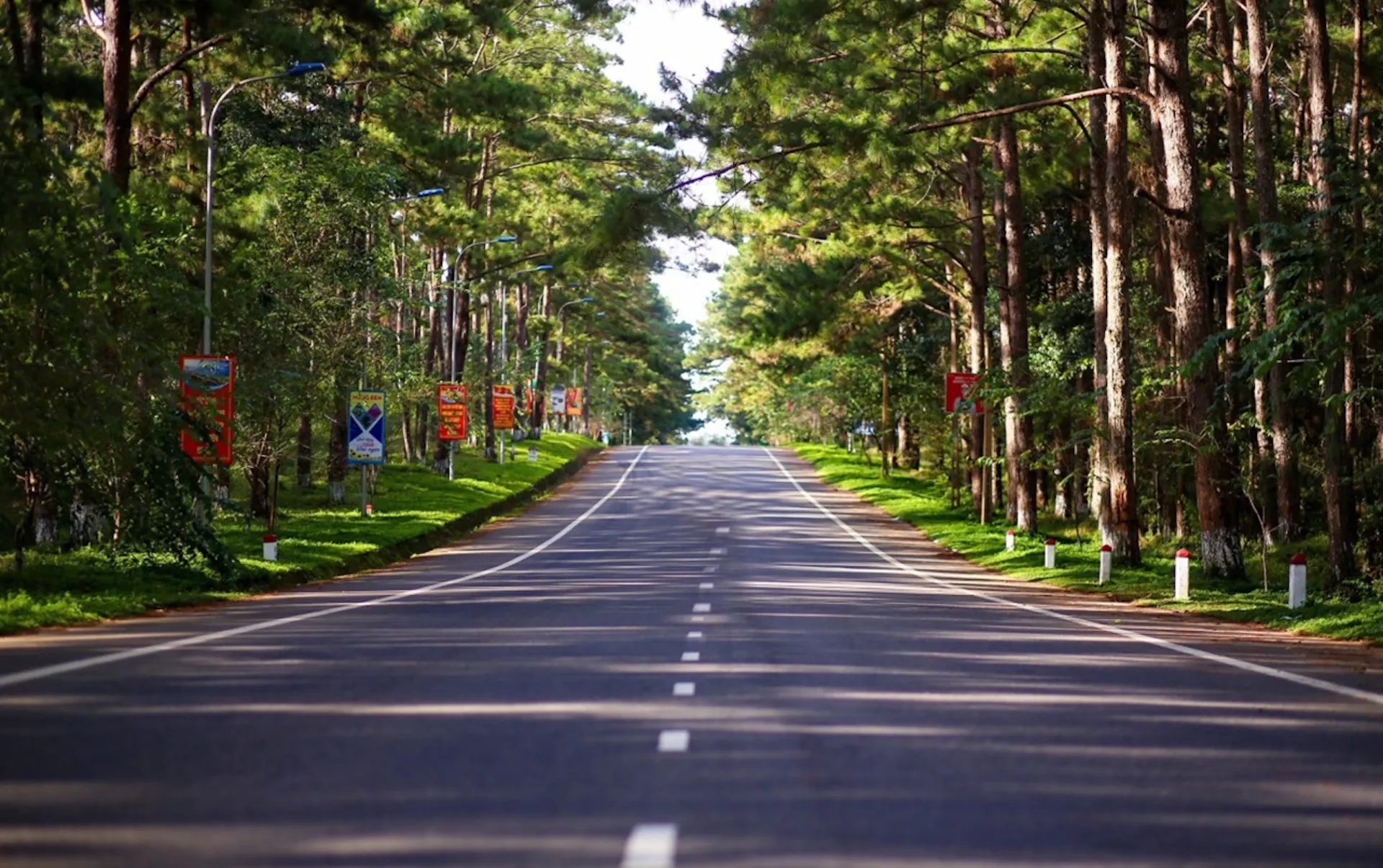
Pine forests are one of the defining features of Mang Den.
Large areas of the surrounding highlands are covered with trees, creating a landscape of winding roads, green hills, and shaded trails.
Early morning can be especially atmospheric. Mist moves through the trees, while the cooler air creates a peaceful environment for walking, photography, or simply enjoying a coffee.
For travelers who enjoy nature rather than busy sightseeing schedules, this is one of the strongest reasons to visit Mang Den.
You do not necessarily need a packed itinerary.
Sometimes the best experience is simply driving through the pine forests, stopping at scenic areas, and exploring the countryside at your own pace.
Best Things to Do in Mang Den
Mang Den is small enough to explore at a relaxed pace, but there are several natural and cultural experiences worth including.
Visit Pa Sy Waterfall
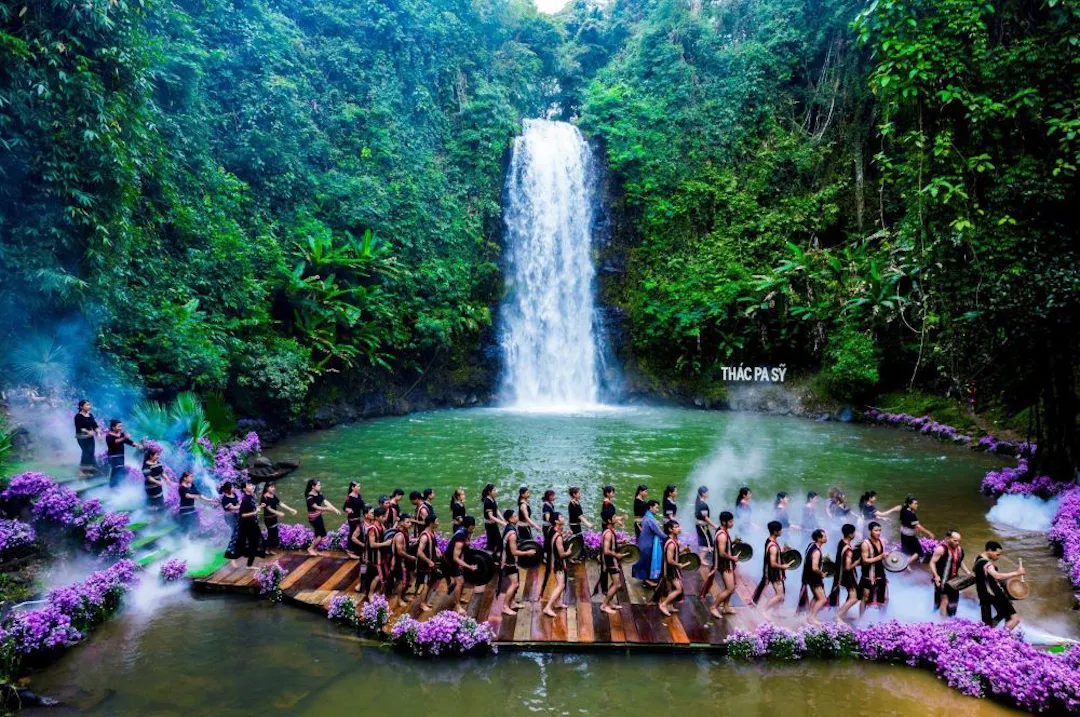
Pa Sy Waterfall is one of the best-known natural attractions around Mang Den.
The waterfall is formed where three major streams come together, and the surrounding landscape is covered by lush forest. The name Pa Sy is associated with the idea of three streams converging.
The combination of flowing water, forest, rocks, and mountain scenery makes Pa Sy one of the most photogenic places in the area.
It is also a good introduction to the natural character of Mang Den.
Rather than being surrounded by a dense urban tourism infrastructure, the waterfall is set within a greener highland environment.
Explore Dak Ke Lake
Dak Ke Lake is one of Mang Den's most recognizable scenic spots.
The lake is surrounded by greenery and offers a quieter environment for walking and enjoying the landscape. Vietnam Tourism identifies Dak Ke as the most famous of the area's seven lakes and notes activities such as walking, canoeing, and fishing.
For travelers who prefer slow travel, the lake is less about adventure and more about atmosphere.
A morning or late afternoon visit can be a relaxing part of a Mang Den itinerary.
Discover Dak Ke Waterfall
Dak Ke Waterfall is smaller than Pa Sy but has a more secluded character.
Vietnam Tourism describes it as more remote and highlights the natural pool formed by the cascading water.
This makes it particularly interesting for travelers looking beyond the area's best-known attraction.
If conditions are safe and local access rules permit swimming, the natural pool can provide a refreshing experience. Always check current conditions before entering natural water, especially after heavy rain.
Walk Through Mang Den's Pine Forests
You do not need a major hiking expedition to enjoy Mang Den's natural environment.
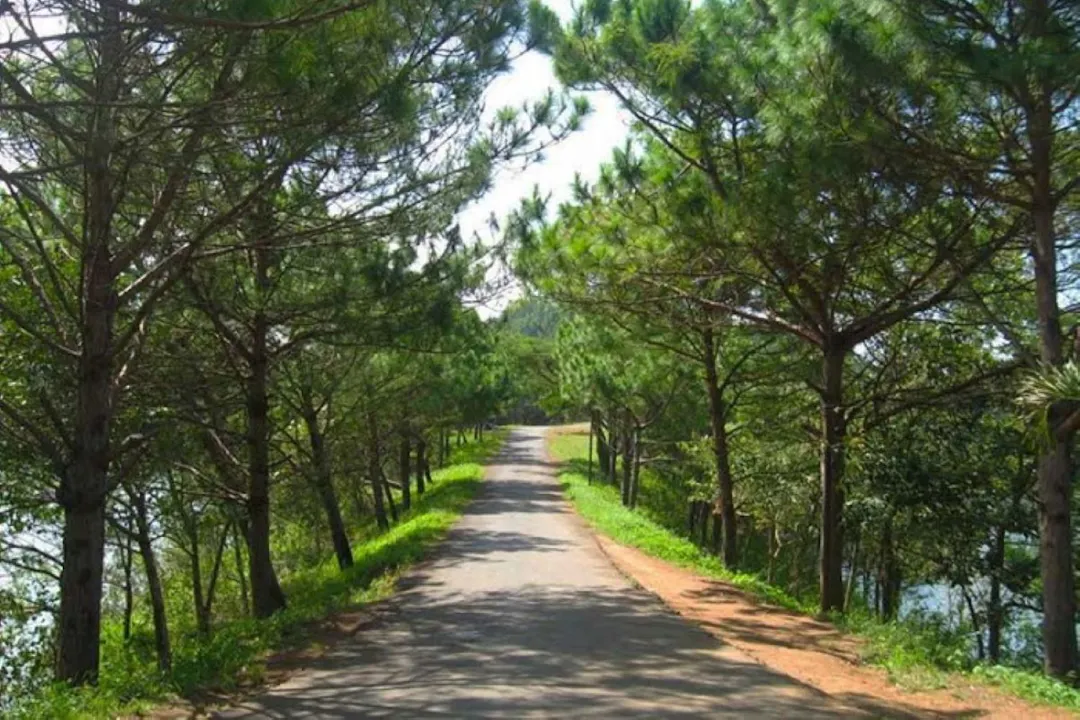
Some of the most rewarding experiences come from simply walking around the forested areas and quiet roads surrounding town.
The high elevation, pine trees, mountain scenery, and cooler temperatures make the area particularly pleasant for outdoor activities.
Vietnam Tourism also highlights hiking and cycling as suitable ways to explore Mang Den.
Go Cloud Hunting
Early-morning cloud and mist are part of Mang Den's appeal.
On suitable mornings, low clouds can settle around the hills and forests, creating atmospheric views across the highlands.
Cloud conditions are naturally unpredictable, so treat this as an experience rather than a guaranteed attraction.
The best approach is to start early, find an elevated viewpoint, and allow time for the landscape to change as the sun rises.
Visit Khanh Lam Pagoda
Khanh Lam Pagoda sits on a forested mountain and is reached by a staircase of around 200 stone steps, according to Vietnam Tourism.
The pagoda provides a combination of spiritual atmosphere and natural scenery.
Rather than treating the visit as a quick photo stop, take time to appreciate the surrounding forest and peaceful setting.
Visitors should dress respectfully and maintain a quiet atmosphere while visiting religious sites.
Discover Konbring Village
Konbring Village offers a different side of Mang Den.
The village is one of the community-based cultural villages associated with the area and provides an opportunity to learn more about Central Highland traditions.
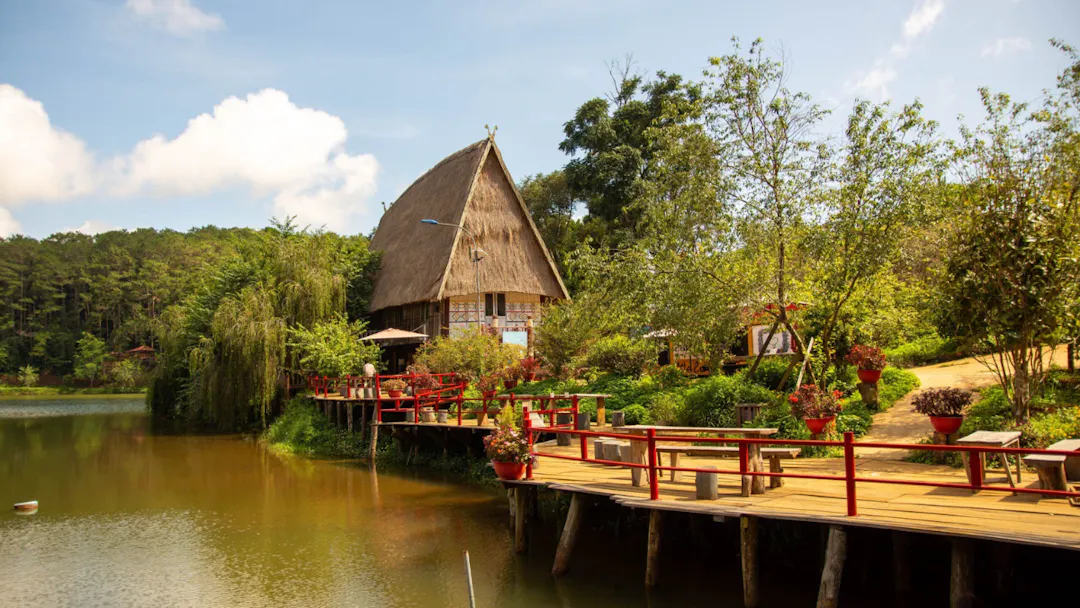
Traditional Rong houses, local food, homemade rice wine, music, and gong performances are among the cultural elements associated with these communities.
For international visitors, experiences like this can add depth to a trip that might otherwise focus mainly on waterfalls and landscapes.
The best approach is to visit respectfully, follow local guidance, and remember that these are living communities rather than tourist displays.
Experience Central Highland Culture
Mang Den is not only a nature destination.
The surrounding highlands have long been home to ethnic communities including the Mơ Nâm, Ca Dong, Xơ Đăng, and Hre, among others. Vietnam Tourism highlights their agricultural traditions and cultural practices, including music, ceremonies, and communal life.
The Rong house is particularly important in Central Highland communities. These communal structures traditionally serve as gathering places and are an important part of the region's cultural landscape.
For travelers interested in Vietnam's ethnic diversity, Mang Den provides an opportunity to experience a side of the country that is quite different from the historic cities and coastal resorts.
Mang Den vs Da Lat: Which Should You Visit?
Mang Den is often compared with Da Lat because both destinations are highland escapes with cooler climates, pine forests, waterfalls, and scenic mountain landscapes.
However, the travel experience is different.
Choose Mang Den if you want:
- A quieter destination
- Fewer international tourists
- Pine forests and mountain scenery
- A slower travel experience
- Community-based cultural experiences
- Smaller-scale accommodation
- Outdoor activities
- An off-the-beaten-path destination
Choose Da Lat if you want:
- More restaurants and cafés
- A larger tourism infrastructure
- More accommodation choices
- A wider range of attractions
- More nightlife
- Easier access to organized tours
- A more established tourist destination
The important distinction is that Mang Den is not simply a smaller Da Lat.
It has its own Central Highland identity, landscape, communities, and travel atmosphere.
If your priority is convenience and variety, Da Lat may be the better choice.
If your priority is quiet nature and discovering somewhere less established, Mang Den has the advantage.
Best Time to Visit Mang Den
Mang Den's high elevation gives it a cooler climate than many other parts of Vietnam.
The destination can be visited throughout the year, but the experience changes depending on weather conditions.
Dry Season
The drier months are generally more convenient for outdoor activities such as hiking, cycling, sightseeing, and exploring mountain roads.
Clearer conditions can also make it easier to enjoy scenic viewpoints and surrounding landscapes.
Rainy Season
Rain can make the forests particularly green and waterfalls more impressive.
However, wet conditions can also make trails, roads, and natural areas slippery.
If you plan to hike or explore waterfalls during periods of heavy rain, check local weather conditions and follow local safety advice.
Cool Weather
One of Mang Den's biggest attractions is its cooler highland climate.
Vietnam Tourism's recent coverage describes the destination as a cool highland escape at around 1,200 meters, with temperatures generally remaining mild compared with hotter parts of Vietnam.
Bring a light jacket, especially for early mornings and evenings.
How to Get to Mang Den
Getting to Mang Den is part of the experience.
The destination is reached through mountain roads, and the surrounding landscape changes as you climb into the highlands.
From Kon Tum
Kon Tum is one of the most natural bases for reaching Mang Den.
Travelers can continue from Kon Tum toward Mang Den by road, with the journey passing through forested and mountainous scenery.
From Pleiku
Another option is to travel from Pleiku, making Mang Den part of a broader Central Highlands itinerary.
This can work well for travelers who want to explore destinations across the region rather than visiting Mang Den as a standalone trip.
By Motorbike
Motorbike travel is particularly appealing for experienced riders who enjoy mountain roads and scenic routes.
However, the roads can be winding, and weather conditions can change quickly.
Ride conservatively, especially in rain or fog, and avoid traveling unfamiliar mountain roads after dark.
By Car or Private Transfer
A private car or transfer is more comfortable for travelers who prefer convenience or are traveling with family.
It also allows you to stop at viewpoints, farms, villages, and other places along the way.
How Many Days Do You Need in Mang Den?
For most travelers, 2–3 days is a good amount of time.
One Day
A short visit can cover:
- Dak Ke Lake
- Pa Sy Waterfall
- Khanh Lam Pagoda
- A few scenic stops
However, a one-day trip can feel rushed.
Two Days
Two days allows you to combine nature and culture.
For example:
Day 1: Dak Ke Lake, pine forests, Khanh Lam Pagoda, local cafés
Day 2: Pa Sy Waterfall, Dak Ke Waterfall, Konbring Village, countryside exploration
Three Days
Three days is better for travelers who want a slower experience.
You can add:
- Hiking
- Cycling
- Local farms
- Cloud hunting
- Longer countryside drives
- More time at your accommodation
- Local food experiences
Mang Den rewards travelers who avoid rushing from one attraction to another.
A Suggested 3-Day Mang Den Itinerary
Day 1: Discover Mang Den
Arrive and settle into your accommodation.
Spend the afternoon exploring the town and surrounding pine forests.
Visit Dak Ke Lake before enjoying a relaxed evening at a local café or restaurant.
Day 2: Waterfalls and Forests
Start early to experience the cool morning air.
Visit Pa Sy Waterfall and explore the surrounding forest.
Continue toward other natural attractions such as Dak Ke Waterfall if conditions and access allow.
Spend the afternoon enjoying the highland scenery rather than trying to fit in too many attractions.
Day 3: Culture and Countryside
Visit Khanh Lam Pagoda in the morning.
Continue to Konbring Village to learn about Central Highland culture and community-based tourism.
Finish your trip with a scenic drive through the surrounding countryside.
This itinerary can easily be adjusted depending on weather, transportation, and how much time you want to spend outdoors.
Where to Stay in Mang Den
Mang Den's accommodation scene is more intimate than that of established tourist destinations.
Travelers can find:
- Homestays
- Small guesthouses
- Boutique stays
- Eco-oriented accommodation
- Villas and retreats
Recent Vietnam Tourism coverage highlights homestays, eco-lodges, and small villas as part of Mang Den's emerging slow-travel scene.
For the best experience, consider staying somewhere surrounded by trees or close to the natural landscape.
A quiet homestay can be more appropriate for Mang Den than a large conventional hotel because it fits the destination's slower character.
What to Eat in Mang Den
Food is another way to experience the Central Highlands.
Look for locally grown ingredients, grilled dishes, vegetables, coffee, and regional specialties.
Depending on where you stay, you may also have opportunities to try food prepared by local communities.
Mang Den is increasingly associated with agricultural and farm-based experiences, so travelers interested in local produce can look for farms, cafés, and small restaurants using ingredients from the surrounding area.
Do not expect the same variety of international restaurants available in Hanoi, Ho Chi Minh City, or Da Nang.
That is part of the appeal.
Is Mang Den Good for Hiking?
Yes.
Mang Den's combination of forests, waterfalls, mountain roads, and highland terrain makes it suitable for travelers who enjoy light hiking and nature walks.
Vietnam Tourism specifically recommends hiking and cycling as ways to explore the destination.
For more demanding routes, use a local guide or obtain current information about trail conditions.
Weather can change quickly in the highlands, and some natural areas may become slippery during rainy periods.
Mang Den for Slow Travel
One of the strongest reasons to visit Mang Den is simply to slow down.
You do not have to fill every hour with sightseeing.
Instead, you can:
- Drink locally grown coffee
- Walk through pine forests
- Read at a quiet homestay
- Watch morning mist
- Explore small farms
- Cycle through the countryside
- Visit local villages
- Listen to the sounds of the forest
- Spend an afternoon near a lake
This makes Mang Den particularly attractive for travelers who feel that popular destinations have become too busy.
The destination's growing reputation for slow travel is also reflected in recent Vietnam Tourism coverage, which emphasizes quiet accommodation, nature, local coffee, and spending time rather than simply checking attractions off a list.
Is Mang Den Worth Visiting?
Yes, especially if you want to experience a quieter side of Vietnam.
Mang Den is not the destination for travelers looking for huge entertainment complexes, crowded nightlife, or an endless selection of international restaurants.
Instead, it is ideal for travelers who value:
- Nature
- Peace and quiet
- Cool weather
- Pine forests
- Waterfalls
- Local culture
- Slow travel
- Scenic road trips
- Outdoor activities
It is also an excellent choice if you have already visited Vietnam's most famous destinations and want to explore somewhere less conventional.
Mang Den for First-Time Visitors to Vietnam
First-time visitors can certainly include Mang Den in their itinerary, but it works best as part of a broader trip.
If you only have one week in Vietnam, Hanoi, Ha Long Bay, Hoi An, Ho Chi Minh City, or other major destinations may be more practical depending on your interests.
But if you have two weeks or more—or if you have already visited Vietnam's major tourist destinations—Mang Den becomes much more attractive.
It can introduce travelers to the Central Highlands, a region that receives far less attention from international visitors than Vietnam's major coastal and cultural destinations.
Responsible Travel in Mang Den
Mang Den's appeal depends heavily on its natural environment and local communities.
As tourism grows, responsible travel becomes increasingly important.
When visiting:
- Avoid leaving plastic and other waste in forests or natural areas.
- Stay on established trails where possible.
- Do not damage plants or wildlife.
- Respect local customs and religious sites.
- Ask before photographing people.
- Support locally owned accommodation and restaurants.
- Follow local guidance when visiting villages.
- Avoid disturbing cultural ceremonies.
- Do not enter waterfalls or natural pools during dangerous weather.
- Treat local communities as hosts rather than attractions.
Traveling responsibly helps protect the qualities that make Mang Den attractive in the first place.
How to Add Mang Den to a Vietnam Itinerary
Mang Den works particularly well in a Central Highlands itinerary.
A longer route could combine:
Da Nang → Kon Tum → Mang Den → Pleiku → Buon Ma Thuot
Another option is to connect Mang Den with central Vietnam before continuing south.
Travelers who enjoy road trips can spend several days exploring mountain landscapes rather than simply flying between Vietnam's major cities.
For international travelers, the key is not to treat Mang Den as a quick stop.
Its appeal comes from the journey, the landscape, and the slower pace.
Who Should Visit Mang Den?
Mang Den is particularly suitable for:
Nature lovers who enjoy forests, waterfalls, lakes, and mountain landscapes.
Slow travelers who prefer quiet mornings and relaxed itineraries.
Photographers looking for misty forests, waterfalls, rural scenery, and cultural landscapes.
Couples looking for a peaceful highland escape.
Motorbike travelers who enjoy scenic mountain roads.
Culture-focused travelers interested in Central Highland communities.
Repeat visitors to Vietnam looking for destinations beyond the country's major tourist routes.
Who Might Prefer Da Lat Instead?
Mang Den is becoming more popular, but it still has a smaller tourism infrastructure than Da Lat.
You may prefer Da Lat if you want:
- More hotels
- More restaurants
- More nightlife
- More organized tours
- More shopping
- More tourist attractions
- Easier transportation options
Mang Den is better suited to travelers who are comfortable with a quieter and less predictable travel experience.
Final Thoughts
Mang Den Vietnam is one of the Central Highlands' most promising hidden gems.
Its appeal comes from the combination of cool mountain weather, pine forests, waterfalls, lakes, rural landscapes, and Central Highland culture.
Unlike more established destinations, Mang Den does not require a packed sightseeing schedule.
You can spend the morning walking through misty pine forests, visit a waterfall in the afternoon, explore a local village, and finish the day with coffee while the temperature drops around you.
That slower rhythm is exactly what makes Mang Den special.
For travelers searching for hidden gems in Vietnam, Mang Den offers an opportunity to discover a quieter side of the country before it becomes another major tourist destination.

By Roy Trinh
Editor
Roy Trinh is a travel writer and destination expert at Go Visit Vietnam, dedicated to helping travelers discover the beauty, culture, and diversity of Vietnam. Through well-researched travel guides, practical itineraries, local insights, and authentic recommendations, Roy shares valuable information to inspire memorable journeys across the country. From vibrant cities and breathtaking landscapes to regional cuisine and cultural heritage, every guide is created to help visitors experience Vietnam with confidence and curiosity.
Frequently Asked Questions
Is Mang Den a hidden gem in Vietnam?
Mang Den is increasingly known among Vietnamese travelers, but it remains less visited by international tourists than destinations such as Da Lat, Sapa, or Ha Long Bay. Its pine forests, waterfalls, lakes, cool climate, and Central Highland culture give it strong hidden-gem appeal.
Where is Mang Den located?
Mang Den is a highland destination in Vietnam's Central Highlands, situated at approximately 1,200 meters above sea level and surrounded by forests and mountain landscapes.
Is Mang Den worth visiting?
Yes. Mang Den is especially worthwhile for travelers who enjoy nature, cool weather, waterfalls, forests, local culture, and destinations away from Vietnam's busiest tourist routes.
Is Mang Den better than Da Lat?
Neither is universally better. Da Lat has a more developed tourism infrastructure and more attractions, restaurants, and nightlife. Mang Den offers a quieter, more nature-focused experience with a stronger off-the-beaten-path atmosphere.
How many days should I spend in Mang Den?
Two to three days is ideal for most visitors. This gives you enough time to explore waterfalls, lakes, forests, cultural sites, and surrounding villages without rushing.
What are the best things to do in Mang Den?
Popular experiences include visiting Pa Sy Waterfall, exploring Dak Ke Lake, discovering Dak Ke Waterfall, visiting Khanh Lam Pagoda, exploring Konbring Village, walking through pine forests, cycling, hiking, and experiencing early-morning mist.
Can you swim in Mang Den?
Some natural pools and waterfalls may be suitable for swimming under appropriate conditions. However, water levels and currents can change quickly, especially after rain. Always check local conditions and follow safety advice before entering natural water.
What is the weather like in Mang Den?
Mang Den has a cooler highland climate than many parts of Vietnam because of its elevation of around 1,200 meters. Mornings and evenings can feel particularly cool, so a light jacket is useful.
Is Mang Den good for international tourists?
Yes, although the destination has a smaller international tourism infrastructure than Hanoi, Ho Chi Minh City, Da Nang, or Da Lat. Travelers who enjoy independent travel, nature, and less-developed destinations may find Mang Den particularly rewarding.
Is Mang Den good for a Vietnam road trip?
Yes. Its mountain roads, forests, farms, waterfalls, and surrounding Central Highlands destinations make Mang Den a good addition to a road trip for experienced riders or travelers using private transportation.
Advertising box