
Best Time to Visit Cao Bang
Cao Bang is a year-round destination, but each season offers a unique experience. Autumn brings cool temperatures, golden rice fields, and spectacular scenery around Ban Gioc Waterfall, while spring showcases blooming flowers and pleasant hiking weather. The rainy season transforms waterfalls into powerful natural wonders, and winter offers crisp mountain landscapes. This guide explains Cao Bang's climate throughout the year and helps you choose the best season for sightseeing, photography, trekking, and discovering northern Vietnam's breathtaking beauty.
On this page
- The Golden Window – Autumn’s Pristine Splendor (September to November) Determines the Best Time to Visit Cao Bang
- The Blooming Highlands – Winter’s Dramatic Serenity (December to February) and the Best Time to Visit Cao Bang
- Awakening Earth – Spring’s Cultural Rebirth (March to May) Offers Another Best Time to Visit Cao Bang
- The Monsoon Rhythm – Summer Realities (June to August) and the Best Time to Visit Cao Bang
- Strategic Planning and Packing Wisdom for the Best Time to Visit Cao Bang
- Final Thoughts on the Best Time to Visit Cao Bang
To traverse the remote northeastern frontiers of Vietnam is to witness a profound meteorological theater where the landscape undergoes a dramatic, continuous transformation across the calendar year. From the mist-shrouded, freezing winter crags that dominate the jagged skyline to the cascading, translucent turquoise waters that roar under pristine, crystalline autumn skies, this province offers a shifting topographical canvas dictated entirely by ancient climatological forces. Understanding the absolute best time to visit Cao Bang requires far more than merely dodging the unpredictable tropical rainfall; it demands a sophisticated synchronization of your itinerary with the region's dynamic hydrological cycles and deeply ingrained agricultural rhythms to truly witness the frontier at its absolute finest. As you prepare to explore this majestic limestone territory, you must carefully consult a rigorous Cao Bang climate guide to comprehend how seasonal monsoon shifts dictate everything from river hydrology to ethnic festival schedules. By meticulously aligning your expedition with these distinct meteorological phases, you transform a standard geographic excursion into an authoritative, deeply resonant exploration of the Non nước Cao Bằng UNESCO Global Geopark, perfectly capturing the raw, elemental spirit of the northern highlands and uncovering a landscape of unparalleled geological magnitude.
The Golden Window – Autumn’s Pristine Splendor (September to November) Determines the Best Time to Visit Cao Bang
Why Autumn is the Peak Season
When evaluating the most optimal conditions for geographic exploration, the golden window of autumn, spanning from early September through late November, undeniably offers the premier climatological environment. This specific post-monsoon period provides an unparalleled meteorological microclimate characterized by rapidly decreasing humidity, stabilizing atmospheric pressure, and pleasantly crisp ambient temperatures hovering comfortably between twenty and twenty-five degrees Celsius, which makes rigorous highland trekking an absolute triumph of endurance rather than a battle against heat exhaustion. For the dedicated landscape photographer, the cultural anthropologist, and the rugged overlander, these months provide the ideal environmental sweet spot. The heavy, obscuring summer rain clouds completely dissipate, leaving behind razor-sharp atmospheric clarity and unobstructed visibility across the towering, high-altitude mountain passes. Analyzing the detailed Cao Bang weather by month during this transition reveals a landscape rapidly recovering from the torrential summer deluges, settling into a stable, dry rhythm that guarantees safe, highly reliable vehicular transit along the twisting dirt corridors of the treacherous borderlands. This seasonal stratification ensures that the treacherous mudslides of summer are replaced by solid, compacted earth, allowing for deep, uninterrupted exploration into the most isolated sectors of the geopark.
The Golden Rice Terraces and Peak Waterflows
The visual zenith of this magnificent season is the breathtaking alignment of the annual autumn harvest, locally celebrated with immense reverence as mùa lúa chín, alongside the stabilization of the regional river systems. As October approaches, the steeply terraced agricultural valleys completely transform from deep summer greens into vibrant, electric shades of gold, brilliantly reflecting the intense, late-season sunlight. This spectacular agricultural phenology coincides perfectly with the hydrological transition of the provincial watersheds, creating a moment of unparalleled natural harmony. It is during this precise window that you will discover exactly when to see Ban Gioc waterfall at its best. Following the violent, muddy surges of the summer monsoon, the majestic Thác Bản Giốc regains its crystalline, turquoise clarity while simultaneously retaining an immense, thunderous volume of water. The cascading tiers of the transnational fault line step gracefully over the calcified limestone, creating a mesmerizing, roaring spectacle that stands in stark, brilliant contrast against the golden rice fields cultivated along the tranquil riverbanks by the industrious local farmers. This flawless convergence of peak hydrological flow and mature agricultural bounty creates a profound, multi-sensory landscape that definitively defines the ultimate northern frontier experience.
The Blooming Highlands – Winter’s Dramatic Serenity (December to February) and the Best Time to Visit Cao Bang
Navigating the Highland Chill
For the intrepid traveler possessing a high tolerance for severe thermal drops and a distinct preference for solitary, introspective exploration, the bitter winter months reveal a stark, dramatically serene iteration of the province. Determining the optimal travel window depends entirely on your specific aesthetic desires, and the period between December and February transforms the rugged limestone topography into a chilling, moody masterpiece. Navigating the highland chill requires significant logistical preparation, as temperatures frequently plummet toward the freezing point, particularly across the exposed, high-elevation ridges of the Tra Linh and Trung Khanh districts. During these freezing mornings, heavy temperature inversions trap dense moisture deep within the valleys, generating the legendary phenomenon known as the sea of clouds, or biển mây. Standing above these thick, rolling banks of mist as they slowly engulf the jagged karst spires provides a deeply atmospheric, almost cinematic visual narrative, appealing strongly to professional documentarians seeking to capture the quiet, formidable isolation of the northernmost borders where the earth seemingly touches the sky.
Seasonal Flora and Buckwheat Blossoms
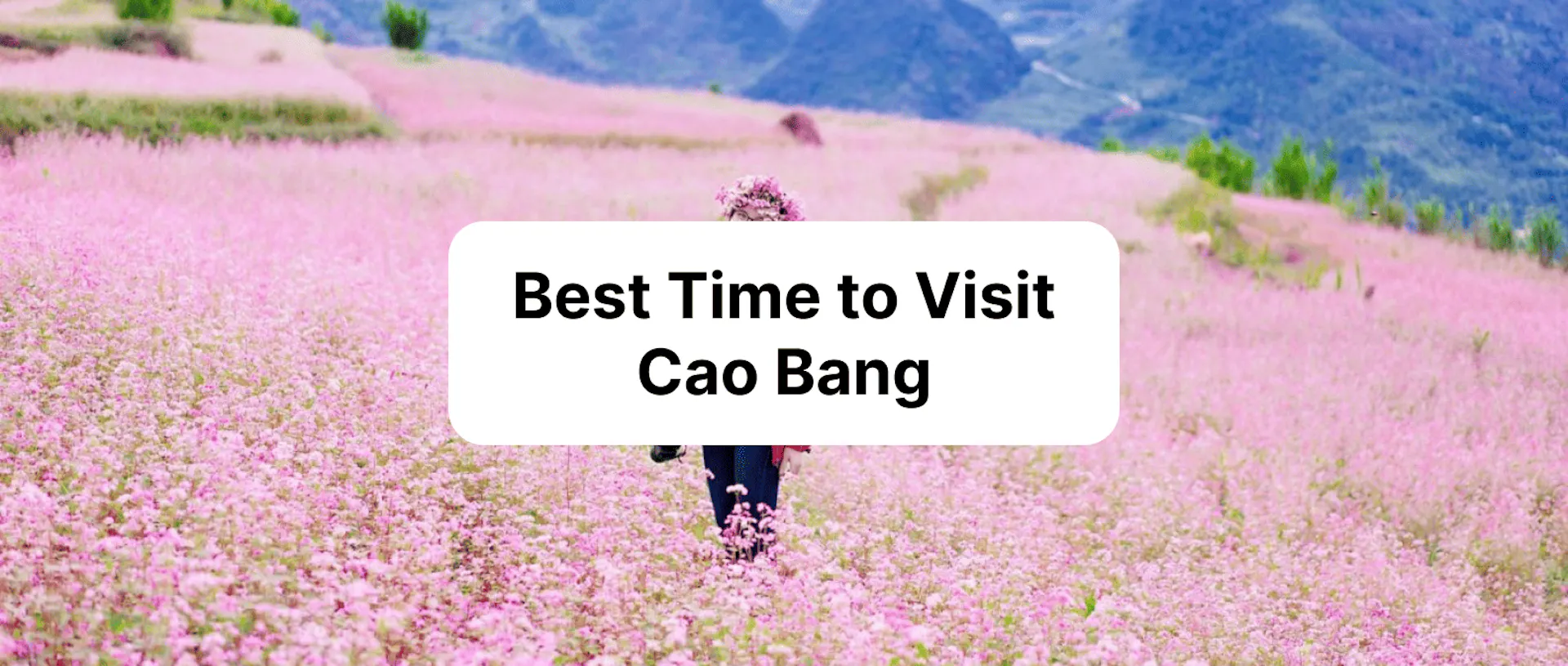
Despite the harsh, unforgiving climatological conditions, the freezing temperatures trigger a spectacular biological response across the rocky, nutrient-deprived soil that characterizes the limestone valleys. This specific timeframe marks the highly anticipated buckwheat flower season Cao Bang, where vast, undulating fields of delicate pink and white blossoms aggressively blanket the severe, grey limestone environment. These incredibly resilient highland flora thrive exclusively within this challenging meteorological microclimate, creating a stunning, high-contrast visual spectacle against the brooding, mist-shrouded mountain peaks. Exploring the province during this quiet, dormant agricultural phase offers a completely different emotional resonance compared to the frantic energy of the harvest months. The winding mountain roads remain entirely devoid of heavy domestic tourist traffic, allowing the adventurous road-tripper to command the silent, twisting asphalt in absolute solitude. This introspective, freezing season is designed explicitly for the resilient cultural geographer who finds profound beauty in the stark, uncompromising survival of both the indigenous flora and the resilient ethnic hill-tribes enduring the long, bitter highland winter.
Awakening Earth – Spring’s Cultural Rebirth (March to May) Offers Another Best Time to Visit Cao Bang
The Re-Emergence of the Landscape
As the freezing grip of winter gradually releases its hold on the northern frontier, the period from March to May ushers in a profound, sweeping biological and cultural resurrection across the limestone valleys. For travelers prioritizing deep ethnographic engagement and vibrant botanical observation, this transitional season represents an incredibly rewarding period to visit. The re-emergence of the landscape is dictated by a steady, reliable increase in ambient temperatures and the arrival of gentle, early spring mists that systematically thaw the dormant earth. This subtle hydrological shift aggressively rejuvenates the dense, broadleaf forest canopy, transforming the arid, grey ridges into an explosive canvas of vibrant, saturated greens. Simultaneously, this warming trend sparks the frantic initiation of the spring agricultural planting cycle. Observing the indigenous farming communities meticulously preparing the flooded, mirror-like rice terraces along the river basins using traditional water buffalo provides an authoritative, deeply educational window into the highly synchronized relationship between local human survival and the unforgiving, shifting microclimate of the karst terrain.
Festive Traditions and Cultural Alignment
Beyond the sheer visual transformation of the flora, spring is definitively characterized by its intense, vibrant cultural alignment, drawing visitors deep into the spiritual life of the mountains. Traveling during these warming months allows the culturally astute observer to witness the most significant traditional festivals celebrated by the Tay, Nung, and Hmong communities residing within the geopark. These ancient, deeply revered communal gatherings are specifically timed to coincide with the changing of the agricultural seasons, serving as vital spiritual rituals designed to appease the mountain deities and guarantee a prosperous, abundant summer harvest. Participating respectfully in these lively, percussion-heavy ceremonies—often featuring traditional folk singing, elaborate religious offerings, and the widespread consumption of locally distilled corn wine—grants the visitor an unparalleled, immersive insight into the region’s living, breathing cultural heritage. The delicate balance of cool, manageable trekking weather and this overwhelming surge of indigenous cultural activity ensures that the spring months provide a uniquely holistic, deeply rewarding expeditionary experience for those who wish to understand the deeply rooted spiritual mechanics that continuously drive the remote mountain populations.
The Monsoon Rhythm – Summer Realities (June to August) and the Best Time to Visit Cao Bang
Understanding the Summer Rains
To comprehensively understand the geographical volatility of this province, one must rigorously analyze the severe climatological realities of the summer monsoon. The stark, violent contrast between the Cao Bang dry season vs wet season fundamentally dictates the absolute boundaries of overland exploration. From June through August, the region is battered by relentless, torrential tropical downpours that aggressively test the limits of both the natural topography and the provincial infrastructure. Providing an honest, expert assessment of this wet season requires acknowledging that these heavy rains severely impact travel logistics in profound ways. The pristine, emerald rivers rapidly transform into violent, muddy torrents carrying massive volumes of eroded sediment, while the unpaved, remote mountain trails frequently degenerate into impassable, highly dangerous mudslides. For the casual tourist seeking pristine photographs or effortless transit, this is undoubtedly the most challenging, least optimal period to attempt a visit to the isolated border zones.
The Double-Edged Waterfall Experience
However, for the hardened adventure traveler seeking raw, visceral elemental power, the summer monsoon delivers a uniquely intimidating spectacle, specifically regarding the infamous mùa nước lũ (flood season) dynamics of the regional waterfalls. During these saturated months, the water volume plunging over the transnational fault line reaches its absolute, terrifying zenith. The waterfall generates a deafening, thunderous roar that physically shakes the surrounding bedrock, creating an immense, towering column of spray that completely obliterates the surrounding valley in thick, blinding mist. While it completely sacrifices the tranquil, crystal-clear photography associated with the autumn months, witnessing this double-edged hydrological explosion offers an unforgettable, visceral encounter with the sheer, untamed tectonic force of the earth, proving that understanding the most intense weather patterns is crucial for those adequately prepared to face the extreme, torrential wrath of the tropical highland climate.
Strategic Planning and Packing Wisdom for the Best Time to Visit Cao Bang
Tailoring Your Itinerary to the Seasons
Ultimately, executing a highly successful expedition to this formidable frontier relies on your ability to strategically tailor your specialized itinerary to these distinct seasonal stratifications. Recognizing the ideal weather window is fundamentally an exercise in matching your specific, personal travel objectives with the precise calendar months that reliably deliver those required conditions. If your primary objective is capturing high-resolution, professional-grade landscape photography of golden harvests and crystalline rivers, you must strictly target the dry, stable months of late September or October, packing lightweight, breathable layers for the daytime heat. Conversely, if your goals involve intensive, solitary trekking through freezing, mist-covered pine forests to witness the blooming buckwheat, the harsh winter months demand heavy, wind-resistant technical gear, moisture-wicking base layers, and rigorous physical preparation. By consulting detailed meteorological data and meticulously packing specialized equipment designed to counteract the specific thermal and hydrological challenges of your chosen seasonal window, you establish a critical foundation of safety and comfort, ensuring your demanding journey through the northern highlands remains a triumphant, highly calculated success rather than a miserable logistical failure.
Final Thoughts on the Best Time to Visit Cao Bang
In final analysis, deliberately aligning your rigorous travel schedule with the province's complex, shifting seasonal cadence transforms a simple, standard vacation into an unforgettable, masterfully executed geographical expedition. By accurately determining the best time to visit Cao Bang, you actively synchronize your movements with the ancient, enduring rhythms of the natural world, allowing the landscape to reveal its deepest, most spectacular secrets. Which profound meteorological experience—the pristine, golden agricultural harvest of the crisp autumn, or the quiet, misty floral solitude of the freezing winter—best matches your ultimate frontier travel vision?
Read more: Cao Bang Travel Guide

By Roy Trinh
Editor
Roy Trinh is a travel writer and destination expert at Go Visit Vietnam, dedicated to helping travelers discover the beauty, culture, and diversity of Vietnam. Through well-researched travel guides, practical itineraries, local insights, and authentic recommendations, Roy shares valuable information to inspire memorable journeys across the country. From vibrant cities and breathtaking landscapes to regional cuisine and cultural heritage, every guide is created to help visitors experience Vietnam with confidence and curiosity.
Frequently Asked Questions About the Best Time to Visit Cao Bang
When is the best time to visit Cao Bang?
The best time to visit Cao Bang is from September to November, when the weather is cool and dry, Ban Gioc Waterfall is at its most impressive after the rainy season, and the surrounding rice fields turn golden.
Is Cao Bang worth visiting during the rainy season?
Yes. The rainy season (May to August) brings lush green landscapes and dramatic waterfalls. While occasional heavy rain may affect travel plans, nature is at its most vibrant during this period.
What is Cao Bang like in winter?
Winter (December to February) is cool, and temperatures can drop below 10°C in mountainous areas. The crisp air, misty valleys, and peaceful scenery make it a wonderful season for photography and sightseeing.
Which season is best for trekking in Cao Bang?
Autumn and spring are ideal for trekking. Comfortable temperatures, lower humidity, and clear skies make hiking through Cao Bang's mountains, forests, and ethnic villages much more enjoyable.
When should I visit Ban Gioc Waterfall?
The waterfall is most spectacular from September to October, when water levels remain high after the rainy season while the weather becomes cooler and clearer. This period also offers excellent conditions for photography and boat rides.
Advertising box