
Banh Cuon vs Banh Uot: What's the Difference?
Banh Cuon and Banh Uot are two popular Vietnamese steamed rice dishes made from thin, delicate rice batter, but they differ mainly in how they are prepared and served. Banh Cuon is typically rolled around a savory filling of minced pork and wood-ear mushrooms, while Banh Uot is usually served unfilled with scallion oil, fried shallots, herbs, and dipping sauce. Discover their shared origins, ingredients, textures, toppings, sauces, regional variations, and the easiest ways to tell these Vietnamese rice dishes apart.
On this page
- What Are Banh Cuon and Banh Uot?
- Banh Cuon vs Banh Uot: The Main Difference
- How Are Banh Cuon and Banh Uot Made?
- Banh Cuon Ingredients
- Banh Uot Ingredients
- Texture: Banh Cuon vs Banh Uot
- Fillings: The Biggest Difference
- Toppings and Accompaniments
- Banh Uot with Grilled Pork
- Dipping Sauces
- Regional Differences
- Banh Cuon vs Banh Uot: Quick Comparison
- How to Eat Banh Cuon
- How to Eat Banh Uot
- Are Banh Cuon and Banh Uot the Same?
- Which One Should You Try?
- Conclusion
If you are exploring Vietnamese cuisine, Banh Cuon and Banh Uot can look remarkably similar at first glance. Both are made from a thin rice batter that is steamed over a cloth, creating soft, translucent sheets with a delicate, silky texture. Yet the two dishes are not quite the same.
The main difference is simple: Banh Cuon is usually filled and rolled, while Banh Uot is generally served without a filling. Their toppings, sauces, regional variations, and ways of eating can also differ.
Understanding Banh Cuon vs Banh Uot offers a glimpse into Vietnam's long tradition of transforming rice into delicate, satisfying street food.
What Are Banh Cuon and Banh Uot?
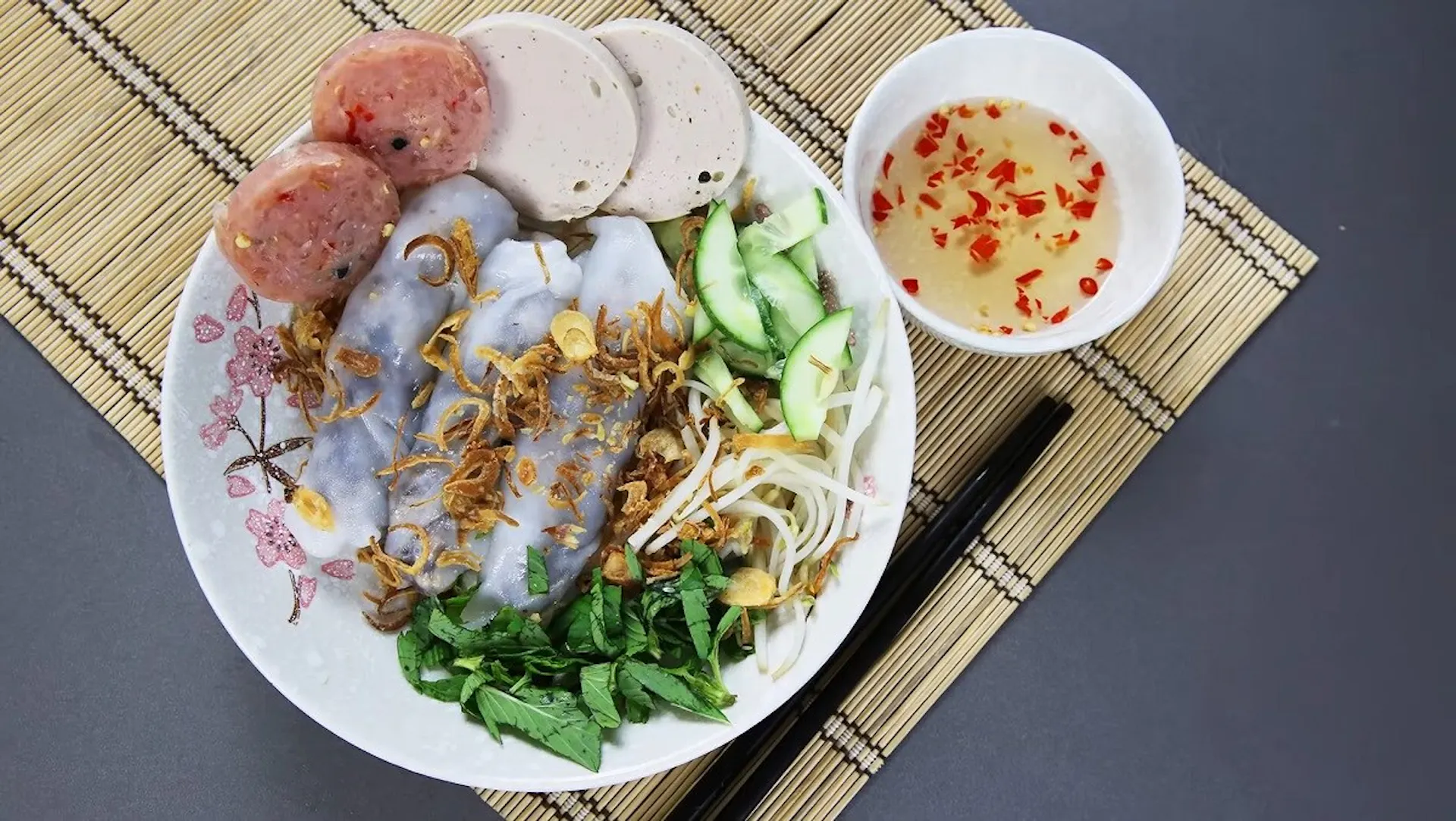
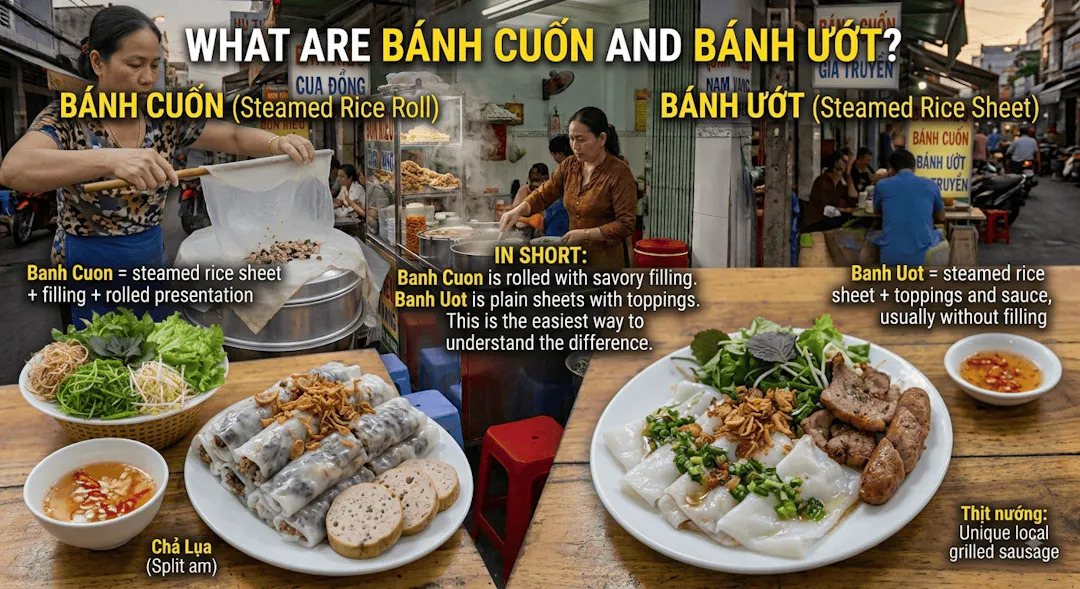
Banh Cuon (Bánh Cuốn) is a Vietnamese steamed rice roll traditionally made from a thin rice-flour sheet wrapped around a savory filling. The classic filling contains minced pork and wood-ear mushrooms, while the finished rolls are commonly served with Vietnamese pork sausage, fried shallots, herbs, and fish sauce.
Banh Uot (Bánh Ướt) is made using a similar steamed rice sheet, but it is usually unfilled. The soft sheets are folded or cut and served with scallion oil, fried shallots, herbs, dipping sauce, and, depending on the region, grilled pork or other savory toppings.
In short:
- Banh Cuon = steamed rice sheet + filling + rolled presentation
- Banh Uot = steamed rice sheet + toppings and sauce, usually without filling
This distinction is the easiest way to understand the difference between Banh Cuon and Banh Uot.
Banh Cuon vs Banh Uot: The Main Difference
Although both dishes share the same basic cooking technique, their final presentation and eating experience are different.
Banh Cuon is designed around its filling. The freshly steamed rice sheet is placed on a work surface, filled with seasoned minced pork and wood-ear mushrooms, and then carefully rolled into a soft cylinder.
Banh Uot focuses more on the rice sheet itself. Because there is normally no filling inside, the delicate texture and subtle flavor of the steamed rice become more noticeable. Savory flavors come from the dipping sauce, fried shallots, scallion oil, grilled meat, or other toppings.
The two dishes can therefore be thought of as different expressions of the same basic rice-sheet tradition.
How Are Banh Cuon and Banh Uot Made?
The preparation of both dishes begins with rice.
Rice is soaked in water and ground into a smooth batter. Depending on the recipe, tapioca starch may be added to improve elasticity and help the finished sheets remain soft without tearing.
The batter is then spread into a very thin layer over a tightly stretched cloth positioned above a pot of boiling water. Steam cooks the batter within seconds, transforming it into a soft, translucent rice sheet.
The real difference comes after steaming.
- For Banh Cuon, the sheet is immediately filled and rolled while still warm.
- For Banh Uot, the sheet is usually transferred without a filling, lightly coated with scallion oil, and folded or layered on a plate.
This shared preparation explains why the dishes can look almost identical before toppings and fillings are added.
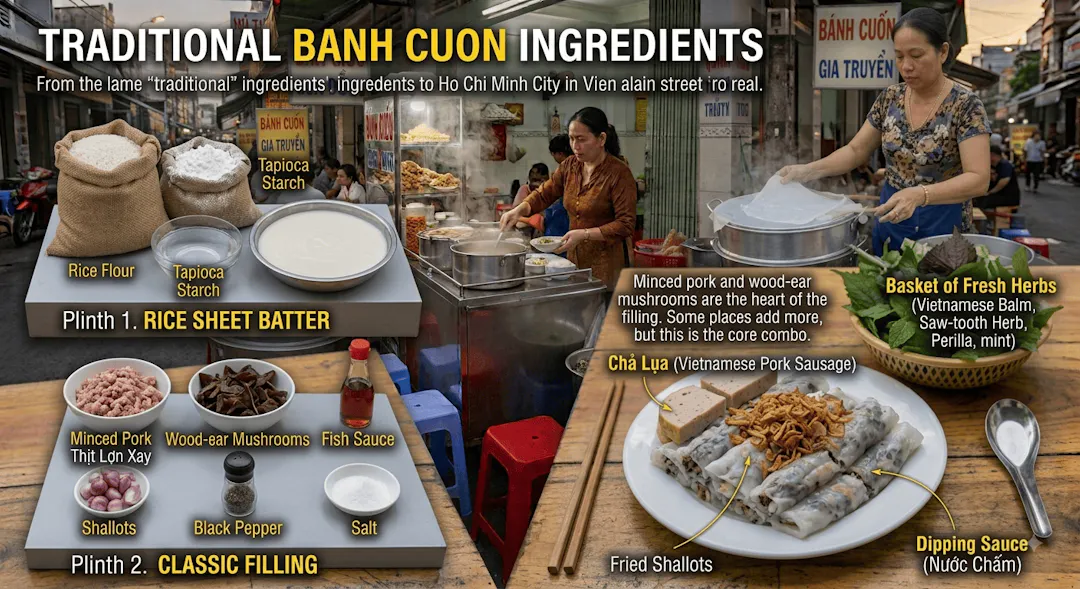
Banh Cuon Ingredients
Traditional Banh Cuon ingredients are relatively simple.
The rice sheet is made primarily from rice flour and water, with some recipes using tapioca starch for additional elasticity.
The classic filling usually includes:
- Minced pork
- Wood-ear mushrooms
- Shallots
- Fish sauce
- Black pepper
- Salt
The finished dish is commonly accompanied by chả lụa, or Vietnamese steamed pork sausage, along with fried shallots and fresh herbs.
Some restaurants and regional vendors add additional ingredients, but minced pork and wood-ear mushrooms remain the most recognizable combination.
Banh Uot Ingredients
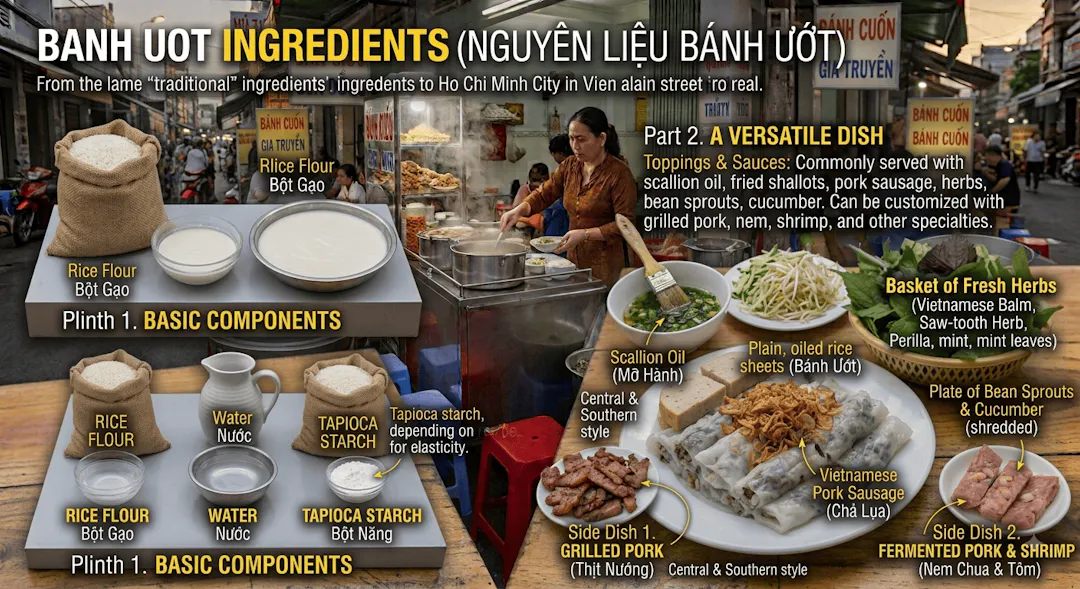
The basic Banh Uot ingredients are even simpler because the traditional version does not contain an interior filling.
The rice sheets are commonly served with:
- Rice flour
- Water
- Tapioca starch, depending on the recipe
- Scallion oil
- Fried shallots
- Vietnamese pork sausage
- Fresh herbs
- Bean sprouts
- Cucumber
- Fish sauce or other dipping sauces
In central and southern Vietnam, Banh Uot can also be served with grilled pork, fermented pork, shrimp, or other regional specialties.
This makes Banh Uot particularly versatile.
Texture: Banh Cuon vs Banh Uot
Texture is one of the most enjoyable similarities between the two dishes.
Both should be soft, moist, smooth, and slightly elastic.
A well-made rice sheet should be thin enough to feel delicate but strong enough to hold together when picked up with chopsticks.
The difference is more noticeable when eating the finished dishes.
Banh Cuon has several layers of texture: the soft rice wrapper, juicy minced pork, slightly crunchy wood-ear mushrooms, and crisp fried shallots.
Banh Uot provides a more minimalist experience. Without a filling, the silky rice sheet becomes the central feature. Fried shallots, herbs, grilled pork, or dipping sauce provide contrasting textures.
If you enjoy delicate rice textures, Banh Uot allows you to appreciate the rice sheet more directly. If you prefer a more substantial bite, Banh Cuon provides additional savory filling.
Fillings: The Biggest Difference
The clearest distinction between these two Vietnamese rice dishes is the filling.
Banh Cuon
Banh Cuon is traditionally filled before being rolled.
The filling is usually made with minced pork and finely chopped wood-ear mushrooms. The mixture is seasoned and cooked before being wrapped inside the steamed rice sheet.
The result is a soft, cylindrical roll with a savory center.
Banh Uot
Traditional Banh Uot is generally not filled.
Instead, the steamed rice sheets are layered or folded and served with toppings and dipping sauce.
Some modern or regional preparations may combine Banh Uot with grilled pork or other ingredients, but these toppings are generally served alongside or on top rather than enclosed inside the rice sheet.
Toppings and Accompaniments
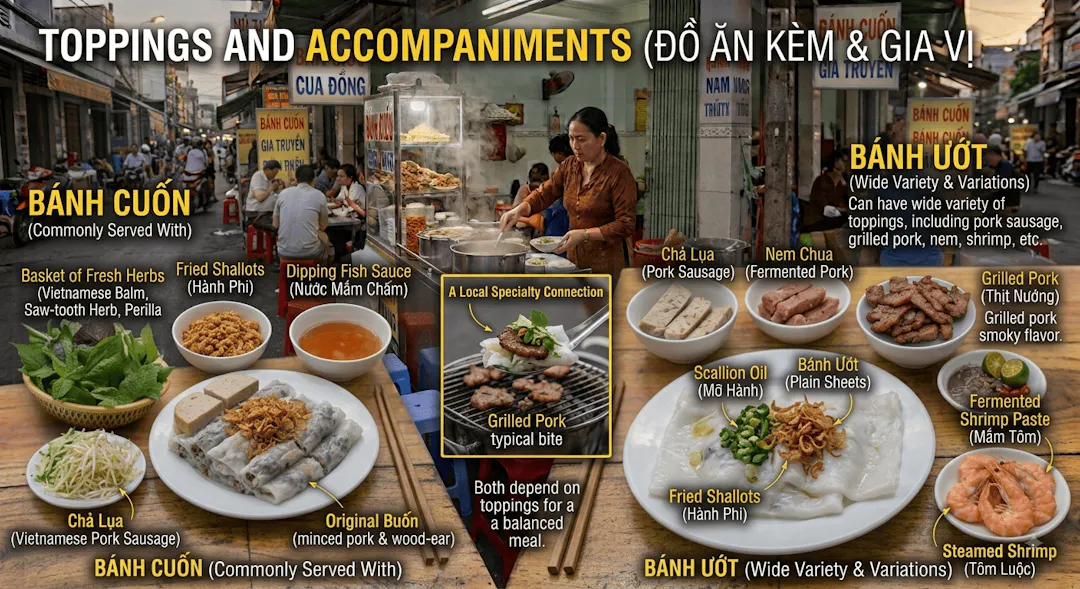
Both dishes depend on toppings to create a balanced meal.
Banh Cuon is commonly served with:
- Chả lụa
- Fried shallots
- Fresh herbs
- Bean sprouts
- Cucumber
- Fish sauce
The pork sausage provides a firm, savory contrast to the soft rice rolls.
Banh Uot can have a wider variety of accompaniments depending on where you eat it. Popular additions include:
- Chả lụa
- Fried shallots
- Scallion oil
- Fresh herbs
- Bean sprouts
- Cucumber
- Grilled pork
- Fermented pork
- Shrimp or seafood
One particularly popular combination is Banh Uot with grilled pork, in which smoky, caramelized pork is served with the soft rice sheets and fresh herbs.
Banh Uot with Grilled Pork
Banh Uot with grilled pork is especially associated with central and southern Vietnamese food culture.
The pork is commonly marinated with ingredients such as fish sauce, lemongrass, garlic, shallots, sugar, and pepper before being grilled over charcoal.
The smoky meat provides a strong contrast to the soft, mild rice sheets.
A typical bite might combine:
silky Banh Uot + grilled pork + herbs + fried shallots + dipping sauce.
This combination makes Banh Uot much more substantial while preserving the delicate texture of the steamed rice.
Dipping Sauces
Sauce is essential because the rice sheets themselves are relatively mild.
For Banh Cuon, a light nước mắm chua ngọt is commonly used. Fish sauce is balanced with water, sugar, lime juice or vinegar, garlic, and chili.
The result is a savory, slightly sweet and tangy sauce that complements the pork filling without overpowering it.
Banh Uot can also be served with sweet-and-sour fish sauce, particularly in southern Vietnam.
In parts of central Vietnam, however, you may encounter mắm nêm, a stronger fermented anchovy sauce often mixed with pineapple, garlic, chili, and sugar.
This bolder sauce works particularly well with Banh Uot served alongside grilled meat.
Regional Differences
Vietnam's regional food culture means there is no single way to eat either dish.
Northern Vietnam
Banh Cuon is strongly associated with northern Vietnamese cuisine, particularly Hanoi. Northern-style Banh Cuon tends to emphasize delicate rice sheets, savory pork filling, wood-ear mushrooms, pork sausage, fried shallots, and a relatively light fish sauce.
Central Vietnam
Central Vietnam offers many variations of Banh Uot, often served with grilled pork and stronger dipping sauces.
The combination of soft rice sheets, smoky meat, herbs, and fermented anchovy sauce creates a more intense flavor profile.
Southern Vietnam
Southern preparations often feature sweeter and more generous accompaniments. Banh Uot can be served with grilled meats, herbs, vegetables, and sweet-and-sour fish sauce.
These regional differences demonstrate how Vietnamese cooks adapt a common rice-based technique to local ingredients and flavor preferences.
Banh Cuon vs Banh Uot: Quick Comparison
The easiest way to remember the difference is:
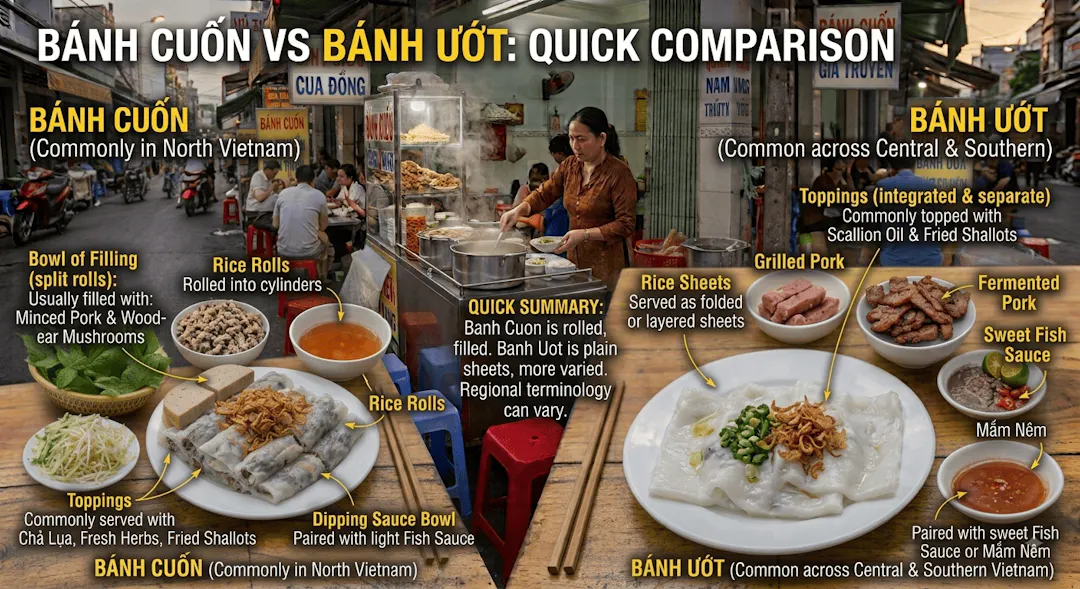
Banh Cuon
- Usually filled
- Rolled into cylinders
- Common filling: minced pork and wood-ear mushrooms
- Often served with chả lụa
- Particularly associated with northern Vietnam
- Usually paired with light fish sauce
Banh Uot
- Usually unfilled
- Served as folded or layered rice sheets
- Often topped with scallion oil and fried shallots
- Frequently paired with grilled pork
- Common across central and southern Vietnam
- Can be served with sweet fish sauce or mắm nêm
Despite these differences, there is considerable overlap. Vietnamese restaurants may adapt the recipes, and regional terminology is not always completely consistent.
How to Eat Banh Cuon
When eating Banh Cuon, start with one warm rice roll and dip it lightly into the fish sauce.
Try combining the soft roll with a slice of chả lụa and some fried shallots.
Fresh herbs can be added between bites to provide a refreshing contrast to the warm pork filling.
The goal is to experience several textures together: soft rice, savory pork, slightly crunchy mushroom, crisp shallot, and aromatic herbs.
How to Eat Banh Uot
For Banh Uot, add some dipping sauce to the rice sheets or dip each portion individually.
Try combining the soft rice sheet with fried shallots, herbs, cucumber, and grilled pork.
If the dish comes with mắm nêm, use a small amount first because its fermented flavor can be quite strong.
The combination of mild rice, smoky meat, fresh herbs, and salty-sweet sauce is one of the defining pleasures of this Vietnamese street food.
Are Banh Cuon and Banh Uot the Same?
No, but they are closely related.
Both are made from thin steamed rice sheets and share similar ingredients and cooking techniques. The main distinction is how the sheets are assembled and served.
Banh Cuon is traditionally filled and rolled, while Banh Uot is traditionally served without a filling.
Because Vietnamese cuisine varies considerably from region to region, the boundary can become less obvious when modern or regional variations are considered.
Which One Should You Try?
Choose Banh Cuon if you want a more complete savory filling inside the rice roll. The combination of minced pork, wood-ear mushrooms, pork sausage, fried shallots, and fish sauce makes it a satisfying Vietnamese breakfast.
Choose Banh Uot if you want to focus on the delicate texture of steamed rice sheets or enjoy them with grilled pork, fresh herbs, and a stronger regional dipping sauce.
For travelers exploring Vietnam, trying both is the best way to understand their relationship.
Conclusion
The difference between Banh Cuon and Banh Uot is simple but reveals the remarkable flexibility of Vietnamese rice cuisine. Both begin with a thin, steamed rice sheet, but Banh Cuon traditionally wraps a savory pork and mushroom filling, while Banh Uot is generally served unfilled with toppings, herbs, meat, and dipping sauce.
From Hanoi's delicate Banh Cuon to central Vietnam's grilled-pork Banh Uot, these dishes demonstrate how one humble ingredient—rice—can produce completely different culinary experiences.
If you are exploring Vietnamese street food, tasting both dishes is an easy and delicious way to experience the country's regional cooking traditions.

By Roy Trinh
Editor
Roy Trinh is a travel writer and destination expert at Go Visit Vietnam, dedicated to helping travelers discover the beauty, culture, and diversity of Vietnam. Through well-researched travel guides, practical itineraries, local insights, and authentic recommendations, Roy shares valuable information to inspire memorable journeys across the country. From vibrant cities and breathtaking landscapes to regional cuisine and cultural heritage, every guide is created to help visitors experience Vietnam with confidence and curiosity.
Frequently Asked Questions About Banh Cuon vs Banh Uot
What is the difference between Banh Cuon and Banh Uot?
The main difference is the filling. Banh Cuon is traditionally a thin steamed rice sheet rolled around a savory filling of minced pork and wood-ear mushrooms, while Banh Uot is usually served without an interior filling and topped with scallion oil, fried shallots, herbs, meat, and dipping sauce.
Are Banh Cuon and Banh Uot made from the same ingredients?
They share the same basic foundation of rice flour, water, and sometimes tapioca starch. The main difference comes from how the steamed rice sheets are assembled and served. Banh Cuon typically includes a pork and mushroom filling, while Banh Uot is generally unfilled.
What does Banh Cuon taste like?
Banh Cuon has a mild, slightly sweet rice flavor with a soft and silky texture. Its minced pork and wood-ear mushroom filling adds savory, peppery, and slightly earthy flavors, while fish sauce and fried shallots provide additional depth.
What does Banh Uot taste like?
Banh Uot has a delicate rice flavor and a soft, slippery texture. Because it is usually unfilled, its flavor comes mainly from toppings and dipping sauces such as scallion oil, fried shallots, Vietnamese fish sauce, herbs, and grilled pork.
Is Banh Cuon always filled with pork?
Traditional Banh Cuon commonly contains minced pork and wood-ear mushrooms, but variations exist. Some restaurants and regional versions may use different fillings or additional ingredients.
Is Banh Uot always served without filling?
Traditional Banh Uot is generally unfilled. Instead, the steamed rice sheets are served with toppings and accompaniments. Some modern or regional dishes may add meat or other ingredients, but these are usually served on top or alongside the rice sheets.
What is Banh Uot with grilled pork?
Banh Uot with grilled pork is a popular variation in which soft steamed rice sheets are served with smoky, caramelized grilled pork, fresh herbs, fried shallots, and dipping sauce. It is especially popular in central and southern Vietnam.
Advertising box