
Balut Recipe: How to Cook & Eat Vietnamese Balut
Learn how to cook and enjoy balut, Vietnam’s famous fertilized duck egg, at home. This guide explains the essential ingredients, cooking time, traditional Vietnamese seasonings, and simple steps for serving balut with rau răm, ginger, salt, pepper, and lime. You’ll also discover what balut tastes like, how locals eat it, and popular variations such as hột vịt lộn xào me. Whether you’re curious about Vietnamese street food or want to recreate this traditional dish, this guide makes preparing balut simple and approachable.
On this page
- Balut Recipe at a Glance
- What Is Balut?
- Balut Ingredients
- How to Cook Balut
- How Long Should You Boil Balut?
- How to Eat Balut
- What Does Balut Taste Like?
- Traditional Vietnamese Balut Seasonings
- Tips for Cooking Balut at Home
- Food Safety Tips
- Popular Vietnamese Balut Variations
- Balut and Vietnamese Street Food Culture
- Balut vs. Regular Duck Eggs
- Final Thoughts
Balut is one of Vietnam’s most distinctive street foods: a fertilized duck egg that is incubated until the embryo develops, then cooked and served hot in its shell. In Vietnam, it is commonly called hột vịt lộn in the South and trứng vịt lộn in the North.
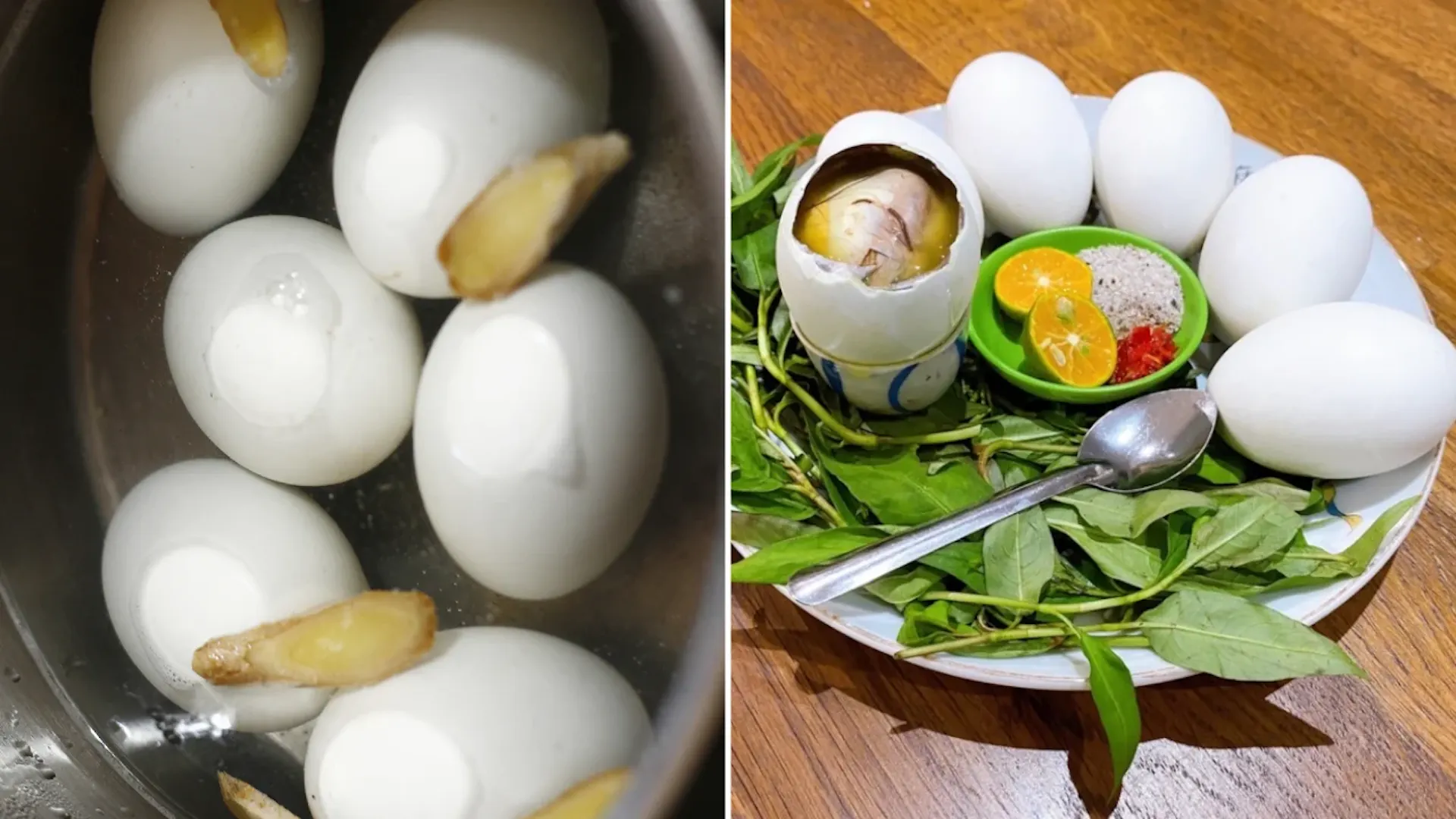
A traditional balut recipe is surprisingly simple. The eggs are gently boiled or simmered and served with rau răm (Vietnamese coriander), fresh ginger, salt, black pepper, and lime. The warm broth inside the shell, rich yolk, tender embryo, and peppery herbs create a combination that is savory, rich, spicy, and refreshing.
If you are trying balut for the first time, this guide explains what balut is, what ingredients you need, how to cook balut, how long to boil it, and how Vietnamese diners traditionally eat it.
Balut Recipe at a Glance
- Prep time: 5 minutes
- Cook time: About 20–30 minutes
- Servings: 2–4
- Main ingredient: Incubated fertilized duck eggs
- Best served with: Rau răm, ginger, salt, black pepper, and lime
Quick Answer: How Long Do You Cook Balut?
Balut is generally cooked by simmering the eggs in water for around 20–30 minutes, depending on their size and starting temperature. Once cooked, the eggs are served hot with Vietnamese coriander, ginger, and a salt, pepper, and lime dipping mixture.
What Is Balut?
Balut is a fertilized duck egg that has been incubated until the embryo has developed, then cooked and eaten while still warm. The exact stage of development varies according to local preference and the type of balut being sold.
In Vietnam, balut is known as hột vịt lộn or trứng vịt lộn. It is commonly sold at street food stalls, small restaurants, markets, and casual eateries, particularly in the evening.
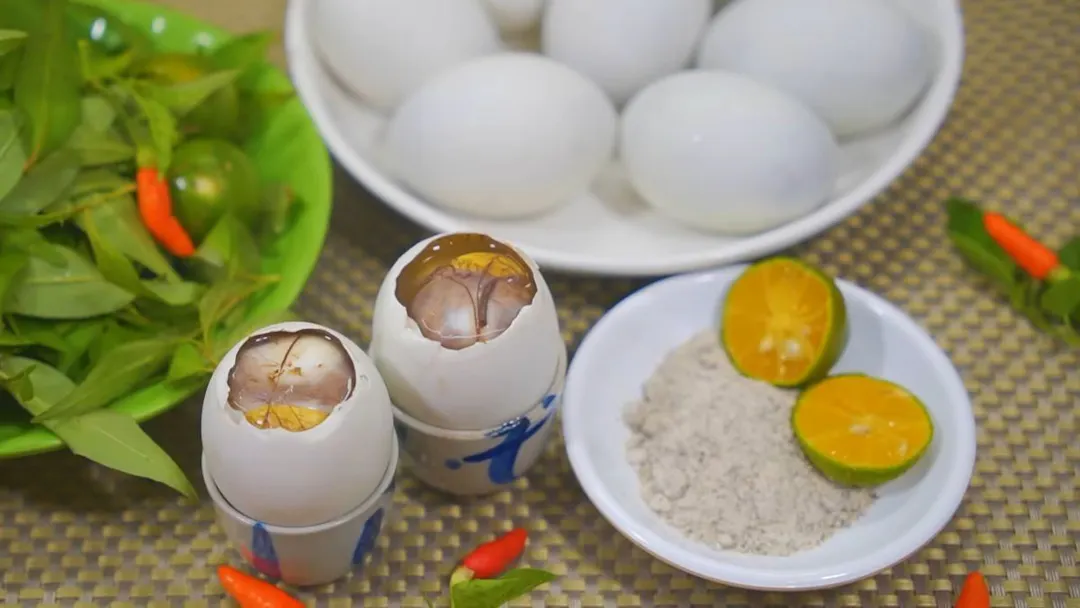
Unlike a regular boiled egg, balut contains several distinct textures. Inside the shell, you can find the rich yellow yolk, savory broth, firm egg white, and developing duck embryo.
For visitors unfamiliar with the dish, the appearance can be surprising. However, balut is a familiar and traditional food in Vietnam and is usually eaten as a casual snack rather than as part of a formal meal.
Balut Ingredients
A traditional Vietnamese preparation does not require many ingredients.
Main Ingredient
- 4 balut eggs — commercially prepared, fertilized duck eggs that have been incubated
To Serve
- 1 small bunch rau răm (Vietnamese coriander)
- 1 small piece fresh ginger
- 1 teaspoon salt
- ½ teaspoon freshly ground black pepper
- 1 lime
The eggs provide most of the flavor. The herbs and seasonings are important because they add freshness, acidity, spice, and contrast to the rich yolk and savory broth.
How to Cook Balut
Cooking balut at home is similar to boiling regular eggs, although the eggs are best handled gently to preserve the broth inside the shell.
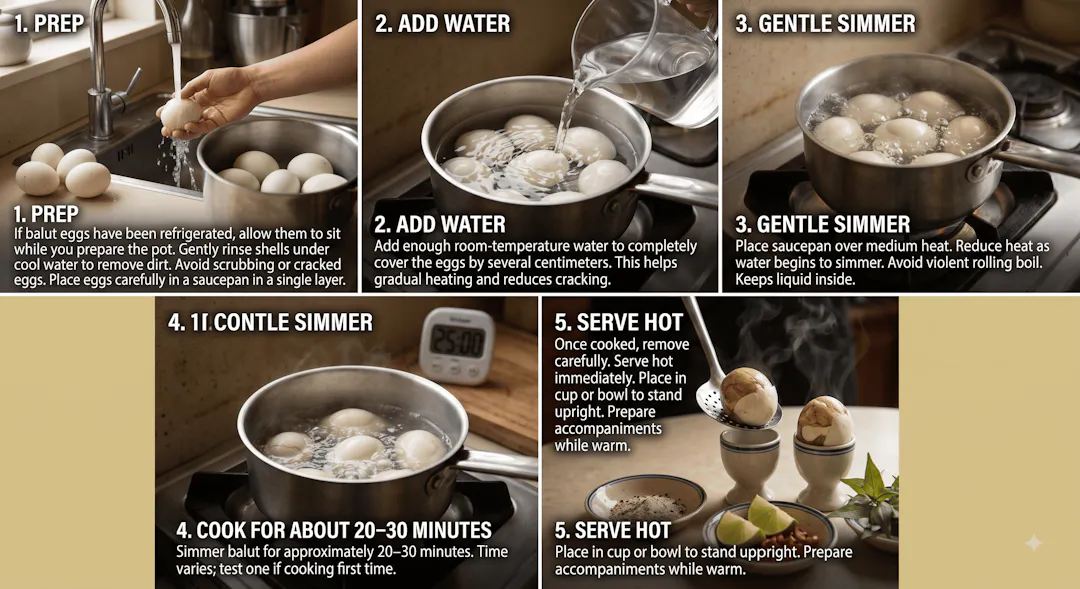
1. Prepare the Eggs
If the balut eggs have been refrigerated, allow them to sit for a short time while you prepare the pot.
Gently rinse the shells under cool running water to remove any visible dirt. Avoid scrubbing aggressively or using cracked eggs.
Place the eggs carefully in a saucepan in a single layer.
2. Add Water
Add enough room-temperature water to completely cover the eggs by several centimeters.
Starting with room-temperature water helps the eggs heat gradually and reduces the chance of cracking from sudden temperature changes.
3. Bring the Water to a Gentle Simmer
Place the saucepan over medium heat.
As the water begins to simmer, reduce the heat so that the eggs cook gently rather than being subjected to a violent rolling boil.
A gentle simmer helps reduce shell cracking and keeps the flavorful liquid inside the egg.
4. Cook for About 20–30 Minutes
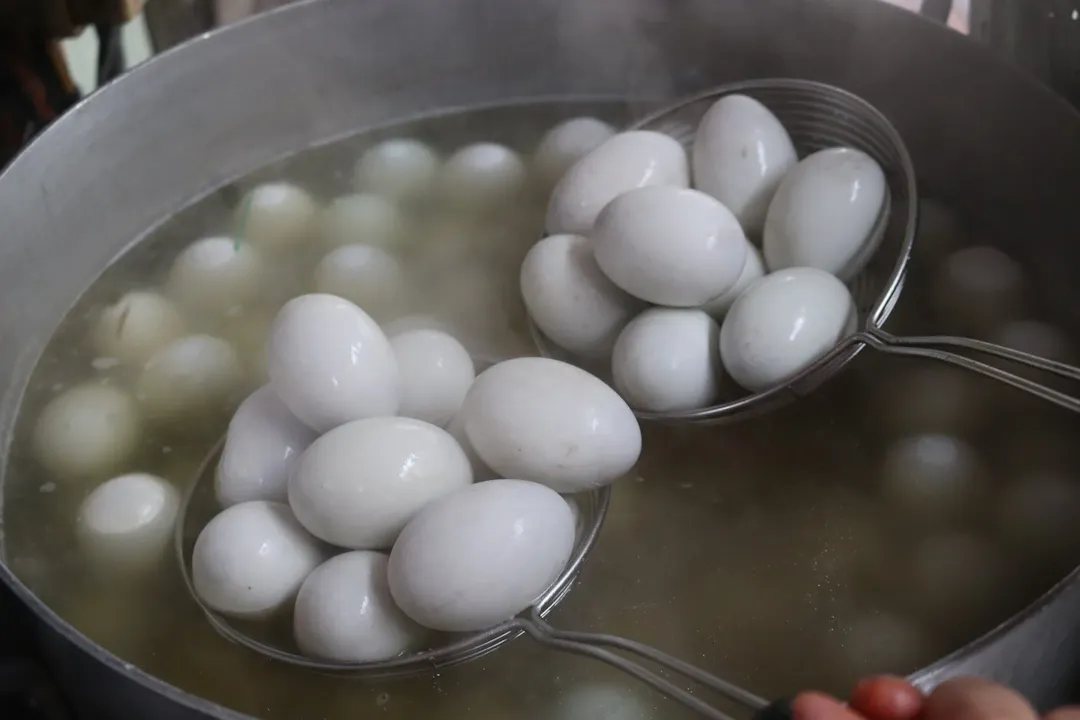
Simmer the balut for approximately 20–30 minutes.
Cooking time can vary depending on the size of the eggs, their starting temperature, and your cooking equipment. If you are cooking balut for the first time, you may want to test one egg before serving the entire batch.
5. Serve Hot
Once cooked, carefully remove the eggs from the water.
Balut is traditionally served hot, often immediately after cooking. Place each egg in a small cup or bowl so it can stand upright while being opened.
Prepare the accompaniments while the eggs are still warm.
How Long Should You Boil Balut?
For most balut eggs, 20–30 minutes of simmering is a practical cooking range.
Avoid relying on an exact minute count because balut eggs can differ in size and incubation stage. The most important goal is to cook them thoroughly while keeping the shell intact.
If the eggs are already cooked and being reheated, they require much less time than raw balut. Always follow the storage and cooking instructions provided by the seller when available.
How to Eat Balut
Eating balut for the first time can seem unfamiliar, but the traditional Vietnamese method is straightforward.
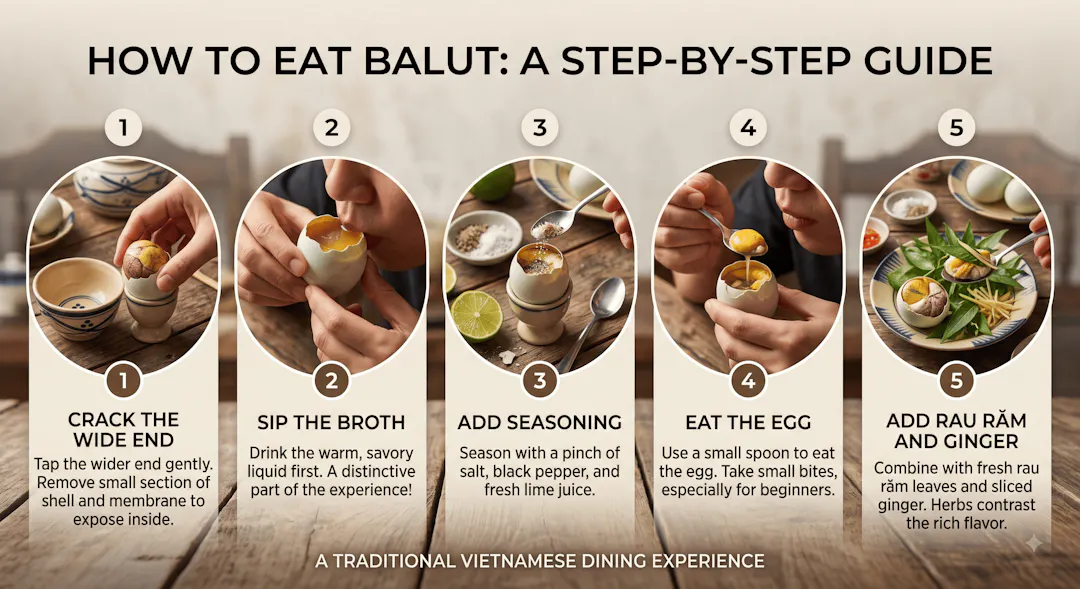
Step 1: Crack the Wide End
Hold the egg upright and gently tap the wider end against a hard surface.
Remove a small section of shell and membrane to expose the inside.
Step 2: Sip the Broth
One of the most distinctive parts of balut is the warm, savory liquid inside the shell.
Many Vietnamese diners drink this broth first before eating the rest of the egg.
Step 3: Add Seasoning
Add a little salt, black pepper, and lime juice according to your taste.
The salty, peppery, and acidic flavors help balance the richness of the egg.
Step 4: Eat the Egg
Use a small spoon to eat the yolk, egg white, and developing embryo.
Take small bites if you are trying balut for the first time.
Step 5: Add Rau Răm and Ginger
Eat the egg together with fresh rau răm and thin slices of ginger.
The herbs provide a fresh, peppery flavor that contrasts with the rich and savory egg.
What Does Balut Taste Like?
Balut has a rich and savory flavor, but the exact taste depends on the stage of development and how the egg is cooked.
The yolk is creamy, dense, and intensely eggy. The liquid inside the shell is warm and savory, while the egg white is firmer than that of a typical boiled egg.
The developing embryo has a more distinctive texture and flavor. It can be tender and slightly chewy, with a deeper savory character than ordinary egg.
Fresh rau răm, ginger, black pepper, and lime provide a spicy, herbal, and acidic contrast that makes the overall dish feel less heavy.
If you have never eaten balut before, the texture is usually more surprising than the seasoning.
Traditional Vietnamese Balut Seasonings
A classic Vietnamese serving of balut is built around a few simple accompaniments.
Rau Răm
Rau răm, often translated as Vietnamese coriander, is one of the most traditional accompaniments for hột vịt lộn.
It has a distinctive peppery, herbal flavor that works particularly well with the rich egg yolk.
Fresh Ginger
Thinly sliced fresh ginger adds a warm, spicy bite.
The combination of ginger and rau răm is especially common when balut is served hot.
Salt, Black Pepper, and Lime
A simple mixture of salt, freshly ground black pepper, and lime juice creates a salty, spicy, and acidic seasoning.
You can mix these ingredients in a small dish or season the egg directly as you eat it.
Tips for Cooking Balut at Home
Keep the Eggs Intact
Choose eggs with intact shells whenever possible. Cracked eggs can lose their broth during cooking and may have a higher risk of contamination.
Avoid a Violent Boil
A gentle simmer is preferable to an aggressive rolling boil. It helps reduce shell cracking and makes the cooking process more controlled.
Serve Balut Hot
Traditional Vietnamese balut is generally served warm or hot. The broth and yolk are at their best when freshly cooked.
Prepare the Herbs Before Serving
Wash and dry the rau răm and prepare the ginger, salt, pepper, and lime before removing the eggs from the pot.
This allows you to eat the balut while it is still hot.
Food Safety Tips
Because balut contains an egg and developing embryo, proper handling and cooking are important.
- Buy balut from a reputable seller or food market.
- Avoid eggs with badly cracked or damaged shells.
- Keep uncooked eggs refrigerated when required.
- Cook the eggs thoroughly before eating.
- Serve them hot rather than leaving cooked eggs at room temperature for a long period.
- Follow any storage or cooking instructions supplied by the seller.
If you are purchasing balut in Vietnam, freshly prepared eggs from a busy, reputable food stall are generally the easiest option for travelers who do not want to prepare them at home.
Popular Vietnamese Balut Variations
The classic boiled version is the most traditional way to eat balut, but Vietnamese cuisine also has several creative variations.
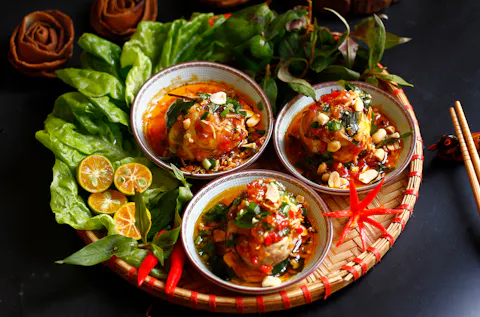
Hột Vịt Lộn Xào Me
Hột vịt lộn xào me combines cooked balut with a sweet, sour, salty, and spicy tamarind sauce.
The eggs are peeled and cooked with tamarind, garlic, chili, fish sauce, and sugar. They are often finished with crushed peanuts and rau răm.
This version is particularly appealing if you prefer stronger sweet-and-sour flavors.
Hột Vịt Lộn Chiên
In some Vietnamese eateries, balut is fried after cooking. The exterior becomes crisp while the interior remains rich and savory.
It can be served with herbs, chili sauce, or other Vietnamese seasonings.
Hột Vịt Lộn Nhúng Lẩu
Balut can also appear in Vietnamese hot pot dishes, where cooked eggs are added to a flavorful broth together with vegetables, herbs, and other ingredients.
These variations show how Vietnamese street food can transform the same ingredient into very different eating experiences.
Balut and Vietnamese Street Food Culture
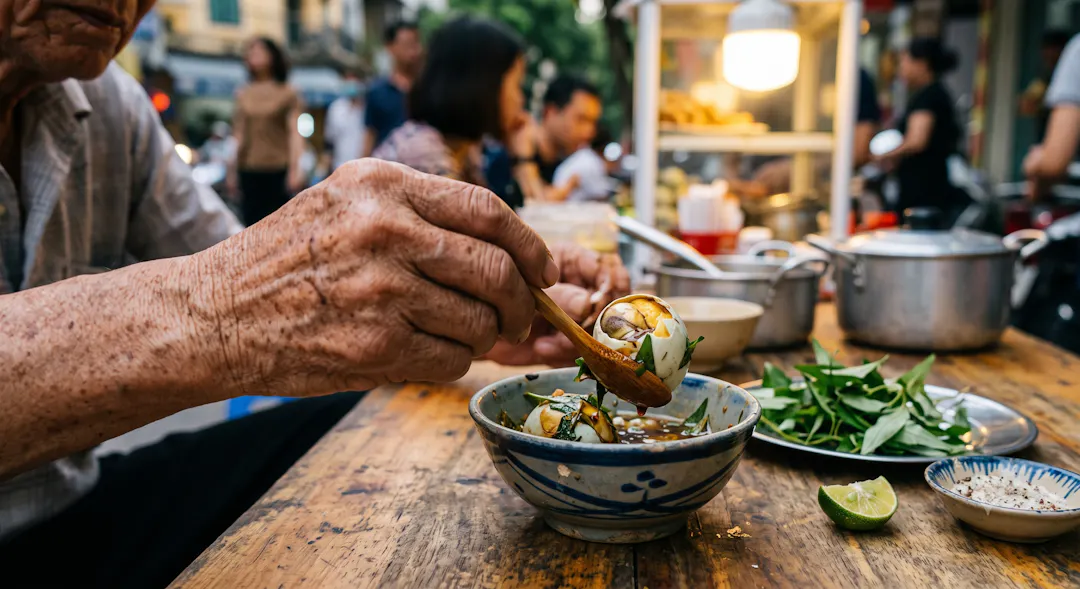
Balut is closely associated with Vietnam's casual street food culture.
Rather than being served primarily in formal restaurants, hột vịt lộn is often enjoyed at small eateries, market stalls, and sidewalk food spots. It is especially popular as an evening snack.
A typical serving is uncomplicated: a hot egg, a small plate of rau răm, slices of ginger, and a dish of salt, pepper, and lime.
For travelers, eating balut can also be a way to experience a different side of Vietnamese food culture. It is not designed as a luxury dish. Its appeal comes from its distinctive flavor, traditional preparation, and place in everyday local dining.
Balut vs. Regular Duck Eggs
The biggest difference between balut and a regular boiled duck egg is the stage at which the egg is eaten.
A regular duck egg contains an undeveloped yolk and egg white.
Balut is a fertilized duck egg that has been incubated long enough for the embryo to develop before the egg is cooked.
This creates a completely different combination of textures, flavors, and appearance.
For first-time diners, understanding this difference makes it easier to know what to expect before ordering balut in Vietnam.
Final Thoughts
A traditional balut recipe does not require complicated ingredients or elaborate cooking techniques. The key is starting with properly prepared balut eggs, cooking them gently, and serving them hot with the classic Vietnamese combination of rau răm, ginger, salt, black pepper, and lime.
For first-time visitors to Vietnam, hột vịt lộn may be an adventurous food to try. For locals, however, it is a familiar street food with a long-standing place in everyday Vietnamese dining.
Whether you try traditional boiled balut at a street-side stall or prepare it at home, the best way to understand this distinctive Vietnamese food is to experience the combination of warm broth, rich yolk, tender embryo, fresh herbs, ginger, and bright lime seasoning together.
Read more: Balut (Hột Vịt Lộn)

By Roy Trinh
Editor
Roy Trinh is a travel writer and destination expert at Go Visit Vietnam, dedicated to helping travelers discover the beauty, culture, and diversity of Vietnam. Through well-researched travel guides, practical itineraries, local insights, and authentic recommendations, Roy shares valuable information to inspire memorable journeys across the country. From vibrant cities and breathtaking landscapes to regional cuisine and cultural heritage, every guide is created to help visitors experience Vietnam with confidence and curiosity.
Frequently Asked Questions
What is balut?
Balut is a fertilized duck egg that has been incubated until the embryo develops and is then cooked and eaten, usually while hot.
How long do you cook balut?
Balut is generally simmered for about 20–30 minutes, although the exact time depends on the size and starting temperature of the eggs.
How do you eat balut?
Crack open the wider end of the shell, sip the savory broth inside, then eat the yolk, egg white, and embryo with salt, pepper, lime, rau răm, and ginger.
What does balut taste like?
Balut has a rich, savory, eggy flavor. The yolk is creamy, the broth is savory, and the developing embryo has a firmer, more distinctive texture.
What do you eat with balut?
Traditional accompaniments include Vietnamese coriander (rau răm), fresh ginger, salt, black pepper, and lime juice.
What is hột vịt lộn?
Hột vịt lộn is the Vietnamese name commonly used for balut, particularly in southern Vietnam. In northern Vietnam, the dish is also commonly called trứng vịt lộn.
Is balut a Vietnamese dish?
Balut is strongly associated with Vietnamese and Filipino food cultures. In Vietnam, hột vịt lộn has become an established part of everyday street food and casual dining.
Can you make balut at home?
You can cook commercially prepared balut at home, but producing balut from a fresh fertilized duck egg requires controlled incubation before cooking. For most home cooks, purchasing properly prepared balut eggs is much more practical.
Advertising box
Explore More About Balut (Hột Vịt Lộn)
Discover everything you need to know about Balut (Hột Vịt Lộn), one of Vietnam's most iconic and intriguing street foods. Learn what balut is, how it's made, what it tastes like, how locals eat it, its nutritional value, and the cultural traditions behind this unique delicacy. Whether you're preparing to try balut for the first time or simply want to understand its place in Vietnamese cuisine, explore our expert guides covering every aspect of this unforgettable culinary experience.
What Is Balut? Vietnam’s Hột Vịt Lộn Explained
Balut is a fertilized duck egg containing a partially developed embryo, traditionally boiled and eaten from the shell. In Vietnam, it is known as hột vịt lộn and is a popular street food served with Vietnamese coriander, salt, pepper, lime, ginger, and chili. This guide explains what balut is, how it is made and cooked, what it tastes like, how to eat it, how Vietnamese balut differs from Filipino balut, and what to know about its nutritional and cultural significance.
Is Balut Healthy? Nutrition, Benefits & Risks Explained
Is balut healthy? Balut, known as hột vịt lộn in Vietnam, is a nutrient-dense fertilized duck egg that provides protein, fat, vitamins, and minerals. However, it is also relatively rich in cholesterol and calories, so portion size and individual dietary needs matter. This guide explores balut nutrition, calories, protein, vitamins, minerals, potential health benefits, cholesterol concerns, food safety, and what travelers should know before trying this traditional Vietnamese street food.
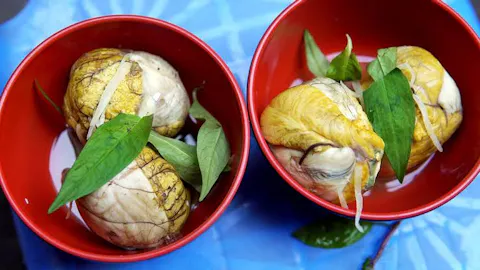
What Does Balut Taste Like? Flavor, Texture & What to Expect
What does balut taste like? Vietnam’s hột vịt lộn has a rich, savory flavor that combines warm egg broth, creamy yolk, and tender duck embryo. The taste can range from mild and eggy to slightly gamey depending on how developed the embryo is. Fresh rau răm, lime, pepper, chili, and ginger add a bright contrast to the richness. In this guide, discover what each part of balut tastes and feels like, plus what first-time travelers can expect when trying this traditional Vietnamese street food.
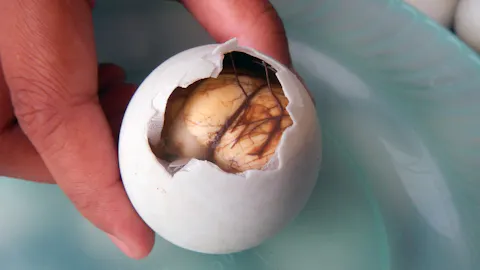
How to Eat Balut: A Step-by-Step Guide for First-Time Visitors
Master the art of eating balut (hột vịt lộn) like a local with this comprehensive step-by-step dining guide. Learn the proper technique for cracking the shell's air cell, sipping the warm, savory duck broth, and applying the essential pepper-lime salt dip (muối tiêu chanh). Discover how to pair creamy yolk and tender duck embryo with fresh rau răm (Vietnamese coriander) herbs, navigate table etiquette, and enjoy one of Vietnam’s most iconic street food rituals with confidence.
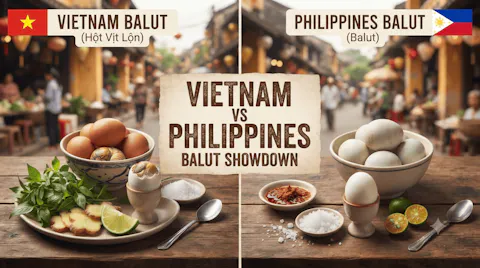
Vietnam Balut vs Philippines Balut: Key Differences Explained
Explore the fascinating comparative gastronomy between Vietnam’s hột vịt lộn and the Philippines' famous balut. This comprehensive guide breaks down the key differences between these two iconic street food traditions, analyzing incubation timelines (19–21 days in Vietnam vs. 16–18 days in the Philippines), sensory taste profiles, and textural variations. Learn how distinct seasoning philosophies—from Vietnamese lime-pepper salt (muối tiêu chanh) paired with peppery rau răm herbs to Filipino spiced vinegars—shape unique cultural dining rituals across Southeast Asia.
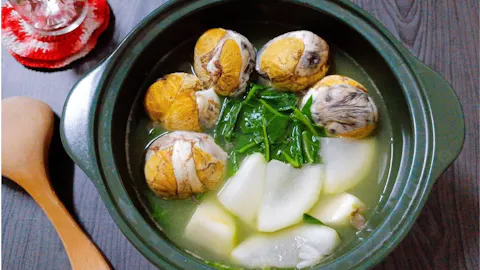
Balut Nutrition: Calories, Protein, Iron, Cholesterol & Health Benefits
Discover the nutrition profile of balut, including calories, protein, iron, cholesterol, fat, and other essential nutrients. This guide explains how much nutrition you can get from one balut egg, explores potential health benefits and dietary considerations, and answers common questions about whether balut is healthy. Learn what makes this traditional Vietnamese food distinctive, how its nutritional value compares with regular eggs, and what to consider when enjoying balut as part of a balanced diet and varied eating pattern in moderation.