
What Is Balut? Vietnam’s Hột Vịt Lộn Explained
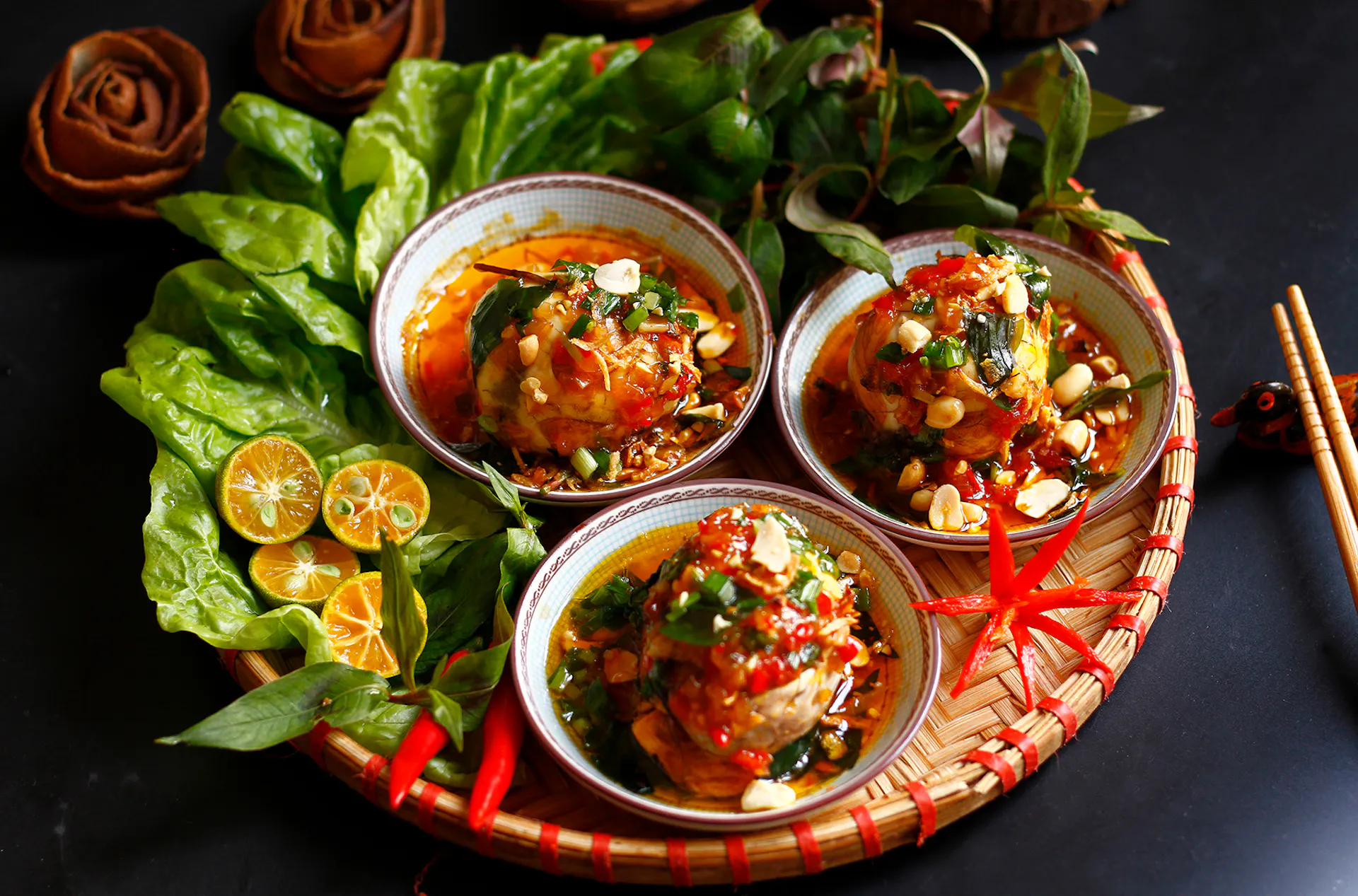
Balut is a fertilized duck egg containing a partially developed embryo, traditionally boiled and eaten from the shell. In Vietnam, it is known as hột vịt lộn and is a popular street food served with Vietnamese coriander, salt, pepper, lime, ginger, and chili. This guide explains what balut is, how it is made and cooked, what it tastes like, how to eat it, how Vietnamese balut differs from Filipino balut, and what to know about its nutritional and cultural significance.
On this page
- What Is Balut?
- What Is Hột Vịt Lộn in Vietnam?
- How Is Balut Made?
- What Does Balut Taste Like?
- How to Eat Balut
- What Is Balut Served With?
- Filipino Balut vs. Vietnamese Hột Vịt Lộn
- Why Is Balut Popular in Vietnam?
- Is Balut an Exotic Food?
- Is Balut Nutritious?
- Is Balut Safe to Eat?
- When Do Vietnamese People Eat Hột Vịt Lộn?
- Balut in Vietnamese Food Culture
- Final Thoughts
Balut is a fertilized duck egg containing a partially developed duck embryo that is cooked and eaten inside the shell. In Vietnam, it is known as hột vịt lộn and is a familiar street food rather than simply an exotic food for adventurous travelers. The egg is usually boiled and served hot with Vietnamese coriander (rau răm), salt, pepper, lime, ginger, and chili.
For visitors discovering Vietnamese food for the first time, balut can seem unusual. Yet its appeal goes beyond its appearance. The combination of warm broth, creamy yolk, tender embryo, herbs, and spicy citrus seasoning creates a distinctive savory experience that has become part of everyday food culture in Vietnam.
What Is Balut?
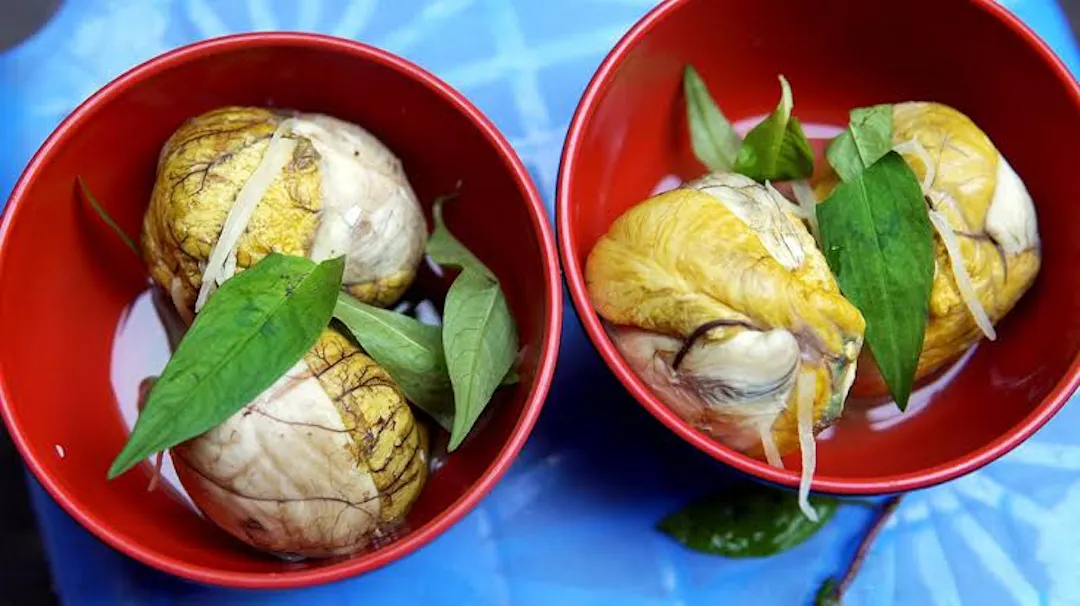
Balut is a fertilized duck egg that has been incubated until the embryo has partially developed, then boiled and eaten from the shell. The exact stage of development can vary by region and personal preference. As the egg incubates, the embryo gradually develops inside the shell while the yolk and egg white change in texture. When cooked, the egg contains several distinct parts: warm broth, yolk, and the developing embryo.
In Vietnam, this dish is called hột vịt lộn. It is commonly sold by street vendors, small food stalls, and casual eateries, particularly in the afternoon and evening. Unlike the image of balut as a novelty food, hột vịt lộn is a familiar part of Vietnamese culinary culture. People may eat it as a snack, a light meal, or a late-day dish, often with fresh herbs and a salty, spicy dipping mixture.
What Is Hột Vịt Lộn in Vietnam?
Hột vịt lộn literally refers to a duck egg that has developed inside the shell. It is one of the better-known Vietnamese dishes made from duck eggs and is particularly associated with street food culture.
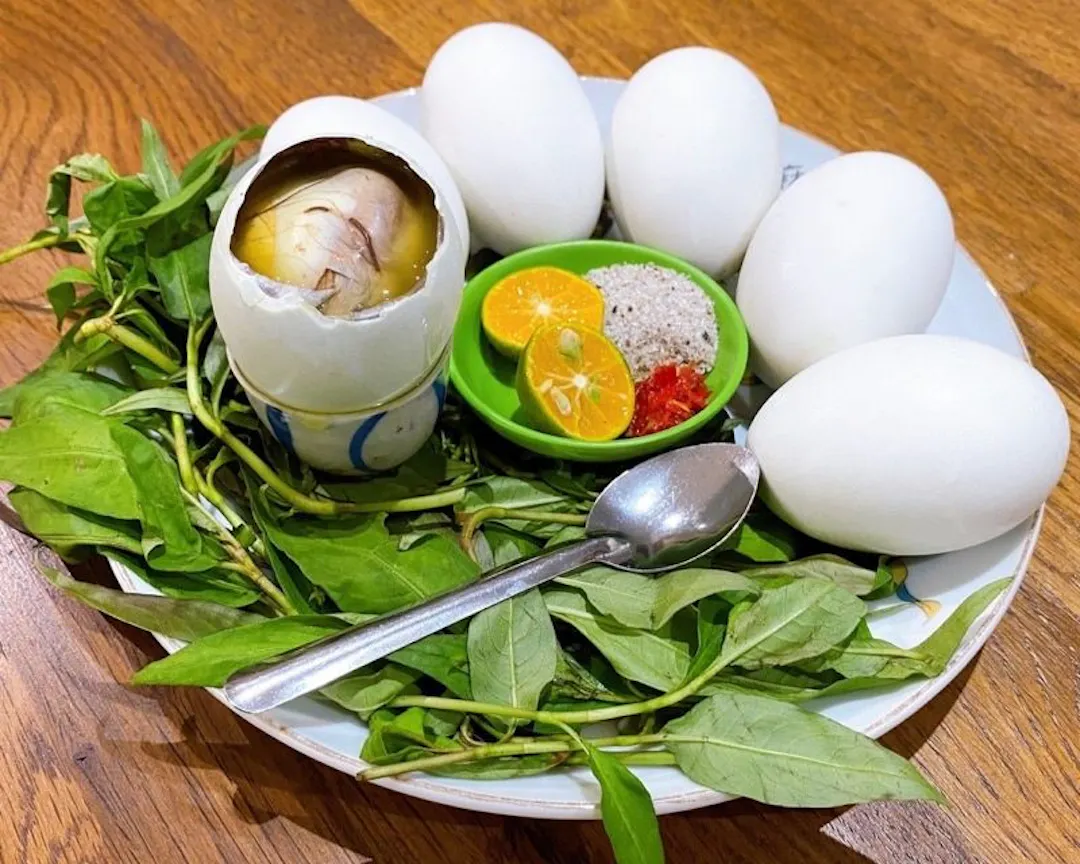
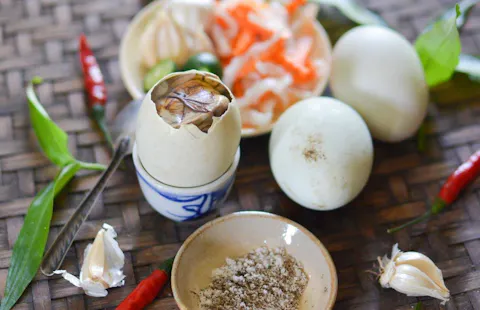
A typical serving includes:
- One or more boiled duck eggs
- Fresh rau răm (Vietnamese coriander)
- Salt and black pepper
- Lime juice
- Fresh chili
- Ginger, depending on the vendor
- Sometimes pickled vegetables or other accompaniments
The combination is important because the rich egg is balanced by the fresh, spicy, salty, and acidic flavors of its accompaniments.
For travelers, hột vịt lộn provides an interesting introduction to how Vietnamese cuisine balances rich ingredients with fresh herbs and sharp seasonings.
How Is Balut Made?
Making balut begins with fertilized duck eggs. The eggs are kept under controlled warmth so that the embryo can develop for a specific period before cooking. As incubation progresses, the embryo becomes increasingly developed and the contents of the egg change. The yolk becomes denser, while the developing embryo takes on more recognizable structure.
The exact incubation period varies depending on the region, producer, and desired stage of development. This is one reason balut can differ in appearance, texture, and flavor from one place to another. Once the eggs reach the preferred stage, they are boiled before being sold or served.
How Is Balut Cooked?
Balut is generally boiled in water until fully cooked. Cooking times can vary according to the size and condition of the eggs, so vendors typically use established cooking practices rather than relying on one universal time.
The finished egg is served hot, usually in its shell. When the shell is opened, the diner can first access the warm liquid inside before eating the yolk and embryo. Proper cooking and good food-handling practices are important, just as they are with other egg dishes.
What Does Balut Taste Like?
Balut has a rich, savory, slightly gamey flavor. The taste depends on the stage of development, but the experience usually combines several textures and flavors in one egg. The warm liquid inside the egg has a concentrated, savory character. The yolk is rich and creamy, while the developing embryo has a firmer and more meat-like texture.
For a first-time visitor, the flavor can be easier to understand when compared with familiar foods:
- Broth: warm, savory, and concentrated
- Yolk: rich, creamy, and eggy
- Embryo: tender to firm, with a mild duck-like flavor
- Rau răm: fresh, peppery, and slightly bitter
- Salt, pepper, and lime: salty, spicy, and acidic
The accompaniments are not just decoration. Their fresh and acidic flavors help balance the richness of the egg.
How to Eat Balut
Eating hột vịt lộn is relatively simple once you know what to expect.
1. Place the egg upright
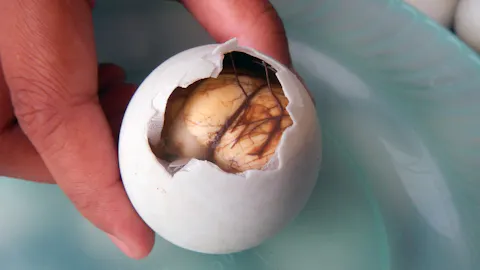
The egg is usually served in a small cup or held carefully in your hand with the wider end facing upward.
2. Crack the wider end
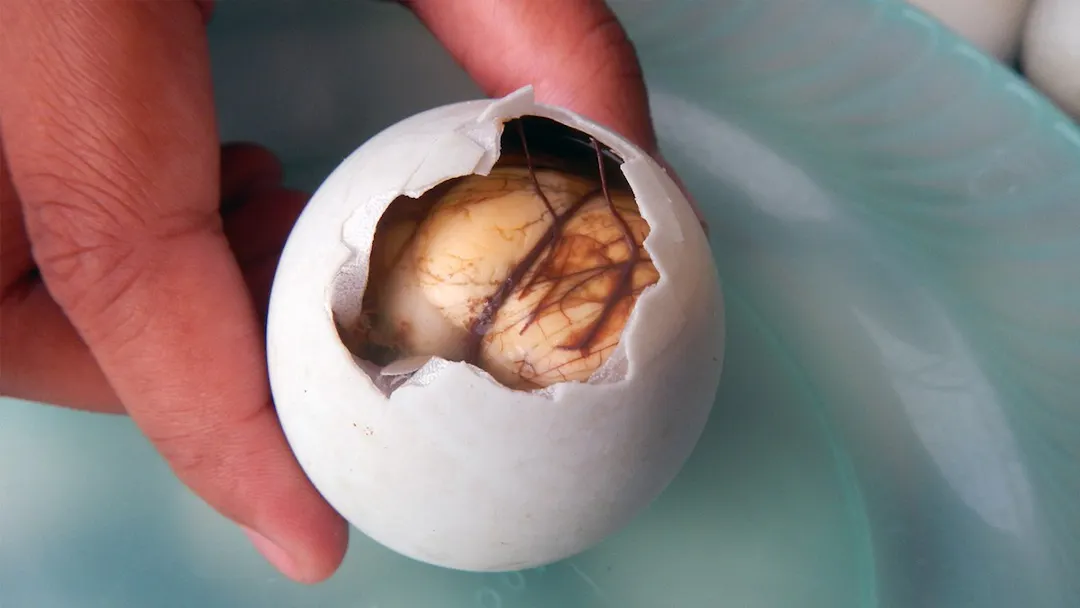
Tap the top of the shell gently with a spoon and remove a small section of shell and membrane.
3. Sip the broth
A small amount of warm liquid is usually visible inside. Many people drink this broth first because it is one of the richest parts of the egg.
4. Add seasoning
Add salt, pepper, lime juice, or chili according to your taste.
5. Eat the yolk and embryo
Use a spoon to scoop out the contents of the shell. The yolk and developing embryo are traditionally eaten together.
6. Add Vietnamese coriander
Take bites with fresh rau răm to add a peppery herbal flavor and contrast with the richness of the egg.
If you are trying balut for the first time, starting with a small amount and eating it slowly can make the experience more comfortable.
What Is Balut Served With?
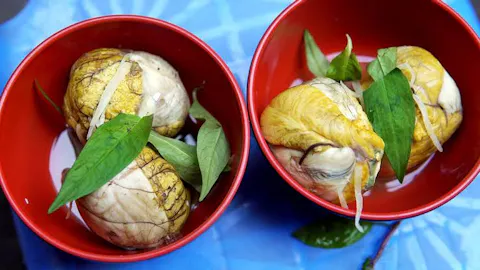
Vietnamese hột vịt lộn is rarely eaten completely plain. The most familiar accompaniment is rau răm, also known as Vietnamese coriander.
The dish may also be served with:
- Salt and black pepper
- Fresh lime juice
- Fresh chili
- Ginger
- Pickled vegetables
The salty, acidic, spicy, and herbal elements create contrast with the warm and rich egg.
This style of serving reflects a broader characteristic of Vietnamese cuisine: rich or savory foods are often paired with fresh herbs, vegetables, acidity, and chili to create a more balanced bite.
Filipino Balut vs. Vietnamese Hột Vịt Lộn
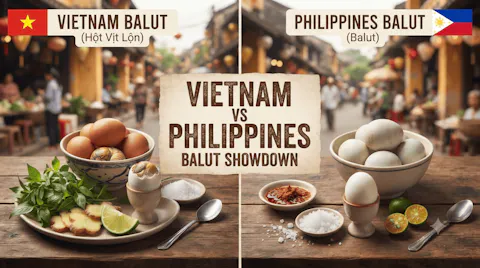
Balut is strongly associated internationally with the Philippines, but similar dishes are also eaten in Vietnam and other parts of Southeast Asia. The biggest differences between Filipino balut and Vietnamese hột vịt lộn can include the preferred stage of embryo development, texture, seasoning, and serving style.
In the Philippines, balut is commonly sold as a street food and may be served with salt, vinegar, or other condiments. In Vietnam, hột vịt lộn is commonly accompanied by rau răm, salt, pepper, lime, chili, and sometimes ginger. The eggs can also differ in developmental stage depending on local preferences. As the embryo develops, its texture and appearance change, so two versions of balut may not look or taste exactly the same.
Rather than viewing one preparation as the “original” version, it is more useful to understand balut as a regional food with different traditions across Southeast Asia.
Why Is Balut Popular in Vietnam?
Hột vịt lộn has become part of everyday food culture in Vietnam because it is filling, flavorful, and relatively simple to prepare and serve. It is commonly associated with street food stalls and casual evening eating. Friends, students, workers, and families may stop at a small food stall to share eggs with herbs and seasonings.
The dish also fits naturally into Vietnamese food culture because its rich flavor is balanced by fresh herbs and acidic seasonings. For visitors, trying hột vịt lộn can therefore provide more insight into Vietnamese everyday eating habits than simply viewing it as an unusual food challenge.
Is Balut an Exotic Food?
Balut can certainly be unfamiliar to travelers who have never encountered a developing duck embryo in an egg. However, describing it only as an “exotic” food misses its cultural context.
In Vietnam, hột vịt lộn is a familiar traditional food, particularly in casual street-food settings. What seems unusual to an international visitor may be an ordinary snack to a local diner.
A better way to approach the dish is with curiosity rather than treating it as a food challenge. Understanding how it is prepared, served, and eaten provides a much more meaningful introduction to the dish.
Is Balut Nutritious?
Balut contains protein, fat, vitamins, and minerals, but its exact nutritional value varies depending on the size of the egg and its stage of development. Because it is a duck egg, it can provide nutrients commonly found in eggs, including protein and several B vitamins. The yolk also contributes fat and cholesterol.
However, nutrition should be considered in the context of the whole diet rather than treating balut as a “superfood.” Portion size and individual dietary needs also matter. For a detailed breakdown of calories, protein, iron, cholesterol, and other nutrients, see our dedicated guide to balut nutrition.
Is Balut Safe to Eat?
Balut should be properly cooked and handled hygienically, just like other egg-based foods. When trying hột vịt lộn in Vietnam, travelers can reduce food-safety risks by choosing vendors with good hygiene practices and high customer turnover. The eggs should be properly cooked and served hot.
People with specific dietary restrictions, allergies, or medical concerns should consider their individual circumstances before eating the dish. The key point is simple: balut is a cooked food, not a raw egg dish, and normal food-safety precautions remain important.
When Do Vietnamese People Eat Hột Vịt Lộn?
Hột vịt lộn is particularly common as an afternoon, evening, or late-night food. Small vendors may begin serving it later in the day, making it a popular choice for people looking for something warm and filling after work or school.
It can be eaten alone or together with friends, often with several eggs shared alongside herbs, seasonings, and drinks. This casual setting is an important part of the experience. Rather than being reserved for special occasions, hột vịt lộn can be part of ordinary Vietnamese street-food life.
Balut in Vietnamese Food Culture
The popularity of hột vịt lộn reflects several characteristics of Vietnamese cuisine: resourcefulness, strong street-food traditions, fresh herbs, and careful flavor balance.
The egg itself is rich and substantial. The rau răm adds freshness and herbal complexity. Lime contributes acidity, while pepper and chili provide heat. Together, these elements create a dish that is much more complex than the egg alone might suggest.
For travelers interested in Vietnamese food, hột vịt lộn is therefore worth understanding in its cultural context rather than approaching it simply as a daring culinary challenge.
Final Thoughts
Balut is much more than a food associated with adventurous eating. In Vietnam, hột vịt lộn is a familiar street food with its own traditions, flavors, and social context.
The experience combines a rich duck egg, warm broth, creamy yolk, developing embryo, fresh rau răm, citrus, pepper, and chili. For first-time visitors, understanding how the dish is prepared and eaten can make it much easier to appreciate.
If you are exploring Vietnamese cuisine, hột vịt lộn offers a fascinating example of how local food traditions transform simple agricultural ingredients into distinctive everyday dishes.
Read more: Balut (Hột Vịt Lộn)

By Roy Trinh
Editor
Roy Trinh is a travel writer and destination expert at Go Visit Vietnam, dedicated to helping travelers discover the beauty, culture, and diversity of Vietnam. Through well-researched travel guides, practical itineraries, local insights, and authentic recommendations, Roy shares valuable information to inspire memorable journeys across the country. From vibrant cities and breathtaking landscapes to regional cuisine and cultural heritage, every guide is created to help visitors experience Vietnam with confidence and curiosity.
Frequently Asked Questions About Balut
What is balut?
Balut is a fertilized duck egg containing a partially developed embryo. It is traditionally incubated, boiled, and eaten from the shell. In Vietnam, the dish is commonly known as hột vịt lộn.
Is balut a fertilized egg?
Yes. Balut is made from a fertilized duck egg that has been incubated long enough for the embryo to partially develop before the egg is cooked.
What does balut taste like?
Balut has a rich, savory, slightly gamey flavor. The broth is concentrated and warm, the yolk is creamy, and the developing embryo has a firmer, meatier texture.
How do you eat balut?
Crack the wider end of the cooked egg, sip the warm broth, then scoop out the yolk and embryo with a spoon. In Vietnam, it is commonly eaten with rau răm, salt, pepper, lime, and chili.
What is hột vịt lộn?
Hột vịt lộn is the Vietnamese name for balut, a cooked fertilized duck egg containing a partially developed embryo. It is a popular street food and casual evening snack in Vietnam.
Is Vietnamese balut different from Filipino balut?
The basic concept is similar, but preparation and serving traditions can differ. Vietnamese hột vịt lộn is commonly served with rau răm, salt, pepper, lime, chili, and ginger, while Filipino balut may be served with different condiments.
Is balut cooked?
Yes. Balut is typically boiled before it is served. It is eaten hot, directly from the shell.
Is balut healthy?
Balut provides protein, fat, vitamins, and minerals, but its nutritional profile varies. It should be considered as one food within a balanced diet rather than automatically described as a superfood.
Advertising box
Explore More About Balut (Hột Vịt Lộn)
Discover everything you need to know about Balut (Hột Vịt Lộn), one of Vietnam's most iconic and intriguing street foods. Learn what balut is, how it's made, what it tastes like, how locals eat it, its nutritional value, and the cultural traditions behind this unique delicacy. Whether you're preparing to try balut for the first time or simply want to understand its place in Vietnamese cuisine, explore our expert guides covering every aspect of this unforgettable culinary experience.
Is Balut Healthy? Nutrition, Benefits & Things to Know
Delve into the scientific and biochemical profile of one of Southeast Asia's most famous street food delicacies: the fertilized duck egg (hột vịt lộn). This comprehensive nutritional guide breaks down balut's caloric density, complete amino acid structure, high biological value protein, bio-available heme iron, and essential vitamins like A and B12. Explore its historical reputation as a vitality tonic alongside objective dietary considerations, including cholesterol management, microbial food safety, and ideal consumption protocols.
What Does Balut Taste Like? Flavor, Texture & What to Expect
Uncover the true taste profile of one of Southeast Asia's most intriguing street food delicacies: the fertilized duck egg (hột vịt lộn). Moving past visual expectations, this sensory guide deconstructs balut’s complex flavor layering—from its warm, savory poultry consommé broth and velvety, custard-like yolk to the tender, braised duck meatiness of the embryo. Learn how traditional accompaniments like peppery rau răm herbs and citrusy lime-pepper salt create a perfectly balanced, delicious culinary experience.
How to Eat Balut: A Step-by-Step Guide for First-Time Visitors
Master the art of eating balut (hột vịt lộn) like a local with this comprehensive step-by-step dining guide. Learn the proper technique for cracking the shell's air cell, sipping the warm, savory duck broth, and applying the essential pepper-lime salt dip (muối tiêu chanh). Discover how to pair creamy yolk and tender duck embryo with fresh rau răm (Vietnamese coriander) herbs, navigate table etiquette, and enjoy one of Vietnam’s most iconic street food rituals with confidence.
Vietnam Balut vs Philippines Balut: Key Differences Explained
Explore the fascinating comparative gastronomy between Vietnam’s hột vịt lộn and the Philippines' famous balut. This comprehensive guide breaks down the key differences between these two iconic street food traditions, analyzing incubation timelines (19–21 days in Vietnam vs. 16–18 days in the Philippines), sensory taste profiles, and textural variations. Learn how distinct seasoning philosophies—from Vietnamese lime-pepper salt (muối tiêu chanh) paired with peppery rau răm herbs to Filipino spiced vinegars—shape unique cultural dining rituals across Southeast Asia.
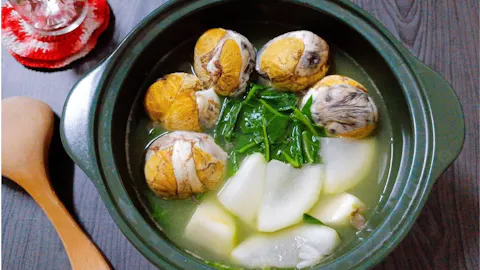
Balut Nutrition: Calories, Protein, Iron, Cholesterol & Health Benefits
Discover the nutrition profile of balut, including calories, protein, iron, cholesterol, fat, and other essential nutrients. This guide explains how much nutrition you can get from one balut egg, explores potential health benefits and dietary considerations, and answers common questions about whether balut is healthy. Learn what makes this traditional Vietnamese food distinctive, how its nutritional value compares with regular eggs, and what to consider when enjoying balut as part of a balanced diet and varied eating pattern in moderation.
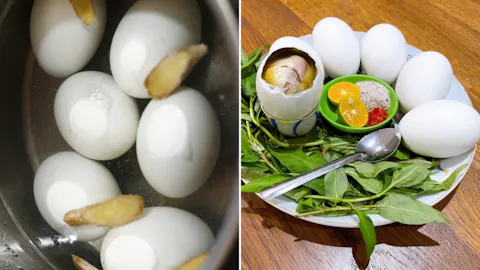
Balut Recipe: How to Cook & Eat Vietnamese Balut
Learn how to cook and enjoy balut, Vietnam’s famous fertilized duck egg, at home. This guide explains the essential ingredients, cooking time, traditional Vietnamese seasonings, and simple steps for serving balut with rau răm, ginger, salt, pepper, and lime. You’ll also discover what balut tastes like, how locals eat it, and popular variations such as hột vịt lộn xào me. Whether you’re curious about Vietnamese street food or want to recreate this traditional dish, this guide makes preparing balut simple and approachable.