
Pennywort Juice Recipe: How to Make Vietnamese Rau Má
Learn how to make refreshing Vietnamese pennywort juice (rau má) at home with this easy recipe. Made with fresh pennywort leaves, cold water, and a touch of sugar, this vibrant green drink has a naturally earthy, grassy flavor and is commonly served over ice in Vietnam. This guide explains how to prepare and blend rau má, strain the juice, balance its flavor, and make the popular rau má đậu xanh variation with mung beans for a creamy, richer Vietnamese drink.
On this page
- What Is Pennywort Juice?
- Vietnamese Pennywort Juice Ingredients
- How to Make Pennywort Juice
- Easy Pennywort Juice Recipe
- What Does Pennywort Juice Taste Like?
- How to Make Rau Má Đậu Xanh
- Pennywort Juice With Coconut Water
- Popular Vietnamese Rau Má Variations
- Tips for Better Pennywort Juice
- Common Pennywort Juice Problems
- How Vietnamese People Enjoy Rau Má
- Final Thoughts
Pennywort juice, known as rau má in Vietnam, is a refreshing green drink made from fresh pennywort leaves, cold water, and a little sweetener. It has a naturally grassy, earthy flavor and is commonly served over ice at Vietnamese drink stalls and cafés. This easy rau má recipe shows you how to wash, blend, strain, sweeten, and serve authentic Vietnamese pennywort juice at home, plus popular variations such as rau má đậu xanh and coconut pennywort juice.
What Is Pennywort Juice?
Pennywort juice is a Vietnamese herbal drink made by blending fresh Centella asiatica leaves with water and straining the mixture into a smooth green juice. In Vietnam, the drink is simply called rau má.
It is especially popular during hot weather because it is served cold and has a fresh, vegetal taste. Depending on the vendor, rau má may be served plain, lightly sweetened, blended with coconut water, or combined with mung bean paste for a creamier drink.
Unlike many fruit juices, pennywort juice has a distinctly green flavor. Expect notes similar to fresh grass, leafy greens, and mild herbs, with a slightly bitter finish.
Vietnamese Pennywort Juice Ingredients
You only need a few basic ingredients to make traditional rau má at home.
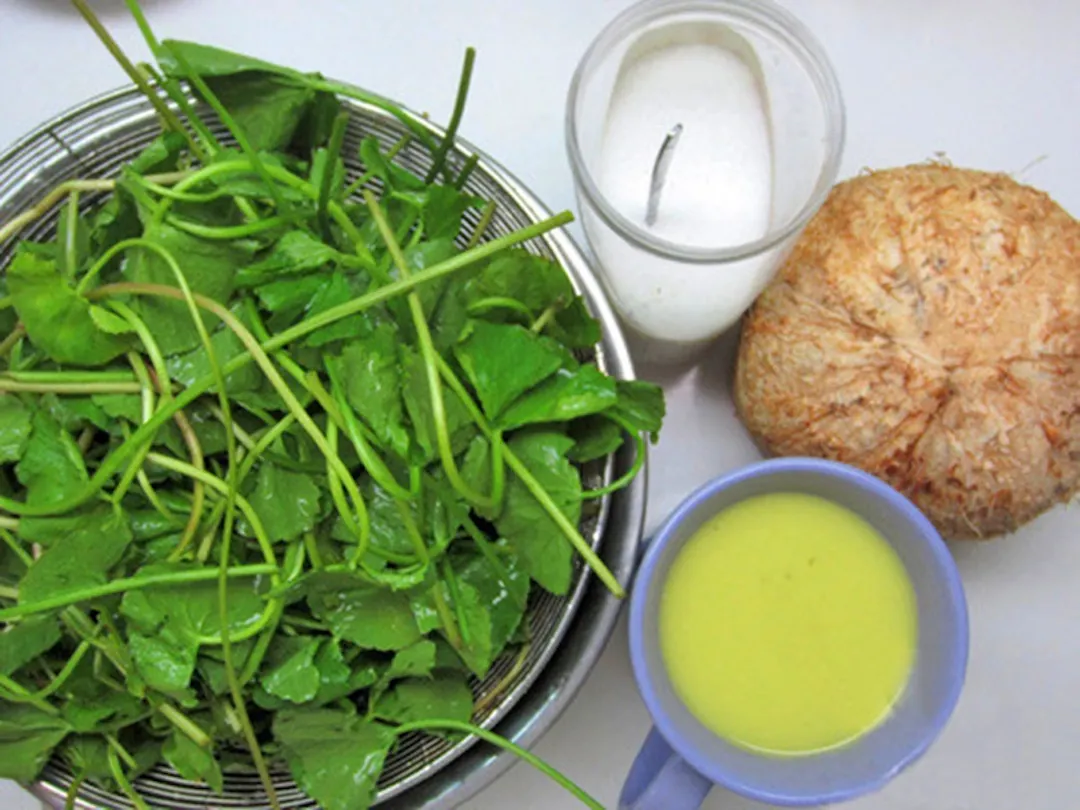
For Classic Pennywort Juice
- 200 g fresh pennywort leaves
- 600 ml cold filtered water
- 3–4 tablespoons simple syrup, or adjust to taste
- Ice for serving
You can also replace some or all of the water with fresh coconut water for a naturally sweeter and more tropical version.
How to Choose Fresh Pennywort
Look for leaves that are:
- Bright or deep green
- Fresh and firm
- Free from yellow or brown spots
- Not slimy or wilted
- Attached to tender green stems
Avoid leaves that look damaged, muddy, or excessively fibrous.
Fresh pennywort is the most important ingredient because older or poor-quality leaves can produce a stronger bitter flavor.
How to Make Pennywort Juice
Making Vietnamese pennywort juice is straightforward: clean the leaves, blend them with cold liquid, strain the pulp, and sweeten to taste.
Step 1: Wash the Pennywort
Place the pennywort leaves in a large bowl of cold water.
Remove:
- Yellow leaves
- Damaged leaves
- Excessively thick roots
- Visible dirt or debris
Rinse the leaves several times under clean running water until the water is clear.
Drain thoroughly.
Tip: Because pennywort is often grown close to wet soil, careful washing is particularly important when using fresh leaves.
Step 2: Blend the Pennywort
Add the cleaned leaves to a blender.
Pour in approximately 600 ml of cold filtered water.
Add a few ice cubes if your blender can safely process them.
Blend until the leaves are finely broken down and the liquid becomes a deep green color.
You generally do not need to blend for a long time. A short blending cycle is enough to extract the liquid while keeping the drink fresh.
Step 3: Strain the Juice
Place a fine-mesh strainer, cheesecloth, or nut-milk bag over a large bowl or pitcher.
Pour the blended pennywort mixture through the strainer.
Press or squeeze the pulp to extract as much liquid as possible.
Discard the remaining fibrous pulp.
The result should be a smooth, emerald-green liquid.
Why Straining Matters
Pennywort contains plenty of plant fiber. Without sufficient straining, the drink can feel gritty or overly thick.
For a smoother Vietnamese-style drink, use a fine strainer or nut-milk bag.
Step 4: Sweeten the Juice
Add simple syrup gradually and stir well.
Start with about 3 tablespoons and taste before adding more.
The amount of sweetness depends on your preference. Vietnamese street vendors commonly adjust drinks according to the customer's requested sweetness.
For a more natural flavor, you can also use:
- Cane sugar syrup
- Rock sugar syrup
- A small amount of honey
Avoid adding too much sweetener at once. Pennywort has a distinctive herbal flavor that should remain noticeable.
Step 5: Serve Over Ice
Fill a glass with ice and pour the freshly prepared pennywort juice over it.
Serve immediately.
For a Vietnamese-style presentation, garnish with a small pennywort leaf or simply serve the drink in a tall glass with a straw.
Your homemade rau má is ready.

Easy Pennywort Juice Recipe
For a simple version, use this ratio:
200 g fresh pennywort + 600 ml cold water + 3–4 tbsp simple syrup + ice
Method
- Wash the pennywort thoroughly.
- Blend with cold water.
- Strain through a fine mesh.
- Add simple syrup to taste.
- Stir well.
- Serve over ice.
This is the easiest way to experience the classic flavor of Vietnamese rau má.
What Does Pennywort Juice Taste Like?
Pennywort juice has a fresh, green flavor that is quite different from fruit-based drinks.
Its flavor can be described as:
- Grassy
- Earthy
- Herbal
- Slightly bitter
- Mildly sweet when prepared with sugar
- Fresh and vegetal
If you have never tried it before, the flavor may seem unusual at first.
Adding sugar or coconut water makes it much easier for first-time drinkers to enjoy.
For a stronger traditional flavor, try rau má nguyên chất, which uses the fresh green extract with little or no additional flavoring.
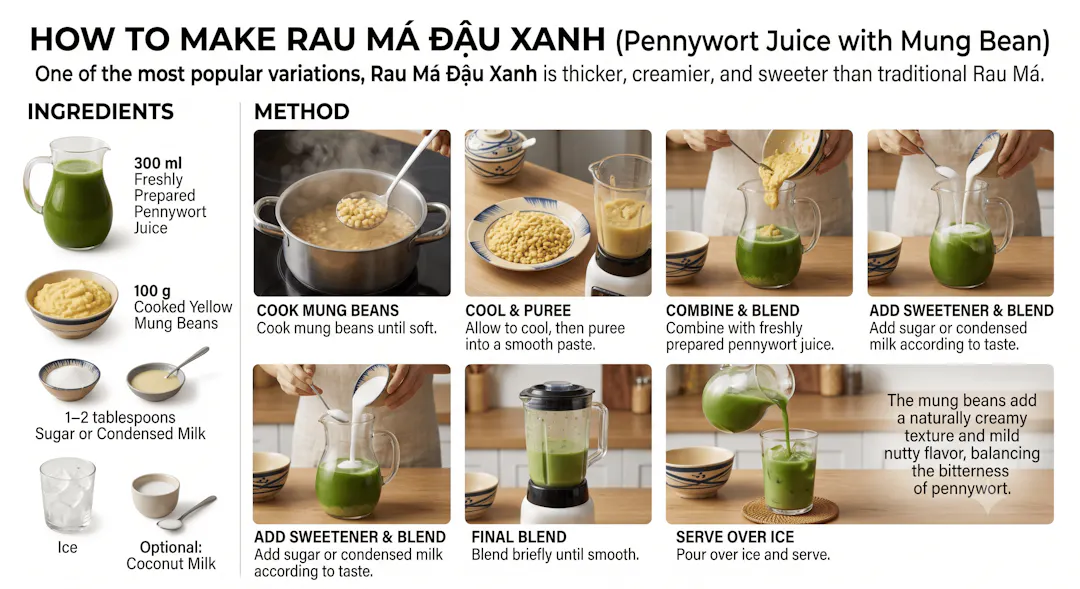
How to Make Rau Má Đậu Xanh
One of the most popular variations is rau má đậu xanh, or pennywort juice with mung bean.
This version is thicker, creamier, and sweeter than traditional rau má.
Ingredients
- 300 ml freshly prepared pennywort juice
- 100 g cooked yellow mung beans
- 1–2 tablespoons sugar or condensed milk
- Ice
- Optional: a small amount of coconut milk
Method
- Cook the mung beans until soft.
- Allow them to cool.
- Blend the cooked mung beans into a smooth paste.
- Combine the mung bean paste with freshly prepared pennywort juice.
- Add sugar or condensed milk according to taste.
- Blend briefly until smooth.
- Pour over ice and serve.
The mung beans add a naturally creamy texture and mild nutty flavor, balancing the bitterness of pennywort.
Pennywort Juice With Coconut Water
For a lighter and more tropical version, replace the water in the basic recipe with fresh coconut water.
Ingredients
- 200 g fresh pennywort
- 500–600 ml coconut water
- 2–3 tablespoons simple syrup, optional
- Ice
Blend the pennywort with chilled coconut water, strain thoroughly, and serve over ice.
Coconut water adds natural sweetness and a subtle tropical flavor, making this version particularly refreshing on hot days.
Popular Vietnamese Rau Má Variations
Vietnamese drink shops have developed many variations of the traditional drink.
Rau Má Nguyên Chất
The simplest version uses freshly extracted pennywort juice with little or no added sweetness.
Best for: experiencing the natural herbal flavor.
Rau Má Đậu Xanh
Pennywort is combined with cooked mung bean paste and sweetener.
Best for: a creamy and filling drink.
Rau Má Nước Dừa
Fresh pennywort is blended with coconut water.
Best for: a lighter, tropical flavor.
Rau Má Dừa
Pennywort juice is combined with fresh coconut or coconut-based ingredients.
Best for: people who enjoy richer tropical drinks.
Modern Rau Má Drinks
Some contemporary Vietnamese cafés add ingredients such as:
- Coconut cream
- Grass jelly
- Tapioca pearls
- Kumquat
- Passion fruit
- Cheese foam
These modern combinations turn traditional rau má into a more dessert-style beverage.

Tips for Better Pennywort Juice
Use Cold Water
Cold water helps produce a fresher-tasting drink and keeps the juice pleasant when served immediately.
Don't Overload the Blender
Blend the leaves in batches if necessary. Overfilling the blender makes it harder to break down the leaves evenly.
Strain Thoroughly
A fine-mesh strainer produces a much smoother drink than a coarse kitchen sieve.
Sweeten Gradually
Pennywort has a naturally strong herbal character. Add sugar little by little so you can find the right balance.
Drink It Fresh
Freshly prepared rau má has the best color, aroma, and flavor. For the best experience, serve it immediately after blending and straining.
Common Pennywort Juice Problems
Why is my pennywort juice too bitter?
The leaves may be older or particularly strong in flavor, or you may simply need more sweetener. Try adding a little simple syrup or coconut water.
Why is my pennywort juice gritty?
The mixture has probably not been strained enough. Pass it through a fine-mesh strainer or nut-milk bag.
Why isn't my pennywort juice bright green?
Freshness, oxidation, and the type of leaves can all affect the color. Use fresh leaves, cold water, and prepare the drink shortly before serving.
Can I make pennywort juice without sugar?
Yes. Rau má nguyên chất can be prepared without added sugar. However, the natural flavor will be considerably more earthy and bitter.
Can I use coconut water instead of water?
Yes. Coconut water is one of the easiest ways to create a naturally sweeter version of Vietnamese pennywort juice.
How Vietnamese People Enjoy Rau Má
Rau má is commonly associated with Vietnam's everyday drink culture rather than formal dining.
You can find it at:
- Street drink stalls
- Local markets
- Juice shops
- Vietnamese cafés
- Neighborhood beverage carts
When ordering, you may be asked how sweet you want the drink.
Useful phrases include:
- Rau má — pennywort juice
- Rau má nguyên chất — plain pennywort juice
- Rau má đậu xanh — pennywort with mung bean
- Rau má nước dừa — pennywort with coconut water
- Ít đường — less sugar
- Không đường — no sugar
For a first taste, rau má đậu xanh is a good choice if you prefer a sweeter, creamier drink. If you want to experience the herb itself, try rau má nguyên chất.
Final Thoughts
Making a pennywort juice recipe at home is a simple way to experience one of Vietnam's most distinctive everyday drinks. The basic method is straightforward: wash fresh rau má, blend it with cold water, strain the plant fibers, and sweeten it to taste.
Once you master the classic version, try rau má đậu xanh for a creamy mung bean variation or use coconut water for a lighter tropical drink.
Fresh, green, slightly earthy, and served over ice, Vietnamese rau má offers a simple taste of Vietnam's vibrant street beverage culture.
Read more: Nước Rau Má: Vietnam's Fresh Pennywort Juice Drink

By Roy Trinh
Editor
Roy Trinh is a travel writer and destination expert at Go Visit Vietnam, dedicated to helping travelers discover the beauty, culture, and diversity of Vietnam. Through well-researched travel guides, practical itineraries, local insights, and authentic recommendations, Roy shares valuable information to inspire memorable journeys across the country. From vibrant cities and breathtaking landscapes to regional cuisine and cultural heritage, every guide is created to help visitors experience Vietnam with confidence and curiosity.
Frequently Asked Questions
What is pennywort juice?
Pennywort juice is a Vietnamese green herbal drink made by blending fresh Centella asiatica leaves with water and straining the mixture. It is commonly served cold over ice and may be sweetened with sugar or combined with coconut water or mung beans.
What is pennywort called in Vietnamese?
Pennywort is called rau má in Vietnamese. The drink made from fresh pennywort leaves is also commonly called rau má.
What does Vietnamese pennywort juice taste like?
It has a fresh, grassy, earthy and slightly bitter flavor. Sugar, coconut water, or mung bean can be added to create a sweeter and smoother taste.
Is pennywort juice easy to make at home?
Yes. You only need fresh pennywort leaves, cold water, a blender, a fine strainer, and a sweetener of your choice.
What is rau má đậu xanh?
Rau má đậu xanh is a popular Vietnamese variation made by combining pennywort juice with cooked mung bean paste and sweetener. It has a thicker and creamier texture than traditional rau má.
Can I use coconut water to make pennywort juice?
Yes. Coconut water can replace regular water in the recipe. It adds natural sweetness and a mild tropical flavor.
Should pennywort juice be served cold?
Yes. Vietnamese pennywort juice is commonly served chilled or over ice, making it especially popular as a refreshing street drink.
Advertising box