
Best Time to Visit Tuyen Quang
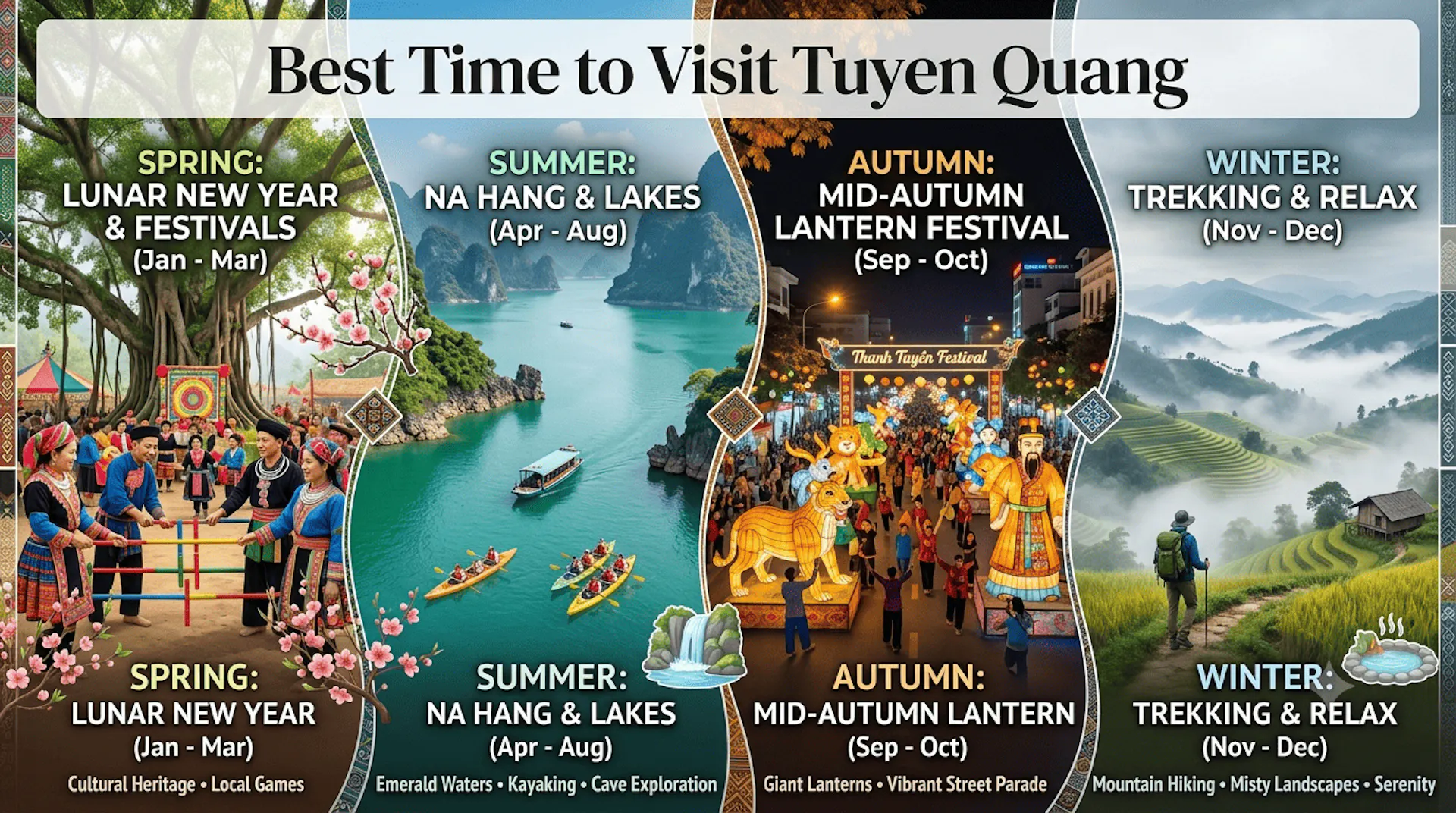
Tuyen Quang is a beautiful year-round destination where each season reveals a different side of its mountain landscapes, emerald lakes, and cultural heritage. Spring offers pleasant temperatures and colorful festivals, while autumn provides cool weather perfect for trekking, sightseeing, and boat trips on Na Hang Lake. Summer showcases lush forests and dramatic waterfalls, and winter brings peaceful scenery with fewer visitors. This guide helps you choose the best time to visit Tuyen Quang based on weather, outdoor activities, festivals, and travel preferences.
On this page
To journey into Tuyên Quang is to engage with the sheer, topographical expanse of one of Northern Vietnam’s most significant inland provinces—a land where expansive, emerald-hued reservoirs meet the dense, primal canopy of the northern highlands. For the veteran travel journalist, the climate researcher, and the expert who has documented these water-carved valleys and forest frontiers for years, determining the best time to visit Tuyen Quang is an exercise in strategic planning. It is a decision that extends far beyond the simplistic checking of a weather forecast; it is about deliberately aligning your expedition with the province’s specific hydro-ecological and cultural rhythms. This is a destination where the time of year fundamentally dictates the quality of the reservoir and forest experience—from the high-velocity, sun-drenched vibrancy of the primary water-based exploration window to the atmospheric, introspective quietude of the cool, mist-shrouded winter months. The province undergoes a dramatic metamorphosis: the water-bound karst corridors surrounding Na Hang shift from bustling, accessible hubs of activity into vast, mirror-like expanses during the high-water season, while the inland mountain ridges shift from parched, harvest-ready slopes to lush, emerald-green sanctuaries. Choosing your arrival window is essentially choosing the lens through which you wish to view the resilient soul of the Vietnamese revolution. Whether you seek the intensity of the vibrant Thành Tuyên festival or the solitary, meditative peace of the unspoiled northern hinterlands, this master guide provides the authoritative framework necessary to navigate the complexities of this diverse seasonal landscape.
Decoding the Regional Climate: Mechanics of the Tuyen Quang Environment
To master the timing of your expedition, one must first deconstruct the province’s seasonal calendar into three primary, powerful engines: the spring pilgrimage window, the summer reservoir peak, and the atmospheric autumn festival season. Each offers a fundamentally different framework for exploration, dictating everything from your choice of technical gear to the specific ecological and historical experiences accessible during your stay.
The Spring Window (February – April) - The Pilgrimage & Culture Prime
For the traveler who prioritizes historical resonance, cultural engagement, and the pursuit of expansive, unobstructed exploration, the spring window spanning from February through April serves as the definitive pilgrimage prime. This period is governed by the gradual transition from the winter dormancy to the spring growth, facilitating consistently mild conditions, particularly within the protected zones of the Tân Trào historical complex. If your primary objective is to navigate the revolutionary heritage grounds and participate in comprehensive historical tours, these months are beyond reproach. The visibility thresholds are at their absolute peak, allowing for the precise documentation of the diverse wooden communal houses and the intricate, forest-integrated topographical features that make this region a globally significant historical corridor. During this window, the humidity remains manageable, and the moderate temperatures provide the necessary comfort for prolonged historical immersion. This is the optimal time for those who wish to traverse the midland-to-mountain transit routes, as the roads remain stable and the province's geography is revealed in its most stark, high-contrast state, providing ideal conditions for photography. The landscape becomes a sprawling stage for the region's revolutionary narratives, allowing you to walk the bastions of the resistance for hours without the constant threat of a tropical deluge disrupting your transit. It is vital, however, to acknowledge the onset of the higher thermal readings—the intense, sun-drenched conditions that can descend upon the province in the height of late April—which effectively transition the province into its reservoir-peak pattern.
The Reservoir Peak (May – August) - The Water-Based Exploration
In contrast, the arrival of the summer reservoir peak in May marks the beginning of a profound, transformative phase. While the frequency of rainfall increases significantly, the popular notion that these months should be approached with caution is a fundamental misunderstanding of the province's character. The "Reservoir Monsoon" is rarely a continuous, day-long event. Instead, the hydro-climatic dynamics dictate that intense, localized downpours typically erupt throughout the summer, filling the Na Hang reservoir to capacity and rapidly dropping the ambient temperature. For the ecologically attuned traveler, this provides a unique, refreshing respite from the long spring heat. It is during these squalls that the province’s massive water network thrives. As the rain hammers against the limestone peaks and the dense forest canopy, you can retreat into independent ecological study or seek shelter inside the massive, water-accessible cave systems, where the geology of the region remains safely preserved. This season invites a "slow-travel" boat pace, encouraging deep, introspective engagement with the province's water-bound interior, where the aquatic flora responds to the rain with an explosive surge of growth. The reservoir season turns the valleys into a moody, cinematic tableau, offering an unparalleled opportunity to witness the "green pulse" of the hinterlands as they reactivate. It is a season of high intensity, where the focus shifts from heritage-focused contemplation to the study of the province's hydro-ecological life and the raw, unvarnished beauty of the landscape under a dramatic, reservoir-laden sky. Safety remains paramount; one must maintain extreme flexibility during these months, as the mountainous terrain is prone to rapid transit alerts, requiring a traveler who is prepared to adjust their itinerary at a moment’s notice.
The Autumn & Festival Season (September – November) - The Trekker’s Window
The third engine of the Tuyên Quang climate is the autumn festival season, a window that defines the cultural and photographic identity of the province. As the heavy summer rains gradually taper off and the extreme heat of the year begins to wane, the air becomes crisp and the humidity momentarily breaks. This is an era of atmospheric transition where the light softens, offering unparalleled opportunities for photography. The province begins to quietly prepare for the peak cultural cycle, notably the Thành Tuyên festival, bridging the gap between historical tradition and modern midland integration. Exploring the revolutionary sites during these months, you will encounter a softer, more reflective landscape, providing the perfect climatic balance for extended, unhurried exploration of the historical landmarks that form the true cultural core of the province. This is the definitive season for those who value the ability to move between the reservoir corridors and the mountain hinterlands without extreme weather interference. The cooling temperatures transform the mountain landscape, making it perfect for long-distance treks and cultural immersion with ethnic minority communities. These insights, gleaned from an understanding of the relationship between reservoir-karst climate resilience and highland environmental stability, provide a depth of understanding that the standard historical-tourist experience fails to provide.
Aligning Travel with the Cultural & Ecological Calendar
To extract the maximum value from your expedition, you must synchronize your arrival not just with the broad seasonal shifts, but with the specific, micro-cultural cycles that define the province's character. The annual rhythm of the region is punctuated by a series of events and harvest cycles that provide a rare, authoritative look at the local way of life.
The revolutionary pulse of the province is nowhere more evident than in the orchestration of the regional commemoration days. Typically scheduled during the prime spring months, these events serve as the cultural peak of the region, where the historical identity is celebrated through performances, ceremonial offerings, and extensive urban exhibitions. For the traveler, this is an essential window for cultural immersion; however, it necessitates precise, early-stage logistics, as accommodation and transit nodes become significantly strained. If your goal is to participate in communal traditions and witness the province at its most energetic, these periods represent the undisputed highlight of the annual calendar. It is a time when the link between modern rural life and the revolutionary faith of the local communities is most visible, providing a vibrant, layered look at the identity of the province.
Simultaneously, the shoulder months of December and January represent the ultimate temporal window for the contemplative traveler. As the heavy festival season tapers off and the quiet of the highland winter begins to assert itself, the air becomes sharp and the humidity remains low. This is an era of atmospheric transition where the light cools, offering unparalleled opportunities for architecture and nature photography. The province begins to move into its winter cycle, bridging the gap between festival tradition and the quietude of the agricultural dormancy. Exploring the historical landmarks during these months, you will encounter a solitary, more reflective landscape, providing the perfect climatic balance for extended, unhurried exploration of the historical sites that form the true cultural core of the province.
Finally, the ecological events cycle is defined by the specific rhythms of the forest reserves. By aligning your visit with the peak flowering of the mountain canopy or the cycle of the seasonal harvests, you gain a deeper, more intellectual layer of engagement with the province's biodiversity. These events are not just natural phenomena; they are the markers of the forest's health, providing an authoritative look at the ecological biodiversity cycles that underpin the province’s wild identity. These insights, gleaned from an understanding of the relationship between climate and ecology, provide a depth of understanding that the standard historical-tourist experience fails to provide.
Timing for Niche Experiences
True expertise in travel planning lies in the ability to synchronize your arrival with the specific, niche experiences that define the Tuyên Quang identity. For the Na Hang reservoir cruise enthusiast, timing is a matter of water clarity and accessibility. Tackling the rugged, karst-buffered waterways is fundamentally more enjoyable during the stable, quieter months of the summer peak, when the reservoir levels are at their maximum and the morning air is clear enough to offer unobstructed, panoramic views of the limestone towers. Early morning departures are a mandatory logistical requirement; you must be on the water before the daily wind-stress patterns alter the water surface, ensuring that your photography is both safe and conducted in conditions of near-perfect clarity.
For those prioritizing photography, the seasonal changes in atmospheric moisture and the angle of the sun are the primary variables. The most evocative imagery of iconic structures like the revolutionary communal houses is often captured during the late afternoon "golden hour" of the autumn shoulder season, when the low-angle light highlights the intricate, historical geometry of the structures against the backdrop of the encroaching forests. This specific lighting condition provides a level of aesthetic depth that the harsh, direct sun of the midday hours simply cannot match. By aligning your documentation of these landmarks with these precise lighting windows, you produce visual work that reflects the true, atmospheric weight of the province's revolutionary heritage.
Furthermore, for those seeking the contemplative connection to nature, escaping the tourist crush is a matter of geographical and seasonal precision. Visiting the more remote village reaches or the lesser-known interior reservoir valleys is most rewarding during the quiet, mid-week intervals. At this time, the highland heat is broken, the landscape is beginning to turn, and the crowds that typically saturate the primary historical hubs are entirely absent. It is the perfect period for a solitary, contemplative connection to the landscape, where you can walk the empty paths of the remote villages and feel the true, raw, and unvarnished character of the province as it exists in the quiet intervals between the height of the tourist activity.
Practical Field Logistics and Travel Etiquette
Executing a seamless, authoritative expedition through Tuyên Quang requires a pragmatic adherence to both the environmental demands of the province and a commitment to responsible, sustainable travel. Your choice of gear must be as fluid as the landscape itself. If you are planning an expedition during the primary summer months, your packing strategy must prioritize UV-protective apparel and high-efficiency hydration management, as the exposure levels on the open reservoirs and the inland karst ridges are extreme. Conversely, if you choose to explore during the atmospheric transition of the winter months, you require versatile, wind-ready layers and waterproof storage for sensitive photographic equipment. The climate is famously volatile, and being caught on a remote mountain trail or an open reservoir corridor during an afternoon squall without proper, protective layers is an avoidable logistical failure.
Transit nuances are equally dictated by the geographical layout of the province. While the primary urban thoroughfares are well-maintained and suitable for a private car hire, the true essence of the frontier is accessed via the smaller, regional roads. Hiring a private, locally operated driver is the most reliable method for accessing the secluded revolutionary sites and remote reservoir villages, regardless of the season. You must be prepared to negotiate directly with operators who adhere to the relaxed, traditional tempo of the highlands, as these individuals possess the innate, generational knowledge required to navigate the reservoir shoals and the interior mountain tracks safely.
Finally, seasonal shifts impact local customs, and respecting them is the mark of an expert traveler. During the major revolutionary anniversaries and festival events, the local population is focused on community-level rites; your presence should be one of quiet observation and support. Whether you are observing a silent tribute at a revolutionary shrine or watching the early-morning sorting of the local harvest, your conduct must prioritize humility. Always request permission before entering private spaces or capturing images of local residents, and be mindful that your presence is a transient one. The quiet, profound beauty of this province is contingent upon the mutual respect between the host community and the guest. By respecting the private, historical lives of the people who steward these lands, you ensure that the province’s hospitable spirit remains intact for future generations.
Conclusion: Finalizing Your Journey Through the Best Time to Visit Tuyen Quang
Tuyên Quang stands as the definitive, undisputed heart of the northern revolutionary tradition, offering a complex, multi-layered landscape that ruthlessly exposes the inadequacy of standard, passive resort tourism. From the heavy, forest-filtered silence of the Tân Trào historical complex to the wild, biodiverse expanses of the Na Hang reservoir, the best time to visit Tuyen Quang demands absolute engagement from those who traverse its borders. By mastering the environmental logistics and respecting the deep, revolutionary heritage of the land, you unlock the true, wild essence of this northern frontier. Which specific seasonal style—the energetic, high-visibility rush of the summer reservoir expedition, or the quiet, atmospheric, and intellectually stimulating retreat of the autumn highland festival season—are you most prepared to command on your journey? The heart of Northern Vietnam awaits, but it requires a traveler who approaches it with patience, respect, and a precise understanding of the seasonal pulse of the land.
Read more: Tuyen Quang Travel Guide

By Roy Trinh
Editor
Roy Trinh is a travel writer and destination expert at Go Visit Vietnam, dedicated to helping travelers discover the beauty, culture, and diversity of Vietnam. Through well-researched travel guides, practical itineraries, local insights, and authentic recommendations, Roy shares valuable information to inspire memorable journeys across the country. From vibrant cities and breathtaking landscapes to regional cuisine and cultural heritage, every guide is created to help visitors experience Vietnam with confidence and curiosity.
Frequently Asked Questions About the Best Time to Visit Tuyen Quang
What is the best time to visit Tuyen Quang?
The best time to visit Tuyen Quang is from March to May and September to November, when the weather is cool and comfortable for sightseeing, trekking, boat trips, and exploring natural attractions.
When is the best time to visit Na Hang Lake?
Na Hang Lake is especially beautiful during autumn (September–November) and spring (March–April), when clear skies, pleasant temperatures, and calm waters create ideal conditions for boat tours and photography.
Is summer a good time to visit Tuyen Quang?
Yes. Summer brings lush forests, full waterfalls, and vibrant green landscapes. Although rainfall is more frequent, it is still an excellent season for nature lovers and eco-tourism experiences.
Can I visit Tuyen Quang during winter?
Absolutely. Winter offers crisp mountain air, peaceful scenery, and fewer tourists. While mornings and evenings can be chilly, it is a pleasant time for historical sites, cultural exploration, and relaxing countryside trips.
Can I visit Tuyen Quang all year round?
Yes. Tuyen Quang is a year-round destination. Each season offers unique experiences, from spring festivals and summer greenery to autumn trekking and tranquil winter landscapes, making it an excellent destination for both nature and culture enthusiasts.
Advertising box
Read More Tuyen Quang
Discover more of Tuyen Quang through our carefully curated travel guides covering breathtaking natural attractions, historical landmarks, local cuisine, suggested itineraries, seasonal travel tips, and practical advice. From the emerald waters of Na Hang Lake and the forests of Lam Binh Nature Reserve to the historic Tan Trao Special National Relic Site and authentic ethnic villages, these guides will help you explore one of northern Vietnam's most peaceful and rewarding destinations.
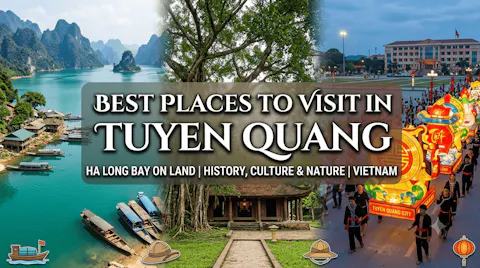
Best Places to Visit in Tuyen Quang
Tuyen Quang is a hidden gem in northern Vietnam, offering spectacular mountain scenery, emerald lakes, historical landmarks, and authentic ethnic culture. Visitors can cruise across Na Hang Lake, explore Lam Binh Nature Reserve, discover waterfalls and caves, and visit the historic Tan Trao Special National Relic Site, often regarded as the cradle of Vietnam's revolution. The province also features peaceful villages, scenic hiking trails, and vibrant local traditions. This guide highlights the best places to visit in Tuyen Quang for an unforgettable nature and cultural adventure.

Best Things to Do in Tuyen Quang
Tuyen Quang offers unforgettable experiences for nature lovers, history enthusiasts, and cultural explorers. Cruise across the breathtaking Na Hang Lake, trek through Lam Binh's forests, discover hidden waterfalls and limestone caves, and visit the historic Tan Trao Special National Relic Site. Travelers can also explore ethnic minority villages, enjoy local cuisine, photograph spectacular mountain scenery, and experience authentic rural life. This guide highlights the best things to do in Tuyen Quang for an inspiring adventure through one of northern Vietnam's most beautiful and peaceful destinations.
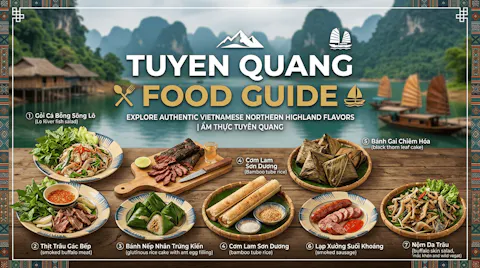
Tuyen Quang Food Guide
Tuyen Quang's cuisine reflects the rich traditions of northern Vietnam's mountain communities, combining fresh local ingredients with authentic ethnic recipes. Visitors can enjoy grilled freshwater fish, hill chicken, bamboo-tube rice, forest vegetables, sticky rice, smoked meats, and seasonal specialties prepared using traditional cooking methods. From bustling local markets to family-run restaurants and ethnic villages, every meal offers a genuine taste of the region's cultural heritage. This Tuyen Quang Food Guide introduces the must-try dishes and memorable culinary experiences waiting throughout the province.

How to Get to Tuyen Quang
Planning a trip to Tuyen Quang? This practical transportation guide explains how to get to Tuyen Quang from Hanoi and other destinations by bus, limousine van, car, or motorbike. Discover typical travel times, the main roads and departure points, what to expect on mountain routes, and tips for getting around after you arrive. Whether you are visiting Tân Trào, Na Hang, Mỹ Lâm, or exploring northern Vietnam by road, learn how to choose the best transport option for your itinerary, budget, and travel style.