
Tuyen Quang Food Guide
Tuyen Quang's cuisine reflects the rich traditions of northern Vietnam's mountain communities, combining fresh local ingredients with authentic ethnic recipes. Visitors can enjoy grilled freshwater fish, hill chicken, bamboo-tube rice, forest vegetables, sticky rice, smoked meats, and seasonal specialties prepared using traditional cooking methods. From bustling local markets to family-run restaurants and ethnic villages, every meal offers a genuine taste of the region's cultural heritage. This Tuyen Quang Food Guide introduces the must-try dishes and memorable culinary experiences waiting throughout the province.
On this page
To cross the geographic threshold into Tuyên Quang is to enter a culinary landscape where the echoes of modern revolutionary history and the primordial rhythms of the northern forests are inextricably linked. For the professional culinary anthropologist, the specialized food critic, and the local advocate who has spent years investigating the distinct, ancestral flavor architectures of this province, Tuyên Quang represents a profound, living archive of highland Vietnamese gastronomy. This is a region that rejects the polished, standardized dining of commercialized urban centers in favor of a raw, honest, and deeply aromatic culinary identity. Every dish found here—from the smoky, wood-cured essence of highland buffalo to the delicate, forest-foraged sweetness of ant-egg delicacies—tells a story of human adaptation to a land shaped by the Lô River’s currents and the dense, high-altitude canopy of the northern borderlands. This exhaustive tuyen quang food guide serves as a definitive map for the deliberate traveler, moving beyond the superficiality of transit-stop dining to uncover the flavor profiles that have defined this province for generations. By navigating the smoky, hearth-cooked rituals of the highland villages and the vibrant, high-turnover hubs that define the local market culture, you will engage with a heritage that honors ancient preservation techniques while continuously adapting to the evolving palate of a modernizing society. This is a cuisine of resourcefulness, complex umami profiles, and a profound, cultural respect for the art of the meal.
The Iconic Delicacies of the Highlands
The gastronomic identity of the province is anchored by a set of delicacies that reflect the historical necessity and the aesthetic ambition of the northern midlands. These meals are not merely culinary selections; they are cultural artifacts that demand a rigorous commitment to artisanal smoke-drying integrity, texture, and traditional preparation methodology, representing the highest evolution of the regional highland palate.
Thịt Trâu Gác Bếp: The Art of Smoke Preservation
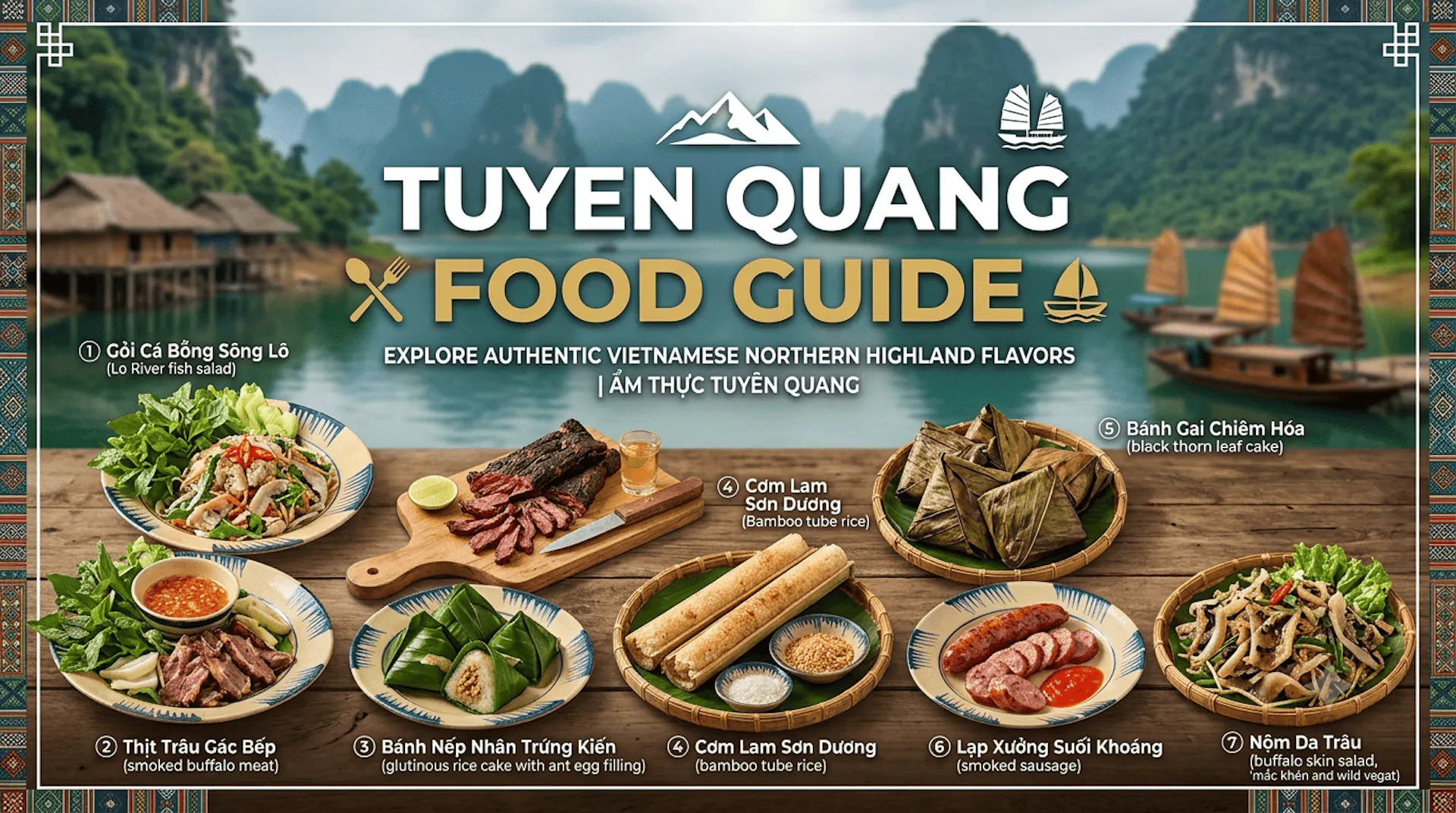
The Thịt trâu gác bếp (smoke-dried buffalo) is the definitive culinary signature of the province, an icon that perfectly articulates the relationship between the highland communities and the harsh environmental realities of the mountain climate. The expertise involved in the preparation is profound; the process begins with the careful selection of lean buffalo meat, which is marinated in a complex, potent blend of local spices, including the signature mắc khén (a wild, numbing forest pepper) and garlic. The critical stage of the craft involves hanging the meat in the rafters above the kitchen hearth, where it is slowly cured over several days by the steady, aromatic smoke of smoldering hardwood fires. This artisanal smoke-drying process does more than preserve the meat; it transforms the muscle fibers, resulting in a product that is dark, firm, and infused with a deep, wood-fired essence. Unlike the mass-produced, oven-dried varieties found in commercial markets, authentic Thịt trâu gác bếp requires the steady, patient influence of the hearth smoke. To taste this buffalo is to consume the very essence of the mountain geography; it is typically served by tearing the meat into thin, fibrous strips and dipping them into a spicy, mắc khén-infused salt, a ritual that highlights the contrast between the intense, smoky depth of the meat and the sharp, numbing high note of the forest pepper.
Cá Lăng Sông Lô: The River’s Bounty
The Cá lăng sông Lô (hemibagrus fish of the Lô River) serves as the primary aquatic anchor of the highland diet, a delicacy that demonstrates the ingenuity of local riverine culinary tradition. The Lô River, known for its swift, cool currents and high oxygen levels, produces a fish that is prized for its exceptionally clean, sweet, and firm white meat. The sensory experience of this fish is defined by its versatility; it is the center of a wide range of regional preparations, from delicate, sour-laced soups infused with wild mountain herbs to charcoal-grilled fillets that highlight the fish’s natural, fatty richness. Authoritative preparation of this fish requires a master cook who understands how to balance the intensity of the river with the acidity of forest-foraged greens, ensuring that the meat remains the focal point of the meal. To experience Cá lăng in a traditional highland eatery is to witness the seamless integration of riverine harvest and mountain foraging; it is a staple that evokes the history of the Lô River basin and provides the traveler with an authentic look at the sophisticated, river-integrated cuisine that defines the province's internal environmental character.
Bánh Nếp Nhân Trứng Kiến: A Seasonal Forest Curiosity
The Bánh nếp nhân trứng kiến (sticky rice cake with ant eggs) is perhaps the most evocative marker of the seasonal culinary calendar in Tuyên Quang. These cakes are crafted from high-quality, fragrant glutinous rice flour and stuffed with a filling derived from the eggs of specific black ants found in the canopy of the forest trees. The ritual of harvesting these eggs requires deep, traditional knowledge of the forest and the correct seasonal window; it is a practice that can only be performed by those who understand the lifecycle of the colony without destroying the forest balance. The taste of Bánh nếp nhân trứng kiến is subtle, earthy, and slightly creamy, a flavor profile that is often elevated by the addition of fried shallots and a touch of wild mountain herbs. To consume these cakes during their brief, spring harvest window is to participate in a local ritual that connects the diet directly to the forest cycle. It acts as a rare bridge between the wild landscape and the local kitchen, serving as a seasonal treasure that demonstrates the province's commitment to the creative, seasonal utilization of the entire available ecosystem.
Forest Treasures & Ethnic Flavors
As the culinary investigator moves away from the river basins toward the highland frontiers, the foodways transition into a realm dominated by ancestral preservation techniques and terroir-driven foraging. Here, the necessity of surviving seasonal shifts has birthed a complex tradition of forest-foraged ingredients that define the everyday highland palate.
Măng Rừng: The Sustainable Soul
Măng rừng (wild bamboo shoots) serves as the definitive symbol of highland agricultural resourcefulness, a staple that represents the ultimate triumph of culinary resilience over the unpredictability of the mountain harvest. Tuyên Quang is home to a diverse array of bamboo species, each of which is harvested according to its unique flavor profile—some are sweet and tender, while others require careful fermenting or boiling to remove their natural, sharp acidity. The local communities have developed an authoritative methodology for transforming these common shoots into nutrient-dense, flavorful staples through fermenting, drying, or stir-frying with local, forest-harvested mushrooms and fats. To eat Măng rừng is to taste the history of the midlands, where every ingredient is respected, processed, and elevated through traditional preparation to ensure maximum nutritional and gastronomic yield. It is a dish that speaks to the history of mountain survival, where the ingenuity of the highland cooks turned an everyday forest plant into a dish that is deeply embedded in the communal social consciousness.
Forest-Foraged Vegetables & Herbs
The daily diet of the province is heavily reliant on the intelligent, traditional use of rural ingredients that are gathered, rather than purchased. The foragers of the region possess an encyclopedic knowledge of the high-altitude canopy, utilizing seasonal greens, wild-growing spices, and forest-harvested mushrooms that define the rhythm of the local kitchen. This is a culinary culture that operates on the seasonal dietary shifts: the intense, dry summer dictates the use of cooling, herb-heavy preparations, while the cool, monsoon-heavy months demand the heat-forward, hearty, and aromatic warmth of the stews and spice-infused broths. To engage with this diet is to observe the local, seasonal dietary shifts that remain firmly anchored in the provincial geography. It is a way of life where the market stall and the home kitchen serve as a reflection of what the forest has provided, ensuring that the cuisine remains in constant, dynamic dialogue with the local ecology and the ancestral heritage of the land.
Indigenous Fermentation Techniques
The ethnic groups of Tuyên Quang, particularly the Dao and Tày communities, utilize sophisticated, indigenous fermentation techniques to balance their flavor profiles and preserve their harvest. These techniques manifest in a variety of traditional sauces, pastes, and fermented pickles that serve as the backbone for almost every meal in the highland interior. The fermentation process is a traditional, slow-maturation methodology that requires months of careful monitoring, resulting in products that are significantly more complex and aromatic than their industrial counterparts. It is the essential, umami-rich foundation for many of the province’s most famous dishes, from braised meats to mountain vegetable sautés, serving as the sensory anchor that connects every kitchen in Tuyên Quang to the vibrant, ecological history of the forest. These fermentation practices are the defining, internal environmental character of the regional cuisine, and they provide the traveler with a window into the ancestral methodology that has sustained these communities through centuries of isolation and climate volatility.
The Market and Community Landscape
To grasp the true culinary pulse of Tuyên Quang, one must look at the markets, where the trade of ingredients provides the most authoritative evidence of the provincial palate and the seasonal availability of the forest bounty.
Navigating Traditional Highland Markets
The highland market—whether it be the high-volume activity of the central markets in Tuyên Quang City or the smaller, village-specific nodes along the northern mountain corridors—is the primary research site for any student of the provincial diet. These spaces operate on a rhythm dictated by the first light; by the time the sun is high, the bulk of the trade is already concluded. Navigating these stalls requires a willingness to observe the mundane, transactional reality of the province. You will see vendors sorting through piles of freshly gathered, forest-foraged greens, arguing over the price of the morning's river-fish catch, and measuring out mounds of local spices. By observing the flow of these ingredients, you gain an immediate understanding of the dietary foundations of the area. It is here that you find the herbs that form the base of the morning soups, the tubers that will be used in the evening porridges, and the chili pastes that will define the province's character. The market is not merely a place of commerce; it is an archive of the regional diet, providing a vivid, sensory-heavy context for the provincial culinary philosophy: a commitment to seasonality, regional sourcing, and the creative utilization of the entire available ecosystem.
The Custodians of Taste
The genuine highland food culture is maintained by family-run stalls and household kitchens that serve as the primary venues for experiencing the province's culinary heritage. These venues are the custodians of regional flavors, often operating in the same location for decades and utilizing recipes that have been refined by multiple generations of the same family. To eat at these stalls is to enter a space of immense cultural importance; the cook is not merely a provider of calories but a protector of ancestral memory. The consistency of the menus, the specificity of the ingredients used, and the adherence to traditional preparation methods are the markers of these custodians. By patronizing these small, family-owned operations, the traveler contributes to the continued sustainability of the provincial culinary identity, ensuring that the labor-intensive recipes are passed on rather than replaced by industrial, standardized alternatives. It is in these quiet, working eateries that you find the true rhythm of the province—a rhythm that is defined by the forest harvest, the hearth, and the communal spirit of the northern highlands.
Practical Culinary Logistics and Etiquette for the Tuyen Quang Food Guide
Executing a highly successful, intellectually grounded food tour across this province requires a pragmatic shift in expectation from the rapid-service culture of the urban centers to the family-oriented, traditional pace of the highland districts. When seeking out the most authentic eateries, rely on the "local traffic" principle; any stall that is consistently crowded with residents—where the menu is handwritten or absent, and the primary ingredients are based on the morning’s procurement—is an immediate, high-authority indicator of quality. These family-run establishments, often tucked away in the quiet, residential corridors of the city or in the periphery of the highland valleys, are the true keepers of the province’s culinary history. They do not cater to the aesthetic preferences of the international tourism market; they cater to the palate of the locals, ensuring that the preparation is uncompromising, authentic, and rooted in the ancestral spice profiles of the region.
In terms of etiquette, dining in this province is inherently a respectful, community-oriented activity. The dining culture is frequently conducted in spaces that are humble and unadorned, where the focus is entirely on the freshness and the quality of the communal platter. It is a space that demands ease, patience, and a lack of pretense. Whether you are in a bustling, mountain-air market stall or a more refined, family-run eatery, the protocol remains consistent: show patience, respect the "slow food" preparation of the traditional recipes, and always express genuine, visible gratitude. The artisans who maintain these recipes are the keepers of the province’s cultural heritage, and they take immense pride in the labor they invest in their traditional, hearth-cooked broths and their careful, artisanal preparations. By approaching your meals with an appreciation for this investment of time and skill, you ensure that your culinary journey is not just a collection of meals, but a respectful engagement with the living, enduring traditions of the Northern midlands. This is the Tuyên Quang way of dining, where the quality of the food is inseparable from the respect shown to the environment, the harvest, and the cook who provides the meal.
Conclusion: Finalizing Your Journey Through the Best Things to Do in Tuyen Quang
Tuyên Quang offers one of the most honest, intellectually stimulating, and environmentally reflective culinary landscapes in Northern Vietnam. By actively refusing to dilute its robust flavor profiles for the comfort of the international market, the province has successfully guarded the integrity of its regional foodways, from the intricate, slow-smoked art of the local buffalo to the bold, intense, and highly aromatic profile of its traditional forest condiments. As you conclude your reading of this definitive tuyen quang food guide, consider the depth of the gastronomic history you are about to encounter. Are you most eager to experience the smoky, mineral-rich intensity of the iconic Thịt trâu gác bếp, or does the prospect of participating in the meditative, ritualized consumption of the adventurous river-caught delicacies provide the primary motivation for your journey into the heart of the northern highlands? Which regional specialty—the iconic smoked buffalo or the river-caught delicacies—are you most excited to document first in your own culinary experience?
Read more: Tuyen Quang Travel Guide

By Roy Trinh
Editor
Roy Trinh is a travel writer and destination expert at Go Visit Vietnam, dedicated to helping travelers discover the beauty, culture, and diversity of Vietnam. Through well-researched travel guides, practical itineraries, local insights, and authentic recommendations, Roy shares valuable information to inspire memorable journeys across the country. From vibrant cities and breathtaking landscapes to regional cuisine and cultural heritage, every guide is created to help visitors experience Vietnam with confidence and curiosity.
Frequently Asked Questions About Tuyen Quang Food Guide
What food is Tuyen Quang famous for?
Tuyen Quang is known for its mountain cuisine, including grilled freshwater fish, bamboo-tube rice (cơm lam), hill chicken, smoked pork, sticky rice, forest vegetables, and traditional dishes prepared by ethnic minority communities.
Where can I try authentic local food in Tuyen Quang?
Visitors can enjoy authentic cuisine at local markets, family-run restaurants, riverside eateries, and ethnic villages throughout Tuyen Quang, especially around Na Hang, Lam Binh, and Tuyen Quang City.
Is Tuyen Quang a good destination for food lovers?
Yes. Tuyen Quang offers authentic northern Vietnamese cuisine with fresh mountain ingredients, traditional cooking techniques, and unique ethnic flavors that are difficult to find elsewhere in Vietnam.
What local specialties should I try in Tuyen Quang?
Popular specialties include cơm lam, grilled stream fish, smoked buffalo meat, hill chicken, sticky rice, bamboo shoots, wild vegetables, and locally produced herbal products and mountain honey.
What food souvenirs should I buy in Tuyen Quang?
Recommended souvenirs include mountain tea, wild honey, dried bamboo shoots, smoked meats, traditional sticky rice products, herbal specialties, and locally made agricultural products available in regional markets and specialty shops.
Advertising box
Read More Tuyen Quang
Discover more of Tuyen Quang through our carefully curated travel guides covering breathtaking natural attractions, historical landmarks, local cuisine, suggested itineraries, seasonal travel tips, and practical advice. From the emerald waters of Na Hang Lake and the forests of Lam Binh Nature Reserve to the historic Tan Trao Special National Relic Site and authentic ethnic villages, these guides will help you explore one of northern Vietnam's most peaceful and rewarding destinations.
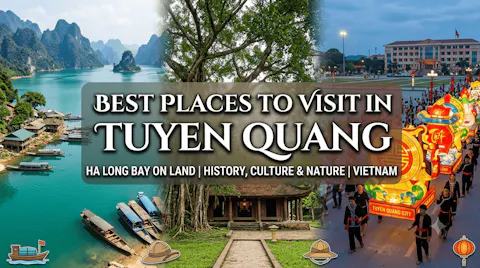
Best Places to Visit in Tuyen Quang
Tuyen Quang is a hidden gem in northern Vietnam, offering spectacular mountain scenery, emerald lakes, historical landmarks, and authentic ethnic culture. Visitors can cruise across Na Hang Lake, explore Lam Binh Nature Reserve, discover waterfalls and caves, and visit the historic Tan Trao Special National Relic Site, often regarded as the cradle of Vietnam's revolution. The province also features peaceful villages, scenic hiking trails, and vibrant local traditions. This guide highlights the best places to visit in Tuyen Quang for an unforgettable nature and cultural adventure.

Best Things to Do in Tuyen Quang
Tuyen Quang offers unforgettable experiences for nature lovers, history enthusiasts, and cultural explorers. Cruise across the breathtaking Na Hang Lake, trek through Lam Binh's forests, discover hidden waterfalls and limestone caves, and visit the historic Tan Trao Special National Relic Site. Travelers can also explore ethnic minority villages, enjoy local cuisine, photograph spectacular mountain scenery, and experience authentic rural life. This guide highlights the best things to do in Tuyen Quang for an inspiring adventure through one of northern Vietnam's most beautiful and peaceful destinations.

Best Time to Visit Tuyen Quang
Tuyen Quang is a beautiful year-round destination where each season reveals a different side of its mountain landscapes, emerald lakes, and cultural heritage. Spring offers pleasant temperatures and colorful festivals, while autumn provides cool weather perfect for trekking, sightseeing, and boat trips on Na Hang Lake. Summer showcases lush forests and dramatic waterfalls, and winter brings peaceful scenery with fewer visitors. This guide helps you choose the best time to visit Tuyen Quang based on weather, outdoor activities, festivals, and travel preferences.

How to Get to Tuyen Quang
Planning a trip to Tuyen Quang? This practical transportation guide explains how to get to Tuyen Quang from Hanoi and other destinations by bus, limousine van, car, or motorbike. Discover typical travel times, the main roads and departure points, what to expect on mountain routes, and tips for getting around after you arrive. Whether you are visiting Tân Trào, Na Hang, Mỹ Lâm, or exploring northern Vietnam by road, learn how to choose the best transport option for your itinerary, budget, and travel style.