
Bun Cha vs Bun Thit Nuong: What Is the Difference?
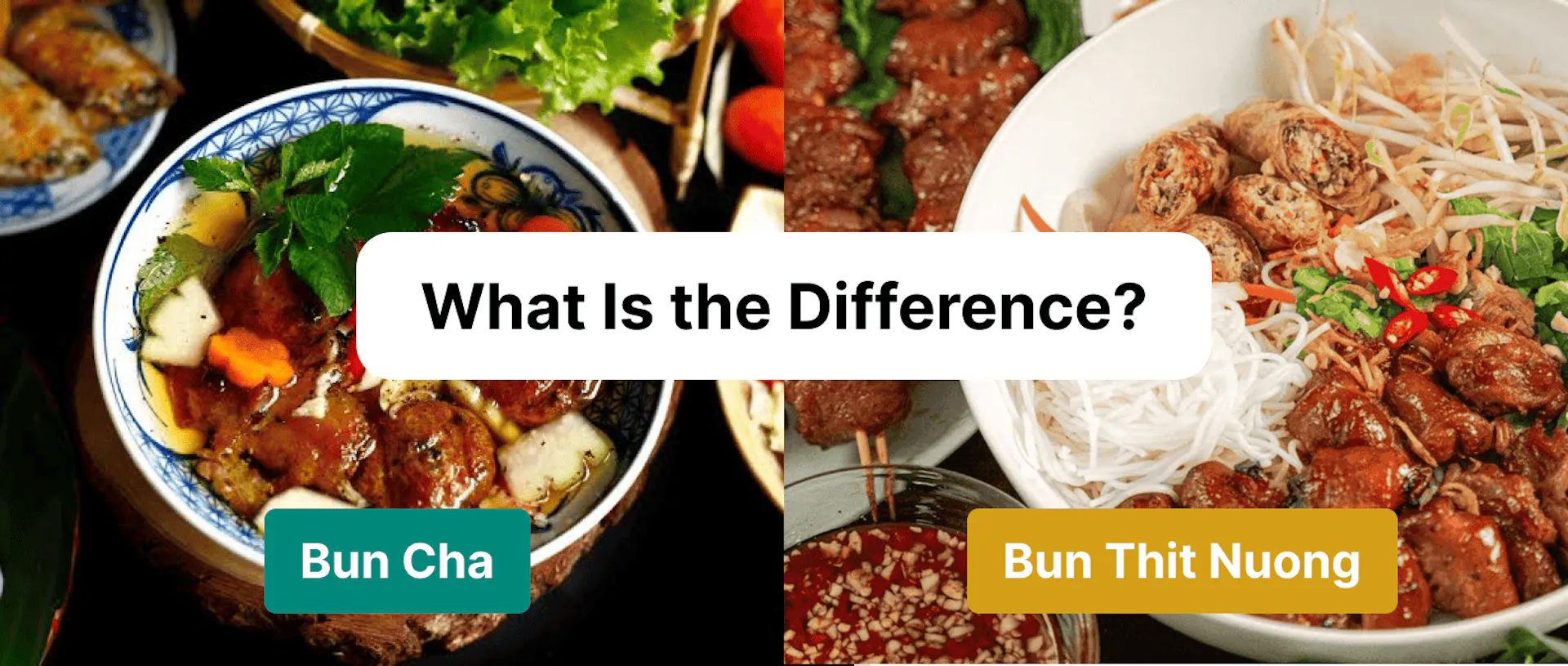
At first glance, Bun Cha and Bun Thit Nuong may look similar because both feature grilled pork and rice noodles. However, these two beloved Vietnamese dishes differ significantly in their origins, serving style, dipping sauce, and overall dining experience. Bun Cha is a signature specialty of Hanoi served with warm broth, while Bun Thit Nuong is popular in southern Vietnam as a dry noodle dish. This guide explains the key differences and helps you choose which one to try first.
On this page
Wandering through the labyrinthine alleyways of Vietnam’s bustling metropolises, a traveler is inevitably seduced by the sizzling, unmistakable olfactory equilibrium of marinated pork fat dripping onto glowing charcoal embers. This deeply savory, smoke-infused scent drifts through the humid air, serving as an invisible thread that culturally unites the nation while simultaneously highlighting its profound gastronomic regionalism. However, for international epicureans, this exact aroma often sparks a widespread, enduring culinary confusion. When analyzing Bun Cha vs Bun Thit Nuong, it becomes immediately apparent that these two celebrated dishes share a deceptively similar foundation: perfectly charred grilled pork, delicate rice vermicelli, and an abundance of fresh, fragrant herbs. Yet, to conflate the two is to fundamentally misunderstand the intricate culinary stratification of the country. While foreigners frequently confuse Bún Chả and Bún Thịt Nướng due to their shared core ingredients, they are entirely distinct geographical expressions representing Northern and Southern culture, respectively. The difference between Bun Cha and Bun Thit Nuong is defined by fundamentally different architectures of broth temperature, seasoning application, and physical assembly rituals. Understanding this complex Vietnamese noodle salad comparison unlocks a deeper appreciation for how climate, geography, and local agricultural traditions shape the nation's iconic culinary identity.
The Northern Champion – The Anatomy of Authentic Bun Cha vs Bun Thit Nuong
The Warm, Immersive Ritual
To properly dissect Hanoi Bun Cha vs Saigon Bun Thit Nuong, one must first venture into the misty, historic corridors of the Northern capital, Hanoi. Bún Chả is not merely a dish; it is a sacred, warm, and highly immersive lunchtime ritual that completely dictates the midday rhythm of the city. The absolute foundation of this Northern masterpiece relies heavily on the profound expertise required to master its signature liquid component. Unlike a traditional soup or a simple condiment, the Northern nước chấm ấm operates as a warm, amber-hued dipping broth that serves as the unifying thermal matrix for the entire meal. Chefs meticulously balance premium fermented fish sauce with a delicate, light rice vinegar, raw cane sugar, and filtered water, heating the mixture over a low flame until it reaches a comforting, gentle warmth. This careful thermal regulation is essential, as the warm liquid is expressly designed to soften the rice noodles and gently coax the volatile essential oils from the accompanying fresh herbs. Floating gracefully within this steaming, savory bath are precisely carved, crisp slices of pickled green papaya and carrots, which provide a sharp, acidic crunch designed to aggressively cut through the impending wave of rich pork fat. This meticulous preparation transforms a simple sauce into a highly sophisticated, multi-dimensional broth that perfectly counteracts the legendary damp, bone-chilling winters and humid summers characteristic of the Red River Delta.
The Dual-Protein Charcoal Technique
The true architectural brilliance of this Northern specialty, and a primary factor in the Bun Cha vs Bun Thit Nuong discussion, rests entirely upon its distinct, dual-protein charcoal-searing methodology. A proper, uncompromising serving of Bún Chả absolutely mandates the inclusion of two distinct cuts of pork, each requiring a specialized preparation technique to achieve maximum textural contrast. The first component is the chả miếng, consisting of exceptionally thin, fatty slices of marinated pork belly. When exposed to the blistering heat of the charcoal braziers, the subcutaneous fat renders rapidly, basting the lean muscle and creating heavily caramelized, slightly charred exterior edges that shatter audibly upon consumption. The second, equally critical component is the chả viên, a heavily seasoned, hand-minced pork shoulder patty tightly formed to retain its internal moisture. These tender, yielding spheres are frequently mixed with finely diced shallots, cracked black pepper, and a touch of wild honey before being grilled to a smoky, mahogany finish. The definitive culinary stroke occurs immediately after grilling: these blisteringly hot proteins are forcefully submerged directly into the bowls of warm dipping broth before being served to the diner. This immediate submersion allows the heavily rendered, smoky pork lipids to bleed directly into the acidic liquid, permanently altering the broth's viscosity and infusing it with an impossibly deep, resonant umami. The diner then receives a separate plate of stark white, room-temperature rice vermicelli and a sprawling basket of pungent herbs, acting as the final architect who manually dips the cold noodles into the hot, fat-laced broth, creating an extraordinary thermal contrast that defines the Northern dining experience.
The Southern Sensation – The Architecture of Bun Thit Nuong vs Bun Cha
The Deconstructed Bowl and Pour-Over Method
Leaving the capital and traveling southward to the sun-drenched, tropical metropolis of Ho Chi Minh City, the culinary philosophy shifts dramatically, revealing the Southern half of the Bun Cha vs Bun Thit Nuong dichotomy. Bún Thịt Nướng represents a fundamentally different textural architecture, perfectly reflecting the vibrant, abundant, and fast-paced culture of Saigon. Instead of a separated, interactive dipping experience, the Southern dish is masterfully presented as a unified, deconstructed dry noodle bowl. The structural foundation begins at the base of a deep ceramic bowl, which is generously lined with a dense, crunchy thicket of shredded iceberg lettuce, crisp bean sprouts, julienned cucumbers, and an aggressive handful of highly aromatic, leafy greens. Resting directly atop this botanical foundation is a substantial portion of pure white, room-temperature rice vermicelli. This cool, refreshing base actively combats the punishing, year-round tropical heat of the Southern delta. The grilled protein—typically consisting of lean, aggressively marinated pork shoulder slices rather than the dual belly-and-patty combination of the North—is laid triumphantly over the noodles, accompanied by the sharp, acidic crunch of locally fermented đồ chua (pickled daikon radish and carrots). This complete, self-contained presentation ensures that every single textural element, from the yielding noodles to the crisp vegetables, remains structurally independent until the diner actively chooses to combine them, offering a stark structural contrast to the inherently saturated Northern dipping method.
The Sweet-Savory Drizzle and Green Onion Oil
The defining element that truly separates the Southern preparation in the ongoing Bun Cha dipping sauce vs Bun Thit Nuong fish sauce comparison is the specific application and chemical composition of the dressing. The Southern nước mắm chua ngọt rưới is distinctly different from the warm Northern broth; it is a room-temperature, highly concentrated sauce that heavily favors a sweeter, more pungent profile, reflecting the Mekong Delta's immense agricultural access to sugarcane and tropical fruits. Crucially, this sauce is not used as a communal dipping vat. Instead, the diner confidently pours the concentrated liquid generously over the entire dry bowl, actively tossing the ingredients together to ensure every strand of vermicelli and shredded lettuce is evenly coated in the sweet, garlicky, and fiery dressing. To elevate this composition into a realm of pure gastronomic indulgence, Southern chefs rely on two absolutely essential, mandatory garnishes that complete the bowl's textural architecture. A heavy, glistening spoonful of mỡ hành (hot scallion oil) is draped over the grilled pork, introducing a luxurious, deeply savory, and slightly grassy lipid profile that binds the lean meat to the dry noodles. Finally, a massive handful of crushed, freshly roasted peanuts is scattered across the top, providing a resounding, earthy crunch that perfectly counters the soft, slippery vermicelli. This brilliant combination of a sweet-savory drizzle, rich scallion fat, and crunchy legumes creates a vibrant, multi-layered, and incredibly refreshing profile specifically engineered to sustain laborers and office workers alike amidst the relentless, sweltering Southern climate.
Deep Dive into the Comparative Contrasts: Bun Cha vs Bun Thit Nuong
Temperature and Broth Physics
To achieve complete gastronomic mastery over the Bun Cha vs Bun Thit Nuong debate, one must rigorously analyze the underlying temperature dynamics and broth physics that govern these two regional heavyweights. The most profound distinction lies in their thermal presentation, which is a direct, ingenious adaptation to their respective geographical climates. The steaming, immersive warmth of the Northern dipping soup is a brilliant culinary response to Hanoi’s distinct, four-season climate, where bone-chilling winter monsoons demand meals that provide immediate, internal thermal comfort. The warm broth actively softens the pork fat and keeps the proteins pliable, transforming the dish into a restorative, comforting winter staple as much as a summer lunch. In stark contrast, the cool, refreshing harmony of the Southern bowl is an evolutionary reaction to Saigon's perpetual, stifling tropical humidity. Serving the rice vermicelli at room temperature and utilizing a cool, concentrated dressing ensures that the Southern dish operates as an invigorating, cooling salad rather than a heavy, sweat-inducing soup. This strict adherence to localized thermal contrast ensures that each dish functions at maximum physiological efficiency within its specific environmental context.
Herb Cultivation and Regional Palates
Furthermore, an exhaustive examination of the accompaniment cultures reveals a profound divergence in agricultural access and regional palates. The Northern preference, as demonstrated in a classic Bún Chả serving, heavily dictates a minimalist, pungent herb selection. Hanoi chefs typically prioritize sharp, highly aggressive botanicals—specifically jagged perilla leaves, spicy Vietnamese balm, and intense, cooling mint—which are expressly designed to surgically cut through the heavy, warm pork lipids suspended in the broth. Conversely, the Southern Bún Thịt Nướng embraces an abundant, jungle-like variety of fresh greens that reflects the overwhelming fertility of the Southern agricultural basin. Southern bowls are generously packed with an immense volume of mild, watery vegetables, including shredded green leaf lettuce, crisp bean sprouts, and sweet basil, creating a significantly higher ratio of raw vegetables to meat. This massive inclusion of hydration-rich flora ensures that the Southern bowl remains remarkably light and intensely refreshing, actively diluting the aggressive sweetness of the poured fish sauce and providing a massive dose of raw dietary fiber. By comparing these distinct agricultural philosophies, the culinary observer gains a profound understanding of how localized terroir directly dictates the construction of Vietnam's most iconic street foods.
Navigating the Confusion – A Guide for Travelers Discussing Bun Cha vs Bun Thit Nuong
How to Order Like a Local
For international food enthusiasts traveling across the length of the country, correctly identifying and ordering these regional specialties is an essential rite of passage that establishes immediate, deep trustworthiness with local vendors. When wandering the narrow, bustling corridors of the Northern capital, you must specifically seek out dedicated street-side grills operating fiercely during the peak midday hours, as Bún Chả is almost exclusively consumed as a dedicated lunch item. You will rarely find it served in the late evening, and ordering it by asking for a "pork noodle salad" will instantly reveal your foreign status. Instead, confidently request your serving, understanding that the warm dipping broth and dual-pork components will arrive as a separated, interactive meal. Conversely, when navigating the neon-lit, chaotic avenues of the Southern capital, Bún Thịt Nướng is widely available throughout the day and well into the humid night, frequently consumed as a rapid, satisfying dinner. Here, you must embrace the pour-over methodology, actively requesting extra đồ chua and mỡ hành to fully experience the rich, saturated complexity of the Southern dry bowl assembly.
Appreciating Both Traditions
Ultimately, engaging in the great Bun Cha vs Bun Thit Nuong debate is never an exercise in declaring a singular, superior victor. Rather, it is a fascinating, delicious exploration of the country's profound culinary stratification. Neither dish effortlessly surpasses the other; they are brilliant, perfectly engineered culinary solutions tailored to the specific climatic, agricultural, and cultural realities of their respective regions. Understanding the fundamental differences in their preparation, thermal dynamics, and textural architecture does not divide the cuisine, but rather deepens a traveler's appreciation for the vast, staggering diversity of Vietnamese gastronomy.
In summary, distinguishing the critical differences inherent in the Bun Cha vs Bun Thit Nuong debate profoundly enriches any serious culinary journey through the heart of Southeast Asia. By meticulously recognizing the restorative, warm, smoky dipping ritual of the North and contrasting it against the vibrant, refreshing, and deeply nutty harmony of the Southern assembled bowl, a traveler unlocks the true, unadulterated narrative of Vietnam’s diverse regional geography. Embrace this gastronomic regionalism by actively seeking out the comforting, rich, and warm dipping broth of Hanoi or the vibrant, sweet-savory, and crisp assembled noodle bowl of Saigon on your next expedition to fully experience the architectural mastery of Vietnamese street food.
Read more: Bun Cha

By Roy Trinh
Editor
Roy Trinh is a travel writer and destination expert at Go Visit Vietnam, dedicated to helping travelers discover the beauty, culture, and diversity of Vietnam. Through well-researched travel guides, practical itineraries, local insights, and authentic recommendations, Roy shares valuable information to inspire memorable journeys across the country. From vibrant cities and breathtaking landscapes to regional cuisine and cultural heritage, every guide is created to help visitors experience Vietnam with confidence and curiosity.
Frequently Asked Questions: Bun Cha vs Bun Thit Nuong
What is the main difference between Bún Chả and Bun Thit Nuong?
Bún Chả is a Hanoi specialty featuring grilled pork patties and sliced pork served with rice noodles, fresh herbs, and a warm, sweet-and-sour dipping sauce. Bún Thịt Nướng is more commonly associated with southern and central Vietnam and typically combines grilled pork with rice noodles, herbs, vegetables, pickled carrots and daikon, and a sweet-and-savory fish sauce dressing. The biggest difference is the serving style and regional culinary tradition.
Is Bún Chả only from Hanoi?
Bún Chả originated in Hanoi and remains strongly associated with the capital's food culture. While restaurants throughout Vietnam now serve variations of Bún Chả, Hanoi-style Bún Chả traditionally features grilled pork cooked over charcoal and served separately in a bowl of dipping sauce. This distinctive presentation is one of the dish's defining characteristics.
Is Bún Thịt Nướng the same as Bún Chả?
No. Although the two dishes share several ingredients, they are prepared and served differently. Bún Thịt Nướng generally consists of grilled pork placed directly over rice noodles and fresh vegetables, then topped with herbs, peanuts, and pickled vegetables before being dressed with fish sauce. Bún Chả traditionally keeps the grilled pork and dipping sauce together in a separate bowl alongside the noodles and herbs.
Which dish is sweeter, Bun Cha or Bun Thit Nuong?
Both dishes can have a sweet-and-savory flavor, but the balance varies by region and restaurant. Bun Cha's dipping sauce commonly combines fish sauce, sugar, vinegar, garlic, and chili, creating a light sweet-and-sour flavor. Bún Thịt Nướng is often served with a sweeter fish sauce dressing, which is mixed with the noodles and other ingredients. Individual recipes can differ considerably.
Which should I try first: Bun Cha or Bun Thit Nuong?
If you're visiting Hanoi, Bun Cha is an excellent choice because it is closely connected to the city's culinary identity. Travelers exploring southern or central Vietnam may find Bún Thịt Nướng more widely available. Ideally, try both: Bun Cha offers the smoky flavor of Hanoi-style grilled pork with a warm dipping sauce, while Bún Thịt Nướng provides a fresh, layered combination of noodles, grilled pork, herbs, pickles, and dressing.
Advertising box
Related Bun Cha Articles
Discover more about Bun Cha, one of Vietnam's most beloved dishes and a classic specialty of Hanoi. Explore our collection of guides covering the history and origins of Bun Cha, traditional ingredients, how it is prepared and served, its distinctive flavors, and the best places to try it in Vietnam. Whether you're learning about Vietnamese cuisine or planning your first food adventure in Hanoi, these articles will help you understand and enjoy Bun Cha like a local.
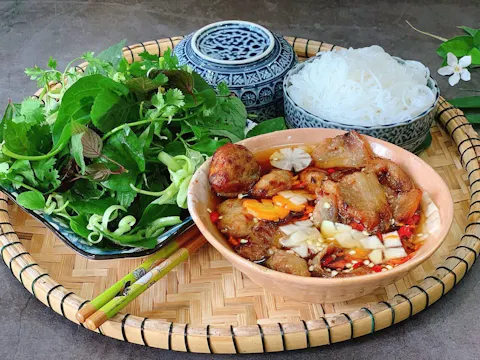
What Is Bun Cha? Hanoi's Grilled Pork & Noodles Explained
Bún Chả is one of Hanoi's most famous dishes, combining smoky charcoal-grilled pork, soft rice vermicelli, fresh herbs, pickled vegetables, and a warm sweet-and-savory fish sauce broth. Unlike many Vietnamese noodle dishes, the ingredients are served separately so diners can combine them with each bite. Discover what Bun Cha is, what it tastes like, how it is prepared, the ingredients traditionally used, how to eat it like a local, and how Hanoi's classic dish differs from Bun Thit Nuong in southern Vietnam.

Obama Pho or Bun Cha? The Story Behind Obama's Famous Meal in Hanoi
When former U.S. President Barack Obama visited Hanoi in 2016, one simple meal captured the world's attention. Many people mistakenly believe he ate Pho, but it was actually Bun Cha that he enjoyed alongside chef Anthony Bourdain. The memorable dinner introduced millions to one of Vietnam's most beloved dishes and became an iconic moment in culinary history. This article explores the story behind Obama's famous meal and why Bun Cha remains a must-try experience in Hanoi.

Where to Eat the Best Bun Cha in Hanoi (Top Authentic & Local Spots)
Hanoi is the birthplace of Bun Cha, and nowhere else serves this iconic dish quite the same way. From legendary family-run restaurants to hidden neighborhood eateries and famous spots visited by world leaders, the capital offers countless opportunities to enjoy authentic Bun Cha. This guide introduces the best places to eat Bun Cha in Hanoi, highlighting local favorites, signature flavors, and practical tips to help you experience one of Vietnam's most beloved culinary traditions like a true local.