
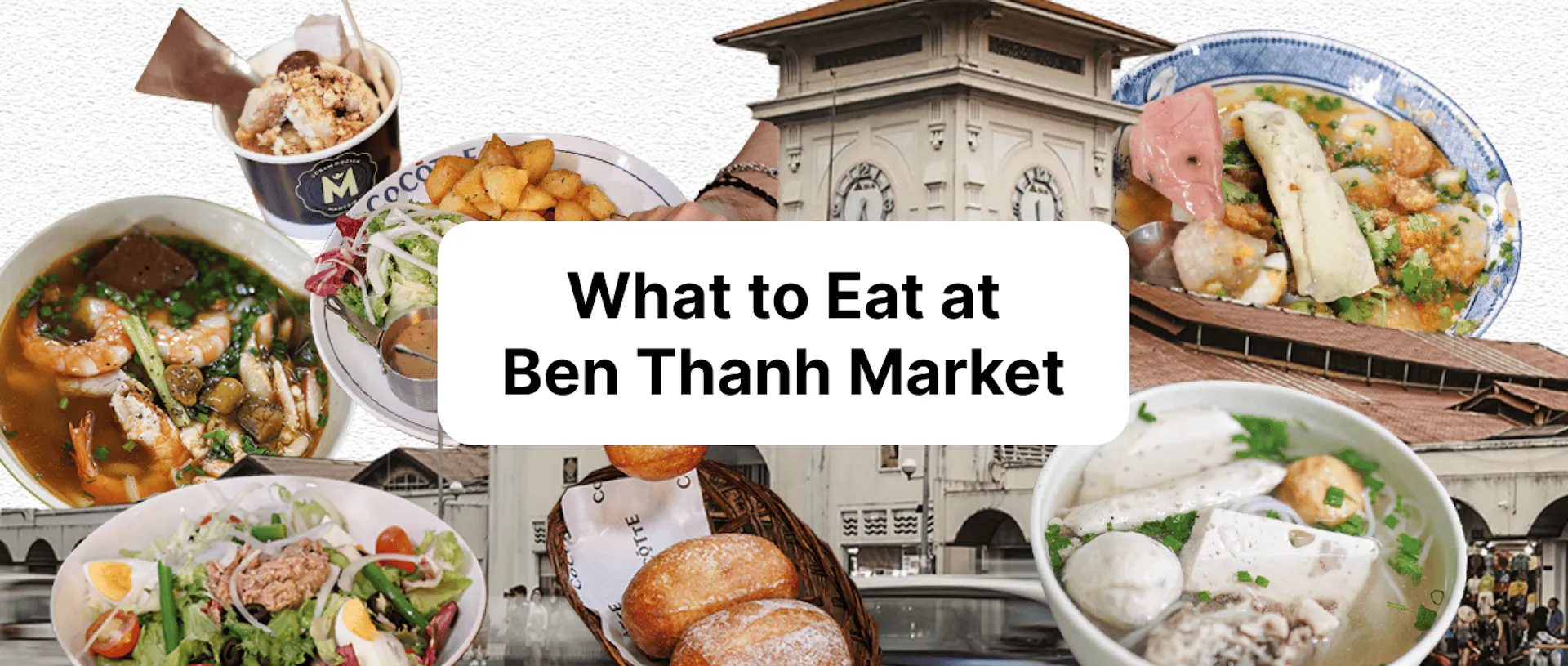
What to Eat at Ben Thanh Market: 7 Best Street Food Stalls You Must Try
Ben Thanh Market is more than a shopping destination—it's one of Ho Chi Minh City's best places to experience authentic Vietnamese street food. From steaming bowls of Pho and Bun Bo Hue to crispy Banh Xeo, fresh spring rolls, sweet desserts, and refreshing local drinks, the market offers flavors from across Vietnam under one roof. This guide highlights seven must-try food stalls and dishes that will help you enjoy an unforgettable culinary adventure at Ben Thanh Market.
On this page
Stepping beneath the towering, neo-classical clock tower of Saigon's most historic commercial epicenter, the olfactory receptors are immediately assaulted by an intoxicating, chaotic collision of heavy culinary aromas. The air is densely packed with the scent of sizzling turmeric pancake batter crisping against cast-iron, the deep, marine resonance of simmering crab and tomato broth, and the unmistakable, rich fragrance of sweet coconut milk boiling over open flames. This intense sensory greeting signifies your arrival at the legendary khu ẩm thực chợ Bến Thành, the central food court of the city's most revered marketplace. Ben Thanh Market food is not merely a collection of convenient tourist snacks; it is a sacred, heavily guarded culinary institution where generations of master cooks have meticulously preserved the vibrant, soulful flavors of Southern Vietnamese street food under one massive, historically significant roof. To navigate this dense, high-energy environment is to embark on a rigorous ethnographic study of regional gastronomy. Every single stall, often occupying a hyper-efficient footprint no larger than a thirty-square-meter boutique cafe, represents a masterclass in localized flavor equilibrium. This authoritative guide dissects the intricate culinary stratification of the market, directing the serious epicurean toward the absolute best street food offerings that define the authentic soul of the southern metropolis.
The Iconic Soups – Crab Broths and Rich Aromas
Bún Riêu Chợ Bến Thành: The Legendary Crab Noodle Soup
When isolating the absolute best food in Ben Thanh Market, the rigorous conversation invariably anchors upon the steaming, crimson cauldrons of bún riêu cua. A visit to the celebrated Bun Rieu Ben Thanh Market stalls offers an authoritative, intensely sensory-rich account of Southern Vietnamese broth mastery. The visual presentation alone is staggering: a massive aluminum vat brimming with a fiercely simmering, highly acidic tomato broth, crowned with a thick, floating raft of intensely savory crab and pork paste. The creation of this complex liquid requires an agonizingly slow extraction process, where the natural, subtle sweetness of pounded freshwater river crabs is forcefully married to the pungent, oceanic depth of fermented shrimp paste. The vendor expertly ladles this scalding, crimson liquid over a bed of tender, stark white rice vermicelli, instantly hydrating the noodles with heavy, savory lipids. Accompanying this magnificent bowl is an aggressive array of fresh, sharp botanicals, mandating the diner to manually tear perilla leaves, split water spinach stems, and crisp banana blossoms directly into the broth. This interactive garnishing process creates a profound textural contrast, perfectly offsetting the soft, yielding proteins. For the traveling gastronome, this monumental, multi-layered culinary experience is remarkably accessible, typically priced with exact precision between $3.00 and $4.50 USD, depending heavily on the requested inclusion of congealed pork blood or slow-braised pork knuckles.
> Read more: Bun Rieu

Understanding Southern Broth Architecture
To fully appreciate the famous dishes at Ben Thanh Market, one must intellectually deconstruct the specific structural architecture of the Southern broth. The culinary stratification found within this specific food court heavily contrasts with the austere, minimalist soup traditions of the Northern provinces. Southern Vietnamese cooks prioritize a bold, unapologetic flavor equilibrium that actively champions natural agricultural sweetness, reflecting the immense, fertile bounty of the Mekong Delta. The broth acts as a highly engineered foundation, meticulously designed to balance the fierce salinity of fermented seafood pastes with the bright, fruity acidity of heavily ripened local tomatoes and the rich, earthy fat of the pork and crab emulsion. This specific architectural approach guarantees that every single spoonful delivers an exhausting, yet deeply satisfying, wave of complex umami. The Ben Thanh Market food court stalls operate as living museums for this specific regional methodology, fiercely protecting ancestral recipes from modern industrial shortcuts. The cooks functioning in these incredibly tight, sweltering spaces rely on a deeply ingrained, generational expertise to continuously adjust the simmering cauldrons, ensuring that the relentless Saigon heat and humidity never compromise the fragile structural integrity of the crab paste or the delicate tartness of the tomato reduction.
Grilled Meats and Fresh Rolls – The Texture of Southern Staples
Bún Thịt Nướng: The Charred Pork Masterpiece
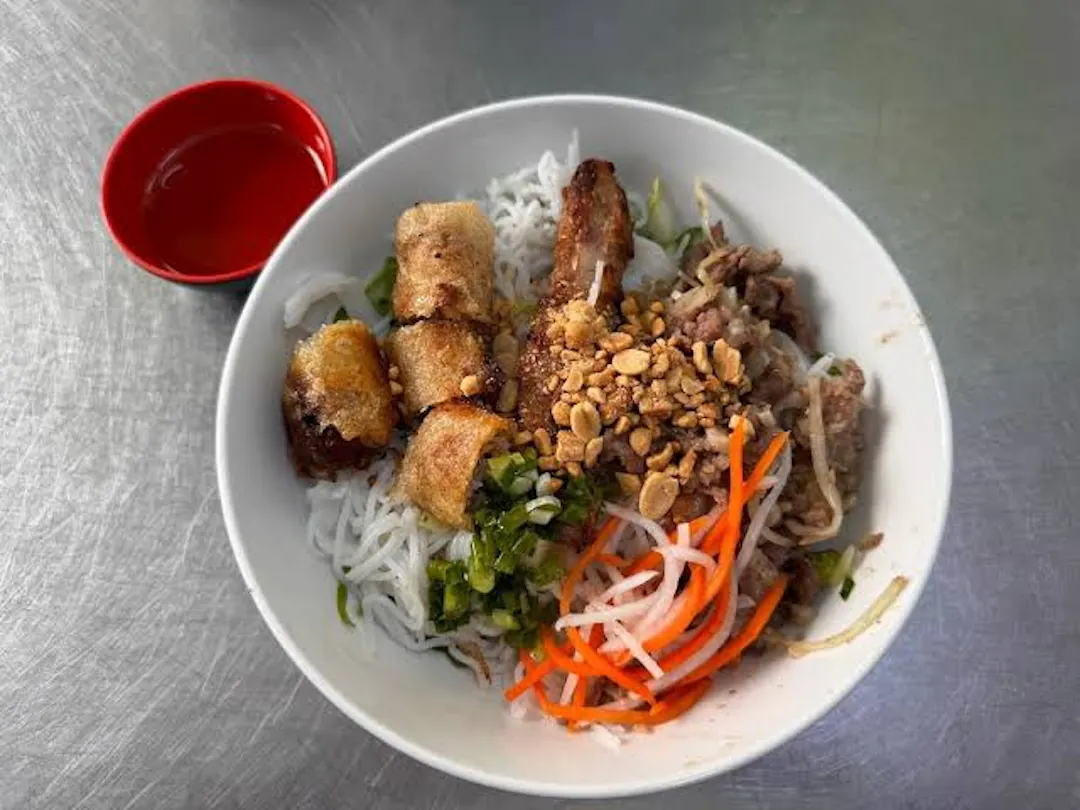
Moving beyond the heavy, simmering liquids, the ambient temperature of the market noticeably spikes as one approaches the open-flame grilling stations dedicated to the ultimate dry noodle assembly. Here, bún thịt nướng reigns supreme, operating as a flawless masterclass in extreme textural contrast and precise charcoal manipulation. The visual and auditory theater is captivating; vendors continuously monitor thick, heavily marbled slices of pork shoulder that relentlessly sizzle over aggressively glowing hardwood charcoal. The meat is subjected to a prolonged, intense marination process, submerged entirely in a thick, highly aromatic slurry of freshly crushed lemongrass, minced garlic, shallots, and wild honey, ensuring a rapid, deeply sticky caramelization upon contact with the open flame. The finalized, heavily charred pork is strategically positioned atop a bed of cool, room-temperature rice vermicelli, creating a highly intentional thermal divide. This foundation is subsequently buried beneath a massive, verdant mountain of fresh leafy greens, pickled daikon radish, and a heavy scattering of crushed, freshly roasted peanuts. The entire composition is brought into a state of flawless flavor equilibrium through the generous, table-side application of sweet and savory fish sauce. This complex, deeply satisfying dish, representing the pinnacle of Southern barbecue technique, commands an incredibly reasonable price point precisely structured between $3.50 and $5.00 USD, solidifying its status as an essential, high-protein staple for the discerning market explorer.
Gỏi Cuốn: The Refreshing Fresh Spring Roll
To effectively counteract the heavy, smoky lipids of the charcoal grill, the astute culinary traveler must actively seek out the pristine, delicate architecture of the gỏi cuốn. Often erroneously simplified as a basic fresh spring roll, this specific dish demands an exceptional level of spatial awareness and ingredient restraint from the vendor. The preparation is a mesmerizing display of rapid manual dexterity. The cook swiftly softens a translucent sheet of sun-dried rice paper, utilizing it as an edible, structural canvas to securely enclose a meticulously arranged interior. The roll typically features plump, gently poached river shrimp, incredibly thin slices of lean boiled pork, a modest portion of tightly bundled rice vermicelli, and an aggressive, highly fragrant inclusion of fresh chives and sharp mint. However, the true Southern identity of this dish is entirely dependent upon its accompanying condiment. The roll is mandatorily paired with a thick, highly viscous dipping sauce engineered from slow-simmered hoisin, heavily fortified with creamy peanut butter and crushed roasted legumes. This dense, sweet, and profoundly earthy sauce perfectly anchors the light, ethereal crunch of the raw vegetables and the clean, oceanic snap of the shrimp. Serving as an ideal, refreshing intermezzo between heavier courses, these masterfully crafted rolls are typically priced exceptionally well for travelers, reliably costing between $2.00 and $3.00 USD for a substantial, freshly wrapped portion.
> Read more: Fresh Spring Rolls (Gỏi Cuốn)

Sizzling Crêpes and Sweet Culinary Traditions
Bánh Xèo: The Crispy Southern Golden Crêpe
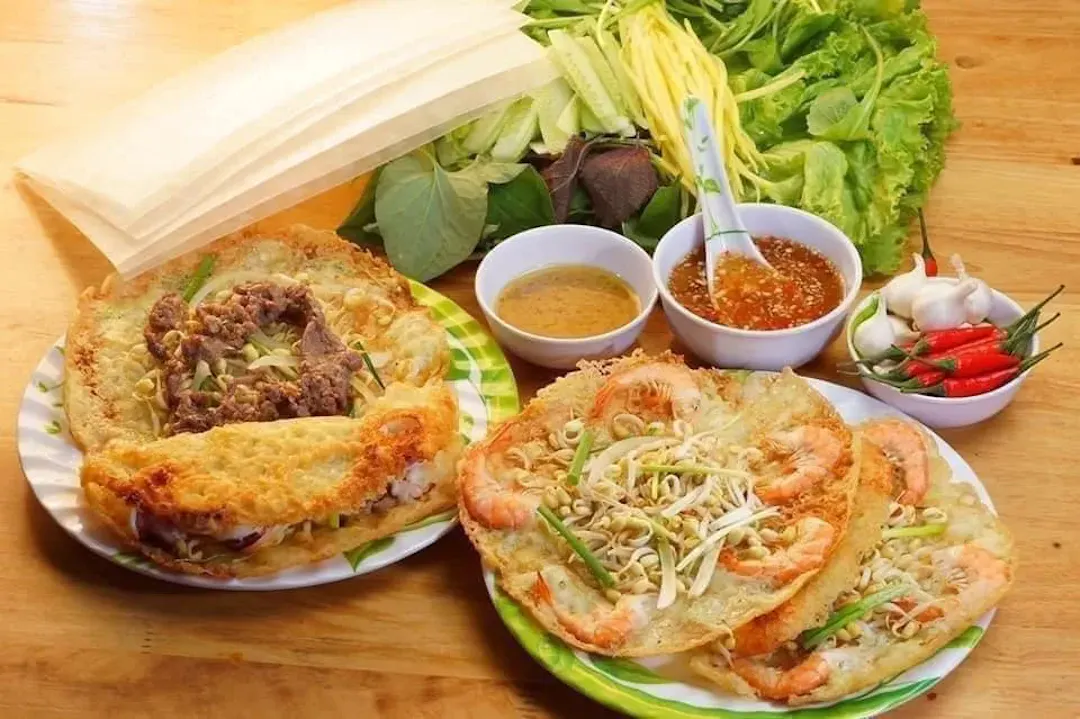
As the sensory exploration penetrates deeper into the labyrinthine corridors of the market, the unmistakable, aggressive crackle of incredibly hot oil striking cast-iron acts as an auditory beacon guiding diners toward the bánh xèo miền Nam stations. Translating literally to "sizzling cake," this massive, brilliant yellow crêpe represents a highly theatrical, high-stakes cooking methodology. The vendor wields a massive, shallow pan over a roaring, concentrated flame, swiftly pouring a highly specialized, liquid rice batter heavily laced with earthy turmeric powder and rich coconut milk. The batter instantly fries upon contact, creating a delicate, violently crisp outer shell while maintaining a remarkably tender, slightly chewy interior. Before the shell solidifies, the cook rapidly distributes a generous payload of tiny, sweet river shrimp, thinly sliced fatty pork belly, and a massive handful of crisp, raw mung bean sprouts. Consuming this gigantic, fragile structure requires a highly specific, hands-on methodology. The diner is expected to manually tear large, jagged shards of the crispy crêpe, carefully wrapping the shattered pieces inside massive leaves of sharp, peppery mustard greens alongside a diverse selection of wild, aromatic herbs, before firmly dunking the entire bundle into a bowl of diluted, sweet chili fish sauce. This incredibly dynamic, highly interactive dining experience, bursting with extreme textural and thermal contrasts, is transparently priced to accommodate the working-class budget, typically ranging precisely between $3.50 and $4.50 USD.
> Read more: Banh Xeo
Chè Sài Gòn: The Sweet Symphony of Chè Bé Ba
No rigorous documentation of this historic gastronomic ecosystem is complete without a profound, dedicated investigation into the deeply ingrained dessert culture. Standing as an undisputed pillar of traditional confectionery excellence within the food court is the legendary Che Be Ba Ben Thanh. This specific stall operates as a mandatory, almost sacred pilgrimage site for dedicated dessert aficionados seeking authentic chè Sài Gòn. The visual presentation is a staggering, kaleidoscopic array of massive glass bowls, each containing a different, intensely colorful component of traditional Vietnamese sweet soups. The architectural assembly of a single glass is a study in precise flavor layering and textural manipulation. The vendor masterfully constructs a towering dessert featuring a dense, earthy base of sweetened, slow-mashed mung bean paste, crowned with vibrant chunks of creamy taro root, violently pink tapioca pearls, and razor-thin slices of highly aromatic, fibrous jackfruit. The entire, towering composition is ultimately flooded with a heavy, deeply luxurious blanket of freshly extracted, thick coconut milk and a generous scoop of crushed ice. This intensely rich, highly caloric symphony of tropical flavors provides a crucial, cooling counterpoint to the aggressive, chili-laden savory dishes that dominate the market. Despite its legendary, highly celebrated status among both fierce local loyalists and international food critics, this spectacular, towering dessert remains priced for everyday, unapologetic indulgence, reliably costing a mere $2.00 to $3.50 USD.

Cơm Tấm and Cà Phê Sữa Đá: The Essential Fuel
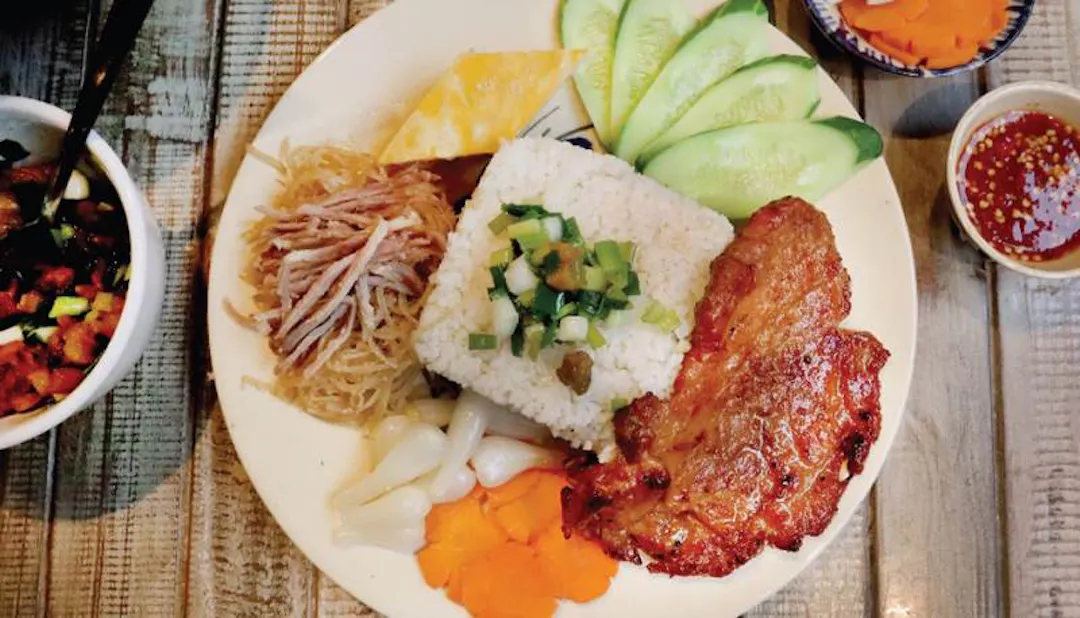
To fully finalize the highly anticipated list of the seven absolute best street food stalls, the discerning visitor must acknowledge the critical, everyday fuel that sustains the surrounding urban workforce. Identifying a stall dedicated to cơm tấm (broken rice) provides access to a uniquely textured, highly absorbent grain historically consumed by the working class, now elevated by the addition of a spectacularly grilled, deeply marinated pork chop and a highly gelatinous, steamed egg meatloaf. Finally, finishing the extensive culinary marathon demands a visit to the specialized beverage stalls pouring hyper-caffeinated, traditional cà phê sữa đá. Utilizing intensely dark-roasted Robusta beans violently extracted through a metal phin filter directly over a thick, pooling layer of sweetened condensed milk, this beverage delivers a profound, almost electric shock to the central nervous system. The careful observation of these specialized stalls reveals a hyper-efficient spatial design; every single ingredient and brewing apparatus is meticulously arranged within incredibly tight, thirty-square-meter boundaries, showcasing an architectural brilliance that mirrors the complex, highly optimized structural layout of a modern, high-volume urban cafe environment perfectly suited for the bustling historic market ecosystem.
Practical Logistics and Navigating the Food Court
Mastering the Seating and Ordering Etiquette
Successfully extracting maximum value from the dense, highly saturated Ben Thanh Market food ecosystem requires an authoritative command of specific, localized dining logistics. Navigating the bustling, incredibly tight-knit seating areas demands an assertive yet highly polite physical presence. The designated dining spaces are intensely communal; expect to sit shoulder-to-shoulder on low, stainless steel stools alongside a fiercely diverse demographic of market laborers, affluent locals, and bewildered international backpackers. When initiating an order, projecting confidence is absolutely critical. Establish direct, unwavering eye contact with the busy vendor, state your specific request loudly over the deafening ambient noise, and proactively communicate any strict dietary preferences using simplified, direct terminology. Regarding the crucial execution of financial transactions, astute travelers must operate exclusively using cash. While vendors possess an extraordinary mental agility for instantaneous currency conversion, conducting your business using local Vietnamese Dong is vastly preferred; however, exact, undamaged USD equivalents are frequently accepted with minimal friction. Always ensure payment is finalized promptly upon the delivery of the food, establishing a smooth, respectful commercial rhythm that honors the vendor's relentless, high-volume operational pace.
Timing Your Culinary Visit
To firmly establish deep culinary trustworthiness and guarantee the absolute highest standard of ingredient freshness, calculating the precise timing of your visit is strategically paramount. The food court undergoes a massive, highly visible shift in energy throughout the daily cycle. To experience the simmering, savory broths at their absolute peak of complex extraction, you must brave the chaotic, intensely crowded lunch rush occurring strictly between eleven in the morning and one in the afternoon. During this frantic window, the turnover of delicate fresh herbs and highly perishable seafood is exceptionally rapid, guaranteeing pristine quality. Conversely, if your primary objective revolves around engaging with the intricate, multi-layered sweet soups or enjoying a slow, highly caffeinated iced coffee, transitioning your visit to the significantly quieter, languid hours of the late afternoon—specifically between three and five o'clock—provides a vastly superior, highly relaxed atmospheric experience. This specific temporal strategy ensures that you interact with the historic market not as a stressed, overwhelmed tourist, but as a seasoned, deeply educated culinary insider capable of expertly surfing the complex, shifting tides of Saigon’s most legendary gastronomic institution.
Exploring the incredibly dense, profoundly historic culinary labyrinth of this legendary marketplace offers an absolutely unmatched, highly visceral immersion into the fiercely resilient soul of Southern Vietnamese cooking. Understanding the complex Ben Thanh Market food landscape requires an enthusiastic willingness to embrace the aggressive thermal heat, the chaotic seating, and the staggering, uncompromising intensity of the localized flavor profiles. From the deep, oceanic resonance of the simmering crab noodle broths to the shattering crunch of the turmeric-laced crêpes and the luxurious, tropical sweetness of the coconut desserts, this market delivers a monumental gastronomic education. Embark on this authoritative journey, pull up a stainless steel stool, and confidently taste your way through these seven extraordinary, masterfully executed street food legends on your very next culinary expedition to the heart of Saigon.
Read more: Ben Thanh Market
Frequently Asked Questions About Eating at Ben Thanh Market
What is the most popular food at Ben Thanh Market?
Ben Thanh Market is famous for dishes such as Pho, Bun Bo Hue, Banh Xeo, Bun Thit Nuong, Goi Cuon (fresh spring rolls), Com Tam (broken rice), and a wide selection of Vietnamese desserts and tropical drinks.
Is the food at Ben Thanh Market safe to eat?
Yes, most food stalls are safe, especially those with a high turnover of local customers. Choose busy vendors, order freshly prepared dishes, and enjoy food served hot for the best experience.
How much does street food cost at Ben Thanh Market?
Most dishes cost between 50,000 and 120,000 VND, while snacks, desserts, and drinks are often available for 20,000 to 50,000 VND, making the market an affordable place to sample a variety of Vietnamese specialties.
When is the best time to visit Ben Thanh Market for food?
Lunch and dinner are the busiest times, offering the widest selection of freshly prepared dishes. The evening food area is especially lively, making it a great time to enjoy multiple local specialties.
Can I try regional Vietnamese dishes at Ben Thanh Market?
Absolutely. One of the market's biggest attractions is its variety of regional cuisine. You'll find specialties from northern, central, and southern Vietnam, allowing you to sample diverse flavors without leaving Ho Chi Minh City.
Advertising box
Explore More Around Ben Thanh Market
Continue discovering the best of Ben Thanh Market and Ho Chi Minh City with more travel guides, shopping tips, local food recommendations, nearby attractions, and insider experiences. From hidden gems to must-visit landmarks, these articles will help you make the most of your visit to one of Vietnam's most iconic destinations.
Ben Thanh Market Bargaining Guide: How to Negotiate Prices Like a Local
Shopping at Ben Thanh Market is an essential Ho Chi Minh City experience, and bargaining is part of the tradition. While first-time visitors may feel unsure about negotiating prices, a few simple techniques can help you shop confidently and respectfully. This guide explains how bargaining works at Ben Thanh Market, how much you should negotiate, common mistakes to avoid, and practical tips that locals and experienced travelers use to secure fair prices while enjoying one of Vietnam's most iconic markets.

Top Souvenirs to Buy at Ben Thanh Market (And What to Avoid)
Ben Thanh Market is one of Vietnam's best places to shop for souvenirs, offering everything from handcrafted lacquerware and embroidered textiles to Vietnamese coffee, spices, and local snacks. However, with hundreds of stalls and thousands of products, it can be difficult to know which items are worth buying and which are better avoided. This guide highlights the best souvenirs to bring home, practical shopping tips, and common tourist traps to help you shop confidently and get the best value.
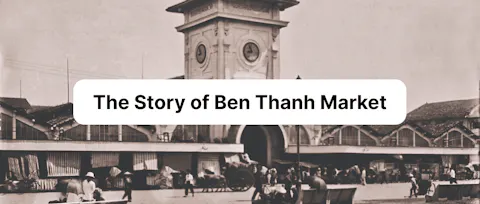
The Story of Ben Thanh Market: History and Architectural Secrets
Ben Thanh Market is far more than a bustling shopping destination—it's one of Ho Chi Minh City's most enduring historical landmarks. Established over a century ago, the market has witnessed the transformation of Saigon through colonial times, independence, and modern development. From its iconic clock tower to its unique architectural design and vibrant trading culture, Ben Thanh Market reflects the city's rich heritage. Discover the fascinating history and hidden stories behind one of Vietnam's most recognizable landmarks.