
The Story of Ben Thanh Market: History and Architectural Secrets
Ben Thanh Market is far more than a bustling shopping destination—it's one of Ho Chi Minh City's most enduring historical landmarks. Established over a century ago, the market has witnessed the transformation of Saigon through colonial times, independence, and modern development. From its iconic clock tower to its unique architectural design and vibrant trading culture, Ben Thanh Market reflects the city's rich heritage. Discover the fascinating history and hidden stories behind one of Vietnam's most recognizable landmarks.
On this page
- The Riverside Genesis: 19th-Century Trading Roots in the History of Ben Thanh Market
- The 1912 Masterpiece: Architectural Design and Engineering in the History of Ben Thanh Market
- The Spatial Logic: Decoding the Four Cardinal Gates in the History of Ben Thanh Market
- The Living Heritage and Urban Legacy
- Conclusion
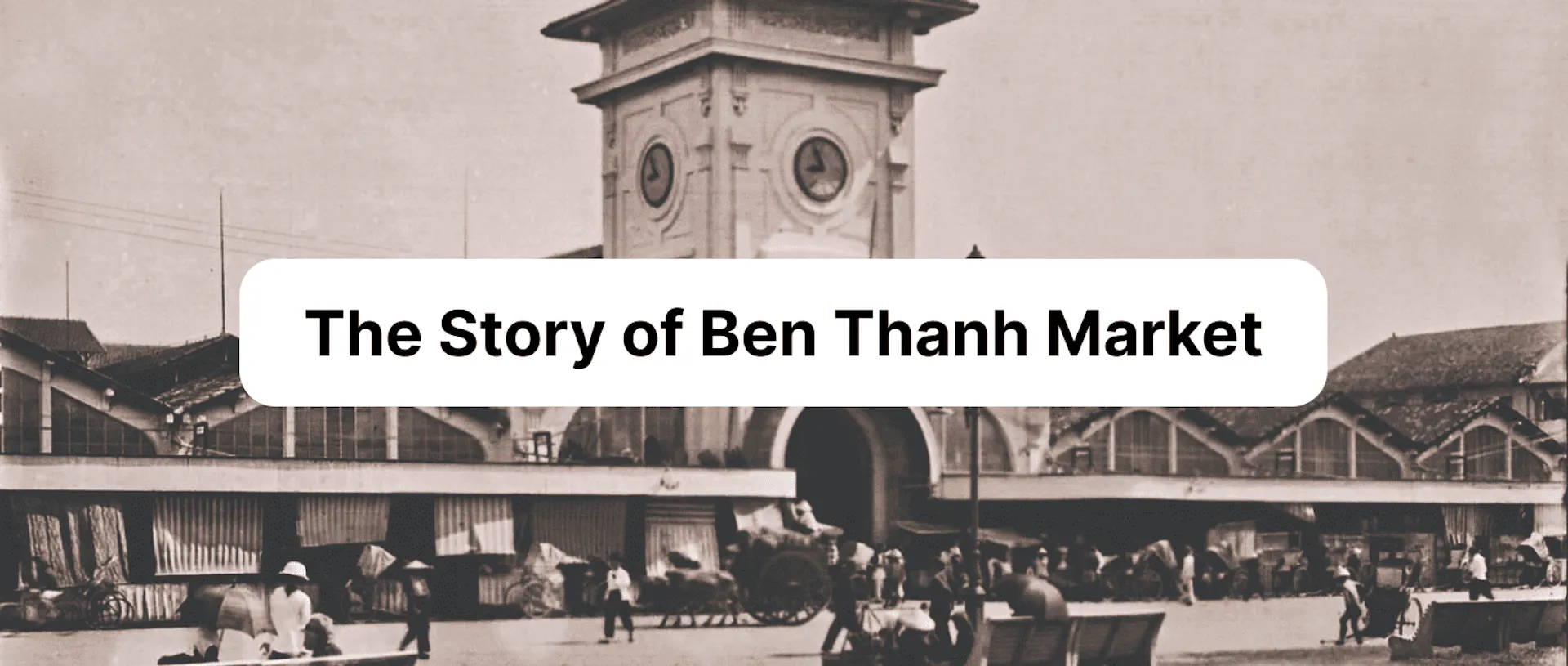
Rising above the swirling, chaotic traffic circles of modern District One, the enduring silhouette of the tháp đồng hồ (clock tower) stands as an unwavering sentinel over Ho Chi Minh City. This monumental structure has quietly witnessed more than a century of profound geopolitical, economic, and social transformation. Exploring the History of Ben Thanh Market reveals that this landmark is far more than a bustling, tourist-heavy commercial bazaar; it is an enduring, readable architectural document written in forged steel, poured concrete, and glazed ceramic tile. It permanently records the fascinating intersection of indigenous Vietnamese river trade and the highly structured, imposing grid of French colonial urban planning. To truly understand the history of Saigon landmarks is to decode the physical and spatial evolution of this building. It encapsulates the transition of a muddy, chaotic riparian trading post into a meticulously engineered modern metropolis. By peeling back the layers of time, we can uncover the profound Ben Thanh Market architectural secrets that continue to dictate the rhythm of urban life in the southern capital, proving that every arched doorway and vaulted ceiling holds a vast, living archive of the city collective memory.
The Riverside Genesis: 19th-Century Trading Roots in the History of Ben Thanh Market
The Original Bến Thành Pier on the Bến Nghé River
To trace the true origins of Ben Thanh Market Saigon, one must look entirely beyond its current concrete foundations and cast their gaze toward the shifting, muddy banks of the Bến Nghé River during the early nineteenth century. Long before the imposition of rigid European urban morphology, the area was characterized by a fluid, organic network of informal street vendors and transient riparian traders. These indigenous merchants gathered organically near the original Gia Dinh citadel, specifically near a river pier designated to serve travelers, merchants, and naval troops entering the fortified city. The name itself, combining the terms pier and citadel, directly references this specific geographic and military proximity. This early iteration was entirely rudimentary, composed of fragile, temporary thatched-roof stalls that flooded seasonally with the rising tides. Despite its structural impermanence, this bustling, chaotic riverside market established the essential commercial DNA of the region. It functioned as the vital economic artery connecting the fertile agricultural yields of the vast Mekong Delta to the densely populated military and administrative heart of pre-colonial Saigon. The overarching spatial logic was entirely dictated by the natural meandering of the local waterways, reflecting an indigenous commercial system that heavily prioritized immediate access to naval transport over formalized civic infrastructure. These vital economic interactions laid the crucial groundwork for future urban expansion, demonstrating the immense trading potential of the rapidly growing southern population.
Destruction and Reconstruction Under Colonial Rule
The violent geopolitical shifts of the late nineteenth century brought profound disruptions to this organic trading ecosystem. Following the brutal French conquest of Saigon in 1859, the colonial administration immediately initiated a massive, relentless campaign of urban restructuring aimed at transforming the conquered territory into a highly profitable, sanitized administrative capital heavily modeled after grand European cities. The original riverside market, deemed unsanitary and structurally chaotic by French urban planners, was completely destroyed during the military conflict. Shortly thereafter, the French resurrected the market in a slightly different location, utilizing a more formalized, albeit still highly flammable, wooden structure. This interim market, while providing a centralized location for colonial taxation and commercial regulation, was repeatedly plagued by catastrophic fires, deeply reflecting the persistent vulnerability of early colonial civic infrastructure in a tropical climate. Recognizing the pressing economic necessity for a permanent, absolutely fireproof commercial hub, the French administration eventually mandated the total demolition of the wooden structure in the early twentieth century. This decisive political action directly paved the way for the construction of a monumental, modern facility, explicitly designed to project imperial permanence and commercial order over the newly conquered tropical landscape. The total eradication of those fragile wooden stalls marked the definitive, irreversible end of the organic riverside trading era and the highly calculated birth of modern French colonial architecture Saigon, setting the stage for the massive concrete and steel behemoth that would soon rise triumphantly from a reclaimed, mosquito-infested marsh.

The 1912 Masterpiece: Architectural Design and Engineering in the History of Ben Thanh Market
The Birth of the Iconic Clock Tower
The monumental relocation and massive rebuilding project, officially commenced in 1912 under the stringent direction of the renowned Brossard et Maupin construction firm, represented a staggering, historically significant engineering and aesthetic triumph for French Indochina. Tasked with erecting the Chợ Sài Gòn mới (New Saigon Market) upon a previously unstable, newly drained pond, the architects deployed highly advanced foundational stabilization techniques completely unprecedented in the region at that specific time. The sheer scale of this central landmark deliberately disrupted the horizontal urban plane, ensuring that arriving ships and trains immediately recognized the market as the ultimate center of civic commerce. The undisputed visual anchor of this massive undertaking was the majestic, four-sided tháp đồng hồ. This iconic central clock tower functioned as a profound architectural synthesis, seamlessly fusing rigid, imposing European civic design principles with highly necessary, pragmatic tropical adaptations. While its stark, symmetrical facade projected the uncompromising authority and temporal punctuality demanded by the colonial administration, the tower's overarching structure cleverly integrated massive, slatted louvers and deeply recessed archways. These highly specific design modifications were not merely decorative elements; they were vital, climate-responsive engineering solutions meticulously calculated to maximize open-air ventilation and continuously draw cooling cross-breezes through the cavernous interior of the massive trading hall, thereby preventing the suffocating accumulation of tropical heat and pervasive humidity that plagued older, purely European-style colonial structures.
Material Integrity and Symbolic Rooflines
Beyond the commanding presence of the primary tower, the sheer material integrity of the sprawling complex established a revolutionary standard for Southeast Asian civic architecture. The French engineers boldly abandoned highly flammable timber framing, opting instead to utilize a vast, interconnected skeleton of heavily reinforced concrete. This structural choice guaranteed unprecedented longevity and provided the necessary tensile strength to support the most visually striking feature of the entire marketplace: its incredibly expansive, multi-tiered rooflines. To properly shield the thousands of merchants and highly perishable commodities from the punishing equatorial sun and torrential monsoon downpours, the architects sourced legendary, thick green-glazed ceramic roof tiles, which were expensively imported directly from Japan. The complex interlocking steel trusses supporting these heavy ceramic tiles were deliberately left exposed on the interior, creating a mesmerizing, industrial canopy that completely dominated the visual field of anyone walking through the bustling market aisles below. These highly specialized tiles functioned as a brilliant, passive thermal regulation system, aggressively deflecting solar radiation while simultaneously providing a distinctly Asian aesthetic contour that gracefully softened the rigid, brutalist geometry of the concrete walls beneath them. Today, those exact same brilliant green rooflines continue to definitively shape and heavily influence the modern Saigon skyline. Investigating these specific Ben Thanh Market architectural secrets reveals a building that was profoundly ahead of its time, flawlessly demonstrating how colonial engineers were eventually forced to respect and adapt to the severe climatological realities of the Vietnamese landscape to achieve absolute structural permanence in a challenging environment.

The Spatial Logic: Decoding the Four Cardinal Gates in the History of Ben Thanh Market
The Urban Orientation of the Four Gates
To completely grasp the profound architectural brilliance of this monumental structure, one must rigorously analyze the intense urban orientation governing its massive entryways. Understanding the Ben Thanh Market four gates meaning requires viewing the building not as an isolated monolith, but as a deeply integrated, highly functional component of the broader colonial grid. The market was meticulously engineered with a strict radial layout, perfectly oriented toward the tứ hướng (four cardinal directions). Each massive gate—South, North, East, and West—was deliberately positioned to seamlessly connect the cavernous interior directly to the rapidly expanding external network of colonial boulevards and bustling railway terminus stations. This precise alignment effectively transformed the massive market into a highly permeable urban lung, allowing the city commercial lifeblood to circulate freely through its concrete veins. The towering South Gate, famously positioned directly beneath the main clock tower, served as the formal, highly decorative civic entrance, purposefully facing the bustling transportation hub of Quach Thi Trang Square. This grand entryway was explicitly designed to intimidate and impress, funneling wealthy colonial elites and international merchants directly into the commercial heart of the city. Conversely, the North, East, and West gates were engineered with significantly wider, purely utilitarian thresholds. These massive, unadorned archways were strictly designed to control and maximize the relentless daily flow of pedestrian traffic, heavily loaded wooden delivery carts, and thousands of indigenous agricultural workers rushing to supply the hungry metropolis before the break of dawn.
Mapping Commerce by Cardinal Direction
Beyond merely controlling the chaotic physical movement of the urban populace, this strict cardinal orientation directly dictated the internal commercial geography of the entire marketplace. The colonial architects applied a rigorous, highly disciplined mercantile spatial logic that strictly zoned specific commodities to designated quadrants, a brilliant organizational system that astonishingly persists into the modern era. The East Gate was historically, and remains today, the exclusive, highly aromatic domain of cosmetics, vibrant textiles, and intricately woven silks, capturing the early morning sunlight to brilliantly illuminate the brightly dyed fabrics. The West Gate was deliberately assigned to heavily manufactured household goods, dense metal hardware, and localized ceramic wares, benefiting from the shaded, cooler afternoon temperatures. The sprawling North Gate, situated closest to the external logistical delivery routes, was logically dedicated to the chaotic, wet environments of fresh provisions, raw butchered meats, and vibrant floral arrangements. Finally, the central crossroads intersecting beneath the high-vaulted ceiling housed the finest local culinary delicacies and dry goods. This deliberate, highly calculated mapping of commerce by cardinal direction ensured absolute organizational order within a fundamentally chaotic environment. It allowed thousands of daily consumers to mentally map the sprawling, intimidating labyrinth of the market with complete ease. This profound, enduring architectural zoning strategy perfectly highlights how the meticulous, rigid structuralism of kiến trúc thuộc địa (colonial architecture) successfully harnessed, organized, and ultimately elevated the vibrant, fiercely independent spirit of traditional Vietnamese mercantile exchange.

The Living Heritage and Urban Legacy
Surviving Wars, Modernization, and Urban Shifts
The true historical provenance of this civic structure is validated by its miraculous survival through the turbulent epochs defining the twentieth century. While surrounding colonial mansions were destroyed during decades of international warfare, this marketplace remained a resilient economic anchor. It functioned as a neutral gathering place where the daily necessity of human survival superseded violent ideological conflict. As Saigon rapidly evolved into a modernized metropolis, the concrete corridors seamlessly absorbed globalized commodities without sacrificing its fierce historical identity.
Preserving Architectural Authenticity in the 21st Century
Maintaining this spectacular 1912 colonial landmark amidst the aggressive construction of modern rapid transit systems presents an immense architectural challenge. Contemporary preservation efforts demand absolute structural vigilance. Recent restoration initiatives successfully reinforced the aging pillars and restored the historic roof tiles, strictly ensuring the original aesthetic integrity remains untouched. Protecting this incredible monument guarantees that the complex historical narrative continues to resonate powerfully, anchoring the chaotic modern urban sprawl to its incredibly rich riverside roots.

Conclusion
Understanding the profound architectural and historical layers hidden within the massive concrete walls completely transforms a routine tourist visit into a profoundly moving, educational journey through Saigon’s resilient collective memory. The sweeping History of Ben Thanh Market reveals a masterpiece of structural engineering that successfully bridged divided cultural worlds. I strongly encourage you to look entirely past the glittering modern souvenir stalls during your next visit. Pause beneath the soaring steel arches, touch the ancient, cool concrete, and deeply appreciate the enduring 1912 engineering marvel that continues to proudly anchor the fiercely beating heart of this magnificent metropolis today.
Read more: Ben Thanh Market
Frequently Asked Questions About the History of Ben Thanh Market
How old is Ben Thanh Market?
Ben Thanh Market dates back to the early 20th century. The current building officially opened in 1914, replacing an earlier riverside market that had served local merchants for many years.
Why is Ben Thanh Market famous?
Ben Thanh Market is famous for its distinctive clock tower, central location, vibrant shopping atmosphere, and role as one of Ho Chi Minh City's most recognizable cultural landmarks. It has become a symbol of the city for both locals and international visitors.
What makes the architecture of Ben Thanh Market unique?
The market combines practical colonial-era design with traditional Vietnamese market functions. Its spacious interior, four main entrances, large ventilation system, and iconic clock tower have remained recognizable for over a century.
Has Ben Thanh Market always been in its current location?
No. The original Ben Thanh Market operated closer to the Saigon River before being relocated and rebuilt at its current location in the early 1900s to accommodate the city's rapid growth.
Can visitors explore Ben Thanh Market without shopping?
Absolutely. Many visitors come simply to admire the historic architecture, photograph the famous clock tower, experience the lively atmosphere, sample local street food, and learn about the market's important role in Ho Chi Minh City's history.
Advertising box
Explore More Around Ben Thanh Market
Continue discovering the best of Ben Thanh Market and Ho Chi Minh City with more travel guides, shopping tips, local food recommendations, nearby attractions, and insider experiences. From hidden gems to must-visit landmarks, these articles will help you make the most of your visit to one of Vietnam's most iconic destinations.
Ben Thanh Market Bargaining Guide: How to Negotiate Prices Like a Local
Shopping at Ben Thanh Market is an essential Ho Chi Minh City experience, and bargaining is part of the tradition. While first-time visitors may feel unsure about negotiating prices, a few simple techniques can help you shop confidently and respectfully. This guide explains how bargaining works at Ben Thanh Market, how much you should negotiate, common mistakes to avoid, and practical tips that locals and experienced travelers use to secure fair prices while enjoying one of Vietnam's most iconic markets.

What to Eat at Ben Thanh Market: 7 Best Street Food Stalls You Must Try
Ben Thanh Market is more than a shopping destination—it's one of Ho Chi Minh City's best places to experience authentic Vietnamese street food. From steaming bowls of Pho and Bun Bo Hue to crispy Banh Xeo, fresh spring rolls, sweet desserts, and refreshing local drinks, the market offers flavors from across Vietnam under one roof. This guide highlights seven must-try food stalls and dishes that will help you enjoy an unforgettable culinary adventure at Ben Thanh Market.

Top Souvenirs to Buy at Ben Thanh Market (And What to Avoid)
Ben Thanh Market is one of Vietnam's best places to shop for souvenirs, offering everything from handcrafted lacquerware and embroidered textiles to Vietnamese coffee, spices, and local snacks. However, with hundreds of stalls and thousands of products, it can be difficult to know which items are worth buying and which are better avoided. This guide highlights the best souvenirs to bring home, practical shopping tips, and common tourist traps to help you shop confidently and get the best value.