
Paradise Cave
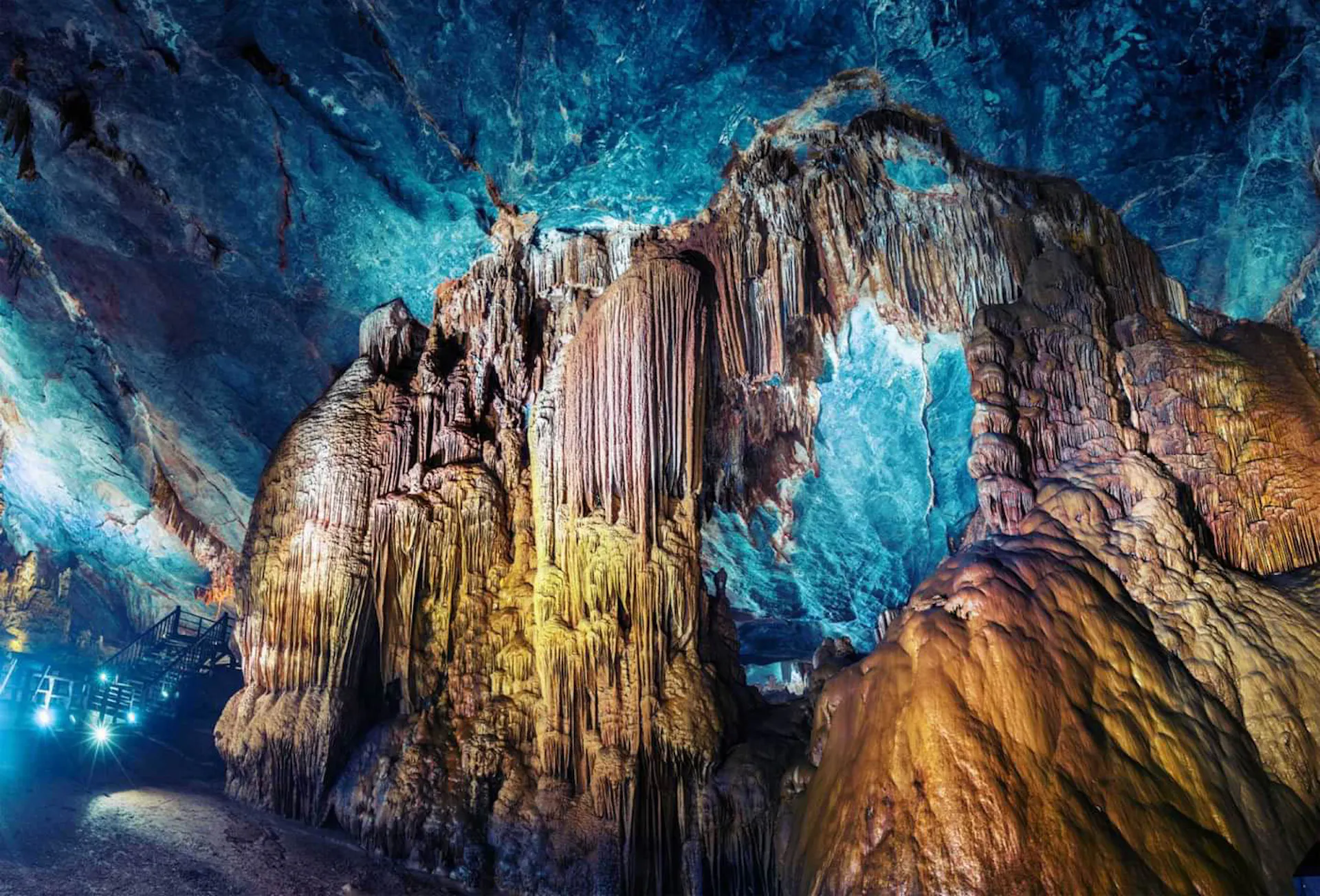
Paradise Cave, also known as Thien Duong Cave, is one of the most beautiful caves in Vietnam, located inside Phong Nha-Ke Bang National Park in Quang Binh Province. Famous for its impressive length, spectacular limestone formations, and peaceful underground atmosphere, the cave offers a breathtaking journey into nature’s hidden world. Visitors can explore wooden walkways surrounded by stunning stalactites and stalagmites shaped over millions of years. Go Visit Vietnam introduces the beauty, history, and travel experiences of this remarkable natural attraction.
About Paradise Cave
Paradise Cave, known locally as Dong Thien Duong, is one of the most spectacular caves in Phong Nha-Ke Bang National Park, Quang Binh Province, central Vietnam. Famous for its enormous chambers, impressive stalactites and stalagmites, and beautifully illuminated underground landscapes, the cave is one of the region's most accessible natural attractions.
Located within the limestone mountains of Phong Nha-Ke Bang, Paradise Cave offers travelers an opportunity to explore a remarkable underground environment without undertaking the demanding expedition required to reach some of the area's more remote caves.
What Is Paradise Cave?
Paradise Cave is a large limestone cave discovered in the Phong Nha-Ke Bang region.
The cave extends for more than 31 kilometers, making it one of the longest known caves in Asia.
However, visitors explore only a designated section of the cave as part of the standard tourist experience.
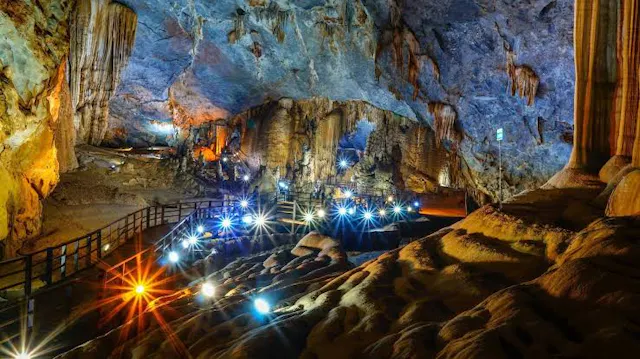
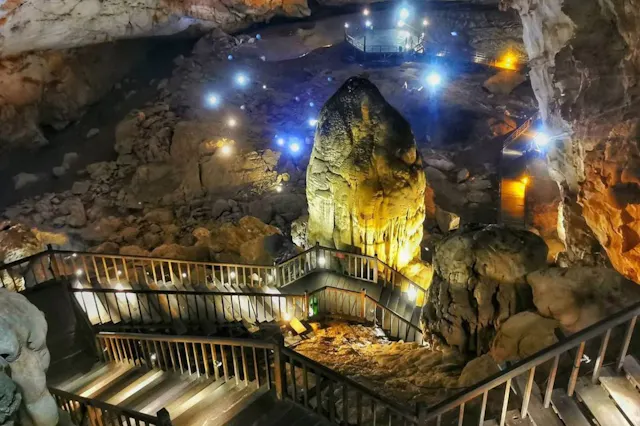
The accessible route features a long wooden walkway through enormous chambers filled with limestone formations.
The Underground Chambers
One of Paradise Cave's most impressive characteristics is the size of its chambers.
The first section of the cave opens into a vast underground space where the ceiling and walls are covered with natural formations.
Stalactites hang from the ceiling while stalagmites rise from the cave floor.
The scale of the chambers creates a dramatic atmosphere that is difficult to appreciate from photographs alone.
Stalactites and Stalagmites
The cave contains a remarkable variety of limestone formations.
Water carrying dissolved minerals slowly deposits material over thousands or millions of years, creating stalactites, stalagmites, columns, curtains, and other shapes.
Some formations appear to resemble animals, plants, or other familiar objects, although these interpretations are naturally subjective.
Visitors should never touch the formations because even small amounts of oil and dirt from human hands can damage delicate cave surfaces.
The Wooden Walkway
A major advantage of Paradise Cave is its well-developed visitor infrastructure.
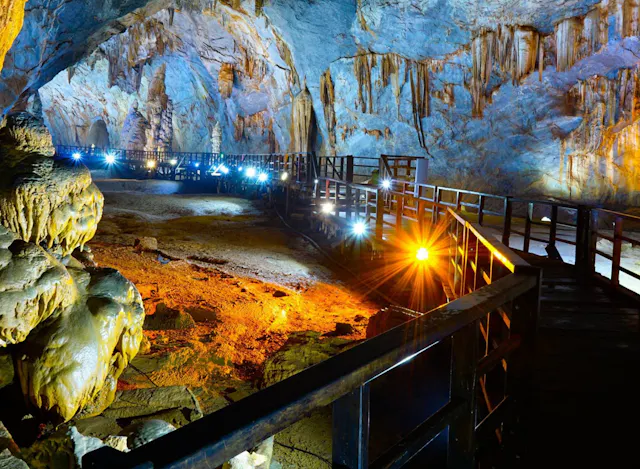
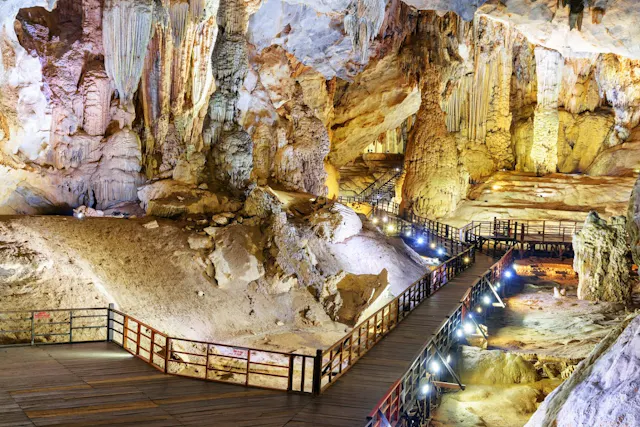
A wooden walkway leads through the accessible section of the cave, allowing travelers to explore the underground chambers without difficult climbing.
The route includes viewing platforms and carefully positioned lighting that highlights major formations.
The walkway makes Paradise Cave suitable for a wide range of travelers, including visitors who may not be prepared for a strenuous caving expedition.
Getting to the Cave Entrance
The entrance to Paradise Cave is located in a forested mountain environment.
Visitors generally walk or use designated transportation from the entrance area toward the cave.
The journey through the surrounding forest provides a pleasant introduction to the natural environment before entering the underground chambers.
Comfortable walking shoes are recommended because the route includes steps and uneven surfaces.
Phong Nha-Ke Bang National Park
Paradise Cave is part of Phong Nha-Ke Bang National Park, a UNESCO World Heritage Site recognized for its exceptional limestone karst landscape and cave systems.
The park contains an extraordinary network of caves, underground rivers, forests, and mountains.
Paradise Cave demonstrates the geological importance of the region while providing a relatively accessible experience for visitors.
Travelers can combine a cave visit with other attractions throughout the national park.
Paradise Cave vs. Phong Nha Cave
Paradise Cave and Phong Nha Cave offer different experiences.
Phong Nha Cave is famous for its underground river and is explored partly by boat.
Paradise Cave is better known for its enormous chambers and extensive limestone formations, with visitors exploring primarily on foot.
Travelers with enough time can visit both to experience two different sides of the Phong Nha cave system.
Best Time to Visit Paradise Cave
Paradise Cave can be visited throughout the year because the underground environment remains relatively stable compared with the weather outside.
However, the dry season from around December to August generally provides more predictable conditions for traveling around Phong Nha-Ke Bang.
The rainy season can bring heavy rainfall and affect access to some attractions in the surrounding region.
Travelers should check local conditions before planning a full day of cave exploration.
How to Get to Paradise Cave
Paradise Cave is located approximately 70 kilometers from Dong Hoi, the main city and transportation hub of Quang Binh Province.
Most travelers stay in Phong Nha town and travel to the cave by private car, motorcycle, taxi, or organized tour.
The journey from Phong Nha to Paradise Cave takes roughly an hour, depending on traffic and road conditions.
Combining Paradise Cave with other attractions is an efficient way to explore the national park.
What to Bring
Visitors should wear comfortable shoes because the cave involves walking and stairs.
The underground environment can feel cool and humid, so a light layer may be useful.
A camera or smartphone is recommended for photography, although visitors should follow restrictions regarding flash photography where applicable.
Water is also useful, particularly during the walk through the forest to the cave.
Responsible Cave Tourism
Paradise Cave is a fragile geological environment.
Visitors should remain on designated walkways, avoid touching formations, and never remove rocks or other natural materials.
Littering should be avoided, and travelers should follow lighting, photography, and visitor-management rules.
Protecting the cave ensures that its formations remain intact for future generations.
Why Visit Paradise Cave?
Paradise Cave offers travelers an accessible way to experience the extraordinary underground landscapes of Phong Nha-Ke Bang National Park.
Its enormous chambers, dramatic limestone formations, wooden walkway, and impressive scale make it one of central Vietnam's most memorable natural attractions.
For travelers interested in geology, photography, nature, and adventure, Paradise Cave is an excellent addition to a Phong Nha itinerary and a convenient alternative to more demanding multi-day cave expeditions.
Paradise Cave in Frames – Stunning Limestone Formations Beneath Vietnam
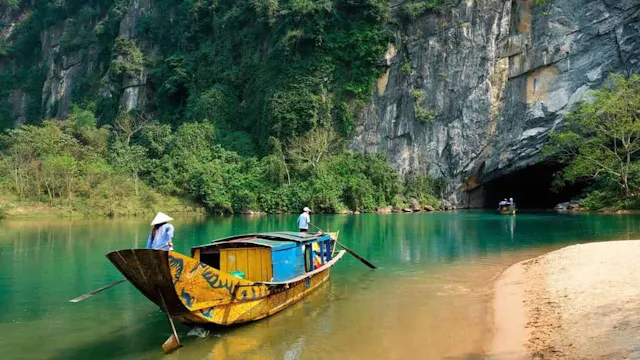
Explore the breathtaking beauty of Paradise Cave through a collection of images showcasing its vast underground chambers, impressive stalactites, and unique limestone formations. From the dramatic cave entrance to the peaceful pathways surrounded by natural sculptures, the gallery captures the magical atmosphere, geological wonders, and hidden beauty that make Paradise Cave one of Vietnam’s most remarkable underground attractions.
How To Get There – Paradise Cave
Bus and coach
Travelers can take buses or sleeper coaches to Phong Nha, Quang Binh Province from major cities such as Hanoi, Da Nang, or Hue. From Phong Nha town, visitors can continue by taxi, motorbike, or tour transfer to Paradise Cave, located inside Phong Nha-Ke Bang National Park.
Train
The nearest railway station is Dong Hoi Railway Station. Travelers can take trains from Hanoi, Hue, Da Nang, or Ho Chi Minh City to Dong Hoi, then continue by taxi, shuttle, or private vehicle to Phong Nha and Paradise Cave.
Driving
Driving to Paradise Cave offers flexibility for travelers exploring Quang Binh. From Dong Hoi City, the journey takes around 1 hour by car or motorbike. The route passes through scenic countryside and limestone mountain landscapes before reaching the national park area.
Flying
The nearest airport is Dong Hoi Airport in Quang Binh Province. Visitors can fly from major Vietnamese cities, then take a taxi or private transfer to Phong Nha-Ke Bang National Park and Paradise Cave.
Frequently Asked Questions About Paradise Cave
What is Paradise Cave famous for?
Paradise Cave is famous for its incredible length, massive underground chambers, and spectacular limestone formations. Known as one of Vietnam’s most beautiful caves, it features impressive stalactites and stalagmites formed over millions of years.
Where is Paradise Cave located?
Paradise Cave is located in Son Trach Commune, Bo Trach District, Quang Binh Province, inside Phong Nha-Ke Bang National Park, a UNESCO World Heritage Site known for its remarkable cave systems.
How long does it take to explore Paradise Cave?
Most visitors spend around 1–2 hours exploring Paradise Cave. The sightseeing route follows a wooden walkway through the main chamber, allowing travelers to enjoy the cave’s impressive natural formations comfortably.
What is the best time to visit Paradise Cave?
The best time to visit Paradise Cave is from March to August when the weather is generally dry and suitable for exploring Phong Nha-Ke Bang National Park. The cave remains cool and comfortable throughout the year.
How do you get to Paradise Cave?
Travelers can reach Paradise Cave by flying to Dong Hoi Airport, taking a train or bus to Dong Hoi or Phong Nha, then continuing by taxi, private vehicle, or tour transfer to the cave entrance.
Advertising box
Explore More Caves in Vietnam
From world-famous underground giants to hidden limestone caverns, Vietnam is home to some of the most spectacular caves on Earth. Discover breathtaking cave systems, adventure treks, underground rivers, and natural wonders across Phong Nha, Quang Binh, Ha Long Bay, and beyond with our complete Vietnam cave travel guides.
Son Doong Cave
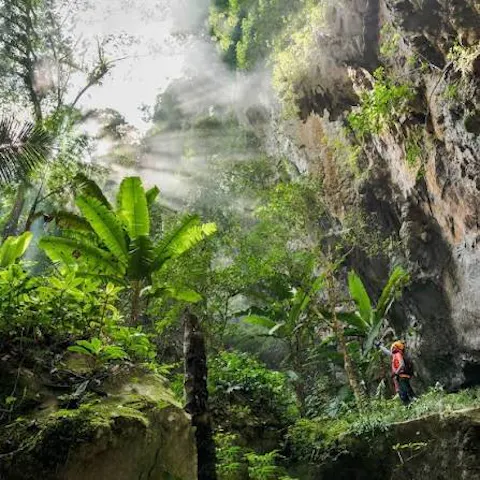
Son Doong Cave is one of Vietnam’s greatest natural wonders and the world’s largest known cave by volume, located in Phong Nha-Ke Bang National Park, Quang Binh Province. With enormous underground chambers, unique ecosystems, rivers, and stunning rock formations, Son Doong offers an extraordinary adventure unlike anywhere else. Accessible through guided expeditions, the cave attracts explorers from around the world seeking a once-in-a-lifetime experience. Go Visit Vietnam introduces the beauty, history, and adventure of this remarkable underground wonder.
Hang En Cave
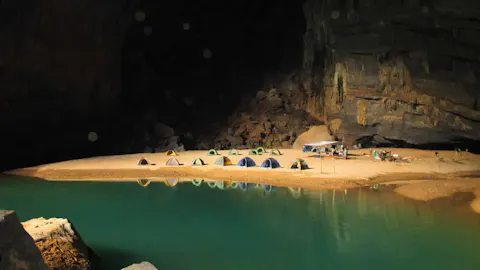
Hang En Cave is one of Vietnam’s most spectacular cave destinations, located in Phong Nha-Ke Bang National Park, Quang Binh Province. Known as one of the largest caves in the world, Hang En features enormous chambers, underground rivers, unique limestone formations, and breathtaking natural scenery. The cave offers an unforgettable adventure through forests, valleys, and ancient landscapes. Go Visit Vietnam introduces the beauty, trekking experience, and travel highlights of Hang En Cave for explorers seeking a unique journey into Vietnam’s underground wonders.
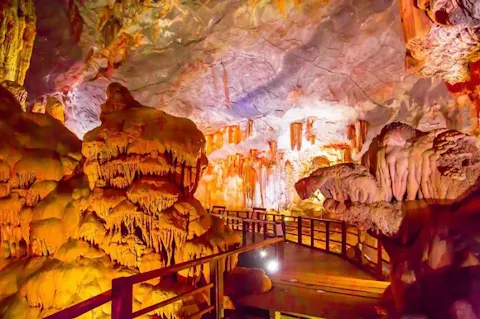
Dau Go Cave
Dau Go Cave is one of the most remarkable caves in Ha Long Bay, Vietnam, known for its impressive size, ancient limestone formations, and fascinating history. Located on Dau Go Island, the cave features three large chambers filled with unique stalactites and stalagmites shaped by millions of years of natural processes. Visitors can explore its mysterious underground beauty while enjoying Ha Long Bay’s spectacular scenery. Go Visit Vietnam introduces the history, highlights, and travel experiences of this iconic natural attraction.
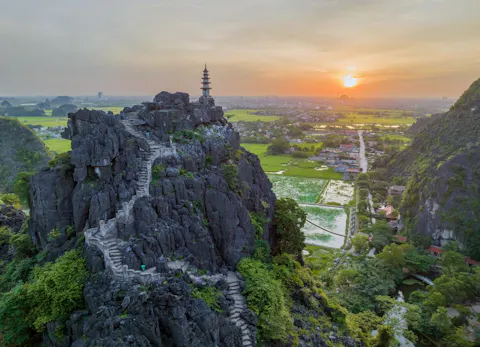
Mua Cave
Mua Cave is one of the most iconic viewpoints in Ninh Binh, Vietnam, offering breathtaking panoramic views of limestone mountains, rice fields, and the beautiful Tam Coc landscape. Located near Trang An and Tam Coc, Mua Cave is famous for its 500-step climb leading to the stunning Dragon Mountain viewpoint. Visitors can enjoy spectacular scenery, photography opportunities, and a peaceful natural atmosphere. Go Visit Vietnam introduces the highlights, travel tips, and unforgettable experiences of this must-visit destination in northern Vietnam.