
What Is Bun Rieu? Vietnam's Tomato & Crab Noodle Soup
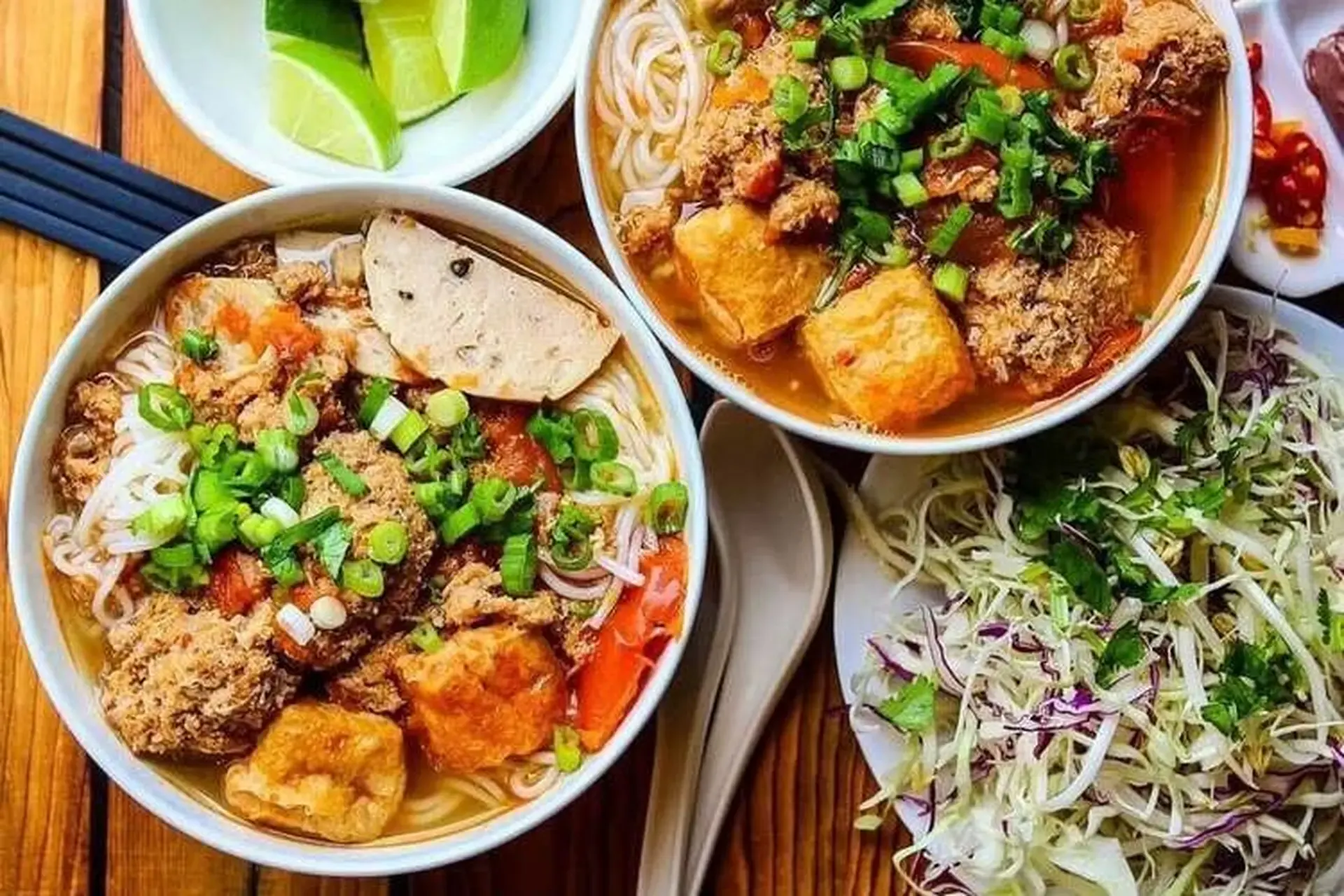
Bun Rieu (Bún Riêu) is a Vietnamese rice vermicelli soup traditionally made with freshwater crab, tomatoes, fried tofu, herbs, and a savory, slightly tangy broth. Closely associated with Northern Vietnam and Hanoi, this comforting noodle dish is known for its soft crab curds, bright tomato flavor, and distinctive umami from fermented shrimp paste. Regional versions may include pork, snails, blood pudding, or other seafood. Discover the history, ingredients, flavors, regional variations, and local way to enjoy this iconic Vietnamese noodle soup.
On this page
- What Is Bun Rieu?
- What Does Bun Rieu Taste Like?
- What Is Bun Rieu Made Of?
- What Is Bun Rieu Broth Made Of?
- Where Did Bun Rieu Come From?
- Bun Rieu in Hanoi
- Regional Variations of Bun Rieu
- How to Eat Bun Rieu Like a Local
- Bun Rieu vs. Pho: What's the Difference?
- Is Bun Rieu Spicy?
- Why Bun Rieu Is an Important Vietnamese Dish
- Where to Try Bun Rieu in Vietnam
- Conclusion
Bun Rieu (Bún Riêu) is a Vietnamese rice vermicelli soup known for its bright tomato broth, freshwater crab, fried tofu, fresh herbs, and distinctive savory flavor. Traditionally associated with Northern Vietnam, especially Hanoi, the dish has become popular throughout the country, with regional versions featuring ingredients such as snails, pork, seafood, and blood pudding. Unlike the clear, deeply aromatic broth of pho, Bun Rieu has a lighter, tangier character, with soft crab curds adding a delicate sweetness and rich umami.
What Is Bun Rieu?
Bun Rieu is a Vietnamese noodle soup made with rice vermicelli, freshwater field crab, tomatoes, tofu, herbs, and a flavorful broth. The defining ingredient is cua đồng, or freshwater rice-field crab, which is traditionally crushed and strained to create a crab-based mixture that forms soft pieces of crab curd as it cooks. The broth typically combines the natural sweetness of crab with tomatoes, fermented ingredients, and sometimes shrimp paste. Fried tofu absorbs the broth, while fresh herbs and vegetables add fragrance and crunch.
The result is a bowl with several contrasting flavors and textures: sweet and savory crab, tangy tomatoes, soft noodles, crispy-edged tofu, fresh herbs, and a rich umami finish. Bun Rieu is commonly enjoyed for breakfast or lunch at casual restaurants and street-food stalls across Vietnam. Although its roots are strongly connected to northern Vietnamese food culture, many regional versions can now be found from Hanoi to Ho Chi Minh City.
What Does Bun Rieu Taste Like?
Bun Rieu has a flavor profile that is noticeably different from many other Vietnamese noodle soups. The broth is usually savory, slightly sweet, and pleasantly acidic, with tomatoes providing much of its characteristic brightness. Freshwater crab contributes a delicate seafood sweetness, while fermented shrimp paste can add a deeper, more intense umami flavor.
The dish also has an appealing variety of textures. Soft rice vermicelli provides the base, while crab curds are tender and slightly spongy. Fried tofu adds a porous texture that soaks up the broth, and fresh vegetables and herbs provide crunch and freshness. Depending on the restaurant and region, the soup may taste more tomato-forward, more seafood-rich, sweeter, or more strongly flavored with fermented shrimp paste.
What Is Bun Rieu Made Of?
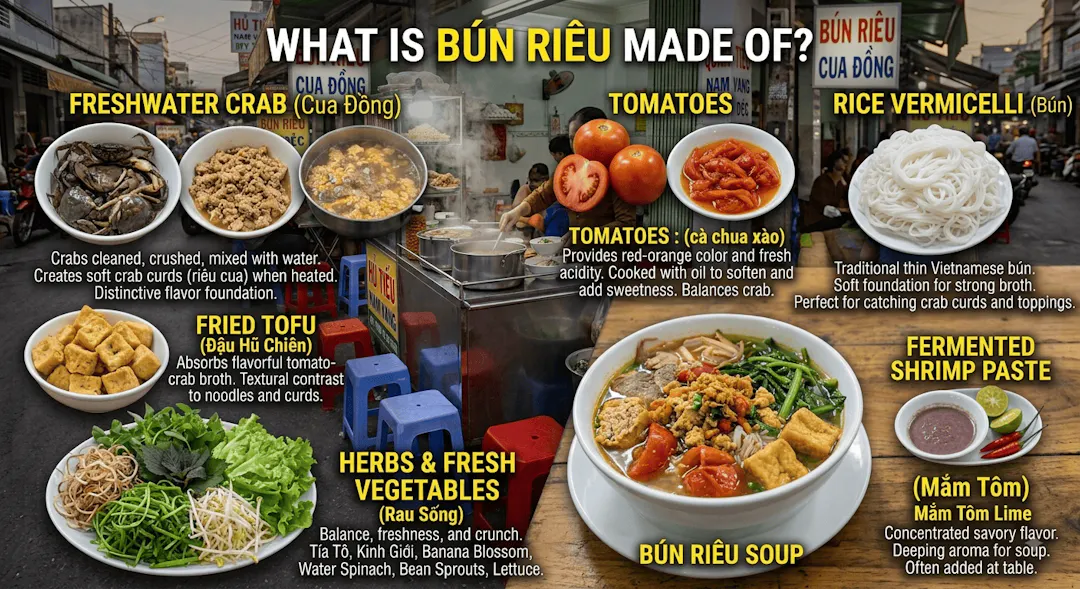
Traditional Bun Rieu ingredients vary from one recipe to another, but several components define the dish.
Freshwater Crab
Freshwater field crab, known as cua đồng, is one of the most important ingredients in traditional Bun Rieu. The crabs are cleaned, crushed, and mixed with water before being strained. The resulting liquid contains crab proteins that naturally gather into soft curds when gently heated. This crab mixture gives traditional Bun Rieu its distinctive character and separates it from tomato-based noodle soups that use seafood stock alone.
Tomatoes
Tomatoes give Bun Rieu its recognizable red-orange appearance and fresh acidity. They are usually cooked with oil before being added to the broth. This helps soften their texture and brings out their sweetness while adding depth to the soup. The balance between tomato acidity and the natural sweetness of crab is one of the dish's defining flavor combinations.
Rice Vermicelli
The noodles used in Bun Rieu are bún, or Vietnamese rice vermicelli. They are soft, round rice noodles that provide a neutral foundation for the strongly flavored broth. Unlike the flat rice noodles used in pho, Bun Rieu uses thin vermicelli that can easily catch pieces of crab curd, herbs, and other toppings.
Fried Tofu
Golden fried tofu is a common addition to Bun Rieu. Its porous interior absorbs the tomato and crab broth, making it particularly flavorful. The contrast between the soft noodles, tender crab curd, and broth-soaked tofu adds variety to every bite.
Herbs and Fresh Vegetables
Fresh herbs are an important part of the Vietnamese dining experience. Depending on the restaurant, a serving of Bun Rieu may come with:
- Perilla leaves (tía tô)
- Vietnamese balm (kinh giới)
- Bean sprouts
- Lettuce
- Banana blossom
- Split water spinach
- Fresh herbs and leafy greens
These ingredients provide freshness and crunch that balance the rich broth.
Fermented Shrimp Paste
Mắm tôm, or fermented shrimp paste, is often served with Bun Rieu or incorporated into the broth. Its strong aroma and concentrated savory flavor can dramatically deepen the soup. Because the flavor is intense, travelers who are unfamiliar with shrimp paste may want to add a small amount first.
What Is Bun Rieu Broth Made Of?
The broth is the heart of a good bowl of Bun Rieu. Traditional versions can begin with the liquid extracted from freshwater crab, while other recipes combine crab with pork bones or other ingredients to create additional depth.
Tomatoes are cooked and added to the broth, contributing acidity and natural sweetness. Fermented rice products may also be used in some northern preparations to provide a subtle sour note.
The exact recipe varies considerably between vendors, but the goal is generally the same: a broth that is savory, bright, slightly sour, and rich enough to complement the crab without overwhelming it.
Some versions also contain gạch cua, the flavorful orange-yellow crab fat found inside the crab. This adds richness and a deeper seafood character.
Where Did Bun Rieu Come From?
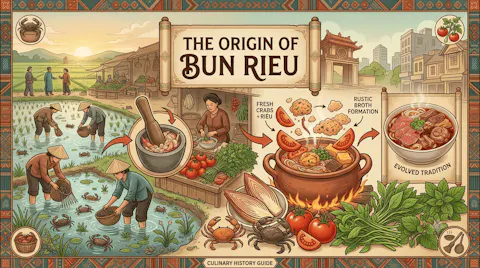
Bun Rieu is strongly associated with the agricultural communities of Northern Vietnam, particularly the Red River Delta.
Freshwater crabs were historically abundant in rice-growing areas and provided an accessible source of protein for rural households. Cooks developed ways to process the small crabs by crushing and straining them, turning them into a flavorful base for soups.
Over time, dishes using freshwater crab became part of everyday Vietnamese cooking. Bun Rieu eventually became particularly associated with Hanoi's markets, neighborhood eateries, and street-food culture.
The dish reflects an important characteristic of Vietnamese cuisine: transforming readily available agricultural ingredients into balanced and satisfying meals.
Today, Bun Rieu is no longer limited to the north. Different versions can be found throughout Vietnam, with each region adapting the dish to local tastes and ingredients.
Bun Rieu in Hanoi
Hanoi is one of the best places to experience the northern style of Bun Rieu. A traditional Hanoi bowl often focuses on the combination of freshwater crab, tomato broth, rice vermicelli, fried tofu, herbs, and fermented shrimp paste.
Northern versions tend to emphasize a relatively light and tangy broth rather than an especially sweet one. The natural flavor of freshwater crab remains an important part of the dish.
Bun Rieu is commonly eaten at casual neighborhood restaurants and street stalls, where the broth is prepared in large pots and noodles and toppings are assembled to order.
For travelers exploring Hanoi food, Bun Rieu offers a different experience from better-known dishes such as pho and Bun Cha.
Regional Variations of Bun Rieu
As Bun Rieu spread throughout Vietnam, cooks adapted the basic recipe to local ingredients and preferences.
Southern Bun Rieu
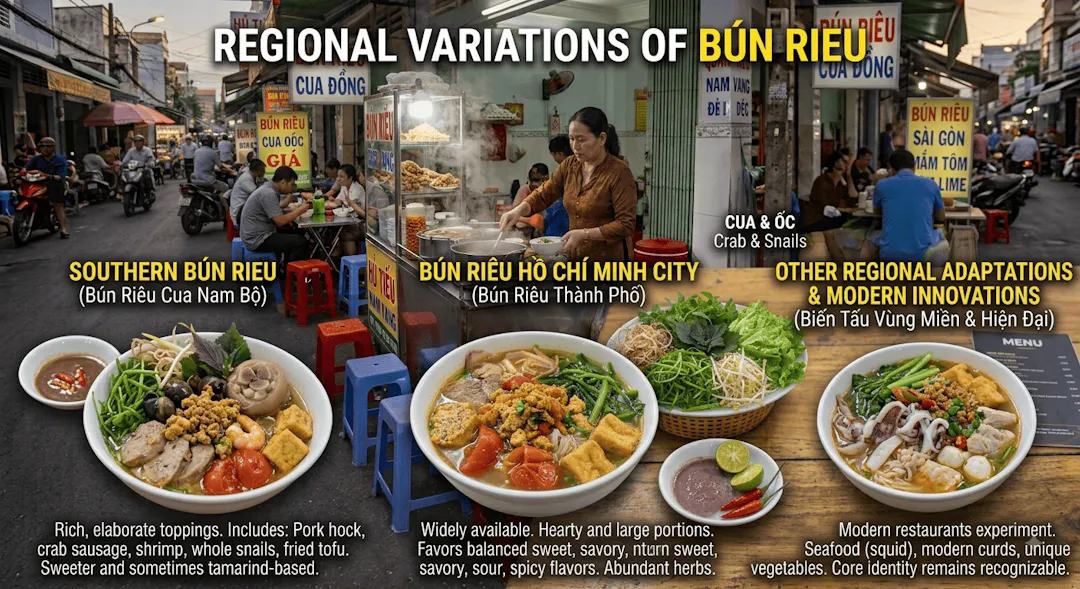
Southern versions often have a richer and more elaborate selection of toppings. A bowl may include pork, crab-based sausage, shrimp, or other seafood. Some versions are also sweeter and may contain additional ingredients such as tamarind. One popular southern variation is Bún Riêu Cua Ốc, which combines crab soup with snails. Pork hock and other toppings may also be added for a more substantial meal.
Bun Rieu in Ho Chi Minh City
In Ho Chi Minh City, Bun Rieu is widely available at casual restaurants and street-food stalls. Southern cooking generally favors a broader combination of sweet, savory, sour, and spicy flavors, so Bun Rieu in the city can taste different from the more restrained northern style. Large portions with numerous toppings are common, making the dish especially appealing to diners who enjoy hearty noodle soups.
Other Regional Adaptations
Modern Vietnamese restaurants continue to experiment with Bun Rieu by adding different seafood, pork, vegetables, and sauces. Despite these differences, the core identity remains recognizable: rice vermicelli combined with a flavorful tomato-based broth and crab as the defining ingredient.
How to Eat Bun Rieu Like a Local
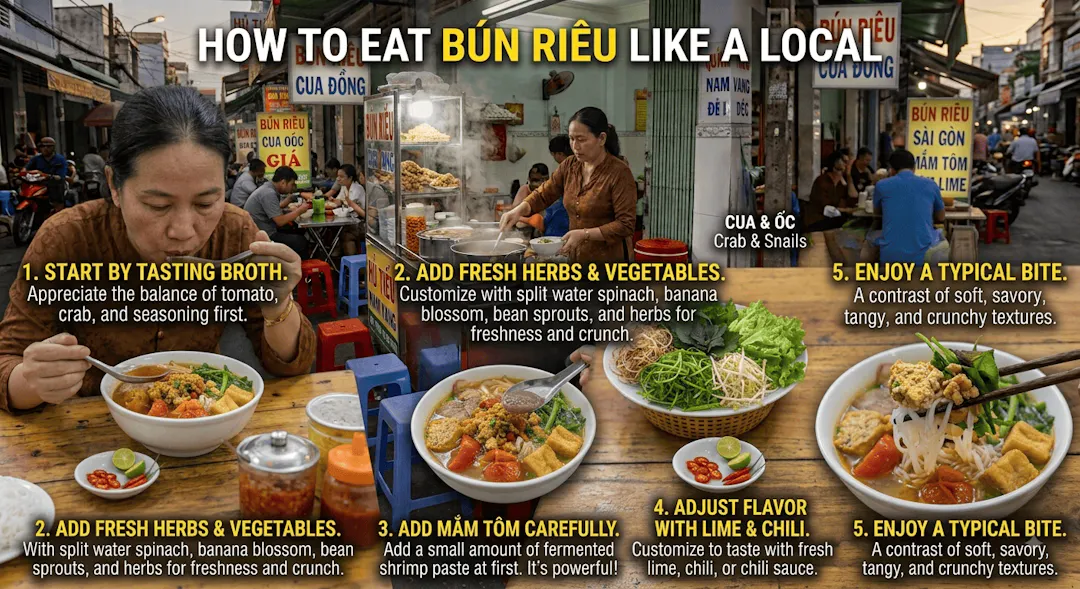
Bun Rieu is generally served with a plate or basket of fresh herbs and vegetables. When your bowl arrives, start by tasting the broth on its own. This allows you to appreciate the balance of tomato, crab, fermentation, and seasoning before adding extra condiments.
Then add herbs and vegetables according to your preference. Split water spinach, banana blossom, bean sprouts, lettuce, and aromatic herbs can add freshness and crunch.
If mắm tôm is served separately, add only a small amount at first. Its flavor is powerful, and a little can significantly change the character of the broth.
Fresh chili, lime, or chili sauce can also be added according to taste. A typical bite combines rice vermicelli, crab curd, tofu, broth, and fresh herbs, creating the contrast of soft, savory, tangy, and crunchy textures that makes Bun Rieu so enjoyable.
Bun Rieu vs. Pho: What's the Difference?
Bun Rieu and pho are both iconic Vietnamese noodle soups, but their flavors and ingredients are quite different.
Pho generally uses flat rice noodles and a clear beef or chicken broth. Its flavor comes primarily from slow-cooked meat and aromatic spices.
Bun Rieu, on the other hand, uses round rice vermicelli and is defined by freshwater crab and tomatoes. The broth is typically brighter and more acidic, with fried tofu, herbs, and sometimes fermented shrimp paste adding additional layers of flavor.
If you enjoy pho but want to explore a more tomato-forward and seafood-influenced Vietnamese noodle soup, Bun Rieu is an excellent dish to try.
Is Bun Rieu Spicy?
Traditional Bun Rieu is not necessarily spicy.
The basic broth focuses on crab, tomatoes, savory seasoning, and acidity. Chili is often provided separately so diners can adjust the heat to their preference.
However, some restaurants and regional versions may serve Bun Rieu with chili oil, fresh chilies, or spicy sauces.
If you prefer mild food, you can simply taste the broth first and add chili gradually.
Why Bun Rieu Is an Important Vietnamese Dish
Bun Rieu represents more than a bowl of noodles. Its ingredients reflect Vietnam's agricultural landscape and the country's long tradition of making flavorful meals from locally available foods.
Freshwater crab connects the dish to rice-growing communities and wetlands. Rice vermicelli represents Vietnam's deep rice-growing heritage, while tomatoes, herbs, tofu, and fermented ingredients demonstrate the importance of balance in Vietnamese cooking.
The dish also illustrates how Vietnamese food changes from region to region. A bowl in Hanoi may emphasize delicate crab and acidity, while a southern version can feature a much wider selection of meat and seafood.
That adaptability has helped Bun Rieu become a familiar part of Vietnamese food culture far beyond its northern origins.
Where to Try Bun Rieu in Vietnam
For travelers, Hanoi is an excellent destination for discovering traditional northern Bun Rieu. Neighborhood eateries and local markets often offer simple bowls focused on crab, tomatoes, tofu, noodles, and herbs.
Ho Chi Minh City is another great place to try the dish, particularly if you want to explore southern versions with more generous toppings.
You can also find Bun Rieu in many cities across Vietnam, where local cooks adapt the recipe according to regional ingredients and preferences.
When choosing a restaurant, look for places where the broth is prepared fresh and where noodles, herbs, tofu, and other toppings are assembled shortly before serving.
Conclusion
Bun Rieu is one of Vietnam's most distinctive noodle soups, combining freshwater crab, tomatoes, rice vermicelli, fried tofu, herbs, and a savory-tangy broth in one flavorful bowl.
Its roots in Northern Vietnam connect the dish to the country's rice-growing landscape, while regional adaptations demonstrate the flexibility of Vietnamese cuisine. From a traditional bowl in Hanoi to a heavily topped version in Ho Chi Minh City, Bun Rieu offers travelers an opportunity to experience a side of Vietnamese food that goes beyond pho.
For anyone exploring Vietnamese street food, trying a bowl of authentic Bun Rieu is a delicious way to discover the country's love of fresh ingredients, contrasting textures, fermented flavors, and carefully balanced broths.

By Roy Trinh
Editor
Roy Trinh is a travel writer and destination expert at Go Visit Vietnam, dedicated to helping travelers discover the beauty, culture, and diversity of Vietnam. Through well-researched travel guides, practical itineraries, local insights, and authentic recommendations, Roy shares valuable information to inspire memorable journeys across the country. From vibrant cities and breathtaking landscapes to regional cuisine and cultural heritage, every guide is created to help visitors experience Vietnam with confidence and curiosity.
Frequently Asked Questions About Bun Rieu
What is Bun Rieu?
Bun Rieu is a Vietnamese rice vermicelli soup traditionally made with freshwater crab, tomatoes, fried tofu, herbs, and a savory, slightly tangy broth. It is particularly associated with Northern Vietnam and Hanoi.
What does Bun Rieu taste like?
Bun Rieu has a savory, slightly sour and tomato-rich flavor. Freshwater crab contributes delicate sweetness and umami, while fermented shrimp paste can add a stronger savory depth.
What kind of crab is used in Bun Rieu?
Traditional Bun Rieu uses small freshwater field crabs known in Vietnamese as cua đồng. The crabs are crushed and strained to create the crab mixture used in the soup.
Is Bun Rieu the same as pho?
No. Pho typically uses flat rice noodles and a clear beef or chicken broth, while Bun Rieu uses round rice vermicelli, freshwater crab, tomatoes, and a more acidic broth.
Is Bun Rieu spicy?
Bun Rieu is not inherently spicy. Chili, chili oil, and other spicy condiments are usually added according to personal preference.
Is Bun Rieu only eaten in Hanoi?
No. Although Bun Rieu has strong northern roots, it is now enjoyed throughout Vietnam. Southern cities such as Ho Chi Minh City have developed their own versions with additional meat and seafood toppings.
What are the main Bun Rieu ingredients?
The core ingredients include freshwater crab, rice vermicelli, tomatoes, fried tofu, and fresh herbs. Depending on the recipe, the dish may also contain pork, shrimp, snails, blood pudding, fermented shrimp paste, and other toppings.
Advertising box
More Bun Rieu Stories & Vietnamese Food Guides
Dive deeper into the world of Bun Rieu with expert guides, regional food stories, cooking traditions, nutrition facts, and comparisons with other famous Vietnamese noodle dishes. Explore the rich flavors, cultural heritage, and local dining experiences that make Vietnam's cuisine one of the most celebrated in the world.

Bun Rieu vs Bun Bo Hue: What Is the Difference?
Bun Rieu and Bun Bo Hue are two of Vietnam's most beloved noodle soups, but they offer completely different flavors and dining experiences. Bun Rieu features a light tomato and crab-based broth with freshwater crab paste, while Bun Bo Hue is famous for its rich, spicy beef broth infused with lemongrass and chili. This guide compares their ingredients, taste, regional origins, toppings, and cooking styles to help you understand what makes each dish unique and decide which one to try first.
The Origin of Bun Rieu
Bun Rieu is one of Vietnam's oldest and most beloved noodle soups, celebrated for its delicate crab-based broth, fresh tomatoes, and fragrant herbs. Originating in northern Vietnam, the dish was created using simple local ingredients gathered from rice fields and rivers. Over generations, Bun Rieu evolved into numerous regional variations while preserving its traditional character. This guide explores the fascinating history of Bun Rieu, its cultural significance, and how this humble noodle soup became a staple of Vietnamese cuisine.
Is Bun Rieu Healthy? Calories and Nutrition Facts You Should Know
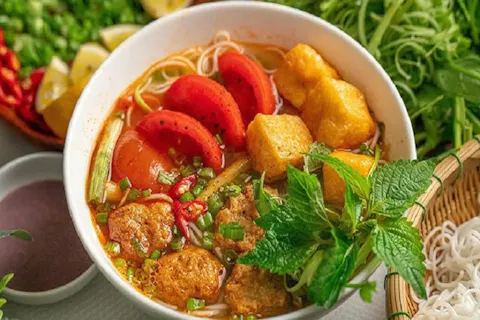
Bun Rieu is more than a delicious Vietnamese crab noodle soup—it can also be a nutritious meal when enjoyed in moderation. Made with freshwater crab, rice noodles, tomatoes, tofu, herbs, and fresh vegetables, it provides a balance of protein, carbohydrates, vitamins, and minerals. This guide explores Bun Rieu's calorie content, nutritional value, health benefits, and simple tips for making it an even healthier choice while enjoying one of Vietnam's most iconic comfort foods.