
- Destinations
Northern Vietnam
Central Vietnam
- Attractions
Categories
World Heritage
Historical & Cultural
- Things To Do
Categories
Outdoor Adventures
- Food & Drink
Categories
Vietnamese Dishes
- Travel & Planning
Categories
- Inspiration
Categories
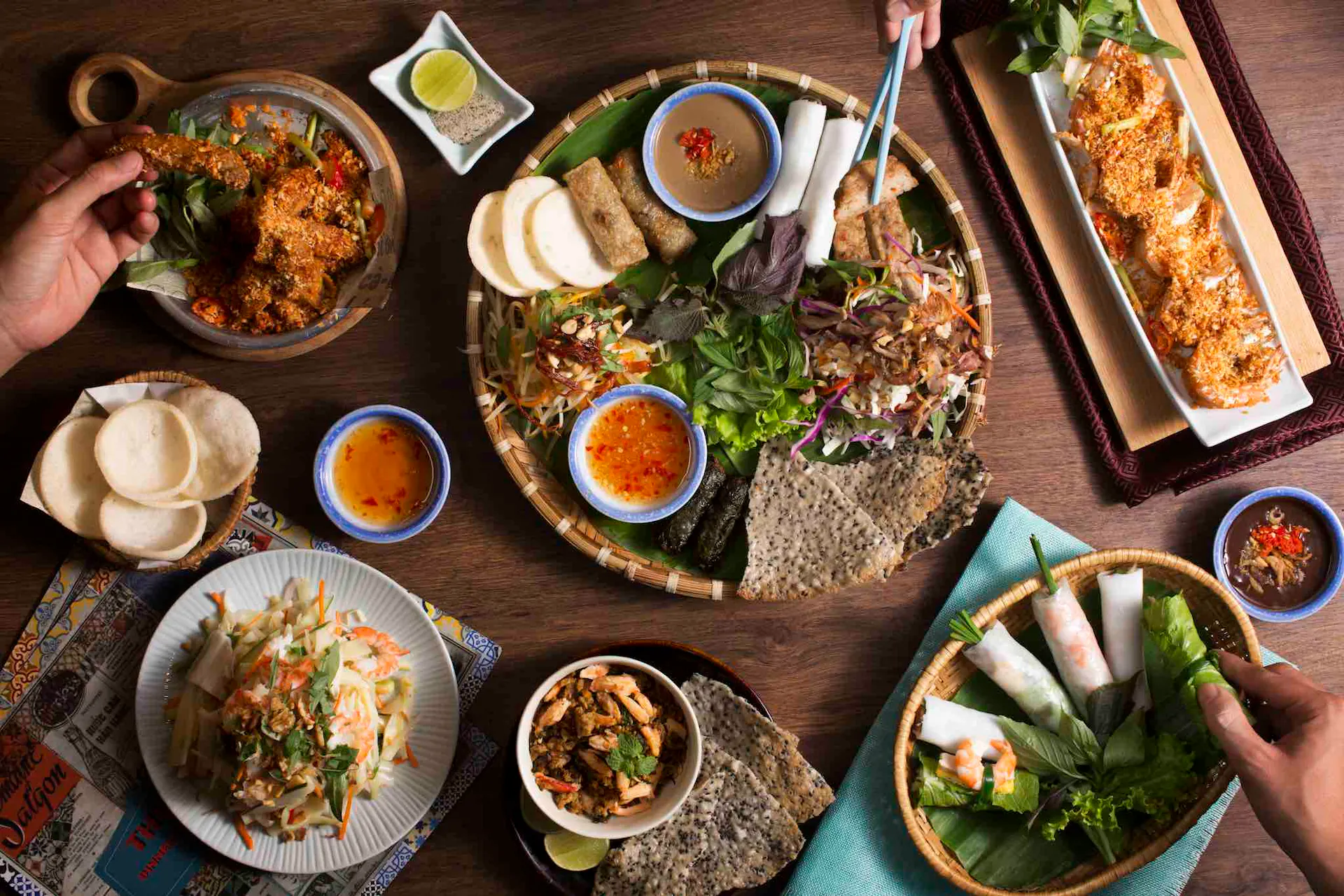
Vietnamese cuisine is celebrated worldwide for its fresh ingredients, balanced flavors, and incredible regional diversity. From the aromatic pho of the north and spicy specialties of central Vietnam to the vibrant tropical flavors of the south, every destination offers unique culinary traditions. Explore authentic street food, family recipes, seafood delicacies, traditional desserts, local drinks, and unforgettable dining experiences that showcase why Vietnam is considered one of Asia's greatest food destinations.
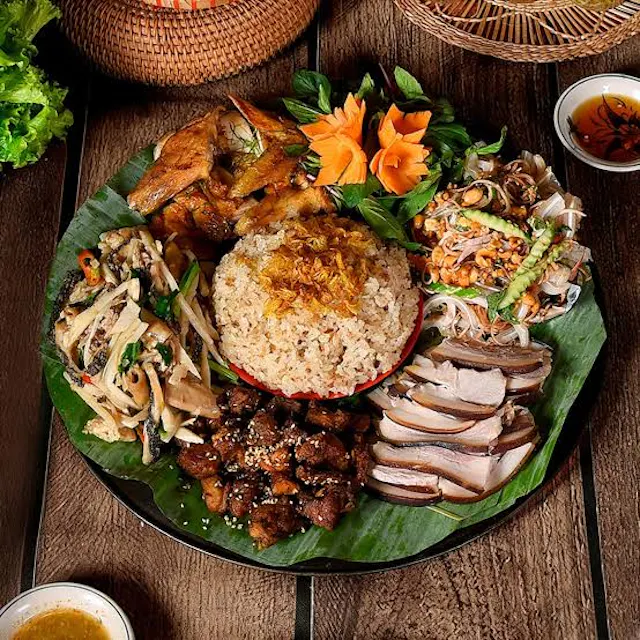
Vietnamese cuisine is one of the country's most distinctive cultural experiences. Known for its fresh ingredients, aromatic herbs, balanced flavors, and diverse regional traditions, Vietnamese food offers travelers an enormous variety of dishes to discover.
From steaming bowls of Phở and flavorful noodle soups to crispy Bánh Xèo, fresh spring rolls, grilled seafood, and strong Vietnamese coffee, food is deeply connected to everyday life in Vietnam. Each region has developed its own ingredients, cooking techniques, and specialties, creating a culinary landscape that changes as you travel from north to south.
Vietnamese cuisine often combines several contrasting flavors in a single dish. Sweet, salty, sour, spicy, and savory elements can work together while fresh herbs and vegetables provide fragrance and texture.
Rice is one of the most important ingredients in Vietnamese cooking. It appears in many forms, including steamed rice, rice noodles, rice paper, rice flour, and fermented rice products.
Fresh herbs are equally important. Ingredients such as Vietnamese coriander, Thai basil, mint, perilla, lemongrass, and green onions are commonly served with meals.
Fish sauce is another essential ingredient, used in marinades, dipping sauces, soups, and many cooked dishes.
Northern Vietnamese cuisine is often associated with relatively balanced and subtle flavors. Hanoi is one of the country's most important culinary destinations, with a food culture shaped by centuries of history.
Phở, one of Vietnam's most internationally recognized dishes, has strong connections to northern Vietnam. Other northern specialties include Bún Chả, Bánh Cuốn, Chả Cá, and Bún Thang.
Hanoi's street food culture also provides an opportunity to experience traditional dishes in casual local settings.
Central Vietnam is known for stronger flavors, chili, herbs, and distinctive regional specialties.
Hue has a particularly important culinary heritage, influenced by its history as the imperial capital. Dishes such as Bún Bò Huế, Bánh Bèo, Bánh Nậm, and Bánh Khoái are associated with Central Vietnamese cuisine.
Further south, destinations such as Da Nang, Hoi An, and Quang Nam offer specialties including Mì Quảng and Cao Lầu.
Central cuisine demonstrates how geography, history, and local traditions can shape a region's food culture.
Southern Vietnamese cuisine often incorporates sweeter flavors, tropical produce, coconut, freshwater ingredients, and abundant herbs.
Ho Chi Minh City is a major food destination where travelers can discover dishes from across southern Vietnam.
Cơm Tấm, or broken rice, is a popular southern specialty, often served with grilled pork and other accompaniments.
Hủ Tiếu is another important southern noodle dish, with variations found throughout the Mekong Delta and southern cities.
The region's tropical climate also supports an enormous variety of fruits, which are commonly enjoyed fresh, blended into smoothies, or used in desserts and drinks.
Street food is an essential part of Vietnamese cuisine and everyday life.
Food stalls, markets, small restaurants, and sidewalk vendors serve dishes throughout the day. Travelers can discover everything from noodle soups and rice dishes to grilled meats, savory pancakes, desserts, and snacks.
Popular street foods include Bánh Mì, Phở, Bún Chả, Gỏi Cuốn, Bánh Xèo, and Bún Đậu Mắm Tôm.
Exploring street food is also an opportunity to experience local neighborhoods and observe how Vietnamese people eat in their daily lives.
Vietnam's long coastline provides access to a wide variety of seafood.
Coastal destinations such as Nha Trang, Da Nang, Quy Nhon, Phu Quoc, Vung Tau, and Ha Long offer fresh fish, prawns, squid, crab, shellfish, and other marine ingredients.
Seafood may be grilled, steamed, fried, stir-fried, or cooked in hot pots and soups. Simple preparation often allows the freshness of the ingredients to remain the focus.
Coffee and tea are an important part of Vietnam's food and drink culture.
Vietnamese coffee is traditionally brewed using a phin filter. Cà Phê Sữa Đá, made with strong coffee, condensed milk, and ice, is one of the country's most popular drinks.
Hanoi is also famous for Cà Phê Trứng, or egg coffee.
Tea has an even longer history in Vietnam, with green tea, lotus tea, and jasmine tea commonly enjoyed during meals and social gatherings.
Vietnamese desserts often use ingredients such as coconut milk, beans, rice, tropical fruits, and tapioca.
Chè, a broad category of Vietnamese sweet soups and desserts, comes in many regional variations.
Fresh fruit, smoothies, sugarcane juice, herbal drinks, and soy milk are also common throughout the country.
These beverages and desserts provide refreshing options in Vietnam's warm climate.
The best way to understand Vietnamese cuisine is to experience it region by region.
Try traditional dishes in their places of origin, explore local markets, visit street food stalls, join cooking classes, and talk to local vendors about regional specialties.
Vietnamese cuisine is not a single style of cooking. It is a collection of regional traditions shaped by geography, history, agriculture, trade, and local communities.
For travelers, exploring Vietnam through food provides an opportunity to discover the country one dish, ingredient, market, and meal at a time.
Continue your culinary journey through Vietnam with our detailed food guides featuring regional specialties, traditional dishes, street food, seafood, local drinks, coffee culture, hidden restaurants, cooking experiences, and authentic dining recommendations. Discover the flavors, stories, and cultural traditions behind Vietnam's world-famous cuisine, one destination and one delicious meal at a time.
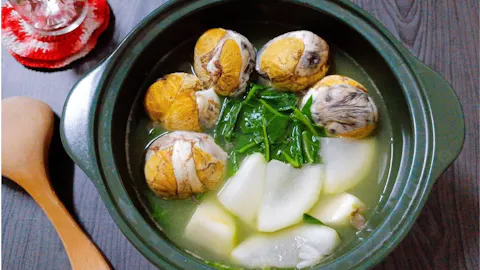
Discover the nutrition profile of balut, including calories, protein, iron, cholesterol, fat, and other essential nutrients. This guide explains how much nutrition you can get from one balut egg, explores potential health benefits and dietary considerations, and answers common questions about whether balut is healthy. Learn what makes this traditional Vietnamese food distinctive, how its nutritional value compares with regular eggs, and what to consider when enjoying balut as part of a balanced diet and varied eating pattern in moderation.
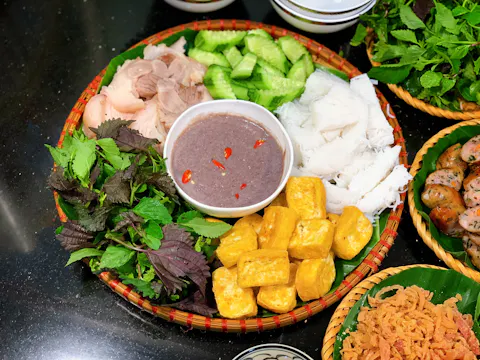
Bún Đậu Mắm Tôm is a popular Vietnamese street food platter featuring crispy fried tofu, pressed rice vermicelli, boiled pork, fresh herbs, cucumber, and pungent fermented shrimp paste. Originating in northern Vietnam, especially Hanoi, this simple yet flavorful dish is known for its contrasting textures and bold combination of salty, sour, sweet, spicy, and savory flavors. Discover the history, essential ingredients, distinctive mắm tôm sauce, regional variations, and the best way to enjoy this iconic Vietnamese dish like a local.
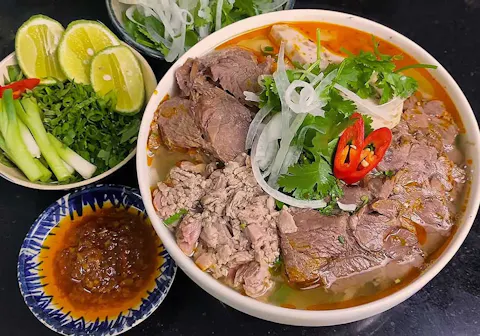
Bún Bò Huế is a spicy Vietnamese noodle soup associated with Huế, the former imperial capital of Vietnam. Made with thick round rice noodles, beef and pork, lemongrass, chili, and fermented shrimp paste, it is known for its rich broth and bold Central Vietnamese flavors. Common toppings include beef shank, pork hock, Vietnamese sausage, fresh herbs, banana blossom, and bean sprouts. Discover the history, ingredients, flavors, regional variations, and traditions behind one of Vietnam's most distinctive noodle soups.
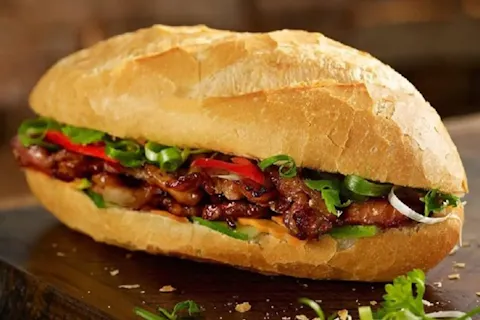
Bánh Mì is one of Vietnam's most recognizable street foods, combining a light, crispy baguette with savory fillings, pâté, pickled vegetables, fresh herbs, cucumber, chili, and flavorful sauces. While its bread has French colonial roots, Vietnamese cooks transformed it into a distinctive sandwich with regional styles and ingredients. From traditional pork-filled Bánh Mì in Hanoi and Ho Chi Minh City to Xíu Mại in Da Lat and local variations in Hoi An, this guide explores its history, ingredients, flavors, types, and cultural significance.
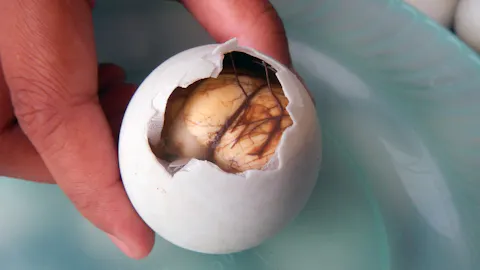
Master the art of eating balut (hột vịt lộn) like a local with this comprehensive step-by-step dining guide. Learn the proper technique for cracking the shell's air cell, sipping the warm, savory duck broth, and applying the essential pepper-lime salt dip (muối tiêu chanh). Discover how to pair creamy yolk and tender duck embryo with fresh rau răm (Vietnamese coriander) herbs, navigate table etiquette, and enjoy one of Vietnam’s most iconic street food rituals with confidence.
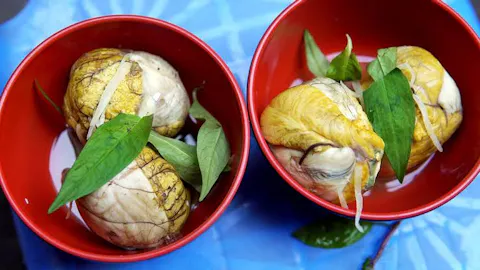
What does balut taste like? Vietnam’s hột vịt lộn has a rich, savory flavor that combines warm egg broth, creamy yolk, and tender duck embryo. The taste can range from mild and eggy to slightly gamey depending on how developed the embryo is. Fresh rau răm, lime, pepper, chili, and ginger add a bright contrast to the richness. In this guide, discover what each part of balut tastes and feels like, plus what first-time travelers can expect when trying this traditional Vietnamese street food.
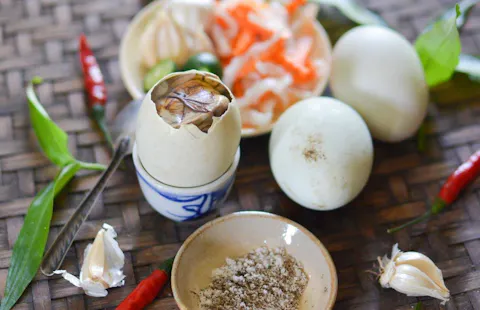
Is balut healthy? Balut, known as hột vịt lộn in Vietnam, is a nutrient-dense fertilized duck egg that provides protein, fat, vitamins, and minerals. However, it is also relatively rich in cholesterol and calories, so portion size and individual dietary needs matter. This guide explores balut nutrition, calories, protein, vitamins, minerals, potential health benefits, cholesterol concerns, food safety, and what travelers should know before trying this traditional Vietnamese street food.
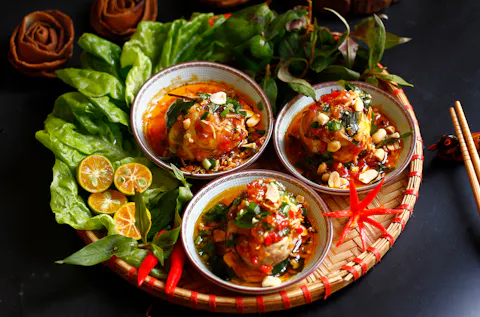
Balut is a fertilized duck egg containing a partially developed embryo, traditionally boiled and eaten from the shell. In Vietnam, it is known as hột vịt lộn and is a popular street food served with Vietnamese coriander, salt, pepper, lime, ginger, and chili. This guide explains what balut is, how it is made and cooked, what it tastes like, how to eat it, how Vietnamese balut differs from Filipino balut, and what to know about its nutritional and cultural significance.
Vietnamese cuisine is known for its fresh ingredients, balanced flavors, and generous use of herbs and vegetables. Many dishes combine sweet, sour, salty, savory, and spicy elements, creating meals that are both flavorful and light.
Some of Vietnam's best-known dishes include pho, banh mi, bun cha, bun bo Hue, mi Quang, banh xeo, bun rieu, fresh spring rolls, and a wide variety of regional seafood specialties. Every region has its own signature recipes and cooking traditions.
Yes, street food is an important part of Vietnamese culture and is generally safe when purchased from clean, busy vendors with a high turnover of customers. Choosing freshly prepared dishes and observing basic food hygiene can help ensure a great experience.
Absolutely. Vietnam offers many vegetarian and vegan dishes, particularly around Buddhist temples and in larger cities. You'll find tofu, fresh vegetables, mushroom-based dishes, noodle soups, rice meals, and dedicated vegetarian restaurants throughout the country.
Each region offers a unique culinary experience. Northern Vietnam is famous for subtle, traditional flavors, Central Vietnam for its spicy and royal cuisine, and Southern Vietnam for its tropical ingredients and sweeter taste profiles. Exploring all three regions provides the most complete understanding of Vietnamese cuisine.
Advertising box