
How Hard Is the Son Doong Trek? Fitness Requirements & Preparation Guide
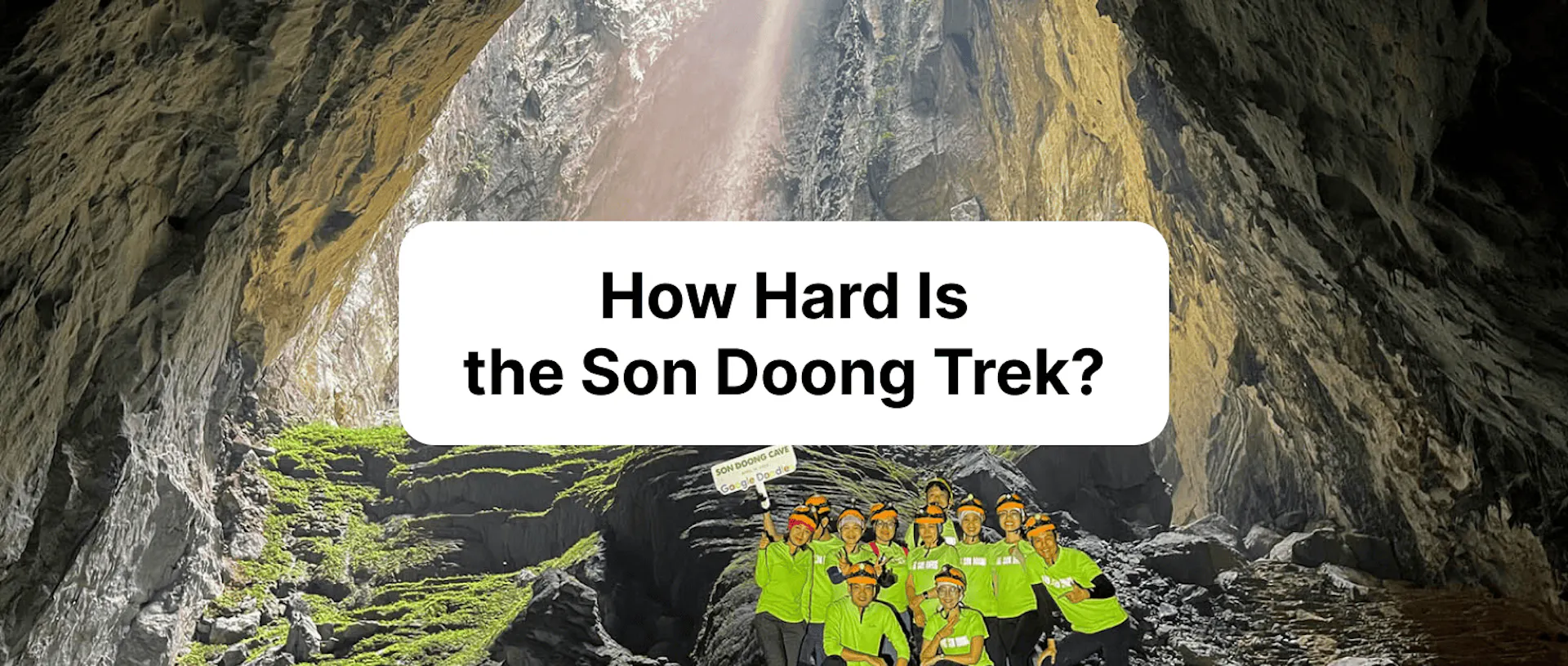
The Son Doong expedition is one of Vietnam's most demanding adventure experiences, requiring several days of trekking through dense jungle, river crossings, steep climbs, and rugged cave terrain. While you don't need to be a professional athlete, participants should have good physical fitness, endurance, and confidence hiking in challenging conditions. This guide explains the trek's difficulty, fitness expectations, training recommendations, and practical preparation tips to help you safely complete the unforgettable journey into the world's largest cave.
On this page
To stand at the threshold of the world’s largest subterranean cavern is to confront a stark, humbling reality: raw nature demands absolute physical resilience and uncompromising mental fortitude. For international adventurers dreaming of descending into the colossal chambers of Hang Sơn Đoòng, a singular, persistent anxiety inevitably shadows their excitement, prompting the central, overriding question: how hard is the Son Doong trek? While the daunting prospect of conquering a grueling multi-day expedition can easily spark intense self-doubt, understanding the precise physical parameters—from navigating razor-sharp limestone labyrinths to executing technical vertical climbs—transforms vague, paralyzing fear into an achievable, highly structured fitness goal. Operating in close collaboration with elite British cave safety experts and the seasoned operational teams of Oxalis Adventure, this comprehensive preparation guide strips away the mystery. It delivers an unvarnished, rigorous analysis of the Oxalis adventure difficulty level 6 rating, the objective reality behind asking is Son Doong dangerous, and a concrete, actionable training roadmap designed to condition your body for the ultimate subterranean odyssey.
Demystifying the Difficulty – What Does Level 6 Actually Mean?
The Oxalis Adventure Rating System
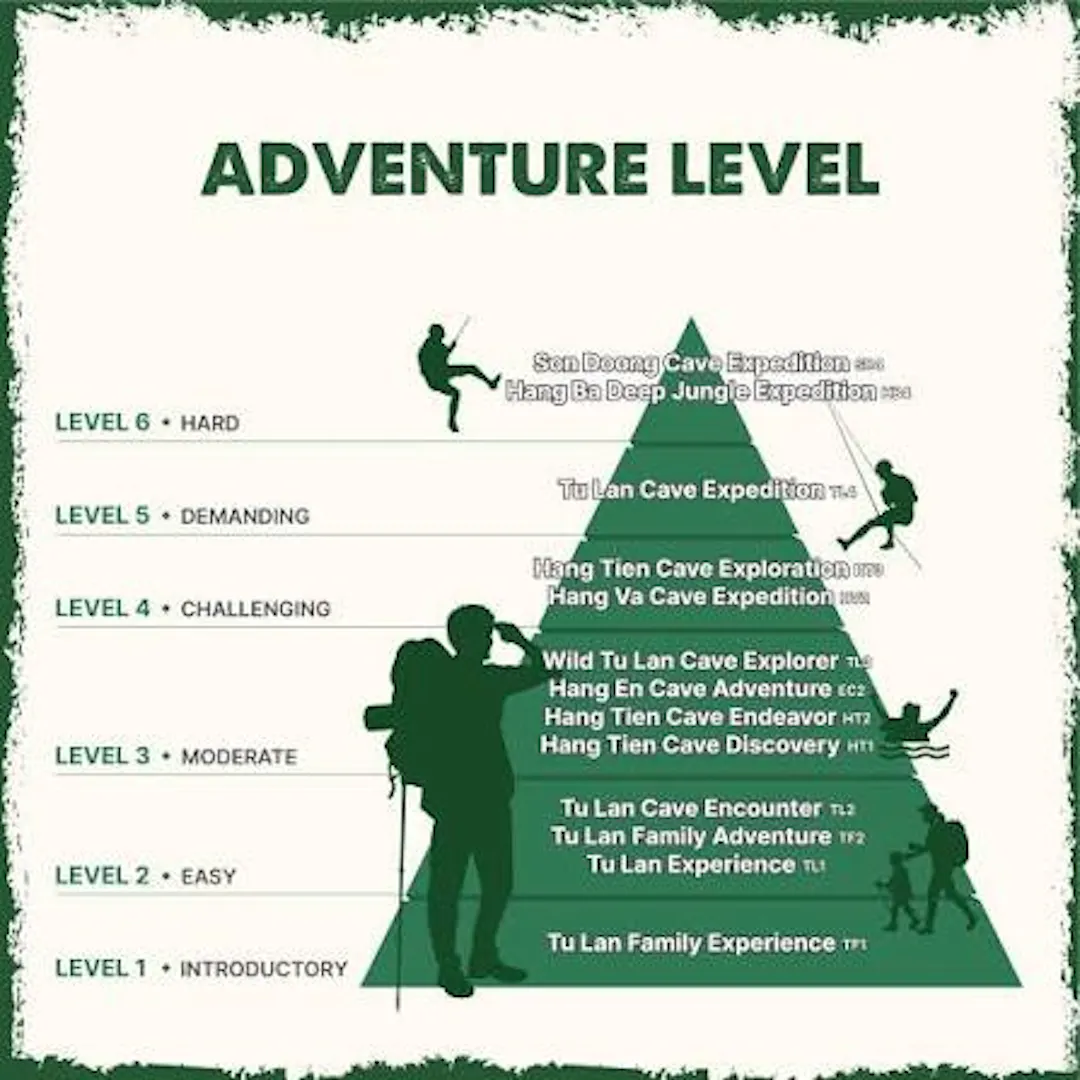
To accurately evaluate your readiness, you must first comprehend the standardized grading matrix employed by expedition operators across the Phong Nha-Ke Bang karst system. Son Doong sits comfortably at the absolute pinnacle of this scale, officially classified as Level 6 - Hard. This designation is not assigned lightly; it is a calculated reflection of the cumulative physical strain experienced over four grueling days of continuous trekking across hostile, isolated terrain. Participants are expected to cover roughly seventeen kilometers of rugged underground terrain, scale steep jungle mountain passes featuring over eight hundred meters of cumulative elevation gain, and scramble across slippery, razor-sharp karst formations where a single misstep can result in severe lacerations or sprains. The expedition requires sustained physical output in an environment characterized by extreme tropical humidity, complete darkness outside of headlamp beams, and zero modern comforts. Recognizing that you are committing to a Level 6 - Hard endeavor ensures that you approach the physical conditioning phase with the uncompromising seriousness of an elite endurance athlete preparing for an alpine summit push.
Addressing the Fear: Is Son Doong Dangerous?
Naturally, prospective explorers frequently question is Son Doong dangerous, given the remote, subterranean nature of the environment. An honest, risk-mitigation-focused assessment reveals that while objective hazards—such as flash floods during heavy rain events, unstable rockfalls, and physical exhaustion—inherently exist within any wild cave system, they are systematically neutralized through world-class safety engineering and professional management. The expedition does not rely on individual luck; it is heavily secured by an elite team of international cave safety experts, national park rangers, and specialized safety assistants who maintain constant, vigilant oversight. Every participant is outfitted with professional-grade harnesses, helmets, and certified thiết bị an toàn chuyên dụng (specialized safety equipment) whenever exposure to height or technical terrain is required. Furthermore, the expedition leadership maintains continuous, satellite-linked communication arrays with the surface command center, ensuring that emergency protocols can be executed instantaneously if a medical crisis arises. Therefore, the danger is not an uncontrolled variable, but a managed factor that yields entirely to strict field discipline and meticulous preparation.
The Physical Obstacles – Jungles, Rivers, and the Great Wall
Navigating Rough Terrain and Knee-Deep River Crossings
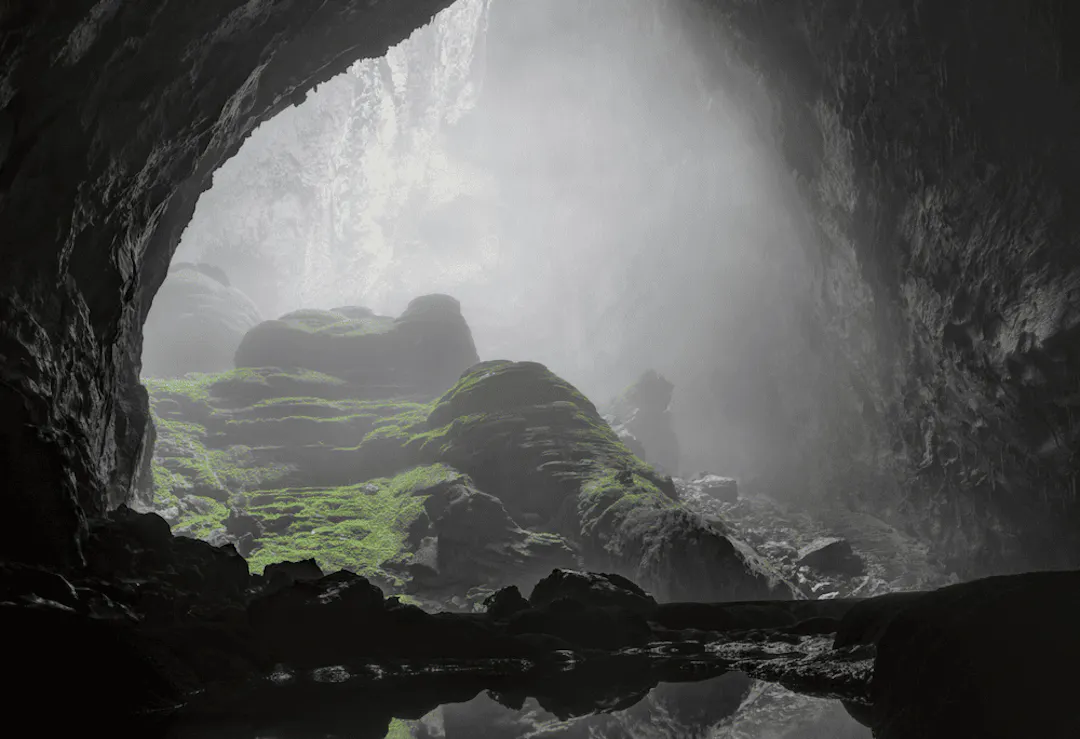
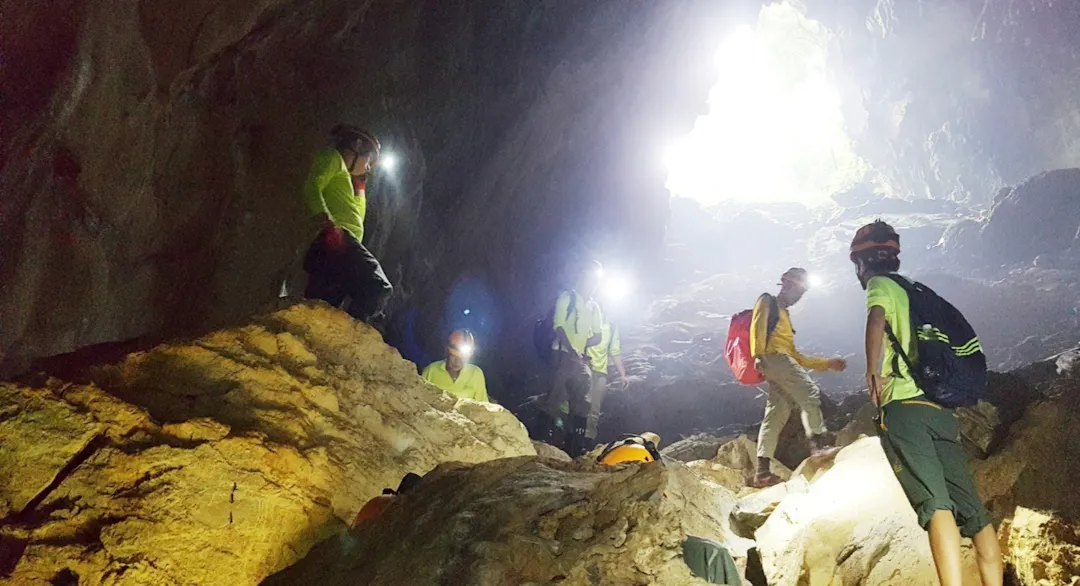
The physical reality of the trek involves enduring days exposed to raw elements that aggressively test your balance, core stability, and cardiovascular stamina. The journey commences with a grueling trek through dense jungle tracks before descending into the cavern, where the terrain shifts dramatically to unstable, house-sized boulders and slick, wet river stones polished smooth by millennia of water flow. Throughout the expedition, participants must frequently execute lội sông (river crossings), wading through fast-flowing, knee-to-waist-deep water currents that demand immense lower-body strength and exceptional proprioceptive stability to prevent being swept off balance. Your ankles and knees will absorb punishing impacts as you scramble over chaotic piles of ancient collapse blocks inside the subterranean chambers, requiring a high degree of agility and continuous concentration. This is an environment that ruthlessly exposes any underlying joint weakness or balance deficiencies, making targeted lower-body conditioning an absolute, non-negotiable prerequisite for anyone hoping to complete the journey without injury.
Conquering the "Great Wall of Vietnam"
The ultimate technical climax of the expedition occurs on the final morning, when explorers must confront the legendary Bức tường Việt Nam (Great Wall of Vietnam)—a towering, 90-meter sheer calcite barrier standing directly near the cave exit. Scaling this monumental vertical obstacle requires executing a meticulously supervised, highly technical climb that pushes both physical and psychological limits. Participants are securely fitted into heavy-duty climbing harnesses and attached to fixed, engineered rope systems managed by expert safety assistants stationed at strategic intervals along the rock face. The ascent involves climbing a series of vertical, aluminum safety ladders bolted directly into the slick limestone, followed by exposed rock scrambling where you must trust your footwork and upper-body pulling strength entirely. Conquering this formidable wall demands a clear head, absolute trust in the safety rigging, and sufficient residual upper-body and core endurance after three days of heavy trekking, serving as the ultimate, triumphant validation of your rigorous pre-trip conditioning.
The 3-to-6-Month Training Roadmap – Building Your Base
Establishing Cardiovascular Endurance
To successfully meet the rigorous Son Doong fitness level requirements, you must deliberately build an ironclad aerobic base over a strict three-to-six-month preparation window. The ideal physiological baseline demands that prospective explorers cultivate exceptional thể lực tim mạch (cardiovascular endurance), enabling them to sustain elevated heart rates for hours in high-humidity environments without experiencing debilitating fatigue. A reliable baseline metric to achieve before departure is the ability to comfortably complete a continuous 5km run within fifty minutes, supplemented by weekly long-distance hikes carrying a weighted daypack weighing at least six to eight kilograms. However, running alone is insufficient; because the trek involves massive cumulative elevation changes, stair-climbing routines are mandatory. Devote multiple sessions per week to scaling tall building stairwells or utilizing a weighted stair-master machine for continuous blocks of forty-five to sixty minutes. This specific, targeted adaptation conditions your heart and lungs to handle the relentless uphill grinding required to navigate the jungle passes and subterranean boulder fields.
Lower Body Strength and Joint Conditioning
Aerobic capacity must be aggressively paired with specialized muscular strength and joint conditioning to protect your body against the brutal impact of the karst terrain. Your training regimen must heavily incorporate lower-body strength exercises focusing specifically on eccentric quad strength, glute activation, and ankle stability. Bulgarian split squats, weighted lunges, step-ups with a loaded pack, and deep-range squats should form the foundational core of your weekly gym routine. Eccentric quad strength—the ability of the muscle to control lengthening under load—is paramount for surviving the punishing downhill descents without experiencing crippling muscle failure. Furthermore, because the ground inside the cave is notoriously uneven, you must actively train your ankle proprioception by incorporating single-leg balance drills on unstable surfaces, such as balance boards or folded foam pads. Strengthening the stabilizing muscles surrounding the ankles and knees drastically reduces your susceptibility to severe sprains when navigating slippery, subterranean boulder fields miles away from immediate medical evacuation.
Assessing Your Readiness and Field Discipline
Vetting Your Health and Self-Assessment
Establishing profound Trustworthiness in your preparation requires an honest, unvarnished self-assessment of your medical history, psychological triggers, and baseline physical stamina before formally committing to the expedition. You must evaluate whether you possess any chronic cardiovascular issues, severe asthma, or structural joint injuries that could be exacerbated by remote, high-exertion travel. Additionally, because the expedition requires spending multiple days engulfed in total subterranean darkness, navigating tight vertical shafts, and camping deep inside massive chambers, you must honestly assess your psychological comfort with enclosed spaces and sustained isolation. Oxalis Adventure enforces strict medical screening protocols, requiring detailed physician clearance and comprehensive health disclosure forms. Acknowledging your physical limitations honestly is not a sign of weakness; it is a critical safety measure that protects not only your personal well-being but also the operational integrity of the entire expedition support team.
The Role of Mental Resilience
When physical exhaustion inevitably sets in deep underground—when your muscles ache from hours of scrambling across jagged rocks and the humid air feels heavy in your lungs—raw physical muscle must be powerfully augmented by unyielding mental grit. The psychological aspect of the trek is frequently underestimated by international travelers accustomed to modern comforts. Success relies heavily on maintaining a positive, adaptive mindset, practicing controlled pacing, and placing absolute, unwavering trust in the local porter and guide teams who dedicate their lives to ensuring your safety. Embracing the discomfort, remaining calm during technical maneuvers, and operating as a supportive, cohesive member of the expedition cohort are character traits that ultimately dictate whether you successfully conquer the subterranean labyrinth or succumb to fatigue.
Conclusion
Ultimately, conquering the intense physical demands of the world's largest cave is an entirely achievable triumph for any dedicated international traveler willing to commit to a disciplined, highly structured training plan. By systematically mastering your cardiovascular endurance, fortifying your lower-body joints, and preparing mentally for the unique rigors of a Level 6 - Hard environment, you transform a daunting physical challenge into an unforgettable, life-defining achievement. Stop wondering how hard is the Son Doong trek and begin your targeted expedition conditioning regimen today, taking that crucial first step toward the ultimate subterranean adventure of a lifetime.
Read more: Son Doong Cave
Frequently Asked Questions About the Son Doong Trek
How difficult is the Son Doong Cave trek?
The Son Doong expedition is considered challenging. Participants hike through jungle trails, cross rivers, climb steep sections, and navigate uneven cave terrain over multiple days. It is suitable for people with good overall fitness and hiking experience.
Do I need to be an experienced trekker?
Not necessarily, but previous trekking or long-distance hiking experience is highly recommended. You should be comfortable walking for several hours each day while carrying a small daypack in humid tropical conditions.
How should I prepare physically for the trek?
Begin training several months in advance by focusing on cardio, leg strength, endurance, and balance. Regular hiking, stair climbing, running, cycling, and strength exercises will help prepare your body for the expedition.
What equipment should I bring?
Most technical equipment is provided by the tour operator. However, you should bring lightweight trekking clothing, quality hiking boots, moisture-wicking socks, gloves, personal medications, a reusable water bottle, and a small daypack for daily essentials.
Can beginners join the Son Doong expedition?
Yes, if they are physically fit and willing to prepare properly. The tour operator evaluates participants before departure, and good physical conditioning is much more important than advanced mountaineering skills.
Advertising box
Discover More About Son Doong Cave
Continue exploring the incredible world of Son Doong Cave with expert travel guides, trekking tips, tour planning advice, nearby attractions, and fascinating stories about the world's largest cave. Whether you're preparing for the expedition or simply dreaming of visiting, these articles will help you uncover more of Phong Nha's breathtaking underground wonders.

How Much Does a Son Doong Tour Cost? (And Is It Worth $3,000?)
A journey to Son Doong Cave is one of the world's most exclusive adventure experiences, but it comes with a premium price tag. With limited permits, expert guides, safety teams, camping equipment, meals, and conservation fees included, the expedition typically costs around US$3,000 per person. This guide explains exactly what you're paying for, why the tour is so expensive, and whether exploring the world's largest cave is truly worth the once-in-a-lifetime investment.
Best Time to Visit Son Doong Cave: Weather, Seasons, and Tour Schedules
Choosing the right season is essential for an unforgettable Son Doong Cave adventure. Due to weather conditions and conservation efforts, expeditions operate only during a limited period each year. Understanding rainfall patterns, temperatures, river levels, and tour availability will help you plan the perfect trip. This guide explains the best months to visit Son Doong, what weather to expect, when tours are available, and how seasonal conditions influence trekking safety and the overall experience inside the world's largest cave.

Can't Book Son Doong? Top 4 Incredible Alternative Caves in Phong Nha
Son Doong Cave may be the world's largest cave, but limited permits mean many travelers miss the opportunity to visit. Fortunately, Phong Nha – Ke Bang National Park is home to dozens of spectacular caves that offer equally memorable adventures. From the massive chambers of Hang En and the breathtaking formations of Paradise Cave to underground rivers and jungle expeditions in Tu Lan, these incredible alternatives deliver unforgettable experiences while showcasing the extraordinary natural beauty of central Vietnam.

Inside Son Doong Cave: 5 Mind-Blowing Wonders Found Nowhere Else on Earth
Hidden beneath the limestone mountains of Phong Nha – Ke Bang National Park, Son Doong Cave contains extraordinary natural wonders unlike anywhere else on Earth. Massive cave chambers, lush underground jungles, towering skylights, giant cave pearls, and unique ecosystems have made it one of the world's greatest geological discoveries. This guide explores five incredible features that make Son Doong more than just the world's largest cave—it is one of the most spectacular natural environments ever found.