
Inside Son Doong Cave: 5 Mind-Blowing Wonders Found Nowhere Else on Earth
Hidden beneath the limestone mountains of Phong Nha – Ke Bang National Park, Son Doong Cave contains extraordinary natural wonders unlike anywhere else on Earth. Massive cave chambers, lush underground jungles, towering skylights, giant cave pearls, and unique ecosystems have made it one of the world's greatest geological discoveries. This guide explores five incredible features that make Son Doong more than just the world's largest cave—it is one of the most spectacular natural environments ever found.
On this page
Stepping across the threshold of Hang Sơn Đoòng is an exercise in total sensory humbling, a jarring transition from the blinding, suffocating tropical heat of the external Vietnamese jungle into the cool, pressurized abyss of the planet's absolute largest subterranean cavern. As the ambient noise of surface wildlife fades, replaced by the profound, echoing drips of ancient moisture, you realize you are crossing a planetary boundary. Exploring Inside Son Doong Cave is not merely entering a rocky cavity carved by ancient waters; it is stepping onto an entirely alien planetary sanctuary. This subterranean masterwork operates as a self-contained world complete with its own localized meteorology, pristine primeval forests, and geological anomalies that exist nowhere else on Earth. Deep within the heart of the Phong Nha-Kẻ Bàng UNESCO World Heritage site, the scale of the void defies human cognitive processing. To witness the wonders inside Son Doong Cave is to confront the raw, unadulterated hydro-tectonic evolution of our planet, offering a masterclass in scale, mystery, and geological time that redefines the absolute boundaries of human exploration.
The Sky-Piercing Skylines – Doline 1 and Doline 2
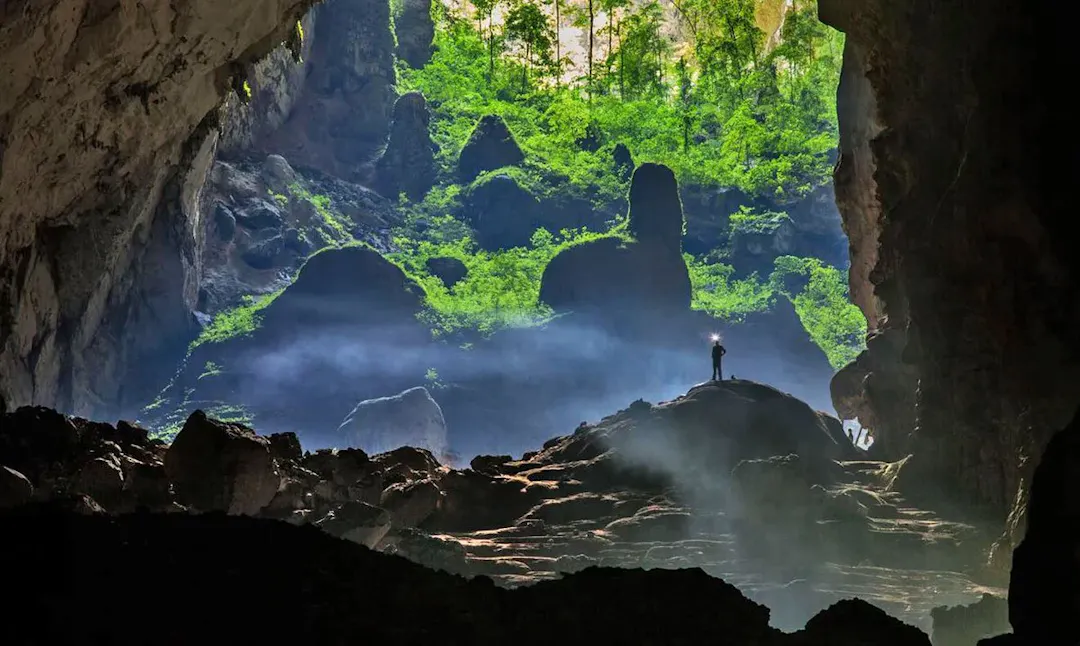
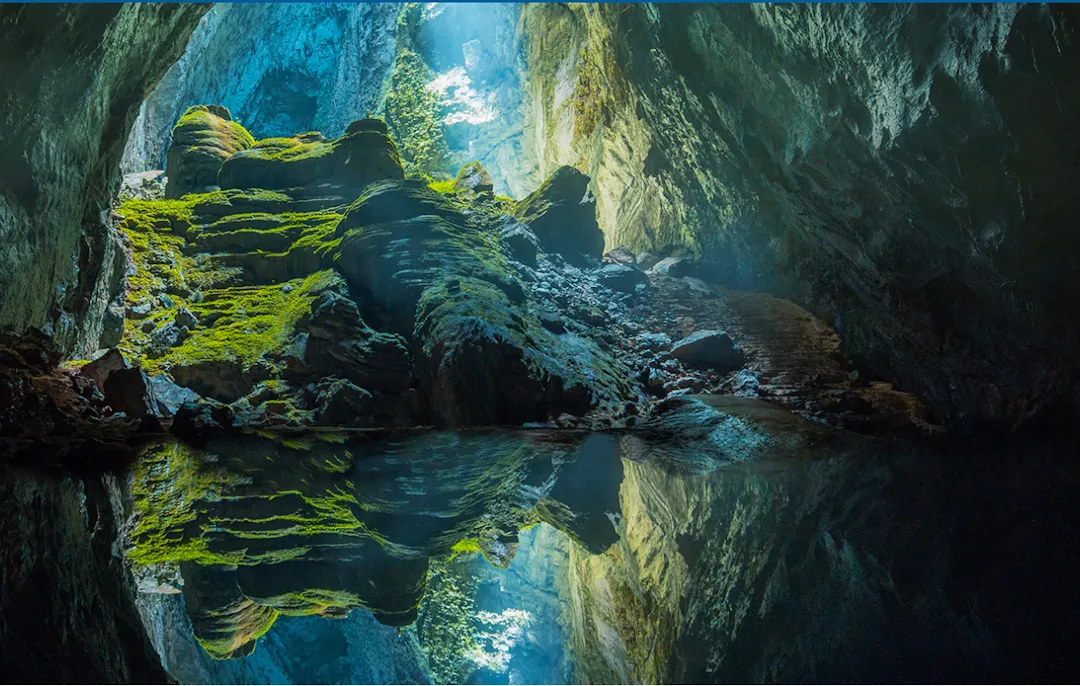
The first and most jarring revelation awaiting travelers Inside Son Doong Cave is the sudden, unexpected collision with the open sky miles beneath the earth's surface, a phenomenon enabled by the colossal collapse structures known as dolines. Millions of years of relentless subterranean river erosion, combined with massive structural tectonic shifts, eventually compromised the integrity of the immense limestone roof, causing cataclysmic collapses that let the light in. These staggering geological ruptures, designated simply as Doline 1 and Doline 2, create colossal vertical windows that plunge hundreds of meters down from the surface jungle, bathing pitch-black chambers in brilliant, celestial illumination. Standing on the jagged, boulder-strewn slopes beneath these enormous skylines forces an immediate psychological shift, as you realize the sheer mass of stone arching above your head is measured in geological epochs rather than human years.
These cataclysmic openings do more than merely illuminate the darkness; they serve as the biological lungs of the cavern, fostering the most surreal Son Doong dolines and underground jungle ecosystems found anywhere on the planet. As vertical shafts of sunlight pierce through miles of absolute darkness, they nourish thriving, primeval rainforests that have adapted to life deep beneath the earth's surface. Towering trees, dense thickets of ferns, and specialized shade-tolerant flora stretch desperately toward the celestial openings, creating an isolated micro-ecosystem cut off from the surrounding surface world. Wandering through these subterranean jungles feels like walking through a lost prehistoric epoch, where specialized vines and endemic plant species thrive on the rich organic debris cascading down from the doline walls above, proving that life will fiercely colonize even the most extreme, light-starved environments on Earth.
The Subterranean Meteorological Engine – The Cave’s Own Weather
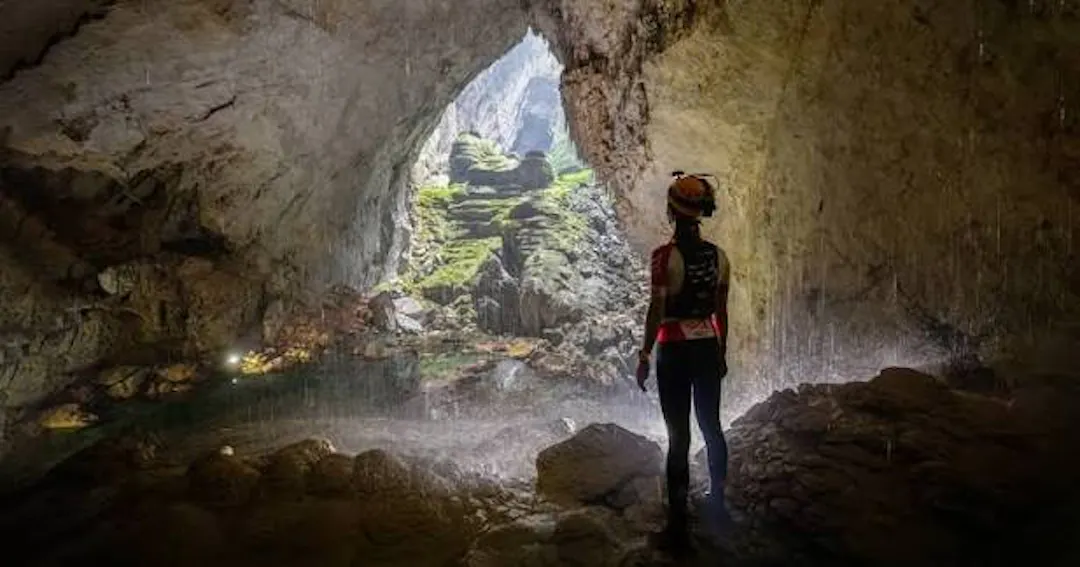
As you navigate deeper into the subterranean labyrinth, you immediately encounter a phenomenon that completely shatters the expectation of stagnant underground air: the cave possesses its own active, highly complex weather system. The physics governing Inside Son Doong Cave create a localized meteorological engine driven by the dramatic thermal contrast between the cool, stable subterranean temperatures and the scorching external climate of Central Vietnam. When the warm, humid air of the surface jungle encounters the cold, dense air trapped within the massive limestone chambers, it generates localized fog banks, rolling mist clouds, and swirling atmospheric currents that sweep through the caverns like ghost winds. This ethereal vapor often collects in thick, cinematic layers along the cavern floors, drifting eerily between colossal stalagmites and shrouding the distant, unseen ceilings in perpetual mystery.
The mastery behind this closed atmospheric system lies in the precise regulation of humidity and barometric pressure across the vast spatial volume of the cave network. Because Son Doong is structured with multiple massive entrances and sky-piercing dolines, it acts as a colossal pneumatic lung, inhaling and exhaling massive volumes of air driven by seasonal barometric shifts. This constant atmospheric movement prevents the interior from becoming a suffocating carbon dioxide trap, instead maintaining a dynamic, highly oxygenated environment that supports complex biological processes. For the traveler, walking through these shifting layers of vapor and moisture provides a deeply atmospheric journey, where visibility can transform in an instant from absolute crystalline clarity to a milky, mystical fog bank driven entirely by subterranean meteorology.
The Ultimate Vertical Test – The Great Wall of Vietnam
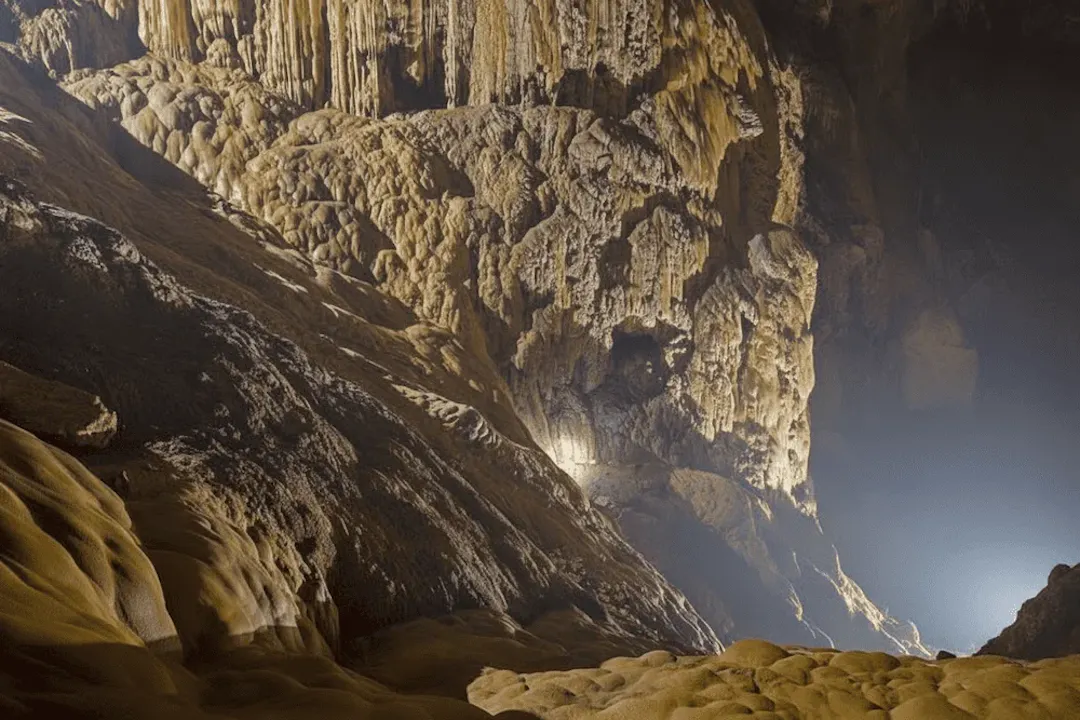
The physical and psychological climax of any expedition Inside Son Doong Cave is the confrontation with its most formidable architectural obstacle: the legendary Great Wall of Vietnam Son Doong. Situated near the final chambers before the cave exits into the external world, this colossal calcite barrier rises like an ancient, impassable fortress blocking the path to freedom. Standing at a staggering ninety meters in height, this sheer limestone and calcite precipice is so massively tall that human figures standing at its base disappear into insignificance. The wall was forged over millennia as mineral-rich water cascaded down a massive geological fault line, depositing thick layers of calcium carbonate that hardened into a towering, vertical monolith of gleaming, wet stone.
Conquering this towering precipice requires absolute physical commitment and the deployment of rigorous technical safety protocols. Elite expedition guides and safety experts manage the ascent by utilizing professional-grade mountaineering harnesses, heavy-duty static ropes, and fixed metal ladders bolted directly into the slick rock face. Climbers must methodically scale the vertical terrain under intense physical exertion, trusting the engineered safety systems completely as they haul themselves upward through the echoing void. Reaching the summit of this colossal calcite titan provides an overwhelming sense of triumph, rewarding the exhausted explorer with an elevated vantage point that reveals the staggering, unobstructed scale of the terminal cavern chamber before final exit.
Crystalline Anomalies – Baseball-Sized Cave Pearls
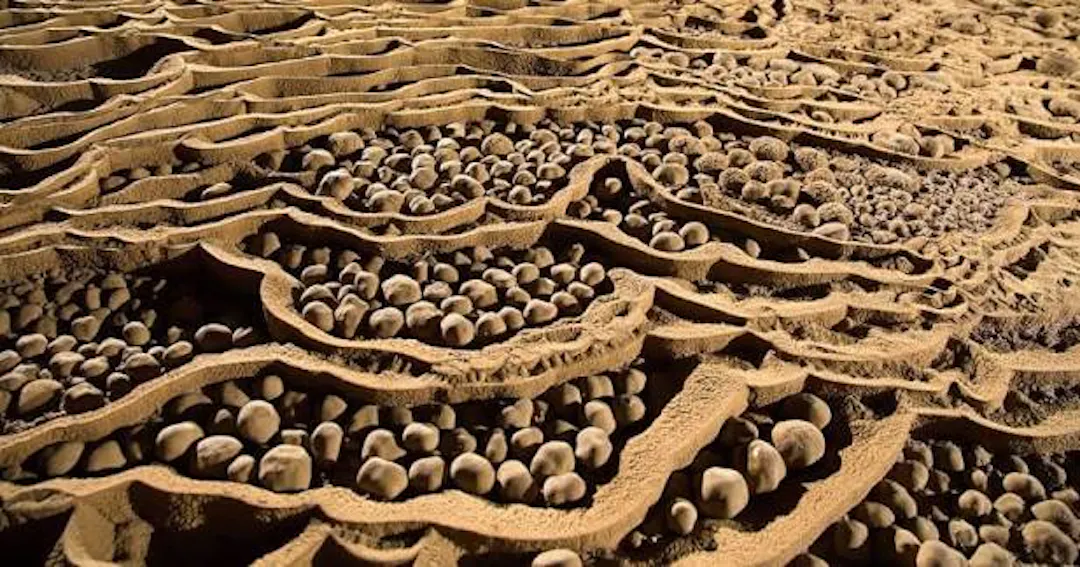
Hidden away in the quiet, undisturbed corners of the subterranean passages, far from the roaring winds and heavy foot traffic, lies one of the most delicate and scientifically fascinating geological marvels Inside Son Doong Cave: the massive giant cave pearls Son Doong. Unlike standard stalactites that hang from above or stalagmites that rise from below, these rare mineral formations are born from the slow, patient alchemy of dripping water and kinetic motion in ancient, isolated pools. As water saturated with calcium carbonate drips continuously from the high ceiling, it strikes tiny grains of sand or fragments of rock resting in shallow depressions on the cave floor. Over hundreds of thousands of years, concentric layers of mineral accretion coat the nucleus, while the gentle movement of the water polishes the accumulating crystal layers into remarkably smooth, near-perfect spheres.
What makes Son Doong's cave pearls utterly unique on a global scale is their unprecedented physical magnitude. While cave pearls discovered in typical subterranean systems rarely exceed the size of small peas or marbles, the unique hydrological energy and massive mineral concentration inside Son Doong allow these pristine spheres to grow to the staggering dimensions of baseballs and small grapefruits. These gleaming, pearl-white spheres rest inside ancient, dry rimstone pools like clutches of fossilized dinosaur eggs. Because even the oils from human skin can permanently halt their growth and tarnish their delicate crystalline structure, strict conservation protocols forbid any physical contact, ensuring these rare geological anomalies remain pristine for eternity.
The Eternal River of the Abyssal Depths
Anchoring the entire living ecosystem Inside Son Doong Cave is the relentless, roaring subterranean river that carves through the lowest geological passages of the cavern. This powerful hydrological lifeline enters the mountain through a massive subterranean tunnel and surges through the deepest chambers, providing the foundational kinetic energy that originally carved this colossal void out of the solid limestone karst. The water runs remarkably clear and icy cold, reflecting the beam of your headlamp with an intense, haunting blue-green hue as it plunges over ancient travertine dams and rushes through hidden siphon tunnels. This continuous river connects the hyper-localized micro-climates of the cave to the broader, highly complex Phong Nha hydrological network, serving as an untamed aqueous corridor that pulses with life.
Conclusion
Ultimately, journeying Inside Son Doong Cave profoundly rewrites our understanding of the earth's hidden depths, exposing a majestic planetary sanctuary that operates entirely outside the normal rules of the surface world. From the sunlight-drenched jungle dolines and swirling subterranean clouds to the towering heights of the Great Wall of Vietnam and the miraculous, baseball-sized cave pearls, this subterranean titan remains the absolute pinnacle of human exploration. Share this epic chronicle, let your imagination roam into the abyss, and begin dreaming of your own transformative descent into the earth's greatest marvel.
Read more: Son Doong Cave
Frequently Asked Questions About Son Doong Cave's Natural Wonders
What makes Son Doong Cave unique?
Son Doong is the largest known cave in the world, featuring enormous chambers, underground rivers, natural skylights, dense jungle, and rare geological formations that cannot be found together anywhere else on Earth.
What is the underground jungle inside Son Doong?
The underground jungle formed beneath massive cave skylights where sunlight reaches the cave floor. This unique environment supports trees, plants, insects, birds, and other wildlife, creating a thriving ecosystem inside the cave.
What are cave pearls in Son Doong?
Cave pearls are smooth, rounded mineral formations created over thousands of years as layers of calcium carbonate build up around tiny particles in shallow pools. Son Doong contains some of the largest cave pearls ever discovered.
Can anyone visit these natural wonders?
Yes, but only through an officially licensed expedition. Visitor numbers are strictly limited each year to protect Son Doong's fragile environment and ensure that its remarkable natural features remain preserved for future generations.
Why is Son Doong considered one of the world's greatest natural wonders?
Beyond its record-breaking size, Son Doong combines giant cave chambers, ancient limestone formations, underground weather systems, biodiversity, rivers, and forests within a single cave system. Its scale and natural diversity make it one of the most remarkable places ever explored.
Advertising box
Discover More About Son Doong Cave
Continue exploring the incredible world of Son Doong Cave with expert travel guides, trekking tips, tour planning advice, nearby attractions, and fascinating stories about the world's largest cave. Whether you're preparing for the expedition or simply dreaming of visiting, these articles will help you uncover more of Phong Nha's breathtaking underground wonders.
How Much Does a Son Doong Tour Cost? (And Is It Worth $3,000?)
A journey to Son Doong Cave is one of the world's most exclusive adventure experiences, but it comes with a premium price tag. With limited permits, expert guides, safety teams, camping equipment, meals, and conservation fees included, the expedition typically costs around US$3,000 per person. This guide explains exactly what you're paying for, why the tour is so expensive, and whether exploring the world's largest cave is truly worth the once-in-a-lifetime investment.
How Hard Is the Son Doong Trek? Fitness Requirements & Preparation Guide
The Son Doong expedition is one of Vietnam's most demanding adventure experiences, requiring several days of trekking through dense jungle, river crossings, steep climbs, and rugged cave terrain. While you don't need to be a professional athlete, participants should have good physical fitness, endurance, and confidence hiking in challenging conditions. This guide explains the trek's difficulty, fitness expectations, training recommendations, and practical preparation tips to help you safely complete the unforgettable journey into the world's largest cave.
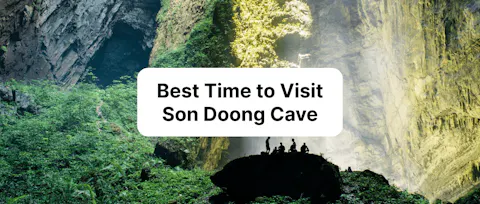
Best Time to Visit Son Doong Cave: Weather, Seasons, and Tour Schedules
Choosing the right season is essential for an unforgettable Son Doong Cave adventure. Due to weather conditions and conservation efforts, expeditions operate only during a limited period each year. Understanding rainfall patterns, temperatures, river levels, and tour availability will help you plan the perfect trip. This guide explains the best months to visit Son Doong, what weather to expect, when tours are available, and how seasonal conditions influence trekking safety and the overall experience inside the world's largest cave.
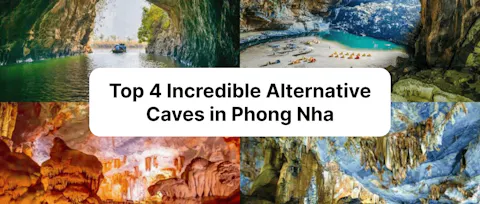
Can't Book Son Doong? Top 4 Incredible Alternative Caves in Phong Nha
Son Doong Cave may be the world's largest cave, but limited permits mean many travelers miss the opportunity to visit. Fortunately, Phong Nha – Ke Bang National Park is home to dozens of spectacular caves that offer equally memorable adventures. From the massive chambers of Hang En and the breathtaking formations of Paradise Cave to underground rivers and jungle expeditions in Tu Lan, these incredible alternatives deliver unforgettable experiences while showcasing the extraordinary natural beauty of central Vietnam.