
How to Get to Ca Mau
Located at the southernmost tip of Vietnam, Ca Mau is a fascinating destination known for its mangrove forests, coastal landscapes, and the iconic Ca Mau Cape. Although it lies far from the country's major tourism hubs, reaching Ca Mau is easier than many travelers expect. Whether you choose a domestic flight, a comfortable long-distance bus, a scenic road trip, or a motorbike adventure through the Mekong Delta, several transportation options make visiting this unique province convenient and rewarding.

On this page
The romantic allure of reaching the absolute geographical terminus of Vietnam exerts a powerful magnetic pull on serious travelers and overland adventurers alike. To stand at the very edge of the Indochinese peninsula, where the dense, impenetrable mangrove forests of the Mekong Delta slowly dissolve into the vast, churning expanses of the South China Sea, is to experience a profound sense of travel finality. However, figuring out exactly how to get to Ca Mau requires navigating a formidable distance and engaging with complex multi-modal transit networks that frequently challenge even the most seasoned international explorers. As a logistics director who has spent years mapping the infrastructural connectivity of miền Tây (the deeply revered Western region, referring to the Mekong Delta), I can assure you that this expedition demands rigorous, unvarnished planning. While traveling to this remote provincial capital involves traversing extensive asphalt arteries and labyrinthine river networks, mastering the journey from Ho Chi Minh City transforms a daunting logistical hurdle into an essential, deeply rewarding exploration of Vietnam's rural heartland. This comprehensive logistical framework will decode the multi-layered transit ecosystem, equipping you with the authoritative knowledge required to conquer the deep south with absolute confidence.
The Overland Highway – How to Get to Ca Mau from Saigon
Navigating the National Highways by Sleeper Bus
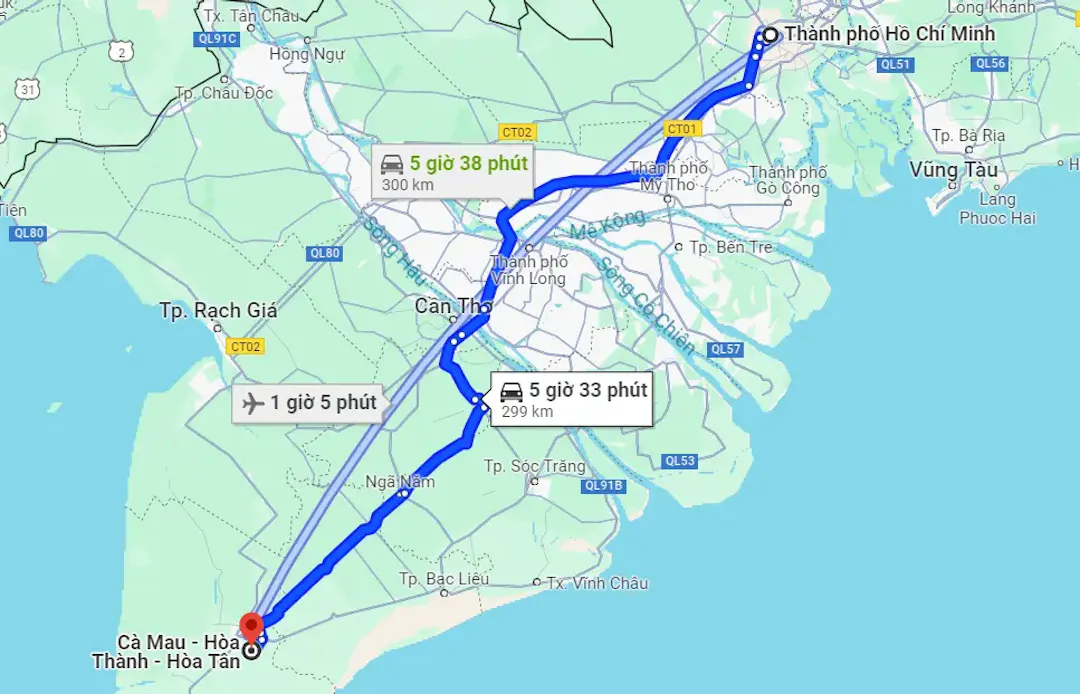
For the vast majority of local residents and budget-conscious international backpackers, executing the travel from Saigon to Ca Mau is synonymous with boarding a long-distance coach. The undisputed backbone of this overland route is the xe giường nằm (overnight sleeper bus), a uniquely Southeast Asian transit marvel designed to transport passengers horizontally across vast distances. To initiate this journey, travelers must first navigate to Ho Chi Minh City's sprawling Bến xe Miền Tây (Western Bus Station), a chaotic, high-energy transit hub that serves as the primary gateway to the delta. Operating highly frequent departures, reputable transport companies such as Phuong Trang (Futa Buslines) and Tuan Hung deploy massive fleets of these sleeper coaches down the vital artery of National Highway 1A.
When booking a sleeper bus Ho Chi Minh to Ca Mau, discerning travelers should explicitly request the modern "VIP Limousine" cabins. Unlike the older, cramped three-row configurations, these premium buses offer private, curtained compartments equipped with massage functions, dedicated air-conditioning vents, and USB charging ports, drastically mitigating the physical toll of a journey that typically spans seven to nine grueling hours. The route traces a mesmerizing path through the agricultural heart of the country, crossing the monumental Can Tho Bridge over the Hau River before pushing deep into the flat, watery plains of Soc Trang and Bac Lieu. Opting for a late-night departure is a highly strategic choice, allowing you to sleep through the heavy industrial traffic leaving Saigon and arrive in Ca Mau City just as the local street markets begin to awaken in the cool, misty dawn.
Private Car Transfers and Self-Drive Realities
For travelers prioritizing ultimate flexibility and comfort over budget constraints, hiring a private car or a luxury limousine van presents a highly efficient alternative for overland transit. Engaging a private driver completely eliminates the stress of navigating the chaotic bus station and provides the invaluable freedom to dictate your own travel pacing. This option is particularly advantageous for photography enthusiasts or cultural researchers who wish to make spontaneous stops at the floating markets of Cai Rang or the ancient Khmer pagodas scattered throughout the neighboring provinces.
However, one must possess a realistic understanding of Mekong Delta transport logistics before committing to a private transfer. While the newly completed sections of the Trung Luong - My Thuan Expressway have significantly accelerated departure times from Ho Chi Minh City, the deeper provincial roads leading into the Ca Mau peninsula remain largely two-lane highways heavily congested with agricultural trucks and erratic motorbike traffic. Self-driving a rental car is strongly discouraged for foreign visitors due to these highly unpredictable driving conditions, the complex network of narrow rural bridges, and strict domestic licensing laws. Hiring a seasoned local driver ensures that you can safely observe the shifting topography—from the sprawling neon outskirts of the metropolis to the tranquil, emerald-green rice paddies of the deep south—without the intense psychological exhaustion of navigating Vietnamese highway traffic.
The Skies of the Delta – How to Get to Ca Mau by Air
Air Travel Logistics and Regional Connectivity
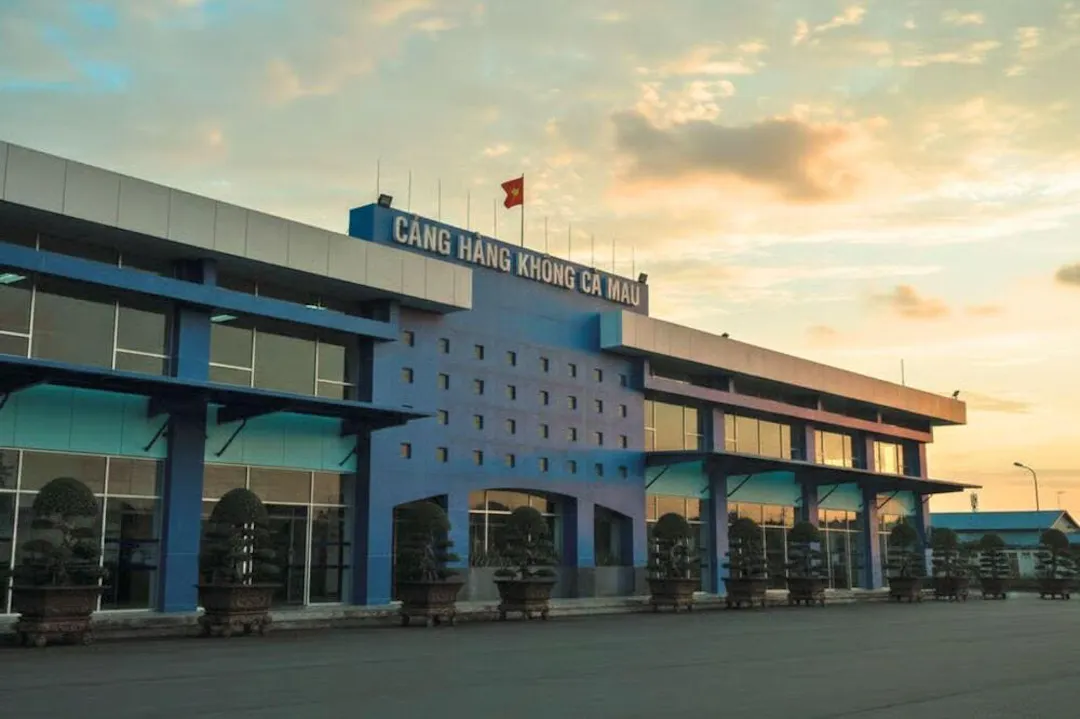
When time is an absolute premium and overland endurance is not on your itinerary, the most rapid and direct method of how to get to Ca Mau is conquering the skies. Flights to Ca Mau Airport (CAH) represent a vital, albeit limited, infrastructural lifeline connecting the southernmost province to the rest of the nation. The airport itself is a remarkably small, highly efficient regional facility featuring a single, short runway that restricts commercial operations to smaller turboprop aircraft. Historically, the national flag carrier, Vietnam Airlines, through its regional subsidiary VASCO, operates specialized ATR 72 aircraft on the short-haul route directly from Ho Chi Minh City's Tan Son Nhat International Airport (SGN).
Recently, route networks have occasionally expanded to include direct connections from Hanoi using specialized Embraer regional jets, though these schedules remain highly subject to seasonal demand and airline operational shifts. The flight from Saigon is staggeringly brief, typically spending less than forty-five minutes in the air. As the turboprop descends, passengers are treated to an unparalleled, breathtaking aerial perspective of the Mekong Delta—a vast, glittering patchwork of flooded shrimp farms, dense mangrove forests, and serpentine river channels that perfectly illustrates the profound aquatic nature of the region. Travelers utilizing this aviation route must remain acutely aware of strict luggage limitations inherent to smaller aircraft and the reality that flights are highly susceptible to sudden cancellations during severe tropical monsoon depressions.
Maximizing Time Efficiency for Short Itineraries
Leveraging the domestic aviation network serves as a brilliant, highly strategic choice for time-pressed international travelers looking to bypass the lengthy, exhausting overland transit and dive straight into the southern ecosystem. By replacing a nine-hour bus ride with a one-hour flight, you effectively reclaim an entire day of exploration. This logistical optimization allows ambitious travelers to land in Ca Mau City by mid-morning, check into their accommodations, and immediately coordinate their afternoon transport deeper into the surrounding national parks or coastal estuaries. While the financial cost of a flight ticket is noticeably higher than a sleeper bus fare, the immense preservation of physical energy and the maximization of active vacation time make flying the undisputed premium choice for those seeking a highly compressed, high-impact itinerary in the deep south.
Waterways and Coastal Transit – How to Get to Ca Mau's Deepest Frontiers
Exploring the River Labyrinths by Speedboat and Ferry
Upon arriving in the provincial capital, the logistical challenge immediately shifts from inter-provincial transit to localized navigation. Ca Mau is a region where asphalt roads frequently surrender to water, making aquatic transport an absolutely essential component of your journey. To truly understand the cultural and geographical heartbeat of the province, one must explore the intricate river labyrinths by utilizing local passenger boats, traditional phà (ferries), and chartered speedboats. Historically, the entire region operated exclusively on these waterways, and today, they remain the most authentic method for reaching isolated communities and ecological sanctuaries.
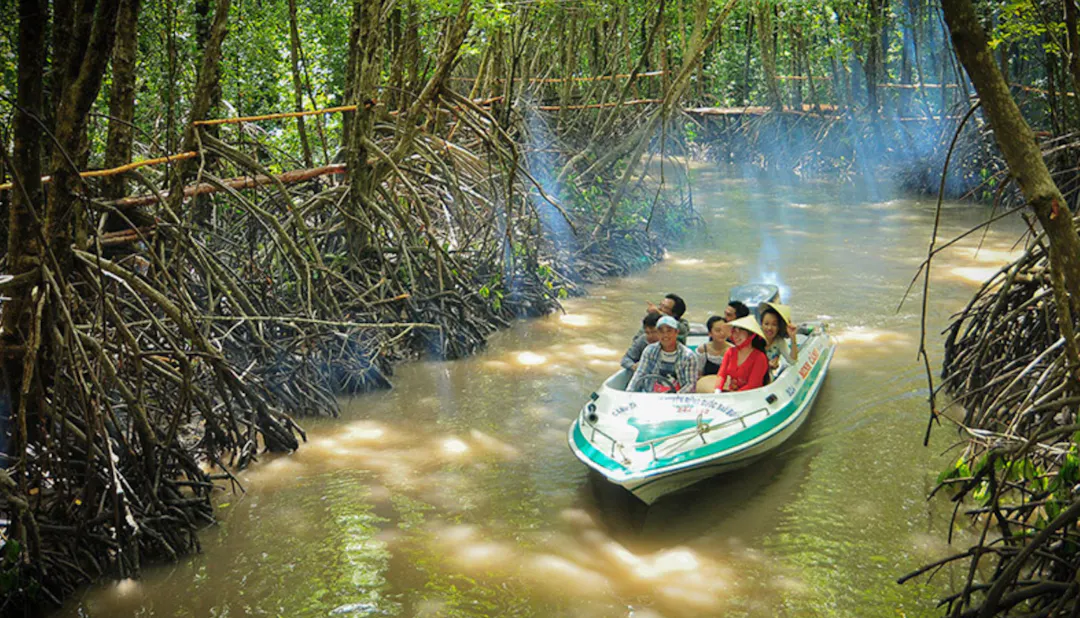
For travelers looking to explore the bustling, raw coastal fishing economy, arranging a river transit out to the vibrant coastal town of Sông Đốc provides an unforgettable, sensory-rich experience. Navigating the wide, muddy rivers aboard a local vessel exposes you to a thriving aquatic civilization where houses balance precariously on wooden stilts, massive fishing trawlers unload their daily oceanic catch, and the scent of fermented fish sauce permeates the humid tropical air. Hiring a private speedboat, known locally as a "cano," from the central piers of Ca Mau City allows you to cut swiftly through the dense, overhanging mangrove canopies, accessing remote bird sanctuaries and ecological reserves where traditional road infrastructure simply ceases to exist.
Connecting to the Cape (Mũi Cà Mau)
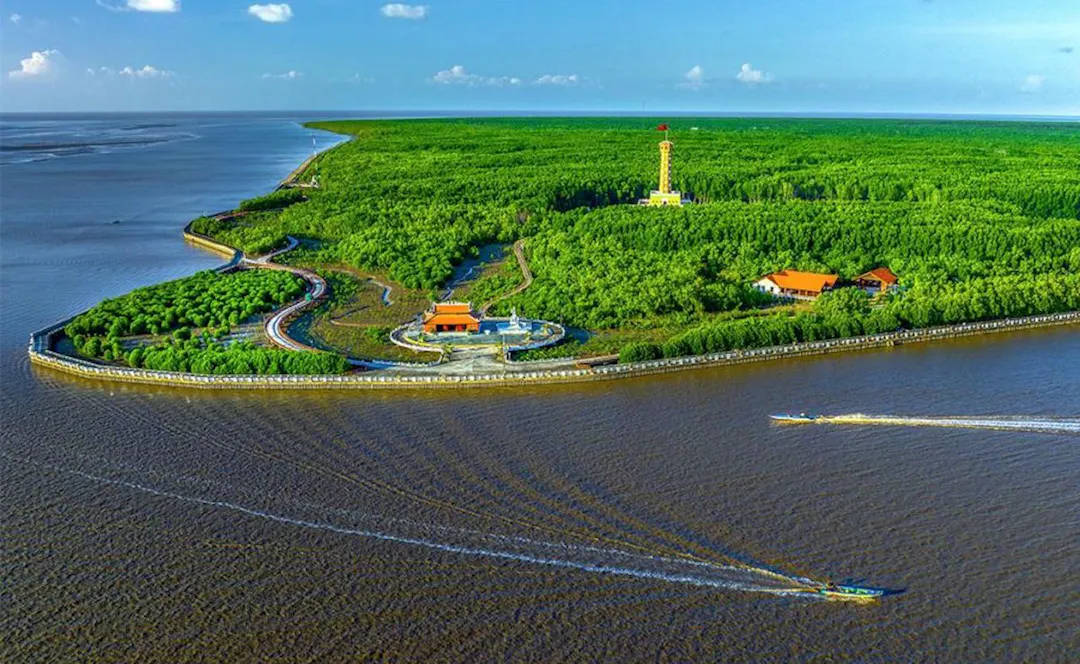
The ultimate objective for almost every visitor traveling to this province is completing the final, symbolic leg of the journey: getting to Vietnam southernmost point. The official geographical marker is located within the highly protected boundaries of Mũi Cà Mau National Park, a globally recognized biosphere reserve. For decades, the only viable method for reaching this remote, shifting mudflat was a lengthy, bone-rattling journey via high-speed river ferries that departed from the city center.
However, monumental infrastructural investments have recently revolutionized this final transit segment. The completion of the final stretch of the Ho Chi Minh Highway—a massive, continuous ribbon of asphalt stretching all the way from the mountainous northern borders of China—now provides a direct, paved route entirely to the cape. Travelers can now hire a local taxi or rent a motorbike in Ca Mau City to drive the remaining one hundred kilometers south. The road cuts beautifully through endless expanses of dark green mangroves and commercial shrimp ponds, culminating at the iconic ship-shaped monument that gazes out over the ocean. This seamless infrastructural connectivity has dramatically simplified the process of reaching the cape, though many purists still advocate for taking a boat at least one way to fully appreciate the region's defining relationship with the water.
Practical Survival Tips for How to Get to Ca Mau Safely
Timing Your Departure and Avoiding Seasonal Delays
Executing a flawless expedition to the deep south requires a rigorous understanding of seasonal meteorology and cultural timelines. Your overarching Mekong Delta transport logistics must be carefully calibrated against the realities of the tropical monsoon season, which dominates the region from late May through November. During these months, torrential, localized downpours frequently cause severe street flooding in Ca Mau City and significantly slow down overland highway speeds due to poor visibility and slick asphalt. If your itinerary involves extensive speedboat travel to the cape or offshore islands, building flexible buffer days into your schedule is absolutely mandatory to account for sudden small-craft weather advisories issued by the coast guard.
Furthermore, attempting to execute this journey during the weeks immediately surrounding the Lunar New Year (Tet) introduces monumental logistical friction. As millions of migrant workers abandon Ho Chi Minh City to return to their ancestral villages in the delta, highway traffic grinds to a devastating halt, and sleeper buses are completely booked months in advance. To maintain your sanity and ensure a smooth transit experience, international travelers are sternly advised to avoid long-distance overland travel entirely during this mass domestic migration window.
Accommodation and Local Ticketing Advice
To secure reliable transport without falling victim to miscommunication or opportunistic scalping, travelers must leverage reputable digital infrastructure. When booking your sleeper bus, utilize trusted domestic ticketing platforms such as Vexere, which provides transparent pricing, exact seating charts, and verified passenger reviews. For domestic flights, booking directly through the official portals of Vietnam Airlines ensures you have access to real-time delay notifications and straightforward luggage policies. Once on the ground in Ca Mau City, rely on the concierge services of established, highly-rated hotels to negotiate private car hires or speedboat charters to the national park. Local hoteliers possess the necessary community leverage to secure fair, standardized pricing for customized transport, insulating you from the aggressive bargaining tactics often encountered at the chaotic riverside docks.
Conclusion: Final Thoughts on How to Get to Ca Mau
Ultimately, discovering exactly how to get to Ca Mau is an exercise in true geographical determination. While the journey demands enduring long hours on a sleeper coach, coordinating domestic flights, and navigating the vast, watery expanse of the Mekong Delta, the profound reward of reaching the end of the road is immeasurable. Conquering this complex logistical web grants you access to an unvarnished, radically authentic corner of the nation defined by resilient communities, boundless mangrove forests, and the vast open sea. Finalize your transit strategies, book your tickets with absolute confidence, and embark on a magnificent expedition to stand proudly at the southernmost edge of Vietnam today.
Read more: Ca Mau Travel Guide

By Roy Trinh
Editor
Roy Trinh is a travel writer and destination expert at Go Visit Vietnam, dedicated to helping travelers discover the beauty, culture, and diversity of Vietnam. Through well-researched travel guides, practical itineraries, local insights, and authentic recommendations, Roy shares valuable information to inspire memorable journeys across the country. From vibrant cities and breathtaking landscapes to regional cuisine and cultural heritage, every guide is created to help visitors experience Vietnam with confidence and curiosity.
Frequently Asked Questions About Getting to Ca Mau
What is the fastest way to get to Ca Mau?
The fastest option is to take a domestic flight from Ho Chi Minh City to Ca Mau Airport. The flight takes around one hour, making it the quickest and most convenient choice for most travelers.
Can I travel to Ca Mau by bus?
Yes. Several long-distance bus companies operate daily services between Ho Chi Minh City and Ca Mau. Depending on traffic and your chosen operator, the journey usually takes between 7 and 9 hours.
Is driving to Ca Mau a good option?
Driving is a great choice if you want to explore the Mekong Delta at your own pace. The route passes through several provinces, allowing you to stop at floating markets, fruit orchards, and local towns before reaching Ca Mau.
How far is Ca Mau from Ho Chi Minh City?
Ca Mau is approximately 350–380 kilometers southwest of Ho Chi Minh City by road. Travel time typically ranges from 7 to 9 hours by car or bus, depending on traffic and road conditions.
When is the best time to travel to Ca Mau?
The dry season, from around December to April, is generally the most comfortable time to visit, with pleasant weather for exploring Ca Mau Cape, mangrove forests, and outdoor attractions. The rainy season offers lush scenery but may bring occasional heavy showers.
Advertising box
Read More About Ca Mau Travel Guide
Continue exploring Ca Mau through our in-depth travel guides featuring top attractions, hidden gems, national parks, islands, local cuisine, transportation tips, suggested itineraries, cultural experiences, and practical travel advice. Discover everything you need to plan an unforgettable journey to Vietnam's southernmost province.

Best Places to Visit in Ca Mau
Ca Mau, Vietnam's southernmost province, is a fascinating destination known for its vast mangrove forests, rich biodiversity, and unique coastal landscapes. Visitors can stand at the iconic Cape Ca Mau, explore national parks, cruise through winding waterways, observe diverse wildlife, and experience authentic Mekong Delta culture. Whether you're interested in eco-tourism, birdwatching, seafood, or discovering Vietnam's southern tip, this guide highlights the best places to visit in Ca Mau for an unforgettable travel experience.

Best Things to Do in Ca Mau
Ca Mau offers unforgettable experiences where nature, adventure, and local culture come together at the southern tip of Vietnam. Cruise through vast mangrove forests, stand at the iconic Cape Ca Mau landmark, explore U Minh Ha National Park, enjoy fresh seafood, and discover traditional fishing communities along the coast. Whether you're seeking wildlife, eco-tourism, photography, or authentic Mekong Delta culture, this guide showcases the best things to do in Ca Mau for an unforgettable journey through Vietnam's southernmost province.

Ca Mau Food Guide
Ca Mau is a paradise for seafood lovers and one of the Mekong Delta's most exciting culinary destinations. Surrounded by rivers, mangrove forests, and coastal waters, the province is famous for fresh crab, shrimp, mudskippers, grilled seafood, and flavorful regional specialties. Visitors can enjoy authentic dishes at floating restaurants, local markets, and family-run eateries while discovering the rich food culture of Vietnam's southernmost province. This Ca Mau Food Guide introduces the must-try dishes and unforgettable flavors waiting to be explored.
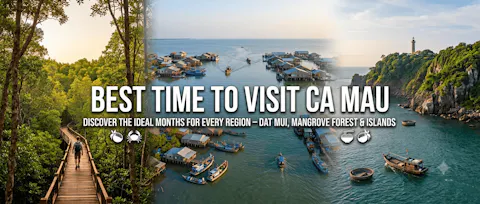
Best Time to Visit Ca Mau
Ca Mau welcomes visitors throughout the year with its tropical climate, diverse ecosystems, and spectacular coastal scenery. The dry season offers comfortable conditions for exploring Cape Ca Mau and national parks, while the rainy season transforms the mangrove forests into lush green landscapes filled with wildlife. Whether you're planning an eco-tourism adventure, birdwatching excursion, seafood experience, or cultural journey through the Mekong Delta, this guide helps you choose the best time to visit Ca Mau based on weather and seasonal highlights.

Hidden Gems in Ca Mau
Beyond the famous Ca Mau Cape lies a world of hidden treasures waiting to be explored. Discover tranquil mangrove forests, quiet fishing villages, peaceful bird sanctuaries, untouched waterways, and authentic local communities that reveal the true charm of Vietnam's southernmost province. These lesser-known destinations offer unique cultural encounters, spectacular natural scenery, and unforgettable experiences far from the crowds. Explore Ca Mau's hidden gems and experience one of the Mekong Delta's most authentic and rewarding travel destinations.