
Best Places to Visit in Ca Mau
Ca Mau, Vietnam's southernmost province, is a fascinating destination known for its vast mangrove forests, rich biodiversity, and unique coastal landscapes. Visitors can stand at the iconic Cape Ca Mau, explore national parks, cruise through winding waterways, observe diverse wildlife, and experience authentic Mekong Delta culture. Whether you're interested in eco-tourism, birdwatching, seafood, or discovering Vietnam's southern tip, this guide highlights the best places to visit in Ca Mau for an unforgettable travel experience.
On this page
- The Sacred Southern Point: Cape Dat Mui Among the Best Places to Visit in Ca Mau
- The Primeval Heart: U Minh Ha Forest – Highlighting the Best Places to Visit in Ca Mau
- Cultural and Urban Highlights: Top Best Places to Visit in Ca Mau
- The "Survival" Logistics for Ca Mau Travel
- Conclusion: Mapping the Best Places to Visit in Ca Mau
Arriving at the southernmost extremity of Vietnam is an immersion into an environment where the earth has not quite finished forming. Ca Mau is a frontier constructed of silt, salt, and intertwined canal arteries. It is a province where the heavy, salt-tinged air hangs over vast mangrove canopies, and the slow, deliberate pace of river life dictates the daily rhythm. If you are seeking pristine white-sand beaches or manufactured luxury resorts, recalibrate your compass. This is a destination reserved for ecological researchers, cultural explorers, and travelers drawn to the raw mechanics of the Mekong Delta’s aquatic ecosystems.
To navigate this region requires a specialized Ca Mau travel guide, one that understands the shifting tides, the seasonal monsoons, and the complex logistics of deep-water transit. From the tangled roots of coastal bio-reserves to the acidic peat soil of inland swamps, compiling an itinerary of the best places to visit in Ca Mau requires strategic planning. In this exhaustive field manual, we will dissect the province’s most vital geographic and cultural landmarks, offering concrete logistics, seasonal realities, and authentic insights for the ultimate off-the-beaten-path expedition.
The Sacred Southern Point: Cape Dat Mui Among the Best Places to Visit in Ca Mau
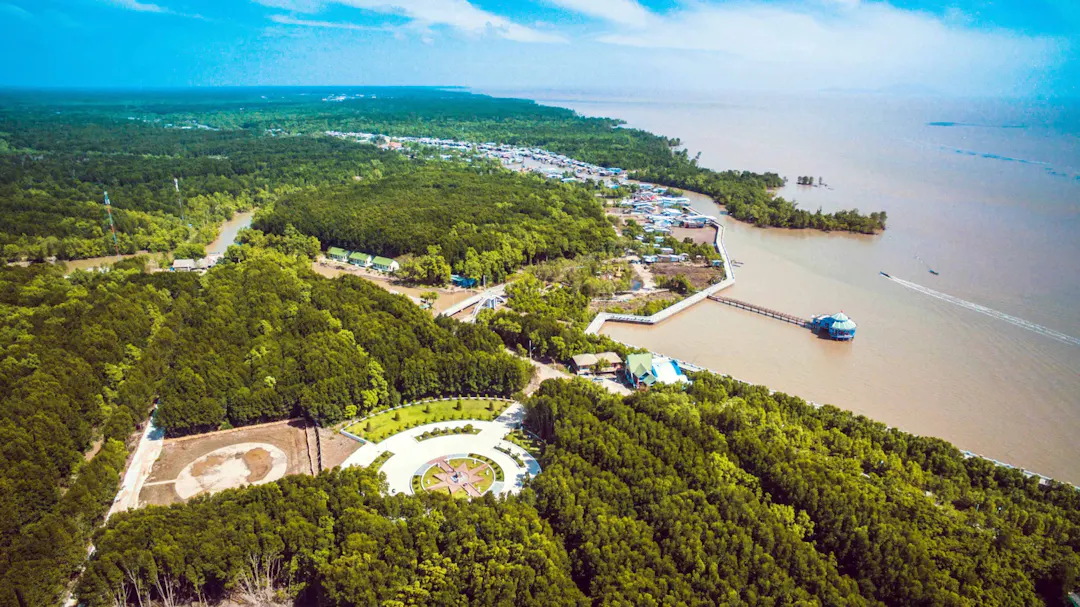
No ecological or geographic expedition to the delta is complete without standing at the very edge of the Indochinese peninsula. Đất Mũi (Cape Dat Mui) is not just a coordinate on a map; it is a sacred symbol of Vietnamese geography and a marvel of continuous land reclamation, where sediment deposits actively push the shoreline further into the sea by nearly 50 meters each year.
1. Dat Mui National Park
Serving as the anchor of the Cape Ca Mau National Park (a UNESCO-recognized World Biosphere Reserve), Dat Mui is a masterclass in coastal resilience. The forest here is strictly stratified. As you walk the elevated wooden boardwalks, you will witness the pioneer species: the mắm (white mangrove), which extends its pneumatophores (aerial roots) upward through the mud to breathe, trapping incoming silt. Behind them stand the formidable đước (Rhizophora apiculata) trees, recognizable by their arching, stilt-like prop roots that lock the newly formed soil in place.
The focal point for domestic travelers is the Km 2436 milestone, marking the official terminus of the Ho Chi Minh Highway, which stretches all the way from Cao Bang in the far north. Surrounding this milestone is a dense, impenetrable wall of green, humming with the clicks of mudskippers and the scuttling of fiddler crabs.
2. The Observation Tower & Geographic Landmark
To truly comprehend the scale of this coastal wilderness, you must ascend the Dat Mui Observation Tower. Standing over 21 meters high, this vantage point offers an unobstructed, 360-degree panorama of the alluvial plains. Field Note for Photographers: The ultimate time to position yourself here is during the late afternoon. Because of its unique geographic curvature, Cape Dat Mui is one of the only places on the Vietnamese mainland where you can watch the sun rise over the East Sea and set over the Gulf of Thailand. The golden hour casts a metallic sheen over the mudflats, providing a stark, high-contrast landscape devoid of light pollution.
3. Canoeing the Mangrove Tunnels
While the boardwalks provide an excellent terrestrial introduction, understanding the aquatic reality of the cape requires chartering a local vỏ lãi (a traditional, narrow composite speedboat). For those researching how to get to Dat Mui and its inner sanctums, hiring these boats directly from the Nam Can port or the Dat Mui tourist center is essential.
Navigating the mangrove tunnels is an exercise in sensory isolation. The thick canopy of đước trees arches over narrow waterways, blocking out the sun and dropping the ambient temperature by several degrees. The boatmen cut the engine as you drift through the core conservation zones, allowing you to observe migratory birds and monitor the delicate brackish water ecology without disruption. This is not a passive cruise; it is a profound encounter with a volatile, shifting ecosystem.
> Read more: Dat Mui National Park
The Primeval Heart: U Minh Ha Forest – Highlighting the Best Places to Visit in Ca Mau
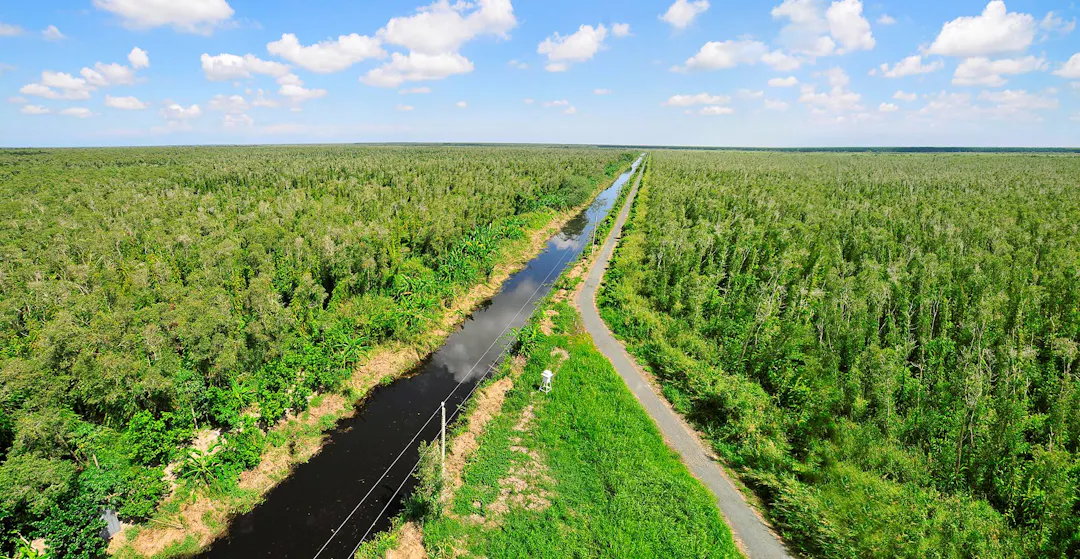
If Dat Mui represents the aggressive, salt-dominated expansion of the coast, the inland U Minh Ha Forest represents the ancient, primeval heart of the lower Mekong. Translating roughly to "Lower Darkness," this region is a massive expanse of freshwater wetlands characterized by highly acidic water and thick layers of combustible peat soil.
1. U Minh Ha National Park
Covering over 8,500 hectares of strictly protected land, U Minh Ha is a sanctuary for the rừng tràm (Melaleuca forest). The ecosystem here is entirely distinct from the coastal mangroves. The water is stained a deep, tannin-rich tea color due to the decaying organic matter, and the air is thick with the scent of eucalyptus-like melaleuca leaves.
When considering the best places to visit in Ca Mau, U Minh Ha offers a completely different seasonal reality. Crucial Logistical Reality: The dry season (December to April) is highly recommended for accessibility. During these months, you can easily trek the elevated dirt paths and climb the 24-meter forest observation deck. However, be aware that during the peak of the dry season (March and April), strict fire prevention protocols are enacted, which may temporarily close certain deep-forest trekking routes. Conversely, the wet season (May to November) floods the forest floor. Trekking becomes impossible, and exploration is conducted entirely by shallow-draft boats, offering a stunning, mirror-like reflection of the dense trunks, though mosquitos are incredibly fierce during this time.
2. The Honey Hunting Culture
The true cultural triumph of U Minh Ha is the ancient craft of gác kèo ong (traditional beekeeping). Unlike conventional apiaries, local woodsmen do not use enclosed hives. Instead, they strategically angle wooden rafters (kèo) at a precise 45-degree slope among the melaleuca branches, mimicking the natural structures favored by wild Asiatic honeybees.
As the melaleuca trees bloom, millions of bees construct massive, exposed combs on these rafters. Visitors can arrange to accompany a master honey hunter into the swamp—outfitted in protective netting and wading boots—to witness the harvest. The resulting product, U Minh melaleuca honey, is distinctively robust, slightly tangy, and highly prized across Vietnam. Participating in a raw honey-tasting session, often paired with grilled snakehead fish (cá lóc nướng trui) caught straight from the acidic canals, is a profound culinary experience that cannot be replicated in a city restaurant.
> Read more: U Minh Ha National Park
Cultural and Urban Highlights: Top Best Places to Visit in Ca Mau
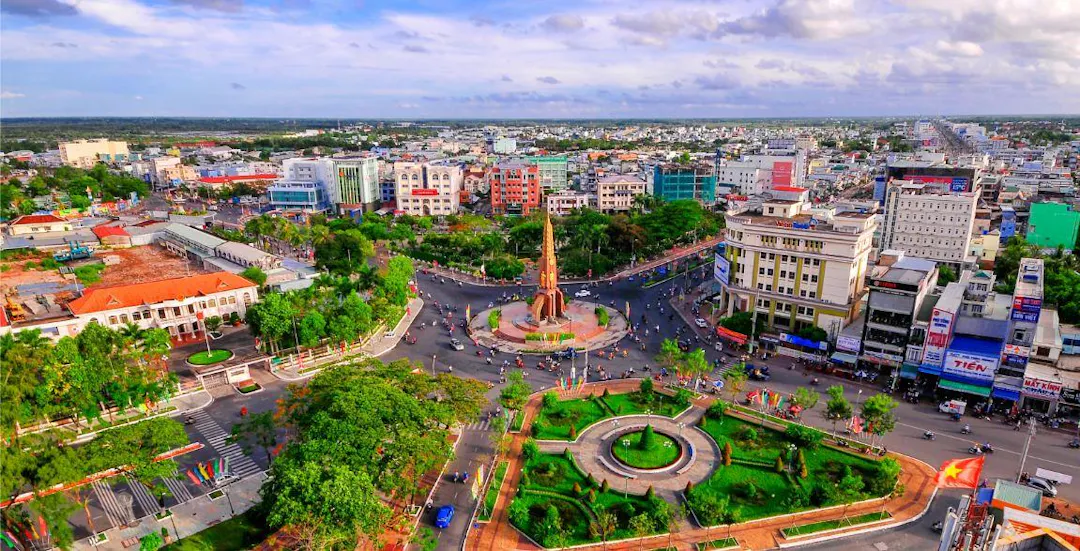
While the wilderness dictates the province’s reputation, Ca Mau City acts as the necessary staging ground and cultural hub for any expedition. It is a bustling, rapidly developing urban center that still retains deep ties to the surrounding wetlands. For travelers looking for things to do in Ca Mau before departing into the deep delta, the city and its immediate surroundings offer critical ethnographic insights.
1. Ca Mau City Landmarks
Urban wildlife integration is rarely seen on this scale, making the Sân chim Cà Mau (Ca Mau Bird Garden) a phenomenal anomaly. Located directly within the city limits at the Ca Mau Cultural Park, this protected grove serves as a nesting ground for tens of thousands of avian species, including painted storks, egrets, and cormorants. The ecological paradox of a massive, raucous bird sanctuary thriving adjacent to roaring motorbike traffic is fascinating. The best viewing time is precisely at dusk (around 5:30 PM), when the sky darkens with flocks returning from the coast to roost.
Additionally, the Ca Mau Cultural Park itself operates as a botanical and historical repository, featuring scaled replicas of significant regional architecture and monuments dedicated to the intense guerrilla warfare history of the U Minh swamps during the 20th century.
2. Local Market Life
To understand the economic lifeblood of the province, one must observe its trade. While the romanticized chợ nổi (floating markets) of the Mekong Delta are slowly diminishing due to the expansion of road infrastructure, Ca Mau still features hyper-active land and riverside markets, particularly Ward 7 Market (Chợ Phường 7).
This is ground zero for regional aquaculture. The undisputed king of the local economy is the Cua Cà Mau (Ca Mau Mud Crab). Reared in the brackish waters of the coastal districts (specifically Nam Can), these crabs are famous nationwide for their incredibly dense, sweet flesh and rich roe. A field expedition is incomplete without sitting at a local quayside eatery to consume a platter of cua rang me (tamarind-roasted crab). Furthermore, the markets are piled high with khô mực (sun-dried squid) and various fermented seafood pastes, offering intense, localized flavors that define extreme southern Vietnamese cuisine.
The "Survival" Logistics for Ca Mau Travel
Accessing the extremities of the Mekong Delta requires shifting your expectations from standard tourist infrastructure to frontier transit. As a definitive Ca Mau travel guide, here are the logistical imperatives you must understand before arrival.
Getting There: While the QL1A Highway connects Ho Chi Minh City directly to Ca Mau City, the 350-kilometer journey via sleeper bus (operators like Phuong Trang/FUTA or Giap Diep) takes a grueling 7 to 8 hours due to heavy delta traffic and narrow bridges. For those prioritizing time over budget, flying is the superior option. Vietnam Air Services Company (VASCO) operates short, daily turboprop flights from Ho Chi Minh City directly to Ca Mau Airport (CAH), cutting transit time down to a mere 55 minutes.
Intra-Province Transit: Road infrastructure has rapidly improved, meaning you can now drive a car or ride a motorbike all the way to the Dat Mui monument. However, to truly experience the geography, hybrid transport is best. Hire a private car to Nam Can, then transition to a charter boat to navigate the final aquatic stretches to the cape.
Ecological Preparedness: The intertwined canal arteries and stagnant swamp waters make Ca Mau an intense breeding ground for mosquitoes. High-DEET insect repellent, lightweight long-sleeved clothing, and sun protection are non-negotiable survival tools, regardless of whether you are trekking U Minh Ha or boating through Dat Mui.
Conclusion: Mapping the Best Places to Visit in Ca Mau
Ca Mau is not a destination for the passive observer; it demands engagement. From navigating the sprawling, root-choked waterways of the southern cape to witnessing the ancient, smoke-filled rituals of melaleuca honey harvesting, compiling an itinerary of the best places to visit in Ca Mau guarantees an encounter with Vietnam’s most resilient ecosystems. This edge-of-the-world province offers a masterclass in geographical evolution and delta endurance. The only question remaining for your expedition is this: are you more compelled by a historical, deeply isolated trek through the acidic swamps of U Minh, or an adrenaline-fueled speedboat run to watch the sun sink into the Gulf of Thailand at the very tip of the continent?
Read more: Ca Mau Travel Guide
Frequently Asked Questions About the Best Places to Visit in Ca Mau
What are the best places to visit in Ca Mau?
Ca Mau's top attractions include Cape Ca Mau National Park, U Minh Ha National Park, Khai Long Beach, Hon Da Bac Island, Ca Mau Floating Market, and the province's vast mangrove forests. These destinations showcase the unique natural beauty and biodiversity of Vietnam's southernmost region.
What is Ca Mau famous for?
Ca Mau is famous for being the southernmost point of Vietnam, home to extensive mangrove ecosystems, rich wildlife, fresh seafood, and the iconic Cape Ca Mau landmark. It is also known for eco-tourism, birdwatching, and authentic Mekong Delta culture.
How many days should I spend in Ca Mau?
A two to three-day itinerary is ideal for exploring the province's main attractions, including Cape Ca Mau, U Minh Ha National Park, local fishing villages, and coastal landscapes. Travelers interested in eco-tourism may wish to stay longer.
Is Ca Mau suitable for nature lovers?
Absolutely. Ca Mau is one of Vietnam's best destinations for nature enthusiasts. Visitors can explore mangrove forests, national parks, wetlands, bird sanctuaries, and coastal ecosystems while enjoying boat tours and wildlife observation.
Can I visit Cape Ca Mau all year round?
Yes. Cape Ca Mau can be visited throughout the year. The dry season from December to April offers comfortable weather for sightseeing, while the rainy season brings lush green landscapes and abundant wildlife, creating excellent opportunities for eco-tourism and photography.
Advertising box
Read More About Ca Mau Travel Guide
Continue exploring Ca Mau through our in-depth travel guides featuring top attractions, hidden gems, national parks, islands, local cuisine, transportation tips, suggested itineraries, cultural experiences, and practical travel advice. Discover everything you need to plan an unforgettable journey to Vietnam's southernmost province.

Best Things to Do in Ca Mau
Ca Mau offers unforgettable experiences where nature, adventure, and local culture come together at the southern tip of Vietnam. Cruise through vast mangrove forests, stand at the iconic Cape Ca Mau landmark, explore U Minh Ha National Park, enjoy fresh seafood, and discover traditional fishing communities along the coast. Whether you're seeking wildlife, eco-tourism, photography, or authentic Mekong Delta culture, this guide showcases the best things to do in Ca Mau for an unforgettable journey through Vietnam's southernmost province.

Ca Mau Food Guide
Ca Mau is a paradise for seafood lovers and one of the Mekong Delta's most exciting culinary destinations. Surrounded by rivers, mangrove forests, and coastal waters, the province is famous for fresh crab, shrimp, mudskippers, grilled seafood, and flavorful regional specialties. Visitors can enjoy authentic dishes at floating restaurants, local markets, and family-run eateries while discovering the rich food culture of Vietnam's southernmost province. This Ca Mau Food Guide introduces the must-try dishes and unforgettable flavors waiting to be explored.
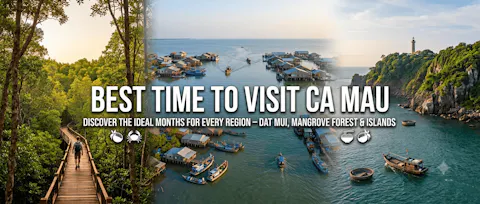
Best Time to Visit Ca Mau
Ca Mau welcomes visitors throughout the year with its tropical climate, diverse ecosystems, and spectacular coastal scenery. The dry season offers comfortable conditions for exploring Cape Ca Mau and national parks, while the rainy season transforms the mangrove forests into lush green landscapes filled with wildlife. Whether you're planning an eco-tourism adventure, birdwatching excursion, seafood experience, or cultural journey through the Mekong Delta, this guide helps you choose the best time to visit Ca Mau based on weather and seasonal highlights.

How to Get to Ca Mau
Located at the southernmost tip of Vietnam, Ca Mau is a fascinating destination known for its mangrove forests, coastal landscapes, and the iconic Ca Mau Cape. Although it lies far from the country's major tourism hubs, reaching Ca Mau is easier than many travelers expect. Whether you choose a domestic flight, a comfortable long-distance bus, a scenic road trip, or a motorbike adventure through the Mekong Delta, several transportation options make visiting this unique province convenient and rewarding.

Hidden Gems in Ca Mau
Beyond the famous Ca Mau Cape lies a world of hidden treasures waiting to be explored. Discover tranquil mangrove forests, quiet fishing villages, peaceful bird sanctuaries, untouched waterways, and authentic local communities that reveal the true charm of Vietnam's southernmost province. These lesser-known destinations offer unique cultural encounters, spectacular natural scenery, and unforgettable experiences far from the crowds. Explore Ca Mau's hidden gems and experience one of the Mekong Delta's most authentic and rewarding travel destinations.