
Hidden Gems in Ca Mau
Beyond the famous Ca Mau Cape lies a world of hidden treasures waiting to be explored. Discover tranquil mangrove forests, quiet fishing villages, peaceful bird sanctuaries, untouched waterways, and authentic local communities that reveal the true charm of Vietnam's southernmost province. These lesser-known destinations offer unique cultural encounters, spectacular natural scenery, and unforgettable experiences far from the crowds. Explore Ca Mau's hidden gems and experience one of the Mekong Delta's most authentic and rewarding travel destinations.
On this page
- U Minh Ha National Park: The Emerald Heart of the Hidden Gems in Ca Mau
- Hon Khoai Island: A Historical Outpost Among the Hidden Gems in Ca Mau
- Dat Mui's Secret Mangrove Biosphere: Ecological Hidden Gems in Ca Mau
- The Culinary Frontier: Foraging the Hidden Gems in Ca Mau
- Conclusion: Uncovering the Ultimate Hidden Gems in Ca Mau
Stepping toward the raw, untamed horizon of Vietnam’s deep south immerses the intrepid traveler in an environment where the terrestrial world surrenders entirely to the aquatic. Here, ancient mangrove roots ruthlessly pierce the dark, tannin-stained delta waters, while the chaotic symphony of wild bird colonies echoes endlessly across an untouched hydro-biological sanctuary. For those seeking the profound quietude of the absolute geographical terminus of the Indochinese peninsula, discovering the hidden gems in Ca Mau requires completely abandoning standard tourist itineraries. While the vast majority of conventional travelers rush briefly to the official coastal monument merely to snap a photograph and promptly depart, true explorers who choose to venture deeper into these labyrinthine waterways unlock an astonishingly rich ecosystem. This remote southern frontier reveals secluded biogeographical reserves, forgotten historical islands, and fiercely resilient marshland communities operating entirely off the grid. Engaging in authentic ecotourism in Vietnam's southernmost province transforms a simple vacation into a rigorous anthropological expedition. By navigating the complex network of canals and tidal flats, you directly encounter the untamed spirit of miền Tây—the deeply revered western river region—and experience a fragile, shifting landscape far removed from the exhausting, well-worn mass tourism trail.
U Minh Ha National Park: The Emerald Heart of the Hidden Gems in Ca Mau
Navigating the Submerged Melaleuca Labyrinths
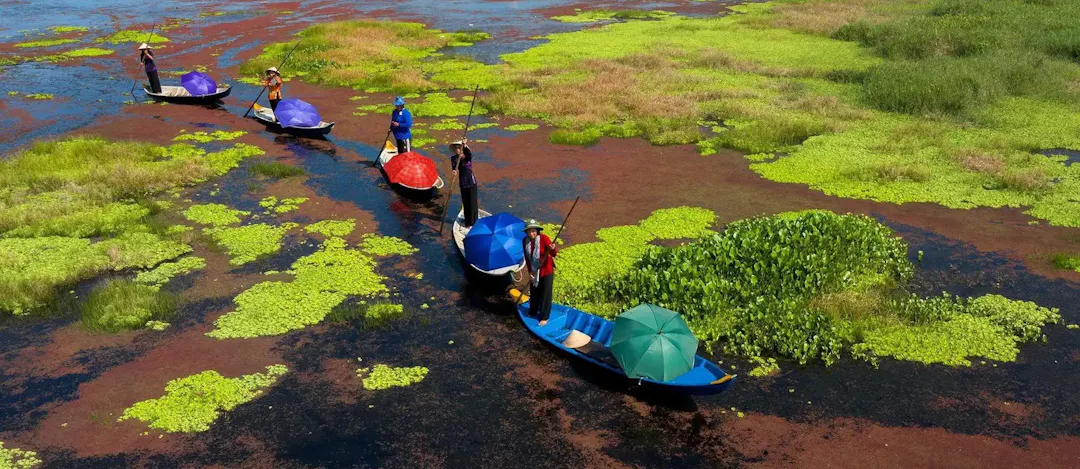
Venture inland from the saline coastal fringes, and the topography radically transforms into the dense, flooded expanse of U Minh Ha National Park, an undisputed pinnacle among off the beaten path Ca Mau attractions. This extraordinary biosphere reserve, encompassing over eight thousand five hundred hectares of heavily protected wilderness, represents a masterclass in localized hydrology.The structural foundation of this forest relies upon a rare, highly acidic peat soil matrix, formed over millennia through the relentless accumulation and anaerobic decomposition of botanical matter. Towering above these dark, saturated soils is an immense, almost impenetrable canopy of indigenous cajeput trees, known locally as rừng tràm. The visual experience of navigating this environment is staggering; the closely packed, papery trunks of the melaleuca trees create a claustrophobic yet mesmerizing vertical labyrinth. The still, freshwater channels mirror the emerald canopy above with flawless precision, hiding the intricate root systems that anchor this fragile đất ngập nước (wetland) ecosystem against the shifting seasonal monsoons. Understanding the hydro-biological mechanics of U Minh Ha requires recognizing how these ancient peat swamps successfully filter and retain massive volumes of freshwater, effectively sustaining the surrounding agrarian communities throughout the punishing dry season while providing a critical buffer against encroaching coastal salinity.
Ecotourism and Marshland Biodiversity
An immersive U Minh Ha National Park guide must emphasize that true exploration here strictly mandates the use of traditional, shallow-draft wooden sampans. Motorized vessels disrupt the profound, prehistoric silence required to observe the park's highly sensitive wildlife. As your local guide silently poles the small craft through the claustrophobic aquatic corridors, the sheer density of the marshland biodiversity slowly reveals itself. This UNESCO-recognized biosphere acts as a critical sanctuary for dozens of threatened species, functioning as a vital refuge where anthropic isolation allows nature to thrive unmolested. Patient observers scanning the dense underbrush frequently encounter wild smooth-coated otters hunting in the dark waters, massive reticulated pythons coiled silently within the upper branches, and troops of crab-eating macaques foraging along the muddy embankments. However, the absolute zenith of the U Minh Ha ecological experience occurs during the twilight hours, when hundreds of migratory and endemic bird species—ranging from the striking painted stork to the elusive spot-billed pelican—return in massive, chaotic flocks to their communal roosts, painting the fading evening sky with frantic, silhouetted movement.
> Read more: U Minh Ha National Park
Hon Khoai Island: A Historical Outpost Among the Hidden Gems in Ca Mau
The French Colonial Lighthouse and Strategic Heritage
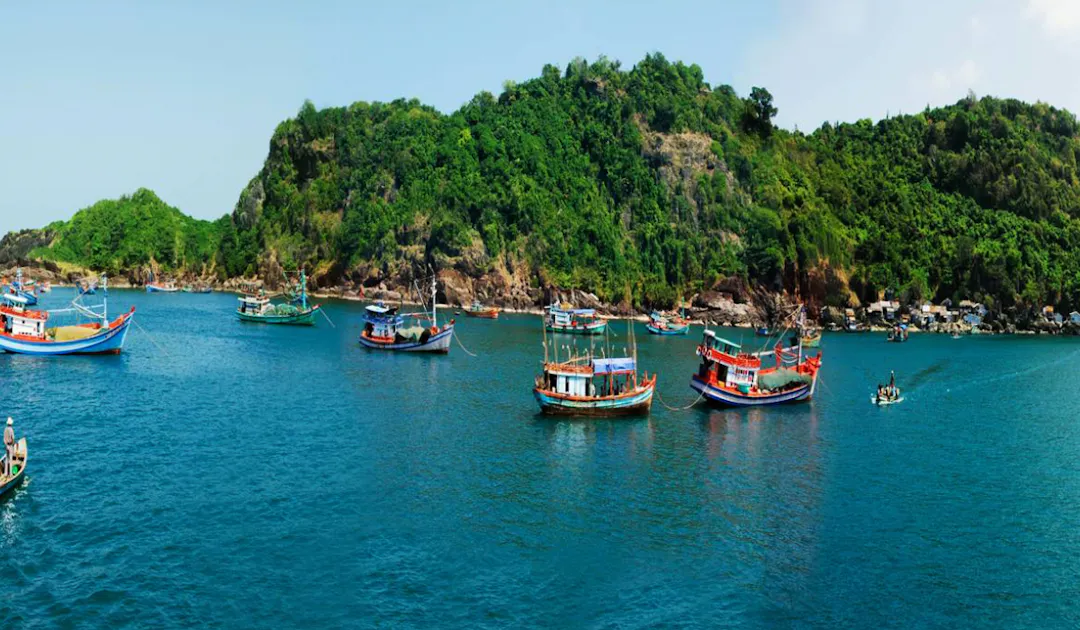
Approximately fifteen kilometers off the extreme southern mainland, rising violently from the churning waters of the Gulf of Thailand, lies Hon Khoai Island. This rugged, heavily forested granite monolith serves as one of the most culturally profound and historically strategic hidden gems in Ca Mau. The island’s undisputed architectural centerpiece is a massive, heavily fortified square lighthouse constructed by French colonial engineers in 1920. Standing at twelve and a half meters tall and constructed from imported rubble stone and thick cement archives, this imposing navigational beacon was engineered to dominate the eastern maritime trade routes. Beyond its functional purpose, the structure possesses an immense, fiercely guarded geopolitical legacy. In 1940, a local teacher and revolutionary named Phan Ngoc Hien successfully led a daring indigenous uprising against the colonial forces, briefly seizing control of the island and its strategic optical infrastructure. Today, observing this beautifully intact colonial monument standing resolute against the harsh saline winds offers a highly evocative, scholarly glimpse into the complex, blood-stained history of European maritime occupation and fierce Vietnamese resistance.
Untouched Coastal Wilderness and Access Logistics
Executing successful Hon Khoai island travel is deliberately complex, requiring rigorous logistical preparation and official clearance from provincial border defense authorities, as the island remains a highly sensitive, actively monitored maritime outpost. This deliberate bureaucratic friction, however, guarantees the absolute preservation of its untouched coastal wilderness. Upon securing military permission and enduring a turbulent speedboat crossing from the mainland port of Rach Goc, travelers are rewarded with an environment that feels entirely untouched by the modern epoch. The topography sharply contrasts with the flat mainland delta; here, steep, winding trails zigzag upward through dense, ancient tropical jungles heavily shaded by century-old jackfruit and mango trees. The rocky, unforgiving granite shoreline creates isolated tidal pools teeming with rare marine algae and crustaceans. Without any civilian settlements or commercial infrastructure disrupting the landscape, the island operates as a closed, pristine biological vault. The sensory experience of standing near the summit, listening to the deafening roar of the ocean crashing against the lower cliffs while surrounded by the shrill calls of wild macaques, defines the absolute pinnacle of southern coastal isolation.
> Read more: Hon Khoai Island
Dat Mui's Secret Mangrove Biosphere: Ecological Hidden Gems in Ca Mau
Venturing Deep into the Intertidal Accretion Zones
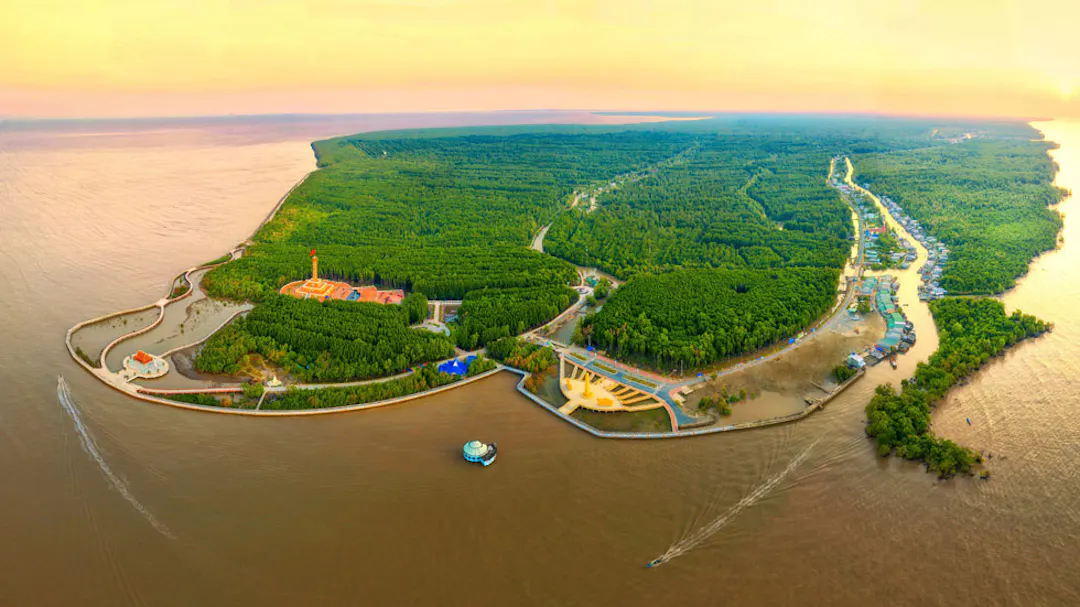
While domestic and international tourists flock relentlessly to the concrete GPS 0001 coordinate marker at Mũi Cà Mau, the true ecological marvel of the region lies quietly just beyond the paved walkways, deep within the rapidly expanding intertidal accretion zones. The national park encompassing this cape serves as a staggeringly dynamic, living geographical entity where the mainland literally grows outward into the sea. This relentless territorial expansion is driven by massive volumes of fluvial sediment transported southward by the Mekong River system, which collides with complex oceanic currents to deposit rich, fertile mud along the western coastline. Highly specialized pioneer species, primarily Avicennia alba (black mangrove), instantly colonize these fresh mudflats. Their dense, complex pneumatophore root systems act as highly efficient biological nets, trapping further sediment and accelerating the astonishing ecological accretion rate, which can push the coastline outward by up to fifty to eighty meters annually. To explore this actively shifting landscape by long-tail boat is to witness the furious, microscopic machinery of planetary creation in real time.
Local Community Life in the Stilt Villages
Embedded deep within these shifting, muddy estuaries, far from the concrete pathways of the official monument, exists a profound sociological marvel: the remote residential enclaves that define authentic Ca Mau floating villages exploration. In extremely vulnerable hamlets like Xom Mui, indigenous fishing families construct rudimentary yet highly resilient stilt houses balanced precariously upon long mangrove timber pilings driven deep into the soft, yielding mud. These skeletal wooden structures, frequently costing a mere thousand to two thousand dollars to erect, are deliberately engineered without traditional doors or solid outer walls to allow the violent, unpredictable monsoon winds and high tidal surges to pass completely through the living space without compromising structural integrity. The daily existence of these fiercely independent communities is entirely synchronized with the lunar tidal cycles. Residents practice highly sustainable, multi-generational methods of polyculture aquaculture, gently harvesting wild mud crabs, mudskippers, and shrimp directly from the flooded forests surrounding their homes without deploying destructive industrial trawling gear. Sharing a simple meal of freshly caught seafood on the wooden floorboards of a swaying stilt house, surrounded by the deafening chorus of cicadas and the rhythmic lapping of the dark river, offers a deeply humbling, unvarnished insight into human resilience at the absolute edge of the continent.
> Read more: Dat Mui National Park
The Culinary Frontier: Foraging the Hidden Gems in Ca Mau
Harvesting and Fermenting the Legendary Ca Mau Crab
No rigorous anthropological documentation of this southern extremity is complete without conducting a thorough investigation into its highly specialized, aggressively localized gastronomic ecosystem. The absolute culinary sovereign of these muddy, brackish estuaries is the legendary three-striped mangrove crab, locally revered as the ba khía. Unlike standard oceanic crustaceans, these small, highly tenacious crabs burrow deep into the dense, oxygen-starved mud directly beneath the tangled roots of the mangrove trees. Foraging for these creatures requires immense physical endurance and deep local knowledge; fishermen typically venture out during the lowest nocturnal tides during the rainy season, utilizing bright headlamps and bare hands to extract the crabs from the treacherous, slippery mud banks. Because historical harvesting yields frequently outpaced immediate consumption capabilities, the early settlers of Ca Mau engineered a brilliant, highly precise method of salt fermentation to preserve the rich, sweet meat for the harsh dry season. Today, the intricate, multi-generational craft of carefully balancing the salinity of the brine to perfectly cure the crab without turning the flesh bitter is officially recognized by the government as a National Intangible Cultural Heritage.
Indigenous Marshland Delicacies
Consuming this fiercely traditional dish transcends simple nutrition; it acts as a highly immersive, intensely flavorful cultural initiation. The fermented mangrove crab is never eaten whole; it is meticulously disassembled, aggressively shattered, and heavily tossed with copious amounts of fresh lime juice, crushed raw garlic, fiery bird's-eye chilies, and refined palm sugar to counteract the intense, oceanic salinity of the curing brine. This explosive, sweet-and-sour concoction is traditionally consumed alongside simple bowls of cold rice, functioning as the quintessential, nostalgic comfort food for generations of delta laborers. Beyond the famous crab, the culinary frontier of the marshlands offers an abundance of exotic regional foods specifically adapted to the peat swamps and muddy estuaries. Adventurous epicureans can forage for rare mud creeper snails, sample wild snakehead fish aggressively grilled over smoking rice straw, or consume the intensely rich, dark golden honey harvested directly from wild giant bees nesting high within the cajuput canopy of U Minh Ha. Engaging deeply with this highly localized, wild-foraged culinary landscape fundamentally transforms the act of dining into a profound, intimate anthropological connection with the resilient, resourceful soul of the delta.
Conclusion: Uncovering the Ultimate Hidden Gems in Ca Mau
Ultimately, undertaking the arduous logistical journey to explore the profound hidden gems in Ca Mau rewards the serious, dedicated traveler with an incredibly authentic, deeply moving connection to Vietnam's most pristine, unforgiving southern frontier. By intentionally bypassing the crowded, superficial tourist markers to silently navigate the ancient, emerald waterways of U Minh Ha, scale the rugged, historical granite peaks of Hon Khoai, and break bread with the fiercely resilient fishing communities clinging to the shifting mudflats of Dat Mui, you witness the raw, untamed heartbeat of the delta. We strongly encourage you to look far beyond the ordinary, pack with deep respect for these fragile ecosystems, and embark upon an extraordinary, off-grid expedition into the magnificent, watery wilderness of the deep south today.
Read more: Ca Mau Travel Guide

By Roy Trinh
Editor
Roy Trinh is a travel writer and destination expert at Go Visit Vietnam, dedicated to helping travelers discover the beauty, culture, and diversity of Vietnam. Through well-researched travel guides, practical itineraries, local insights, and authentic recommendations, Roy shares valuable information to inspire memorable journeys across the country. From vibrant cities and breathtaking landscapes to regional cuisine and cultural heritage, every guide is created to help visitors experience Vietnam with confidence and curiosity.
Frequently Asked Questions About Hidden Gems in Ca Mau
What are some hidden gems worth visiting in Ca Mau?
Besides the famous Ca Mau Cape, visitors can explore U Minh Ha National Park, remote mangrove forests, peaceful fishing villages, bird sanctuaries, quiet canals, and small riverside communities that offer authentic Mekong Delta experiences.
Are Ca Mau's hidden attractions suitable for nature lovers?
Absolutely. Ca Mau is one of Vietnam's best destinations for nature enthusiasts, offering vast wetlands, mangrove ecosystems, wildlife habitats, birdwatching opportunities, and peaceful waterways perfect for eco-tourism.
Can I visit hidden places in Ca Mau without a guide?
Many attractions can be visited independently, but hiring a local guide or joining an eco-tour can enhance your experience, especially when exploring remote mangrove forests, protected wetlands, or less accessible villages.
What is the best time to explore hidden gems in Ca Mau?
The dry season from December to April generally offers the most comfortable conditions for outdoor exploration, boat trips, and wildlife watching. Early mornings are especially enjoyable for birdwatching and photography.
Why should I explore off-the-beaten-path destinations in Ca Mau?
Hidden gems allow you to experience Ca Mau's authentic culture, untouched natural landscapes, and peaceful local life away from busy tourist areas. They provide unique opportunities to connect with local communities while supporting sustainable tourism.
Advertising box
Read More About Ca Mau Travel Guide
Continue exploring Ca Mau through our in-depth travel guides featuring top attractions, hidden gems, national parks, islands, local cuisine, transportation tips, suggested itineraries, cultural experiences, and practical travel advice. Discover everything you need to plan an unforgettable journey to Vietnam's southernmost province.

Best Places to Visit in Ca Mau
Ca Mau, Vietnam's southernmost province, is a fascinating destination known for its vast mangrove forests, rich biodiversity, and unique coastal landscapes. Visitors can stand at the iconic Cape Ca Mau, explore national parks, cruise through winding waterways, observe diverse wildlife, and experience authentic Mekong Delta culture. Whether you're interested in eco-tourism, birdwatching, seafood, or discovering Vietnam's southern tip, this guide highlights the best places to visit in Ca Mau for an unforgettable travel experience.

Best Things to Do in Ca Mau
Ca Mau offers unforgettable experiences where nature, adventure, and local culture come together at the southern tip of Vietnam. Cruise through vast mangrove forests, stand at the iconic Cape Ca Mau landmark, explore U Minh Ha National Park, enjoy fresh seafood, and discover traditional fishing communities along the coast. Whether you're seeking wildlife, eco-tourism, photography, or authentic Mekong Delta culture, this guide showcases the best things to do in Ca Mau for an unforgettable journey through Vietnam's southernmost province.

Ca Mau Food Guide
Ca Mau is a paradise for seafood lovers and one of the Mekong Delta's most exciting culinary destinations. Surrounded by rivers, mangrove forests, and coastal waters, the province is famous for fresh crab, shrimp, mudskippers, grilled seafood, and flavorful regional specialties. Visitors can enjoy authentic dishes at floating restaurants, local markets, and family-run eateries while discovering the rich food culture of Vietnam's southernmost province. This Ca Mau Food Guide introduces the must-try dishes and unforgettable flavors waiting to be explored.
Best Time to Visit Ca Mau
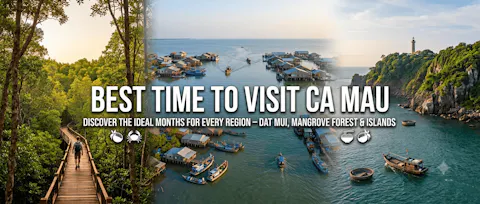
Ca Mau welcomes visitors throughout the year with its tropical climate, diverse ecosystems, and spectacular coastal scenery. The dry season offers comfortable conditions for exploring Cape Ca Mau and national parks, while the rainy season transforms the mangrove forests into lush green landscapes filled with wildlife. Whether you're planning an eco-tourism adventure, birdwatching excursion, seafood experience, or cultural journey through the Mekong Delta, this guide helps you choose the best time to visit Ca Mau based on weather and seasonal highlights.

How to Get to Ca Mau
Located at the southernmost tip of Vietnam, Ca Mau is a fascinating destination known for its mangrove forests, coastal landscapes, and the iconic Ca Mau Cape. Although it lies far from the country's major tourism hubs, reaching Ca Mau is easier than many travelers expect. Whether you choose a domestic flight, a comfortable long-distance bus, a scenic road trip, or a motorbike adventure through the Mekong Delta, several transportation options make visiting this unique province convenient and rewarding.